
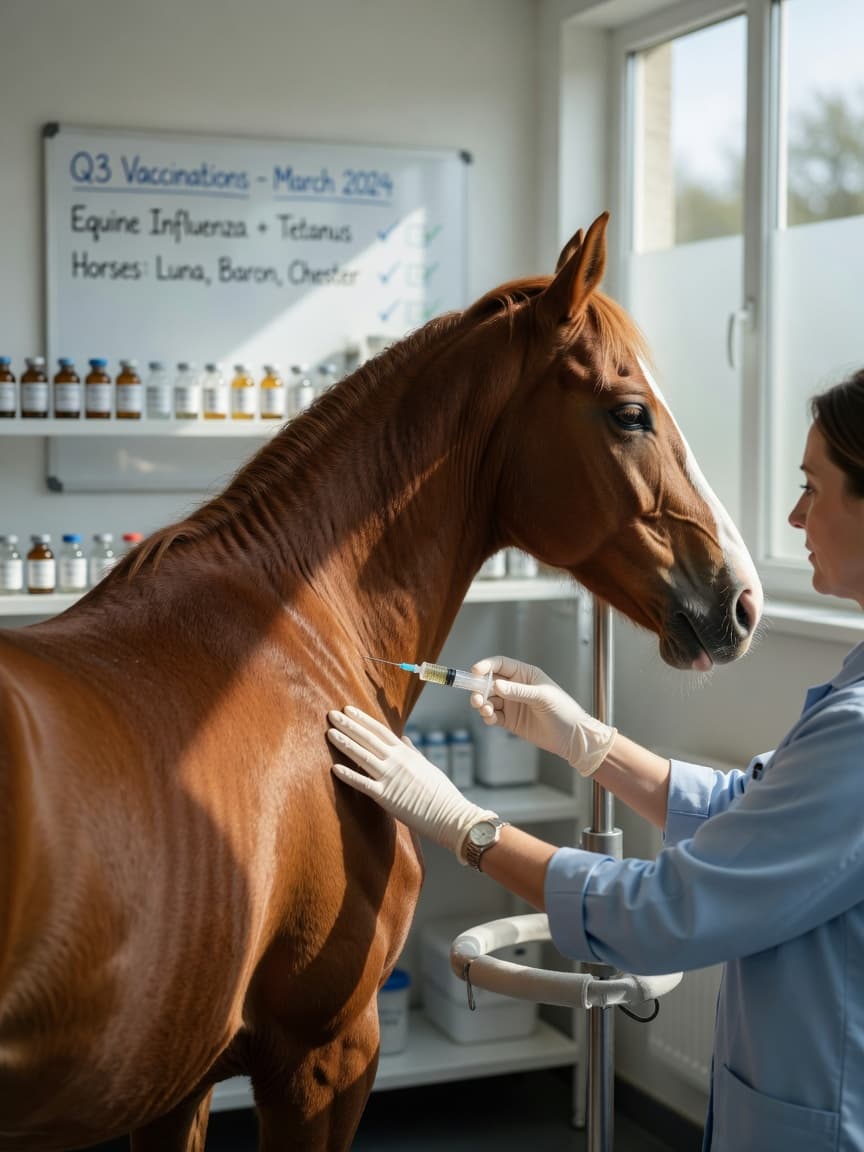
Why Vaccination Matters for Horses in Europe
Vaccination is one of the most effective tools available to horse owners for preventing serious infectious disease. In Europe, the landscape of equine vaccination is shaped by a combination of legal requirements, competition regulations, and evolving disease risks — particularly as shifting climate patterns bring diseases such as West Nile Virus further north than previously seen. Understanding which vaccines are required, which are recommended, and how to record them correctly is essential for every horse owner on the continent.
Mandatory Vaccinations for Competition: FEI Requirements
If your horse competes under the Fédération Equestre Internationale (FEI) — which governs international competition in disciplines including dressage, show jumping, eventing, endurance, and vaulting — equine influenza vaccination is compulsory. The FEI rules are among the most detailed vaccination protocols in equine sport and are regularly updated.
The current FEI equine influenza vaccination protocol requires:
- A primary course of two vaccinations given no fewer than 21 days and no more than 92 days apart
- A first booster given no fewer than 150 days and no more than 215 days after the second primary vaccination
- Subsequent boosters at intervals of no more than 12 months
- No vaccination to have been administered within seven days of the horse entering a competition venue
These rules exist to prevent the introduction and spread of influenza at events where large numbers of horses from different backgrounds congregate. Even minor lapses in the vaccination record can result in elimination from competition, so meticulous record-keeping is non-negotiable.
Many national equestrian federations have adopted equivalent or slightly stricter rules for their own competitions. In Spain, the Real Federación Hípica Española (RFHE) mirrors FEI requirements for affiliated events. In France, the Fédération Française d'Equitation (FFE) requires valid influenza vaccination for competition entry. Always check the specific requirements of the federation and event organiser before competing.
Tetanus: Essential for Every Horse
Tetanus is caused by the bacterium Clostridium tetani, which is found widely in soil and horse faeces. Horses are particularly susceptible — more so than most other domestic animals — and the disease is almost universally fatal once clinical signs appear. There is no legal requirement to vaccinate against tetanus in most EU countries, but it is universally considered essential by equine veterinary professionals.
Tetanus vaccine is frequently combined with equine influenza in a single injection, making it straightforward to administer both simultaneously. The primary course consists of two injections four to six weeks apart, followed by a booster at 12 months. After the initial series, boosters are typically required every two years, though some vets recommend annual boosters for horses in high-risk environments.
Any horse that sustains a wound — particularly a deep puncture wound — and whose vaccination status is uncertain or lapsed should receive a tetanus antitoxin immediately, in addition to starting or resuming the vaccination course.
Equine Herpesvirus (EHV-1 and EHV-4)
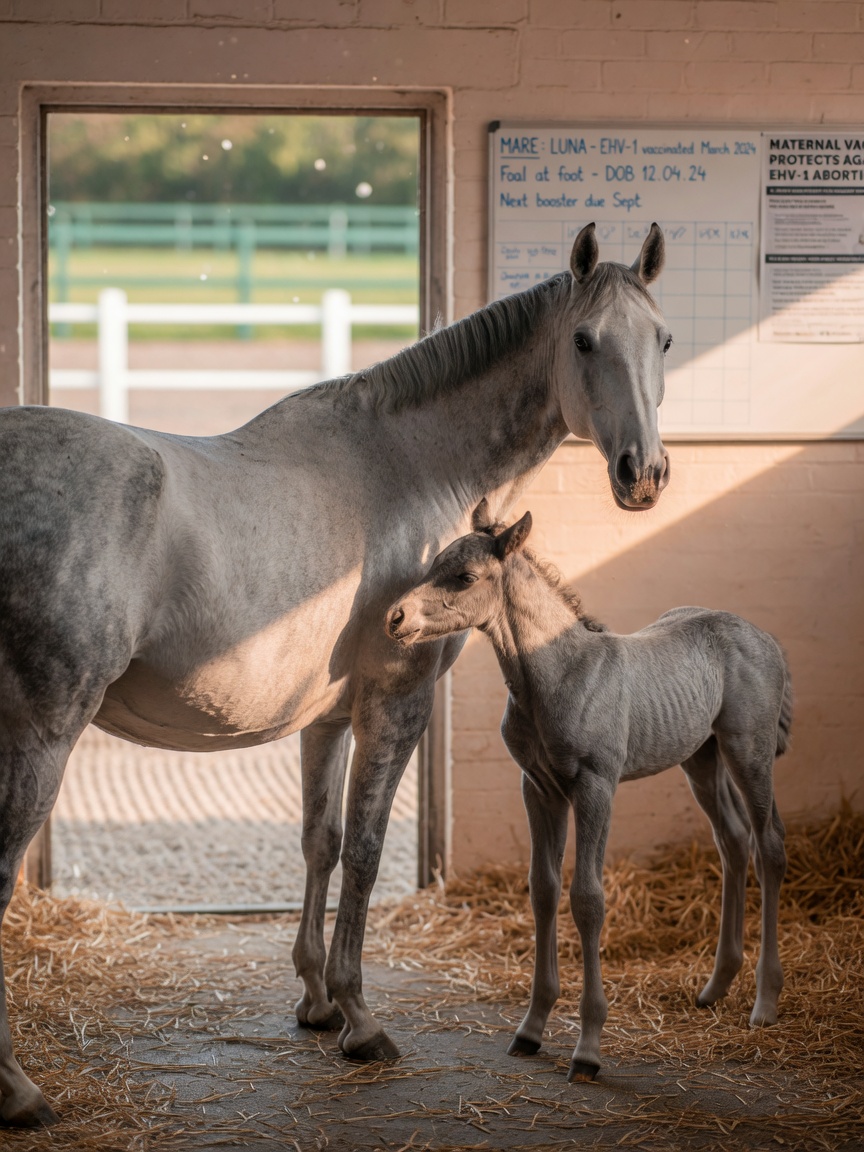
Equine herpesvirus encompasses several strains, of which EHV-1 and EHV-4 are the most clinically significant. EHV-4 primarily causes respiratory disease (rhinopneumonitis), while EHV-1 can cause respiratory disease, abortion in pregnant mares, and, in severe cases, a potentially fatal neurological form known as equine herpesvirus myeloencephalopathy (EHM).
Vaccination against EHV does not prevent infection entirely but reduces clinical severity and viral shedding. It is particularly important for breeding mares and horses that travel frequently or live in yards with high horse turnover. The FEI does not mandate EHV vaccination but strongly recommends it, and some competition venues have introduced their own requirements following outbreaks.
A typical EHV vaccination protocol involves a primary course of two injections four to six weeks apart, with boosters every six months. Pregnant mares are often vaccinated at months five, seven, and nine of pregnancy specifically to reduce the risk of abortion.
West Nile Virus: An Increasing Concern in Southern Europe
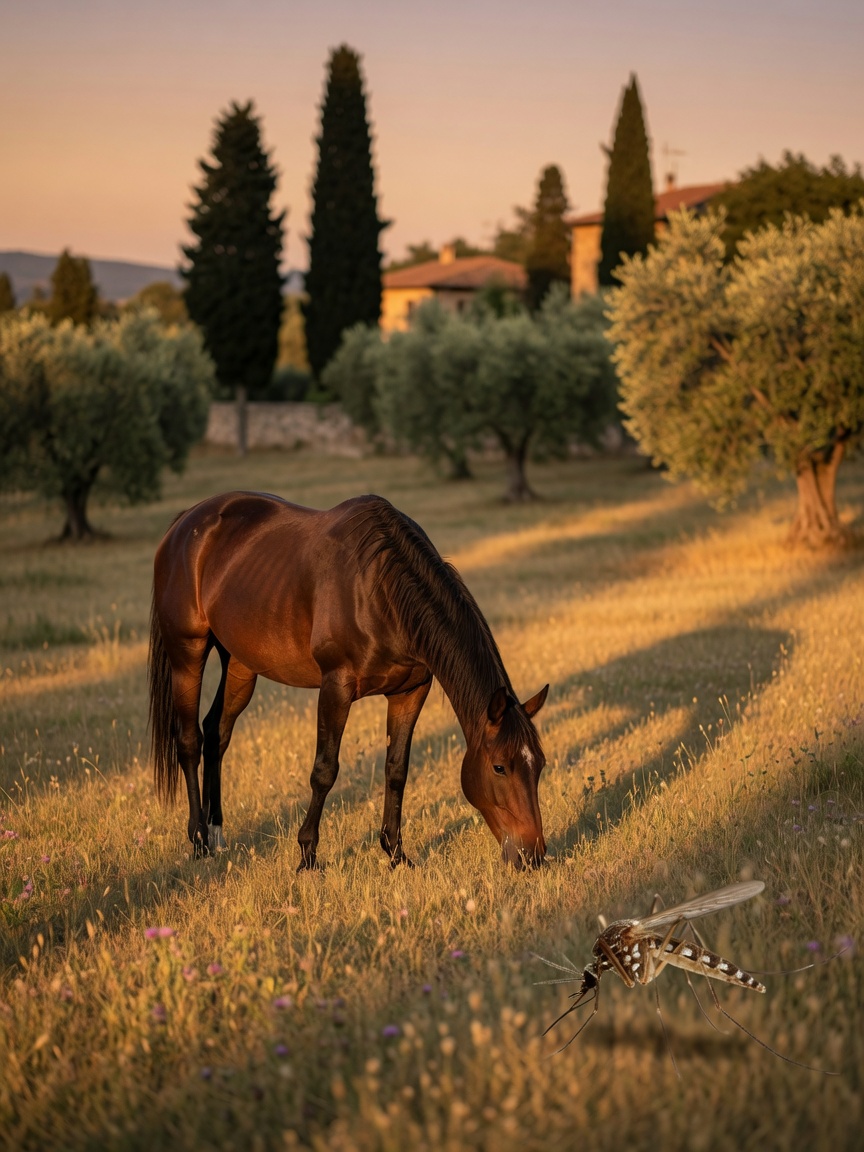
West Nile Virus (WNV) is a mosquito-borne disease that has expanded significantly across Southern Europe in recent decades. Spain, Italy, France, Greece, and Portugal have all recorded outbreaks in horses and humans. The virus is transmitted by Culex mosquitoes and causes neurological disease that can be severe or fatal in horses.
A licensed WNV vaccine is available in Europe and is increasingly recommended — and in some regions effectively expected — for horses in endemic areas. In Spain and Italy in particular, regional veterinary authorities have issued guidance encouraging vaccination of horses in affected provinces. The primary course involves two injections three to six weeks apart, with annual boosters before the mosquito season.
If you are in Northern Europe — the UK, Germany, the Netherlands — WNV risk is currently lower, but the situation is changing. Consult your equine vet about the current risk assessment for your specific region each year.
Equine Influenza: Beyond Competition Requirements
Even if your horse never competes, equine influenza vaccination is strongly recommended. Influenza spreads rapidly between horses via respiratory secretions and can cause severe illness, with recovery often taking several weeks. Horses that attend clinics, share transport, or live in yards with horses coming and going are at elevated risk.
The strains circulating in Europe are monitored by the Animal Influenza Surveillance Scheme coordinated by the Animal Health Trust (now part of the Newmarket-based research community) and by European surveillance networks. Vaccine manufacturers update formulations periodically to match circulating strains, so using a current, recommended product is important.
Recording Vaccinations in the EU Horse Passport
All vaccinations must be recorded in the horse's EU passport by the administering veterinary surgeon. The entry must include the date, the product name and batch number, and the vet's stamp and signature. Incomplete or unsigned entries are not considered valid for competition purposes.
Keep the passport safe and bring it to every veterinary appointment. If entries are made incorrectly or the passport is lost, contact your national passport-issuing organisation immediately. A replacement passport can be issued, but any unverifiable vaccination history will be lost, potentially requiring the horse to restart its vaccination primary course before it can compete.
Working with an ESCCAP-Aligned Equine Vet
The European Scientific Counsel Companion Animal Parasites (ESCCAP) provides evidence-based guidelines on parasite control for companion animals and, increasingly, equines. When developing your horse's preventive health plan, seek a vet who follows current ESCCAP and BEVA guidelines and who takes a risk-based approach to vaccination — assessing your horse's individual lifestyle, location, and use rather than applying a one-size-fits-all protocol.
An annual health review with your equine vet is the ideal opportunity to reassess your vaccination programme in light of any changes in your horse's circumstances or disease patterns in your region. This is also the time to update passport records and discuss any upcoming travel or competition plans that may affect vaccination timing.
Summary: Recommended Vaccination Schedule
- Equine influenza: Primary course, then boosters as per FEI protocol or annually
- Tetanus: Primary course, boosters every one to two years
- EHV-1/4: Every six months, especially for breeding and travelling horses
- West Nile Virus: Annually before mosquito season, essential in Southern Europe
- Strangles (Streptococcus equi): Discuss with your vet based on local risk
Vaccination is an investment in your horse's long-term health and in the biosecurity of every yard and event your horse attends. Keeping records accurate and up to date in the EU passport is not merely a bureaucratic obligation — it is a cornerstone of responsible horse ownership.