

The Grain-Free Debate: Where Did It Start?
Grain-free dog food was once considered a premium, health-conscious choice. Marketed as more natural and closer to an ancestral diet, these formulas flew off the shelves throughout the 2010s. Then, in 2018, the US Food and Drug Administration (FDA) announced it was investigating a possible link between grain-free diets and dilated cardiomyopathy (DCM) in dogs. The pet food world has not been the same since.
DCM is a serious heart condition in which the heart muscle weakens and enlarges, reducing its ability to pump blood effectively. It can be fatal. The question at the heart of this debate — no pun intended — is whether grain-free diets are actually causing it, or whether the association is more complicated than the headlines suggest.
What the FDA Investigation Found
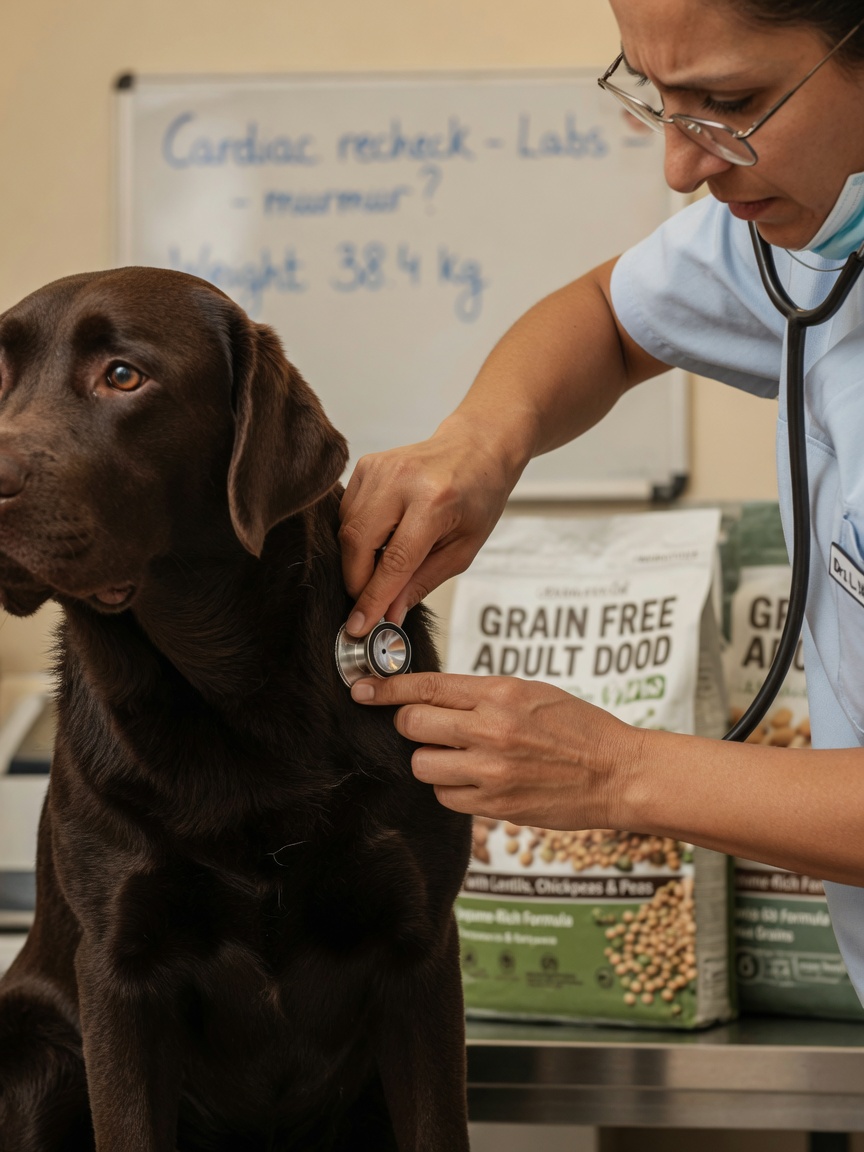
The FDA released several updates between 2018 and 2019, identifying hundreds of DCM cases in dogs eating grain-free diets. Crucially, many of these dogs were breeds not typically predisposed to DCM — breeds like Golden Retrievers, Labrador Retrievers, and French Bulldogs. This was unusual enough to raise genuine concern.
The diets most commonly associated with reported cases tended to be high in legumes — particularly peas, lentils, chickpeas, and potatoes — which are frequently used as carbohydrate replacements in grain-free formulas. The FDA noted these ingredients often appeared in the first five listed on the label, suggesting they made up a significant portion of the recipe.
However, the FDA never concluded that grain-free food definitively causes DCM. The investigation identified a signal, not a proven causal mechanism. That distinction matters enormously.
Taurine: The Missing Piece

One of the leading hypotheses involves taurine, an amino acid essential for cardiac function in dogs. Unlike cats, dogs can synthesise taurine from other amino acids — specifically methionine and cysteine. The concern is that certain high-legume diets may interfere with this process, either by reducing the bioavailability of precursor amino acids or by altering gut microbiota in ways that affect taurine metabolism.
Some research has shown that dogs diagnosed with diet-associated DCM had low taurine levels in their blood, and that supplementation — combined with a diet change — led to measurable cardiac improvement. This is encouraging evidence, but it does not apply universally. Many dogs on grain-free diets have normal taurine levels, and not all DCM cases involve a taurine deficiency.
What the Research Has Not Proven
It is worth being precise about what the science does and does not show. The FDA investigation was based on voluntary case reports, not a controlled clinical study. That means reporting bias is a real factor — veterinarians and owners who suspected a dietary link were more likely to submit reports, while dogs on grain-free diets that remained healthy were not documented.
A 2020 study published in the Journal of Animal Science examined taurine status across dogs eating various diets and found that diet type alone was not a reliable predictor of deficiency. The picture is further complicated by the fact that DCM has multiple causes, including genetics, infections, and other nutritional deficiencies unrelated to grain content.
Several researchers have also pointed out that grains themselves are not particularly rich in taurine or its precursors, so simply removing them from a diet should not theoretically cause cardiac problems — which suggests the legume content, rather than grain absence, may be more relevant to whatever mechanism is involved.
Breed Predisposition Still Matters
Certain breeds carry a genetic predisposition to DCM regardless of diet. Dobermann Pinschers, Boxers, Great Danes, Irish Wolfhounds, and Cocker Spaniels are among those at elevated risk. If your dog belongs to one of these breeds, cardiac monitoring is advisable regardless of what they eat, and dietary choices should be made with your vet's input.
For the breeds flagged in the FDA reports — particularly Golden Retrievers — the evidence suggests it may be worth erring on the side of caution, especially if your dog has been eating a high-legume grain-free formula for an extended period.
What Vets Currently Recommend
The American College of Veterinary Internal Medicine (ACVIM) issued a consensus statement recommending that vets consider dietary history when evaluating dogs for DCM, and that owners consult their veterinarian before choosing or continuing a grain-free diet, particularly for at-risk breeds.
Most veterinary nutritionists currently advise choosing foods that meet AAFCO standards and have been developed with input from board-certified nutritionists, ideally with feeding trials rather than purely formulation-based approval. This applies whether or not the food is grain-free.
Practical Guidance for Dog Owners
- If your dog is eating grain-free food and is healthy, do not panic — there is no proof that all grain-free diets cause DCM in all dogs.
- If your dog shows symptoms such as lethargy, exercise intolerance, difficulty breathing, or coughing, see a vet promptly regardless of diet.
- For large or predisposed breeds, discuss cardiac screening and diet with your vet, especially if the food is legume-heavy.
- Look for brands that have conducted actual feeding trials and employ veterinary nutritionists in their formulation process.
- Avoid diets where peas, lentils, or potatoes are among the first three ingredients listed.
The grain-free debate is not settled science. What it has done is remind us that marketing claims and nutritional reality do not always align, and that feeding decisions — particularly for dogs with breed-related vulnerabilities — deserve the same evidence-based scrutiny we apply to any aspect of animal health.