
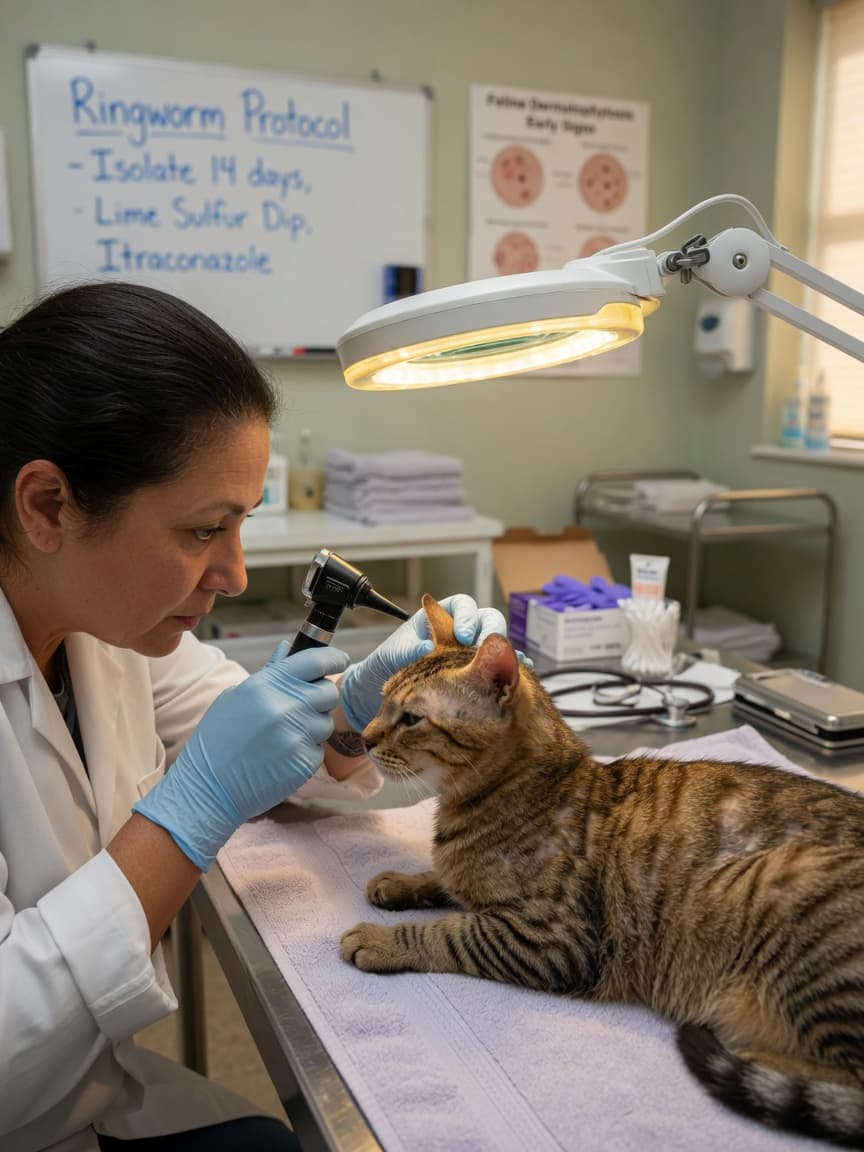
What Is Ringworm?
Despite the name, ringworm has nothing to do with worms. It is a fungal infection caused by a group of fungi called dermatophytes. In cats, the overwhelming majority of cases — around 90 per cent — are caused by a species called Microsporum canis. The remaining cases may involve Trichophyton mentagrophytes or Microsporum gypseum, which are more commonly associated with contact with soil or rodents.
Ringworm is also called dermatophytosis. The circular, ring-like lesions that give it its common name are seen more reliably in humans than in cats, where the presentation can be much more variable and subtle.
How Is It Transmitted?
Microsporum canis spreads through direct contact with an infected animal or through contact with contaminated surfaces and objects. The fungus produces enormous numbers of microscopic spores called arthrospores. These spores are remarkably tough — they can survive in the environment for 12 to 18 months under the right conditions, clinging to carpets, furniture, bedding, grooming tools, and even walls.
Infection occurs when spores penetrate broken or damaged skin or colonise hair follicles. Young kittens, cats with compromised immune systems, and cats living in crowded conditions such as rescues and catteries are most susceptible. Some cats, particularly long-haired breeds, can carry the fungus on their coats without showing obvious signs of disease — these asymptomatic carriers are a significant source of spread.
Signs of Ringworm in Cats
The classic appearance is one or more areas of hair loss (alopecia) with a scaly, crusty border. However, the presentation in cats can range widely:
- Circular patches of hair loss, most often on the head, ears, and forelimbs
- Broken, stubby hairs around affected areas
- Scaling, dandruff-like skin
- Mild redness or crusting at the margins of lesions
- Itchiness, though many cats show surprisingly little irritation
- In some cats, a more widespread, patchy hair loss across the body
A Wood's lamp — a UV light used in veterinary practice — causes some strains of Microsporum canis to fluoresce a characteristic apple-green colour. However, only around 50 to 70 per cent of M. canis strains fluoresce, so a negative result does not rule out ringworm. The Wood's lamp is useful when positive but should never be the sole basis for ruling out infection.
Diagnosis: DTM Culture Is the Gold Standard
The definitive way to diagnose ringworm is fungal culture using a dermatophyte test medium (DTM). Hairs and skin scales are collected from the edges of lesions and placed onto the culture medium. As dermatophytes grow, they cause the medium to change colour from yellow to red — a result that usually becomes apparent within one to two weeks, though cultures are monitored for up to four weeks.
Colonies are then examined under a microscope to identify the specific species, which guides treatment and helps assess zoonotic risk. PCR testing is also available at some laboratories and produces results more quickly, though DTM culture remains widely used and highly reliable.
Zoonotic Risk: Who Is Most Vulnerable?
Ringworm is one of the most important zoonotic diseases associated with cats — meaning it spreads from animals to people. Direct contact with an infected cat or with contaminated surfaces can transmit the infection.
Those at highest risk of contracting ringworm from an infected cat include:
- Children, whose skin is more permeable and who are more likely to have close physical contact with animals
- Elderly individuals
- People who are immunocompromised, including those receiving chemotherapy, organ transplant recipients, and people with HIV
- Anyone with broken or damaged skin
Human ringworm typically presents as itchy, circular, raised, scaly patches on the skin. It responds well to topical antifungal creams available from pharmacies. Medical advice should be sought promptly if lesions are spreading, the person is immunocompromised, or lesions are on the scalp or nails. Inform your GP that you have a cat with confirmed or suspected ringworm.
Treatment: Treating the Cat
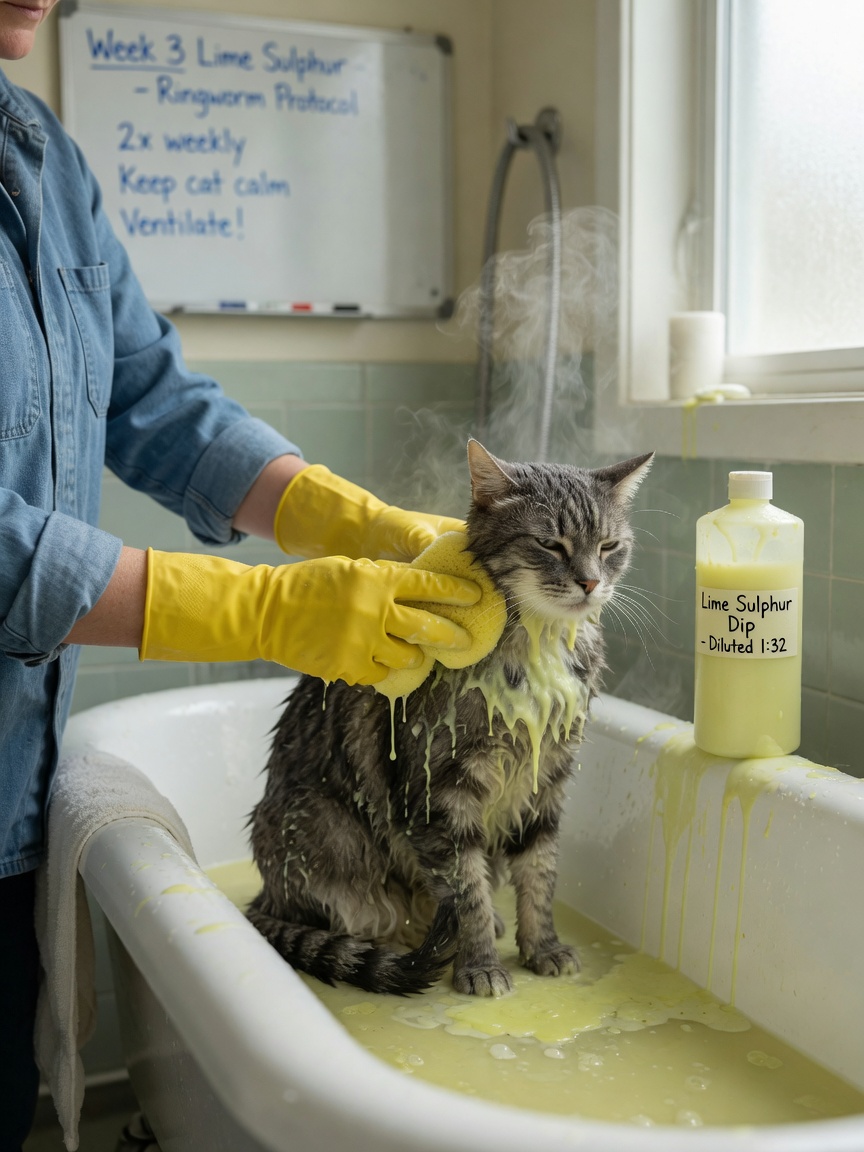
Ringworm requires treatment on two fronts: treating the infected cat and decontaminating the environment. Neither alone is sufficient.
Itraconazole
Itraconazole is currently the preferred systemic antifungal drug for cats with ringworm. It is given orally and is well tolerated by most cats. A pulse dosing protocol is commonly used — one week on, one week off — for a total of several cycles. This approach reduces drug exposure while maintaining efficacy, as itraconazole accumulates in skin and hair follicles and continues to act during the off weeks.
Treatment continues until at least two consecutive negative fungal cultures are obtained, typically one to three months after starting treatment. Stopping too early is one of the most common reasons for treatment failure and recurrence.
Whole-Body Lime Sulphur Dips
Topical treatment is used alongside systemic therapy, particularly in multi-cat households or in severe cases. Whole-body dips using lime sulphur solution are the most evidence-based topical treatment for cats. The solution is applied to the entire coat and left to dry without rinsing.
Lime sulphur has a strong, unpleasant smell — similar to rotten eggs — and will stain clothing, surfaces, and jewellery. It should be applied with protective gloves and old clothing. Despite its drawbacks, it is highly effective at killing fungal spores on the coat and reducing environmental contamination shed from the cat.
Dips are typically repeated every five to seven days alongside oral treatment. Cats should be prevented from grooming until the dip has dried, as excessive ingestion can cause irritation.
Environmental Decontamination
Because ringworm spores survive for so long in the environment, thorough home decontamination is essential and must be maintained throughout the treatment period.
- Vacuum carpets, sofas, and curtains daily — immediately dispose of the vacuum bag or empty the canister outside, as spores are not destroyed by the vacuum
- Wash all bedding, blankets, and soft furnishings at 60 degrees Celsius or higher
- Wipe hard surfaces with a diluted bleach solution (1:10 dilution) or an antifungal disinfectant proven effective against dermatophytes
- Discard or thoroughly disinfect grooming equipment, collars, and toys
- Steam cleaning is effective on carpets and upholstery
Quarantining Affected Cats
Infected cats should be isolated from other pets in the household, particularly other cats, and from vulnerable people. Ideally, an affected cat is kept in one room with easily cleaned hard floors until at least the first negative culture result has been obtained. This significantly reduces the spread of spores through the home.
In multi-cat households or rescue environments, all in-contact cats should be tested and treated regardless of whether they are showing signs. Asymptomatic carriers are a major obstacle to ringworm elimination.
How Long Does Treatment Take?
Ringworm treatment is a commitment. Most cats require six to twelve weeks of combined systemic and topical treatment before consecutive negative cultures are achieved. Patience and consistency are essential — owners who complete the full course of treatment and maintain environmental decontamination throughout are far more likely to achieve full resolution without recurrence.