ForPetsHealthcare
Nutrition

Grain-Free Cat Food: Is It Better for Your Cat?

By Julia WrenfieldUpdated August 4, 20261 min read
Evidence-based · Sources checked
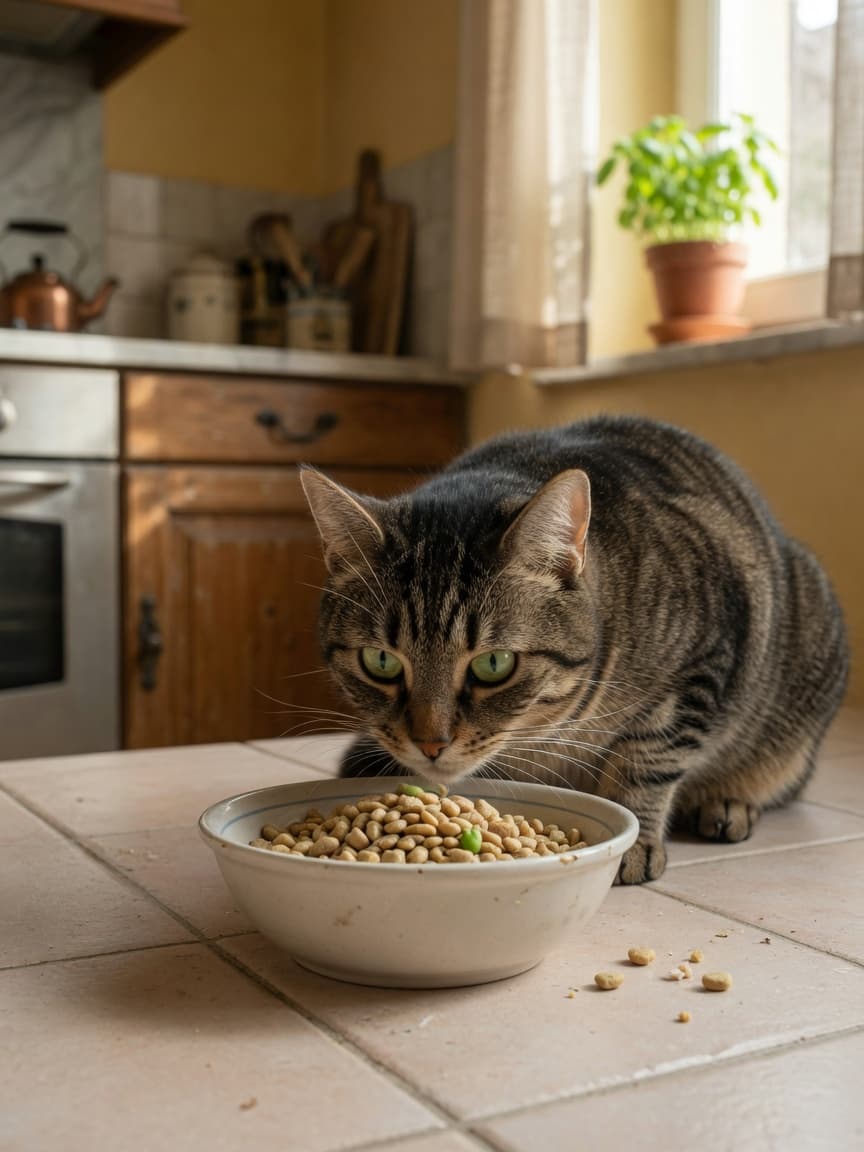
{"en": "Close-up of a cat eating from a bowl of grain-free kibble and wet food", "es": "Gato comiendo de cerca de un plato con alimento sin granos", "fr": "Chat mangeant de pr\u00e8s dans un bol de nourriture sans c\u00e9r\u00e9ales", "de": "Katze frisst aus einer Sch\u00fcssel mit getreidefreiem Katzenfutter", "nl": "Kat eet uit een kom met graanvrij kattenvoer", "pt": "Gato comendo de perto em uma tigela com ra\u00e7\u00e3o sem gr\u00e3os", "it": "Gatto che mangia da una ciotola con cibo senza cereali"}

Grain-free cat food has become increasingly popular — but is it actually better for cats?

The Grain-Free Marketing Claim

The idea that grains are harmful to cats and that grain-free diets are more natural gained widespread traction in the 2010s. But the science does not straightforwardly support this.

Are Cats Intolerant of Grains?

True grain allergies in cats are rare. Most cats digest small amounts of grain perfectly well. The more significant concern for cats is overall carbohydrate content — cats have limited ability to metabolise high carbohydrate loads.

The Problem With Grain-Free Diets

Many grain-free diets replace grains with potatoes, tapioca, or legumes — which are also carbohydrates and sometimes higher glycaemic than the grains they replaced. Grain-free does not mean low-carb.

What Matters More for Cats

  • High animal protein content
  • Moderate fat
  • Low carbohydrates overall (under 10% is ideal for cats)
  • Wet food (higher moisture content)

Conclusion

Grain-free is not inherently better for cats. Focus on high protein, low carbohydrate, and adequate moisture rather than grain presence or absence.

#grain free cat food good bad#cat health#feline nutrition#forpetshealthcare

Sources & further reading

This article is based on peer-reviewed veterinary research and reputable animal-health sources. Explore the underlying science in our Research Library.

Related articles

Great Dane Bloat (GDV): Causes, Signs & Care

Great Danes are one of the breeds most vulnerable to gastric dilatation-volvulus (GDV, commonly called "bloat"), a life-threatening emergency in which the stomach fills with gas and may twist upon itself. Their deep, narrow chest allows the stomach to swing and rotate more easily than in breeds with…

Read more →

Bulldog Breathing problems (BOAS): Causes, Signs & Care

Bulldogs are prone to breathing problems because their entire skull and airway have been shaped by generations of selective breeding for a flat face, leading to a condition called Brachycephalic Obstructive Airway Syndrome (BOAS). This affects the vast majority of Bulldogs to some degree, from mild …

Read more →

Pug Breathing problems (BOAS): Causes, Signs & Care

Pugs are one of the breeds most affected by Brachycephalic Obstructive Airway Syndrome (BOAS), a condition caused by their short, flattened skull shape which squashes the airway into too little space. This means many Pugs snore, snort and struggle to breathe normally even at rest, and the problem te…

Read more →

Raw Cat Food Guide

Cats are obligate carnivores, which means their biology is fundamentally different from dogs and humans. They cannot survive on plant-based diets and…

Read more →

Prescription Diet Guide Dogs

Prescription or veterinary therapeutic diets are not simply premium foods with a clever label. They are formulated to contain therapeutic levels of…

Read more →

Prescription Diet Guide Cats

Cats have unique nutritional needs that make therapeutic diets more complex than those for dogs. This guide covers prescription foods for CKD, hyperthyroidism, urinary disease, IBD, and diabetes — and why strict dietary compliance is especially critical in cats.

Read more →
Disclaimer:This article is for informational purposes only and does not constitute veterinary advice. Always consult a qualified veterinarian for your pet's health concerns.

Free newsletter

Pet health tips, straight to your inbox

Weekly science-backed advice for dog & cat owners. No spam, unsubscribe anytime.