
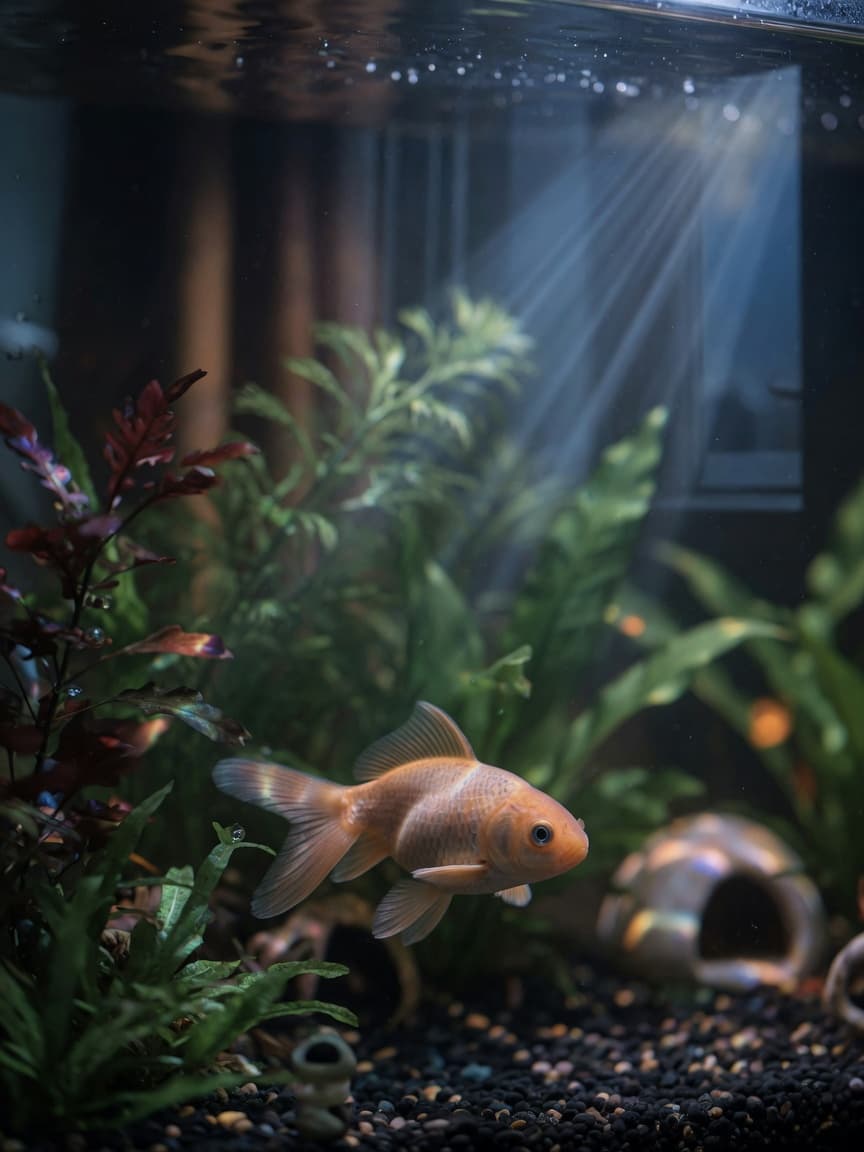
If you've ever watched your goldfish late at night, you might have noticed they seem oddly still, hovering near the bottom of the tank or nestled amongst the plants. This behaviour often leaves owners wondering: do goldfish actually sleep? The answer is yes – but not quite in the way you might imagine. Goldfish do experience rest periods, though their sleep is fundamentally different from that of humans and many other pets. Understanding how your goldfish sleeps is essential for creating an environment where they can rest properly and maintain optimal health.
How Goldfish Sleep: The Science Behind It
Goldfish are polyphasic sleepers, meaning they take multiple short rest periods throughout the day and night rather than one long sleep session. Unlike mammals, goldfish lack eyelids, so they cannot close their eyes – yet they still require rest to function properly. Research has shown that fish experience reduced brain activity during sleep, similar to other animals, and this rest is crucial for memory consolidation and physical recovery.
During sleep, goldfish enter a state called "dormancy," where their metabolism slows significantly and their responsiveness to stimuli decreases. You'll notice your goldfish becoming less active, moving slowly, and sometimes remaining nearly motionless for extended periods. This is perfectly normal behaviour and indicates your fish is getting the rest they need.
Signs Your Goldfish Is Sleeping
Recognising when your goldfish is sleeping helps you understand their natural rhythms and avoid unnecessary disturbance. Here are the key indicators:
- Reduced or very slow movement
- Loss of colour – goldfish often appear slightly paler when sleeping
- Resting near the tank bottom or amongst vegetation
- Minimal response to external stimuli
- Rapid gill movement slowing down noticeably
- Staying in one spot for extended periods (10–30 minutes or longer)
Creating the Right Environment for Sleep
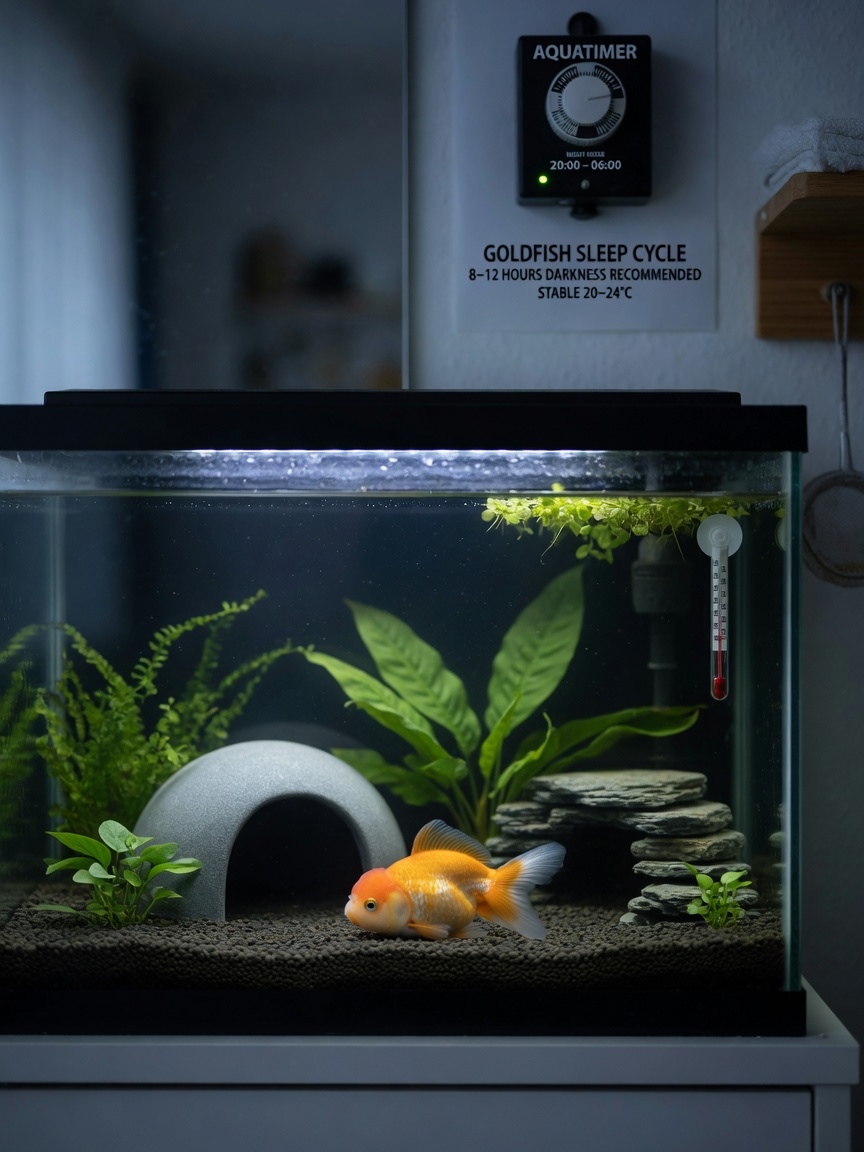
To help your goldfish sleep well, you need to replicate natural conditions as closely as possible. Goldfish are diurnal creatures, meaning they're active during the day and rest at night. Here's what you can do:
- Establish a consistent light cycle: Provide 8–12 hours of light daily and ensure complete darkness at night. Use an aquarium timer to automate this.
- Reduce nighttime stress: Keep your tank away from high-traffic areas and sudden disturbances during sleeping hours.
- Provide hiding spots: Plants, caves, and decorations give goldfish secure places to rest undisturbed.
- Maintain stable water conditions: Temperature fluctuations and poor water quality disrupt sleep patterns.
- Limit sudden movements: Avoid tapping on the glass or making sudden changes to the tank during your goldfish's rest periods.
How Much Sleep Do Goldfish Need?
Goldfish typically rest for approximately 7–8 hours per day, distributed across multiple short naps. However, the exact amount can vary depending on their age, health status, and environmental conditions. Younger goldfish may be more active overall, whilst older fish tend to rest more frequently. If your goldfish seems exceptionally lethargic or refuses to wake during feeding times, this could indicate illness rather than normal sleep behaviour.
Common Sleep Disruptions to Avoid
Several factors can interfere with your goldfish's sleep quality. Excessive noise, flickering lights, and sudden temperature changes all cause stress and prevent proper rest. Additionally, an overcrowded tank or aggressive tank mates can keep your goldfish in a constant state of alertness, preventing the relaxation needed for quality sleep.
Key Takeaways
Goldfish do sleep, though their rest differs significantly from ours. By recognising the signs of sleep, maintaining consistent lighting, providing secure hiding spaces, and minimising stress, you can create an environment where your goldfish enjoys restorative rest. A well-rested goldfish is a healthier, happier goldfish – and that means a more vibrant addition to your home aquarium for years to come.