
Understanding the Thyroid Gland in Dogs
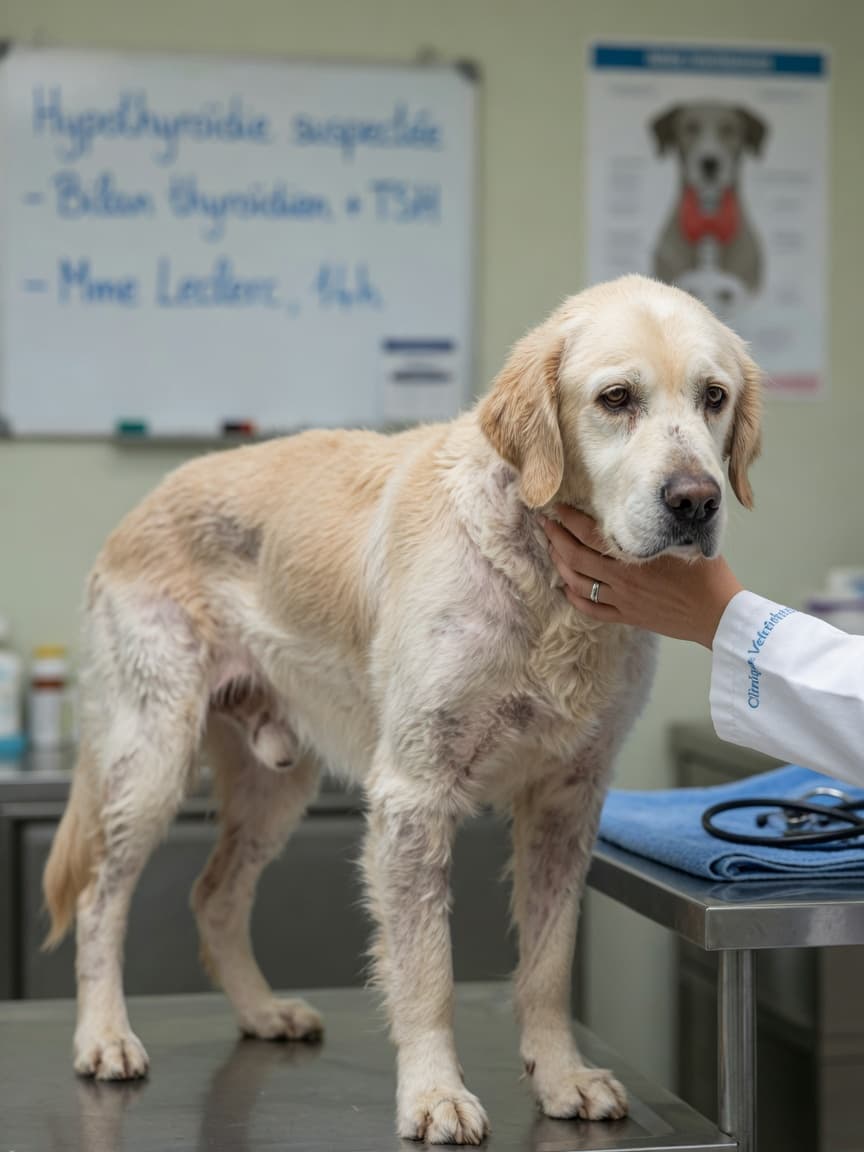
The thyroid gland sits in the neck region and produces hormones that regulate metabolism throughout the body. When this gland underperforms and fails to produce enough thyroid hormone, virtually every body system is affected. The result is hypothyroidism, the most commonly diagnosed hormonal disorder in dogs.
Unlike cats, who more frequently suffer from an overactive thyroid, dogs almost exclusively develop the underactive form. The condition typically affects middle-aged to older dogs and tends to present in medium to large breeds, though no dog is entirely exempt. Golden Retrievers, Dobermanns, Irish Setters, Cocker Spaniels, and Boxers all appear in the literature as predisposed breeds.
In the vast majority of cases, hypothyroidism arises because the immune system destroys thyroid tissue over time, a process called lymphocytic thyroiditis. In other cases, the gland gradually wastes away without immune involvement, a condition known as idiopathic atrophy. Both processes lead to the same outcome: insufficient production of thyroxine (T4) and triiodothyronine (T3).
Subtle and Not-So-Subtle Signs to Watch For
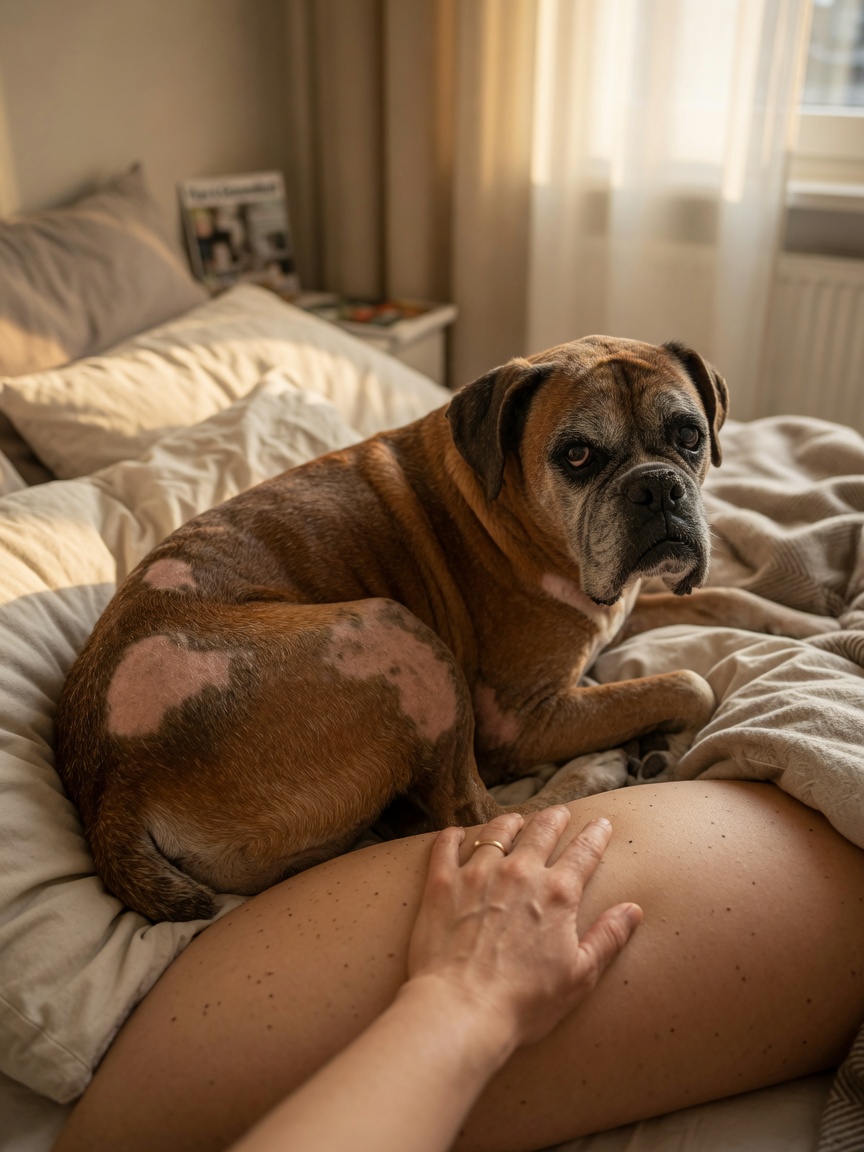
Hypothyroidism is sometimes called the great imitator because its signs are so non-specific that they overlap with many other conditions. This is part of why it can take considerable time to reach a correct diagnosis.
- Weight gain despite no increase in food intake
- Lethargy and a general reluctance to exercise
- Feeling cold easily, seeking out warm spots
- Symmetrical hair loss, often on the trunk, tail, and thighs
- Coat that becomes dull, coarse, or fails to regrow after clipping
- Thickened, puffy skin, sometimes described as a tragic facial expression
- Recurrent skin infections and slow wound healing
- Slowed heart rate (bradycardia)
- Neurological signs in more severe or long-standing cases, including weakness, balance problems, or facial nerve paralysis
The weight gain associated with hypothyroidism is particularly telling when it occurs without dietary changes. Many owners notice their dog becoming progressively more lethargic and assume it is simply ageing. The skin and coat changes are often what finally prompt a vet visit.
Diagnosing Hypothyroidism
A definitive diagnosis requires blood testing, and the results need to be interpreted carefully alongside the dog's clinical signs.
Total T4 Measurement
The first step is usually measuring total thyroxine (TT4) in the blood. A low TT4 in a dog showing compatible signs is strongly suggestive of hypothyroidism. However, TT4 can be suppressed by illness, certain medications, and other factors, which complicates interpretation in dogs with concurrent health conditions.
Free T4 by Equilibrium Dialysis
Free T4 (fT4) measures the biologically active fraction of thyroxine and is less affected by non-thyroidal illness. Testing via equilibrium dialysis is considered the most accurate method and is particularly useful in ambiguous cases.
Thyroid Stimulating Hormone (TSH)
TSH is produced by the pituitary gland and rises when thyroid hormone levels fall, as the body attempts to stimulate the thyroid to produce more. An elevated TSH alongside a low T4 strongly supports a diagnosis of hypothyroidism. Used together, T4 and TSH offer a more complete picture than either test alone.
It is worth noting that a routine blood panel may hint at hypothyroidism before specific thyroid testing is requested. Elevated cholesterol, mild anaemia, and elevated liver enzymes can all appear as secondary changes.
Treatment With Levothyroxine
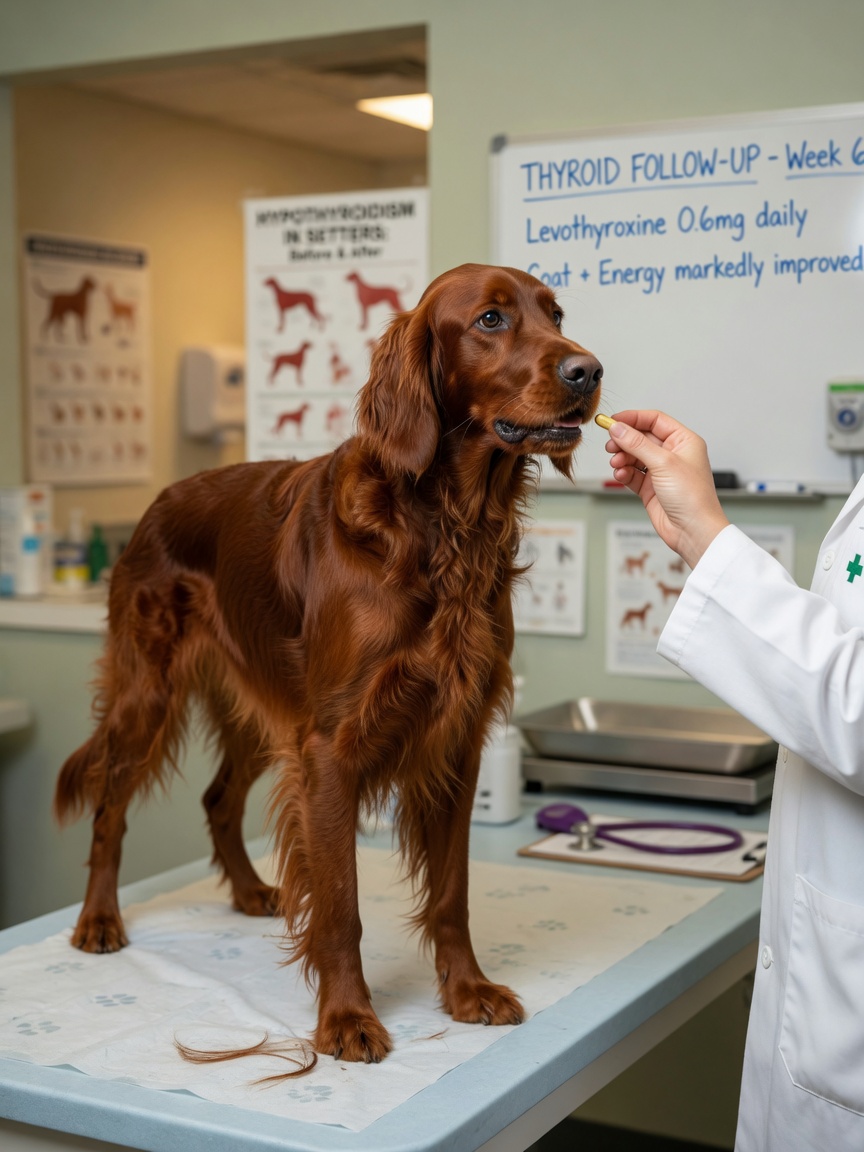
Hypothyroidism is treated with oral synthetic thyroxine, known as levothyroxine. This medication replaces the hormone the thyroid is failing to produce. In the UK, it is available under several brand names and is generally given once or twice daily, depending on the individual dog's response.
Most dogs show a noticeable improvement within four to eight weeks of starting treatment. Energy levels tend to pick up first, followed by gradual improvements in coat quality and weight. Full resolution of skin and coat changes can take three to six months.
Monitoring and Dose Adjustments
Once treatment begins, blood levels of T4 should be checked approximately four to six weeks later to confirm that the dose is producing adequate thyroid levels. The sample is ideally collected four to six hours after the morning dose to capture peak levels.
After initial stabilisation, most dogs require a recheck every six to twelve months. The dose may need adjusting over time, particularly if the dog's weight changes significantly.
Hypothyroidism is a lifelong condition, and medication must be continued indefinitely. Fortunately, levothyroxine is generally very well tolerated and reasonably affordable. Dogs that are appropriately treated can expect a completely normal quality of life and a normal lifespan. The prognosis is excellent once the correct diagnosis has been made and the dose optimised.