
Snake Bites in Cats: Adder Venom, Symptoms, and Treatment in the UK
The adder — Vipera berus — is the only venomous snake native to the United Kingdom. Found across heathland, moorland, chalk downland, and woodland edges, adders are most active between March and October. Cats that roam through suitable habitat are occasionally bitten, and while adder bites are rarely fatal in cats, they require prompt veterinary attention and should never be dismissed as minor injuries.
When and Where Adder Bites Happen
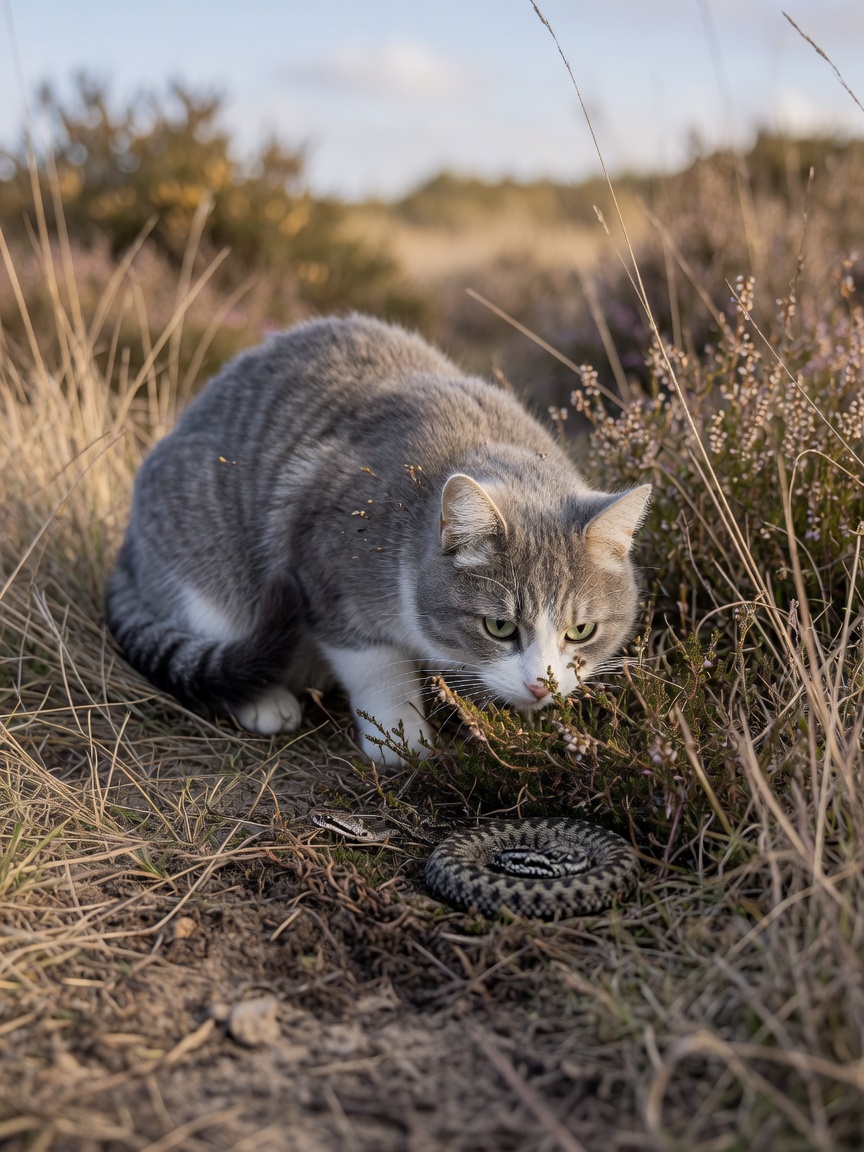
Adders are not aggressive snakes. They bite in self-defence when startled, cornered, or handled — and a curious cat investigating a basking adder fits that description precisely. Most bites in cats occur on the face or forelimbs, reflecting the predatory approach cats take when encountering unfamiliar animals.
Bites are most likely in spring, when adders emerge from hibernation and are sluggish in the early cool of the year. They are also common in early summer. Adders tend to be found in areas with dense, low vegetation where they can bask undisturbed — exactly the kind of environment that appeals to exploring cats.
What Adder Venom Does
Adder venom is a complex mixture of enzymes and proteins. It is primarily cytotoxic and haemotoxic, meaning it damages cells directly and interferes with blood clotting. Following a bite, venom spreads through local tissue and lymphatic drainage, causing progressive cell death, inflammation, and potentially systemic effects as it enters the bloodstream.
The severity of envenomation depends on the amount of venom injected, the size and health of the cat, and the location of the bite. Bites to the face and neck carry a greater risk than bites to the limbs, partly because absorption is faster and partly because swelling in these areas can compromise the airway.
Symptoms to Watch For
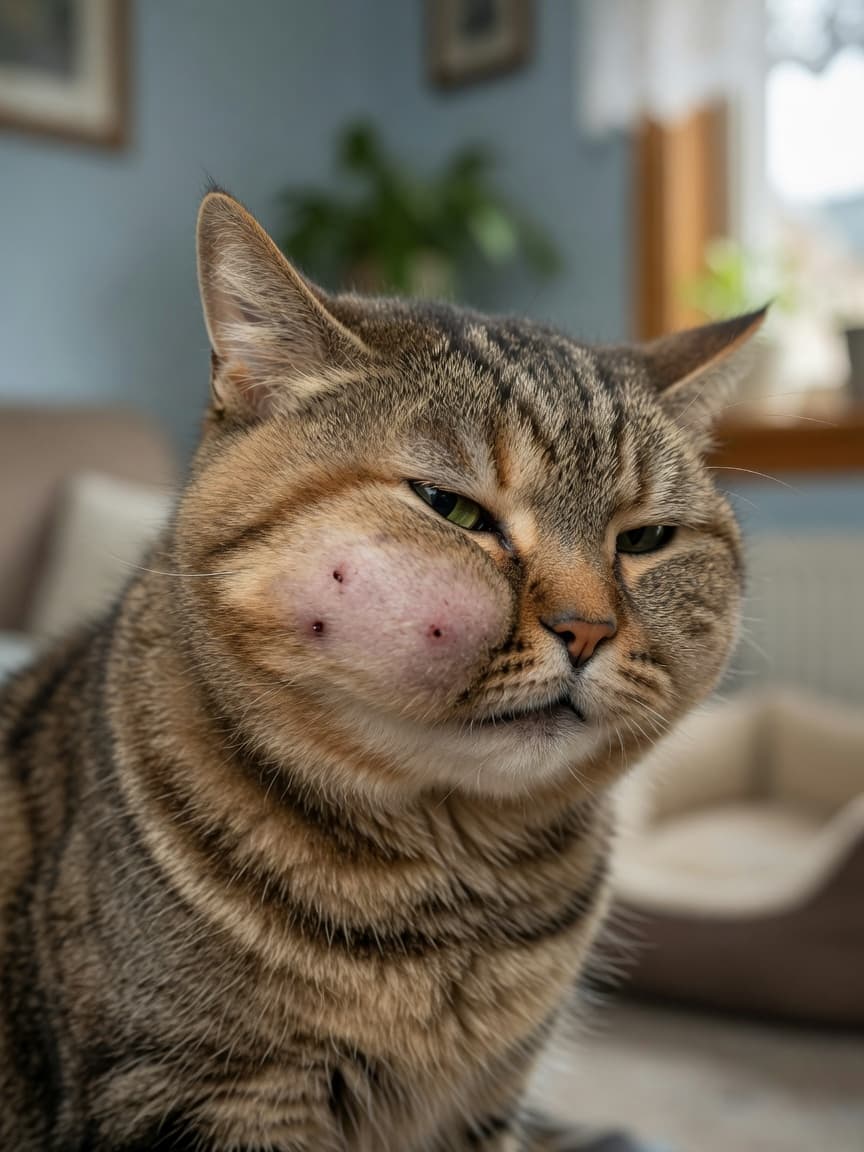
Symptoms may appear within minutes or may be delayed by an hour or more. The first sign is usually localised swelling at the bite site, which can become dramatic — particularly on the face, where the tissue is lax and swelling spreads easily. Two small puncture marks may be visible, though parting the fur to find them can be difficult.
As envenomation progresses, you may observe:
- Rapidly expanding swelling, potentially affecting the entire face or limb
- Pain and distress at the bite site
- Lethargy and weakness
- Pale or white gums — a sign of cardiovascular compromise
- Vomiting
- Difficulty breathing if swelling affects the neck or if systemic effects develop
- Collapse or trembling
- In severe cases, clotting abnormalities leading to bruising or bleeding
Not all bitten cats will show severe systemic signs. Some experience localised swelling with relatively mild general effects. However, because the course of envenomation is unpredictable, all suspected adder bites must be assessed by a vet.
First Aid at Home
There is limited first aid you can safely administer at home, but the following steps are appropriate:
- Keep your cat as calm and still as possible — movement increases venom spread
- Do not attempt to suck out or cut out the venom
- Do not apply a tourniquet
- Do not apply ice directly to the wound
- Call your vet immediately and transport your cat without delay
Time is genuinely important here. The faster treatment begins, the better the outcome. Phone ahead so the clinic can prepare pain relief and supportive treatment before you arrive.
Veterinary Treatment
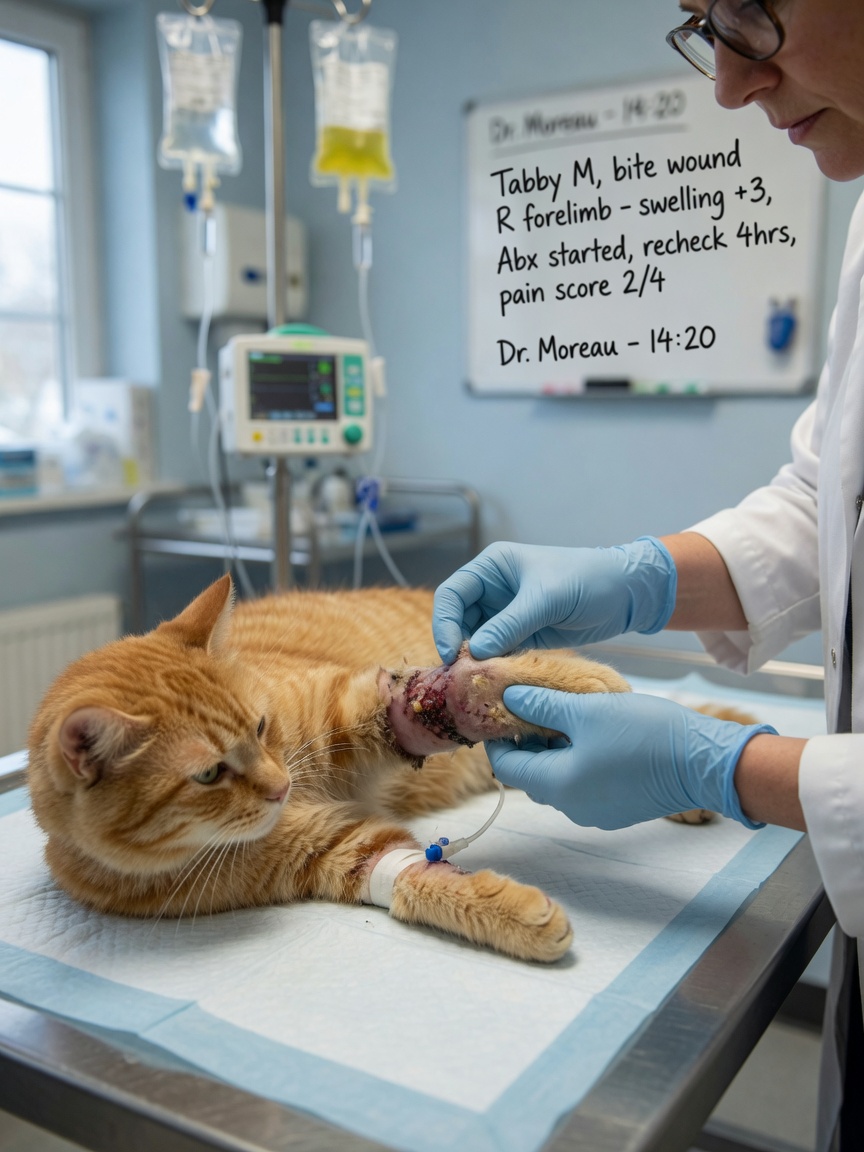
Treatment of adder bite in cats is primarily supportive, as there is currently no licensed antivenom for cats in the UK, and the equine-derived antivenom used in human medicine carries a risk of anaphylaxis in cats that makes its use controversial. Some vets may consider antivenom in the most severe cases after weighing the risks, but the majority of cats are treated without it.
Supportive treatment typically includes intravenous fluid therapy to maintain blood pressure and support cardiovascular function, antihistamines to reduce the inflammatory response, pain relief, and anti-nausea medication. In cases where airway compromise is a risk, oxygen therapy may be provided. Blood tests will assess clotting function and organ status, and the cat may remain hospitalised for 24 to 48 hours for monitoring.
The prognosis for cats that receive prompt treatment is generally good. Mortality rates in treated cats are low, though recovery can take several days to weeks, particularly where tissue necrosis has occurred around the bite site.
Reducing the Risk
If you live in or regularly visit adder habitat with your cat, awareness is your best tool. Adders are protected under the Wildlife and Countryside Act 1981 and must not be killed or harmed. Keeping cats indoors during the peak basking hours on warm spring and summer mornings reduces encounter risk. Long grass and heath-edge areas are worth particular caution.
Knowing your nearest emergency vet and having their number saved before a crisis is straightforward advice that can make a real difference to outcome. In areas where adders are common, it is worth discussing the risk with your vet proactively, so you know exactly what to do if a bite occurs.