
Cat Grooming: Complete Guide for Short & Long-Haired Cats
Why Cats Need Grooming Help
Cats are famously fastidious self-groomers, but their self-care has limits. When cats groom, they ingest loose hair, which accumulates in the stomach and forms hairballs. While occasional hairball regurgitation is normal, frequent hairballs can signal that too much hair is being swallowed — a problem that regular brushing directly reduces by removing loose hair before the cat ingests it.
Long-haired breeds face additional challenges. Without regular brushing, dead hair tangles with the live coat to form mats — dense clumps of compressed fur that pull on the skin, harbor moisture, and can become painful or even restrict movement. Mats close to the skin can hide skin infections, wounds, or parasite infestations. Senior cats and overweight cats often struggle to reach all areas of their body, making owner assistance essential regardless of coat length.
Short-Haired Cats: Frequency and Tools
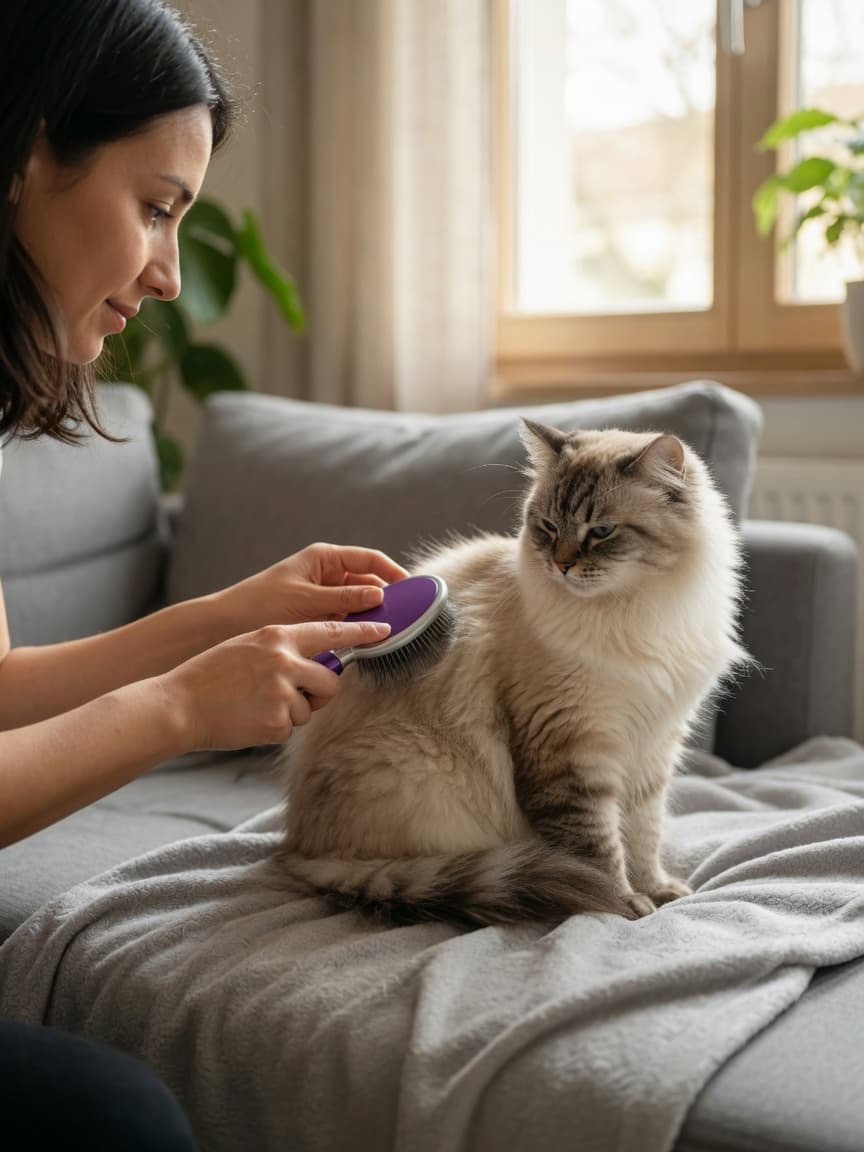
Short-haired cats (domestic shorthairs, British Shorthairs, Bengals, Siamese) typically require brushing just once or twice per week. Their shorter coats are naturally less prone to matting, and their self-grooming is generally sufficient for day-to-day maintenance. A weekly brushing session still provides meaningful benefits: it removes loose hair and reduces shedding around the home, distributes natural skin oils through the coat, allows you to check for fleas, skin abnormalities, or lumps, and gives your cat positive tactile contact with you.
For short-haired cats, a rubber grooming mitt or a fine-toothed bristle brush is ideal. These tools remove dead hair without scratching the skin. A flea comb passed through the coat weekly is also valuable for early parasite detection.
Long-Haired Cats: Frequency and Tools
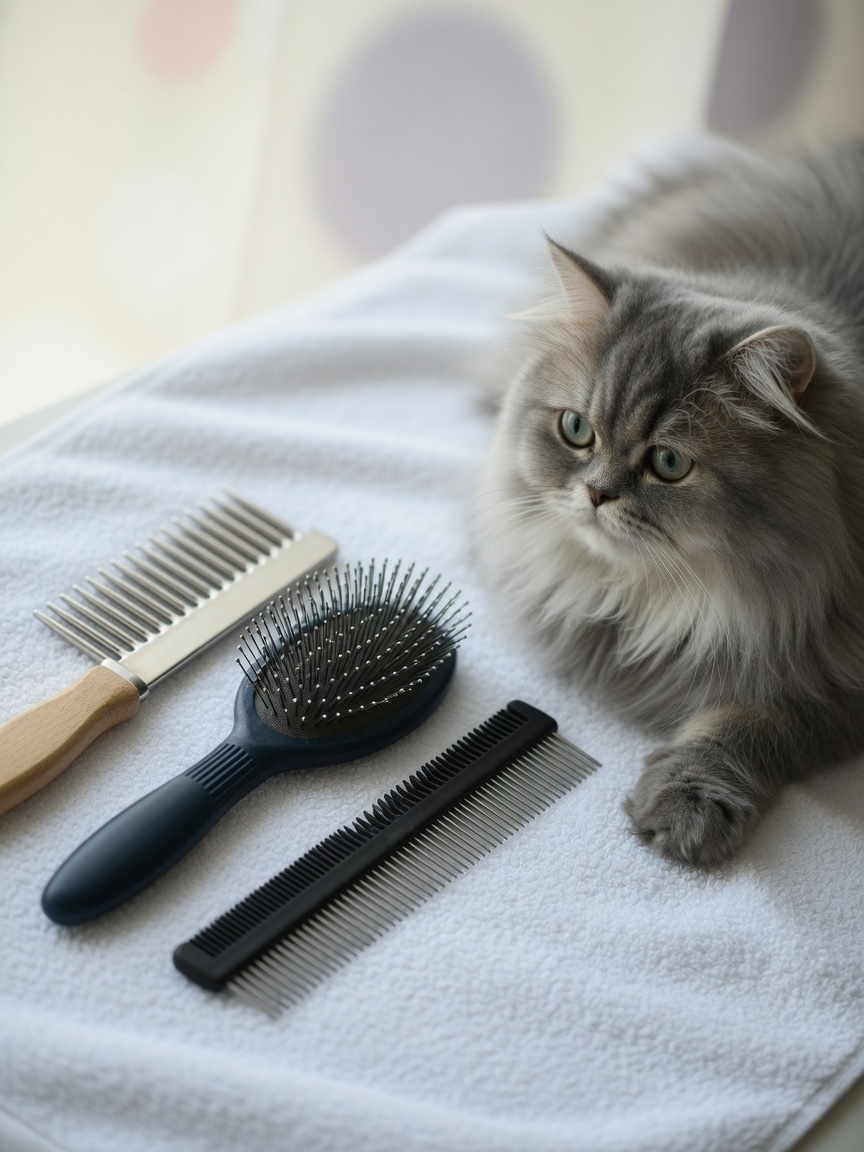
Long-haired breeds (Persians, Maine Coons, Norwegian Forest Cats, Ragdolls) require daily brushing — or at minimum every other day — to prevent matting. The coat should be brushed in sections, working from the skin outward rather than just running a brush over the surface.
Essential tools for long-haired cats include a wide-toothed comb for initial detangling, a slicker brush for the outer coat, and a dematting comb for minor tangles. Pay special attention to the armpits, behind the ears, around the collar area, and at the base of the tail — these friction zones mat fastest. Many long-haired cat owners schedule a professional grooming appointment (often called a "lion cut" for severe cases) every few months as part of their cat's routine care.
Brushing Technique
Always brush in the direction of hair growth unless working through a tangle. Start with the most tolerant areas — typically the back and sides — and save sensitive areas like the belly, armpits, and face for when your cat is relaxed. Keep sessions short (5–10 minutes), especially when starting, and offer a high-value treat at the end. Most cats learn to enjoy or at least tolerate grooming when introduced gradually with positive reinforcement.
Dealing With Mats: What Not to Do
If you encounter a mat, work from the edges inward using a dematting comb or your fingers, applying gentle tension. A small amount of detangling spray can help loosen fibers. The cardinal rule: never try to cut a mat out with scissors. Because mats pull skin taut, the actual skin surface can be much closer to the mat than it appears, and accidental skin lacerations are distressingly common. If a mat is too tight or too close to the skin to safely comb out, have a professional groomer or veterinarian shave it away with clippers.
Bathing Cats: Rare but Sometimes Necessary
Most cats do not require baths, but certain situations make bathing appropriate: exposure to a toxic or irritating substance, heavy flea infestation requiring medicated shampoo treatment, cats with skin conditions under veterinary care, or cats who are unable to self-groom due to age or obesity. When bathing is necessary, use a cat-specific shampoo in a shallow warm-water bath or sink. Wet the coat gradually, apply shampoo working from the neck back (avoid the face and ears), lather, rinse thoroughly, and dry immediately with a warm towel followed by a low-heat dryer if the cat tolerates it. A wet cat can become hypothermic surprisingly quickly, especially in cooler environments.
Nail Trimming for Cats
Cat nails should be trimmed every 2–3 weeks. Unlike dogs, cats have retractile claws that are only extended voluntarily — gently press on the toe pad to extend the claw for trimming. Use dedicated cat nail clippers (human nail clippers can split the nail). Trim only the sharp, curved tip — the pink quick runs partway into the claw and must be avoided. Overgrown cat nails can curl and puncture the paw pad, which is painful and prone to infection.
Ear Cleaning
Healthy cat ears are clean and light pink inside with no odor and minimal wax. Check ears weekly during grooming sessions. If you notice dark brown discharge, strong odor, redness, or your cat scratching at their ears, consult your vet — these signs suggest ear mites or a yeast infection. For routine maintenance, a cotton ball dampened with a vet-approved ear cleaner can remove visible surface wax from the outer ear canal. Never insert cotton swabs deep into the ear canal.
Signs of Grooming Problems
Watch for these red flags during grooming sessions: bald patches (which may indicate over-grooming from stress or skin disease), mats that reappear quickly after removal, wounds or scabs hidden beneath the coat, unusual lumps or swellings, strong skin odor, and extreme resistance to grooming in a previously tolerant cat. Any of these warrant a veterinary check-up.
Key Takeaways
- Short-haired cats need brushing 1–2 times per week; long-haired breeds require daily brushing to prevent painful matting.
- Never cut mats with scissors — the skin is often much closer than it appears. Use a dematting comb or seek professional help.
- Regular grooming reduces hairball formation by removing loose fur before the cat can ingest it.
- Cat nails should be trimmed every 2–3 weeks; press the toe pad gently to extend the retractile claw.
- Grooming sessions are the ideal time to check for skin changes, parasites, lumps, or ear problems.
References
- Cannon M. Hair balls in cats: a normal nuisance or a sign that something is wrong? Journal of Feline Medicine and Surgery. 2013;15(1):21–29. PMID: 23261700
- Hobi S, Linek M, Marignac G, et al. Clinical characteristics and causes of pruritus in cats: a multicentre study on feline hypersensitivity-associated dermatoses. Veterinary Dermatology. 2011;22(5):406–413. PMID: 21382103