
Why Diet Matters So Much in Feline CKD
Chronic kidney disease (CKD) is a condition in which the kidneys progressively lose their ability to filter waste, regulate electrolytes, and concentrate urine. Diet cannot reverse this damage, but it can significantly slow disease progression, reduce the build-up of harmful waste products, and improve the cat's overall quality of life. For this reason, dietary management is considered one of the most impactful interventions available for cats with CKD, alongside hydration and medication.
Getting the diet right is not always straightforward, however. A CKD cat who refuses to eat a beneficial food is in greater danger than one eating a less optimal food with good appetite. Sustaining caloric intake must always remain the primary concern, particularly in cats who are already thin or losing weight.
Phosphate: The Most Critical Dietary Concern
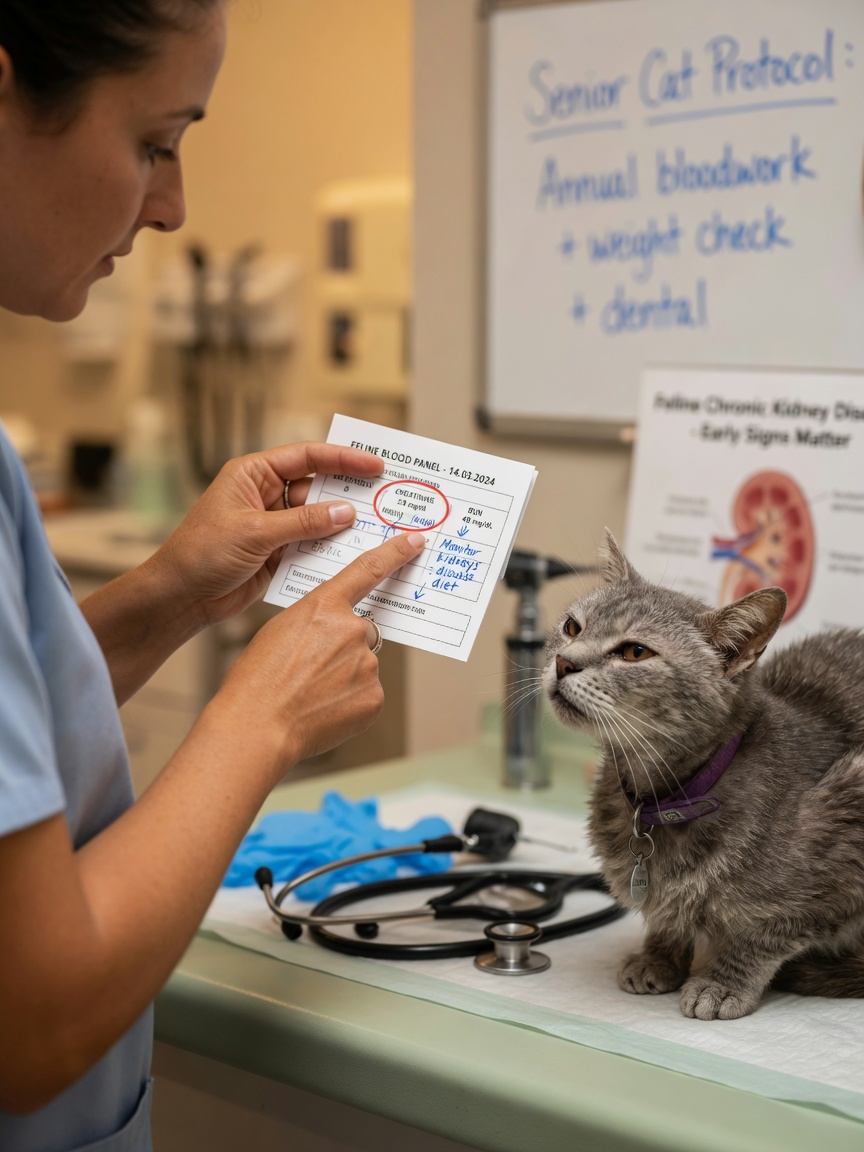
Of all the dietary considerations in feline CKD, phosphate restriction is the most clinically important. As kidney function declines, the ability to excrete phosphate through the urine diminishes. Phosphate accumulates in the blood — a condition called hyperphosphataemia — and this directly drives further kidney damage by promoting mineralisation of kidney tissue and stimulating the parathyroid gland to produce excess parathyroid hormone (secondary renal hyperparathyroidism).
Multiple studies in both cats and dogs have shown that reducing dietary phosphate slows the rate of CKD progression and extends survival time. Prescription renal diets are formulated with significantly lower phosphate content than standard commercial cat foods, and this is one of their primary advantages.
Target blood phosphate levels in CKD cats depend on the IRIS stage:
- Stage 1 and 2: below 1.5 mmol/L
- Stage 3: below 1.6 mmol/L
- Stage 4: below 1.9 mmol/L
Phosphate Binders
When dietary restriction alone is insufficient to bring phosphate levels within the target range — which is common in moderate to advanced CKD — phosphate binders are added to the cat's food. These work by binding dietary phosphate in the gut, preventing its absorption and allowing it to be excreted in the faeces rather than entering the bloodstream.
Commonly used phosphate binders include:
- Ipakitine (calcium carbonate and chitosan): a palatable powder that is sprinkled over food; widely used and generally well accepted by cats
- Aluminium hydroxide: highly effective but must be used with caution and only under veterinary supervision, as aluminium toxicity is a risk with long-term use
- Lanthanum carbonate and sevelamer: newer options that may be used in specific situations
Phosphate binders must be given with food to be effective, as they need to be present in the gut at the same time as dietary phosphate.
Protein: Debunking the "No Protein" Myth
One of the most persistent misconceptions about CKD diets in cats is that protein should be drastically reduced or eliminated. This approach, once common, is now known to be harmful. Cats are obligate carnivores with a high and non-negotiable requirement for dietary protein. Severely restricting protein in a cat with CKD leads to muscle wasting, weakness, and malnutrition, all of which worsen outcomes.
The modern understanding is that protein should be moderately reduced and, crucially, of the highest possible quality. High-quality protein is more completely digested and absorbed, producing less nitrogen waste — the breakdown products of protein metabolism that accumulate in CKD and contribute to uraemic signs. Low-quality protein generates more waste for less nutritional benefit.
Prescription renal diets achieve this balance: they provide somewhat reduced but highly digestible protein from quality sources. The goal is to minimise uraemic waste production while still meeting the cat's fundamental nutritional needs and preserving lean body mass.
The Importance of Wet Food
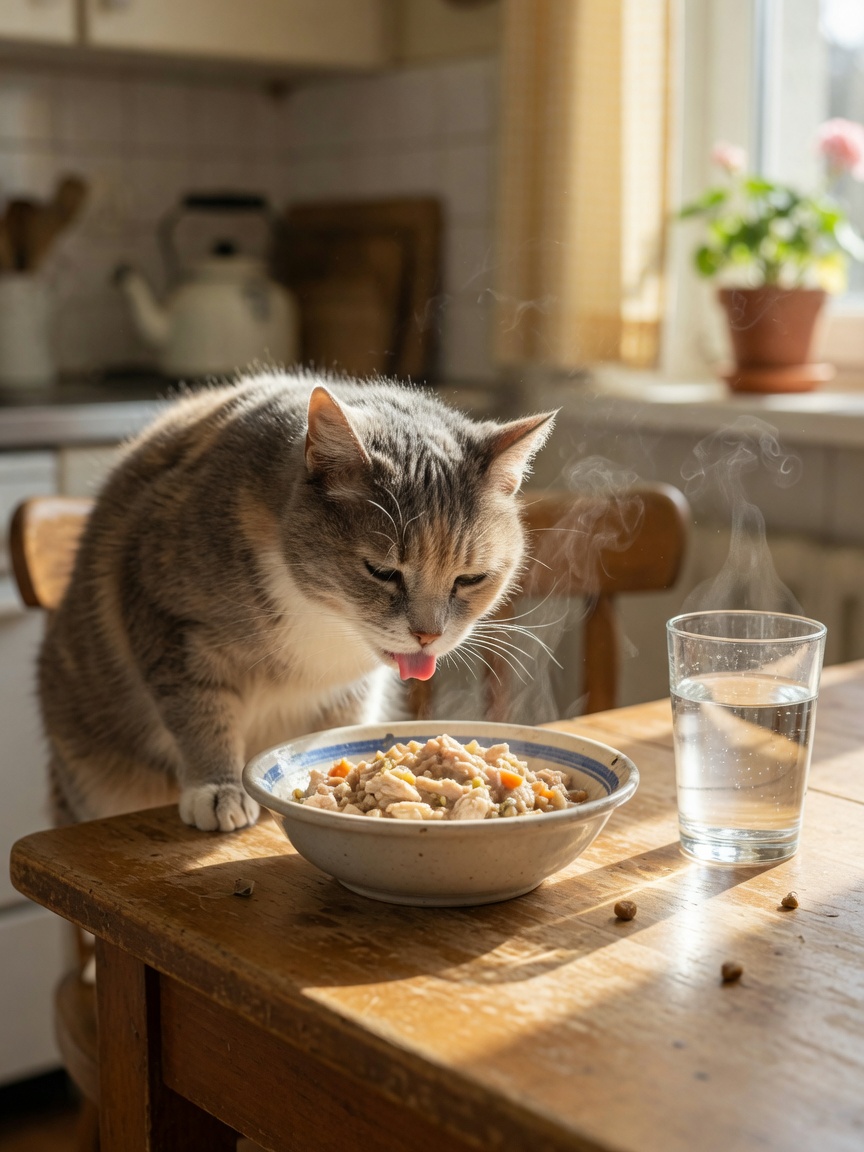
Wet food is strongly preferred over dry food in all cats with CKD. The high moisture content — typically 70 to 80 per cent — significantly increases daily fluid intake and helps maintain hydration in cats whose kidneys can no longer concentrate urine effectively. Chronically dehydrated CKD cats deteriorate faster.
Many cats with CKD also find wet food more palatable, which is important when appetite is already reduced. Warming wet food to just below body temperature (around 37°C) enhances the aroma and can significantly improve acceptance, as cats rely heavily on smell when assessing food.
Appetite Stimulants: Mirtazapine and Capromorelin
Reduced appetite and weight loss are among the most common and serious problems in cats with CKD. When a cat is not eating enough, muscle wasting accelerates, immunity declines, and quality of life deteriorates rapidly. Appetite stimulants play a vital role in keeping CKD cats eating.
Mirtazapine is the most widely used appetite stimulant in feline CKD. It is an antidepressant in humans that has potent appetite-stimulating and anti-nausea effects in cats. It can be given as an oral tablet every two to three days, or as a transdermal gel applied to the inner surface of the ear flap — the gel formulation (Mirataz) is popular because it avoids the stress of pilling. Dosing is adjusted carefully in CKD cats as the drug is metabolised by the kidneys.
Capromorelin (marketed as Entyce in some countries) is a newer appetite stimulant that works by mimicking the hunger hormone ghrelin. It is given as a daily oral liquid and is well tolerated by most cats. It provides an alternative or complement to mirtazapine for cats with poor appetite.
Hand-Feeding and Practical Tips
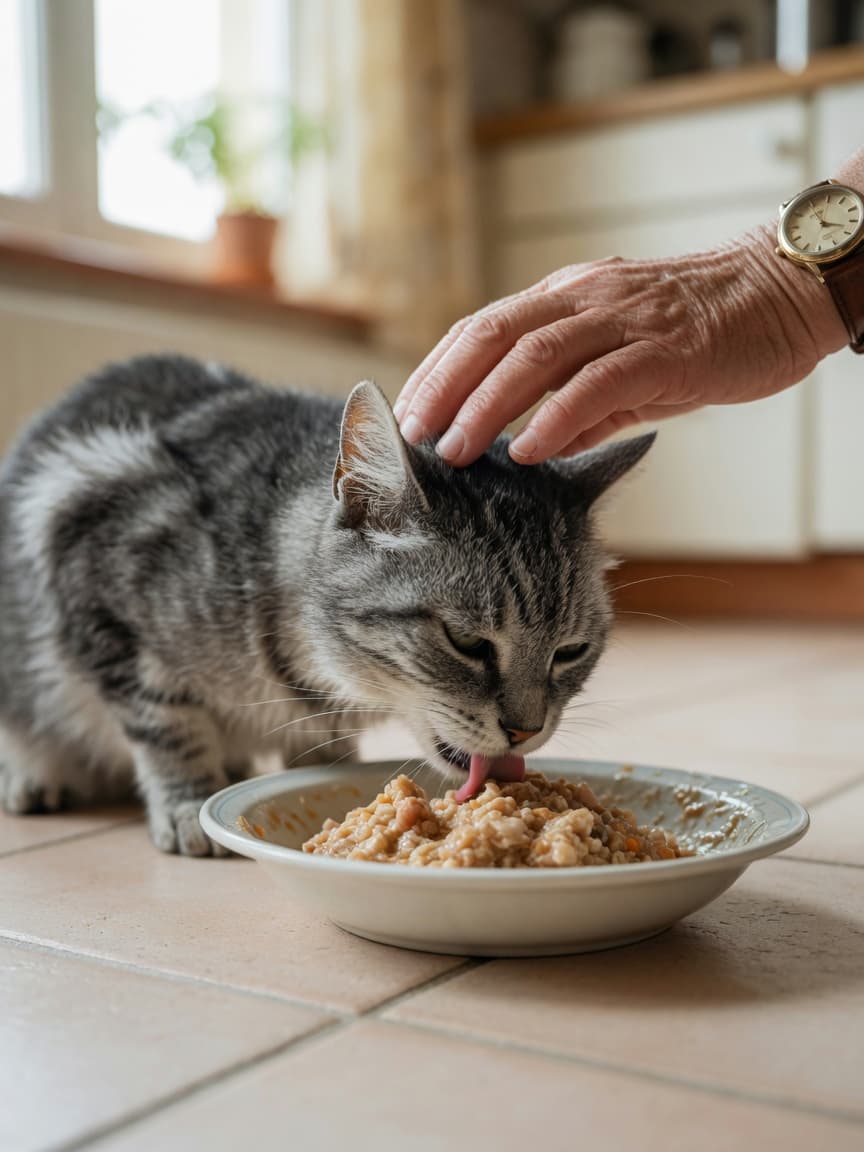
Some cats with CKD lose interest in eating from their bowl but will accept food offered directly from a hand or fingertip. Hand-feeding can bridge the gap during periods of reduced appetite and provides valuable bonding time that keeps the cat engaged with food. Offering small amounts frequently — six to eight times per day rather than two large meals — can also be more effective than expecting a nauseous cat to eat a full meal.
Additional practical tips include:
- Rotate between several flavours and textures to prevent food aversions — cats can develop negative associations with foods they ate when feeling unwell
- Use shallow bowls or flat plates to avoid whisker fatigue, which discourages some cats from eating from deep bowls
- Keep food fresh and replace uneaten portions promptly, as CKD cats are often more sensitive to food that has been sitting out
- Try adding a small amount of low-sodium fish or chicken broth to food to increase palatability and fluid intake simultaneously
When Appetite Loss Signals a Crisis
A cat with CKD who stops eating entirely — particularly for more than 24 to 48 hours — should be assessed by a vet without delay. Complete anorexia in a CKD cat can signal a sudden deterioration in kidney function, a uraemic crisis, an intercurrent illness such as a urinary tract infection, or severe nausea that requires more aggressive treatment. It can also mark the point at which quality of life has declined to a level that warrants a serious conversation with your vet about the cat's prognosis and comfort. Prompt assessment allows these causes to be distinguished and the right intervention to be made.