
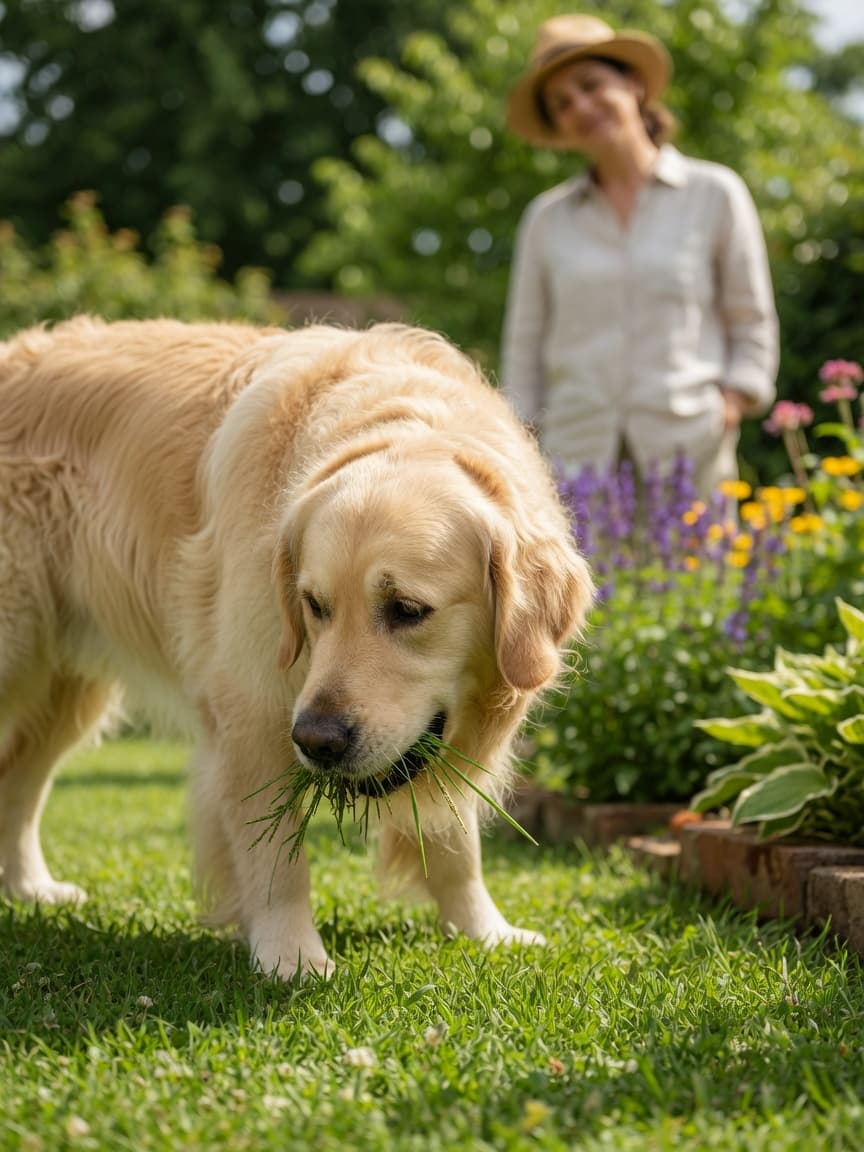
Why Do Dogs Eat Grass? The Main Theories
Grass eating, known scientifically as plant-eating or phytophagy in non-obligate carnivores, is one of the most frequently asked questions in veterinary consultations. Despite how common it is, there is no single definitive explanation. Research has explored several plausible theories, and in practice the behaviour likely has different causes in different dogs — and sometimes in the same dog on different occasions.
Theory One: Self-Medication for Nausea
The most widely cited explanation is that dogs eat grass to induce vomiting when they feel nauseous. The idea is intuitive — grass blades may tickle the throat and stomach lining, triggering the vomit reflex, allowing the dog to expel whatever is causing discomfort. Many owners report that their dog appeared unwell before eating grass and seemed better afterwards.
However, the scientific evidence for this explanation is surprisingly limited. A study published in Applied Animal Behaviour Science found that fewer than one in four dogs vomited after eating grass, and only around eight per cent of dogs appeared unwell before doing so. This suggests that while nausea-driven grass eating does occur, it is far from the primary explanation for the behaviour overall. Dogs may occasionally use grass as a deliberate remedy, but most grass eating appears to happen for other reasons.
Theory Two: Fibre Supplementation Instinct
A more compelling explanation for routine grass eating is that dogs are instinctively seeking additional dietary fibre. Grass is high in insoluble fibre, which supports healthy gut motility and can help move material through the digestive tract. Some veterinary nutritionists suggest that dogs may graze to supplement a diet that is lower in roughage than their digestive system is accustomed to.
Owners who switch their dogs to a higher-fibre diet sometimes report that grass eating reduces or stops entirely. While this is anecdotal, it is consistent with the fibre supplementation theory. If your dog grazes regularly and their diet is primarily kibble, it is worth speaking to your vet about whether the fibre content is appropriate for your dog's size and digestive health.
Theory Three: Ancestral and Evolutionary Behaviour
Dogs descended from wolves, and wolves are opportunistic omnivores rather than strict carnivores. When wolves consume herbivore prey — rabbits, deer, and similar animals — they typically eat the entire carcass, including the stomach contents. Those stomach contents frequently include partially digested plant material, seeds, and grasses. It is possible that plant consumption is simply a normal part of canine dietary behaviour that has been retained through domestication, rather than a response to any specific need.
Under this theory, grass eating is not a problem to solve — it is simply a dog being a dog. The behaviour may be entirely normal and purposeless in the sense that it serves no urgent function in that moment, much as humans sometimes chew on a pen or tap their fingers without a specific goal.
Theory Four: Boredom and Attention-Seeking
Some dogs eat grass simply because they are understimulated. If a dog is spending time in the garden with limited sensory input, investigating and chewing on available vegetation is an easy form of self-entertainment. In some cases, the behaviour becomes attention-seeking: owners who respond to grass eating — even with a negative reaction such as calling the dog away — may inadvertently reinforce it through the attention itself.
Dogs that graze primarily when left alone in the garden, or those who immediately graze when they notice their owner watching, may be engaging in this behaviour for social or boredom-related reasons. Increasing enrichment, interactive toys, and off-lead exercise often reduces this type of grass eating.
When Should You Be Concerned?

In most cases, occasional grass eating is harmless. However, there are specific circumstances in which the behaviour warrants closer attention or a veterinary consultation.
Grass Treated With Pesticides or Herbicides
This is perhaps the most immediately important safety concern. Many lawns, parks, and gardens are treated with weedkillers, pesticides, fertilisers, and other chemicals that can be toxic to dogs. If your dog eats treated grass, they may ingest substances that cause gastrointestinal irritation, neurological symptoms, or in serious cases organ damage. Always check whether any green space your dog has access to has been recently treated. When in doubt, prevent access until you have confirmed it is safe. Many councils now post notices when public green spaces have been treated with chemicals.
Frequent Grass Eating Combined With Repeated Vomiting
If your dog is eating grass regularly and vomiting repeatedly — particularly if the vomiting contains bile, blood, or undigested food — this is a combination that warrants a veterinary assessment. It may indicate an underlying gastrointestinal problem such as inflammatory bowel disease, a gastric ulcer, pancreatitis, or a dietary intolerance. Occasional vomiting after grass eating is common and usually benign, but a pattern of frequent nausea and repeated grass consumption suggests something else may be driving the behaviour.
Pica: Eating Non-Food Items Compulsively
It is worth distinguishing between grass eating and pica, which is the compulsive consumption of non-food items. Pica can include grass, but also extends to soil, stones, fabric, plastic, paper, and other materials. If your dog is eating a range of non-food items and doing so compulsively — appearing unable to stop, or distressed when prevented — this requires veterinary attention. Pica can indicate nutritional deficiencies, gastrointestinal disease, neurological issues, or anxiety-related compulsive behaviour. A thorough examination, including blood work to rule out nutritional deficiencies, is an important first step.
What You Can Do
If your dog's grass eating is occasional and they appear otherwise well, the most practical approach is simply to ensure the grass they access is chemical-free and to monitor for any changes in frequency or associated symptoms. You do not need to prevent the behaviour entirely.
If you suspect boredom or attention-seeking, increase daily exercise, add puzzle feeders and enrichment toys to their routine, and try to avoid reacting visibly when your dog grazes. If you suspect a dietary factor, discuss fibre intake with your vet before making any significant changes to feeding.
Keep a brief log of when grass eating occurs, how much is consumed, and whether vomiting follows. This information is genuinely useful to a veterinarian trying to determine whether the behaviour is incidental or a symptom of something worth investigating.