
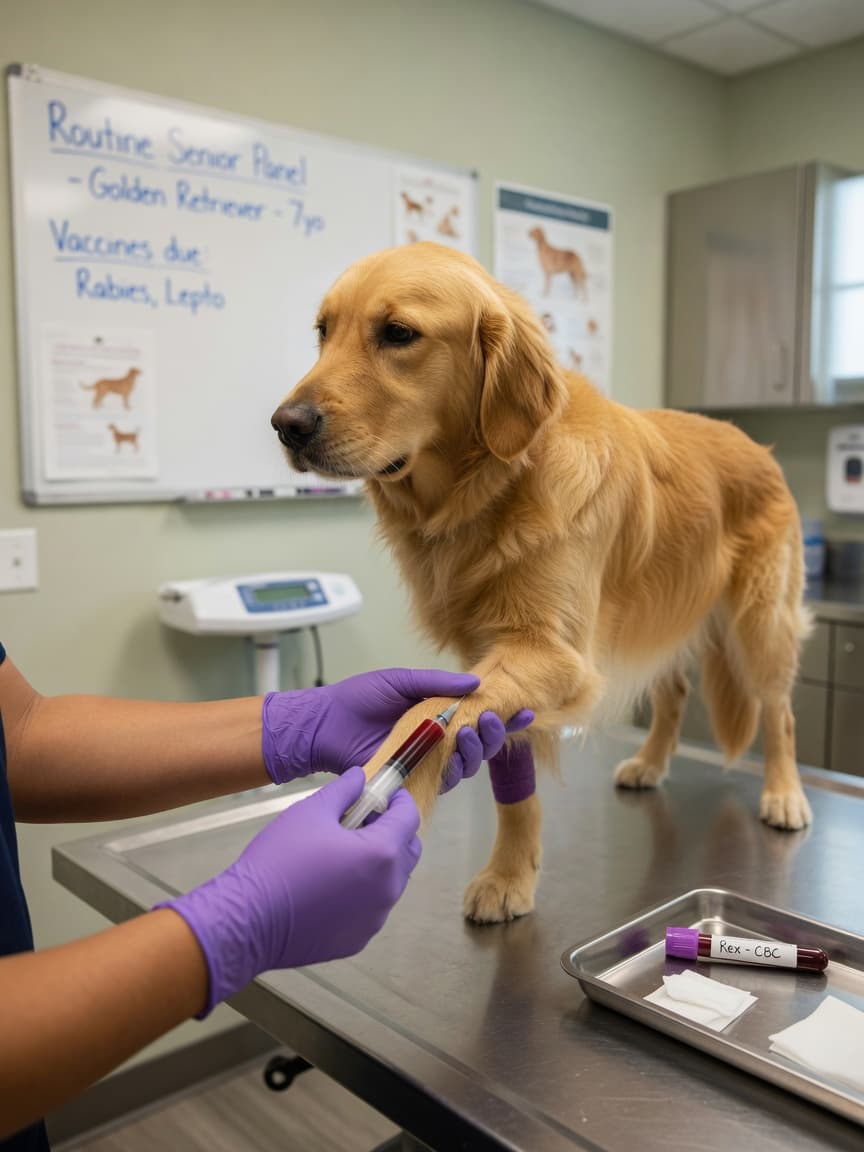
Why Your Vet Recommends Blood Tests
If your vet has recommended blood tests for your dog, your first reaction might be worry. The second might be sticker shock. But blood panels are among the most powerful diagnostic tools available in veterinary medicine, and understanding what they measure can transform you from a passive bystander into an active participant in your dog's healthcare. This guide breaks down the most common blood test components in plain language, so you can have a more informed conversation with your vet and better understand what the results mean for your dog.
The Two Main Types of Blood Panel
Most veterinary blood panels fall into two categories: the complete blood count, commonly called a CBC, and the biochemistry profile, sometimes called a chem panel. These are often run together, particularly for pre-anaesthetic screening, senior wellness checks, or investigation of illness.
Complete Blood Count
The CBC examines the cellular components of blood. It gives your vet information about red blood cells, white blood cells, and platelets. Each of these tells a different story about what's happening inside your dog's body.
Red blood cells carry oxygen around the body. If these are low, your dog may be anaemic, which can result from blood loss, bone marrow problems, or destruction of red cells by the immune system or parasites. High red blood cell counts are less common but can indicate dehydration or, rarely, a condition called polycythaemia.
White blood cells are the immune system's foot soldiers. Elevated white cell counts often indicate infection, inflammation, or stress. However, some types of white cells rising while others fall can point towards specific conditions. A very low white cell count can make your dog vulnerable to infection and may indicate a bone marrow problem or a viral illness such as parvovirus.
Platelets are responsible for blood clotting. Low platelet counts, known as thrombocytopenia, can cause unexplained bruising or prolonged bleeding and may be linked to tick-borne diseases, immune-mediated conditions, or certain toxins.
The Biochemistry Profile Explained
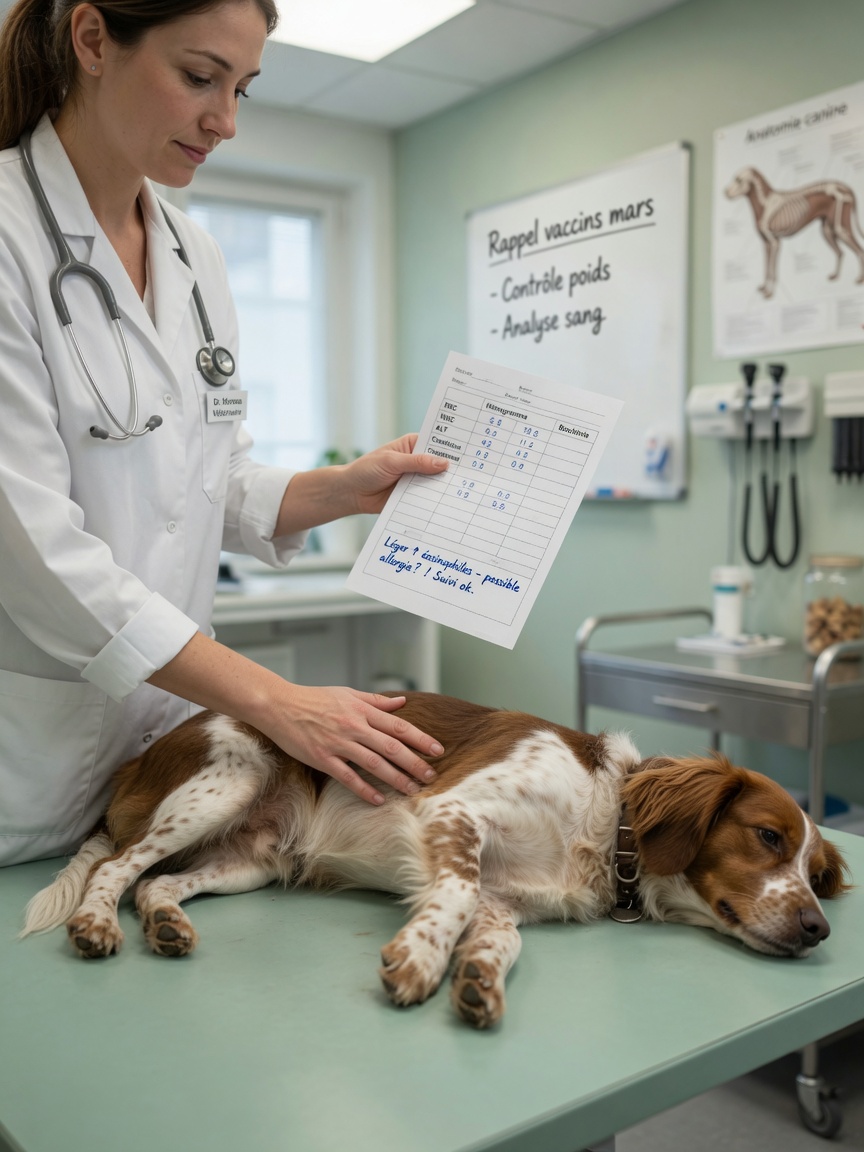
The biochemistry panel assesses the function of organs and measures specific substances in the blood. Here are the markers you are most likely to encounter on your dog's results.
Liver Markers
ALT (alanine aminotransferase) is the most liver-specific enzyme in dogs. Elevated ALT usually indicates liver cell damage or inflammation, though it does not pinpoint the cause. ALP (alkaline phosphatase) can rise due to liver disease but also in response to steroid use, Cushing's disease, and bone activity in growing dogs. GGT (gamma-glutamyl transferase) is another liver enzyme that tends to rise with bile duct problems. Your vet will rarely make a diagnosis from a single elevated enzyme — they look at the pattern across multiple markers.
Kidney Markers
BUN (blood urea nitrogen) and creatinine are the traditional kidney markers. Both rise when the kidneys are not adequately filtering the blood. However, BUN can also be elevated by diet, dehydration, or gastrointestinal bleeding, so it is always interpreted alongside creatinine and the clinical picture. SDMA (symmetric dimethylarginine) is a newer and more sensitive kidney marker that can detect declining kidney function earlier than creatinine — some labs now include it as standard in senior panels.
Blood Glucose
Glucose measures blood sugar levels. High glucose in a non-stressed, fasted dog is suggestive of diabetes mellitus and will usually prompt further testing including a urinalysis. Low glucose (hypoglycaemia) can occur in very young puppies, toy breeds, dogs with insulinomas, or dogs who have not eaten for an extended period.
Proteins: Albumin and Globulin
Albumin is produced by the liver and is important for maintaining fluid balance and transporting substances through the blood. Low albumin can indicate liver disease, protein-losing enteropathy, kidney disease, or severe malnutrition. Globulins are proteins produced by the immune system. High globulins can suggest chronic infection or inflammation; low globulins may indicate immune deficiency.
What "Out of Range" Actually Means
Seeing a value flagged in red on a results sheet is alarming, but context is everything. Reference ranges are derived from populations of healthy dogs and represent the middle 95% of normal values. This means that five per cent of completely healthy dogs will have at least one value outside the reference range at any given time, purely by statistical chance. A single mildly elevated result in an otherwise well dog is very different from the same result in a dog with weight loss, vomiting, and increased thirst.
- One abnormal result rarely makes a diagnosis on its own
- Results are always interpreted alongside your dog's history and physical examination findings
- Some values fluctuate with factors like stress, recent exercise, or timing of the last meal
- Repeat testing is often recommended before treating a mild abnormality
- Trends over time are more meaningful than a single data point
When to Ask for a Copy of the Results
Always ask your veterinary practice for a copy of your dog's blood results, even when everything is normal. Building a file of your dog's baseline values over time is genuinely useful — if your dog becomes ill in three years, a vet will be able to compare new results against their personal normal rather than a population average. This is particularly valuable for dogs with breed-specific quirks, such as Greyhounds, who naturally have higher red blood cell counts and lower platelet counts than other breeds.
Questions Worth Asking Your Vet
When your vet calls with results, it's reasonable to ask which values are abnormal and by how much, what those specific values measure, what conditions are being considered, whether any additional tests are recommended, and what the plan is if results don't change. Good veterinary care is a partnership, and understanding your dog's blood work is one of the most practical ways to be an active partner in that process.