

A Disease That Starts at the Claws
Few things distress a dog owner quite like watching their pet's nails begin to crack, split, and fall away from the digit. Symmetrical lupoid onychodystrophy — frequently abbreviated to SLO — is an immune-mediated condition affecting the claws of dogs, causing progressive dystrophy and onychomadesis (claw shedding). It is painful, often misdiagnosed initially, and can involve all claws across multiple feet before the diagnosis is reached. Understanding what SLO is and what distinguishes it from other causes of nail disease is critical to getting affected dogs the help they need.
What Is Happening at the Nail
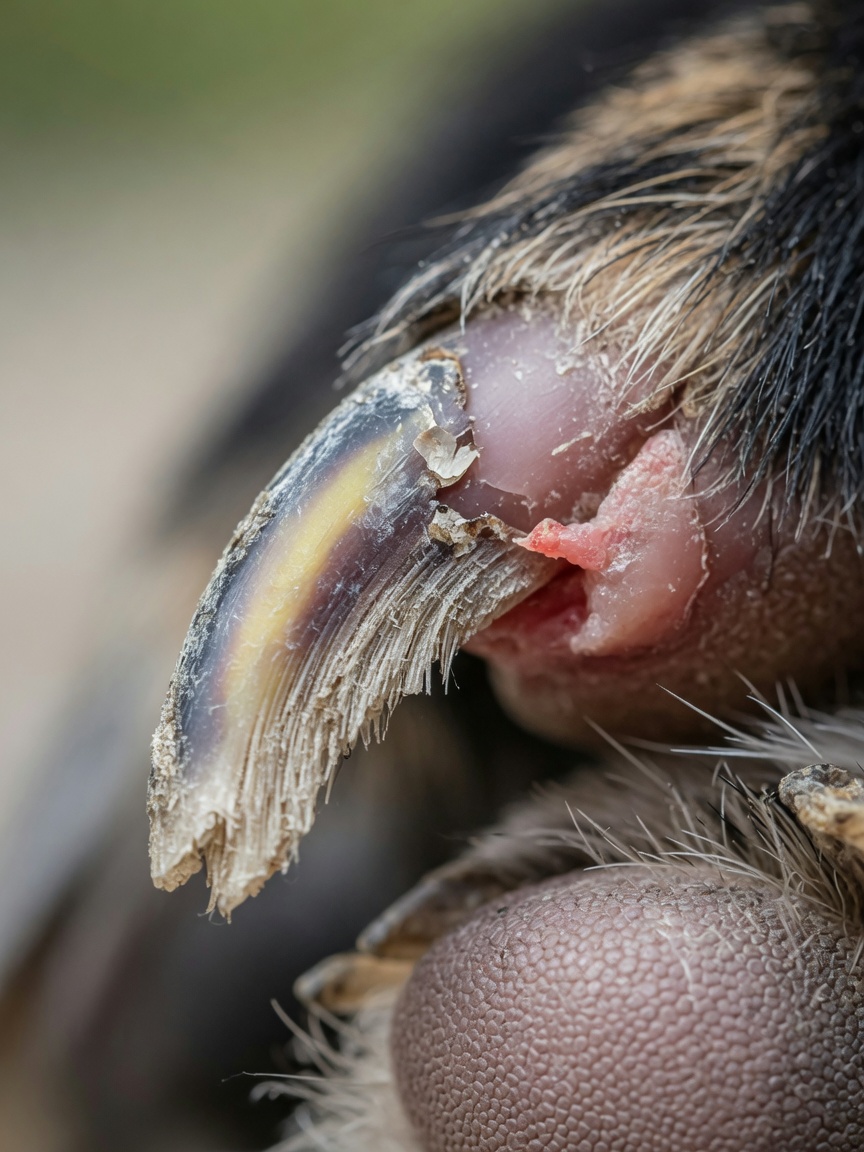
The claw of a dog is produced by the germinal epithelium of the claw matrix, located within the ungual crest of the third phalanx. In SLO, immune-mediated inflammation targets this tissue — the precise autoantigen has not been definitively identified, but the pattern of tissue damage on histopathology is characteristic of a lichenoid interface reaction at the claw matrix.
The result is progressive disruption of claw production. Affected claws become misshapen, brittle, and friable. They may develop longitudinal ridges and fractures before separating from the underlying quick — sometimes with significant bleeding and pain. Once shed, regrowth produces abnormal claws that themselves undergo the same destructive process.
Breeds at Risk and Typical Presentation
SLO has a recognised breed predisposition, with Gordon Setters, English Setters, Rottweilers, Bearded Collies, German Wirehaired Pointers, Labrador Retrievers, and Giant Schnauzers appearing in the literature with increased frequency. A heritable component is suspected in several of these breeds.
The condition most commonly affects young to middle-aged adult dogs. The hallmark of SLO is its symmetry and multifocal nature: claws from multiple feet are affected, and within each foot, multiple nails are typically involved. This distinguishes it from traumatic nail loss (usually a single claw on one foot), fungal onychodystrophy (often asymmetric early on), and bacterial nail fold infection.
The typical clinical course begins with one or a few claws, then progresses over weeks to months to involve most or all claws. Dogs are frequently lame, reluctant to walk on hard surfaces, and may show behaviour changes associated with chronic pain. Secondary bacterial infection of exposed nail beds is common and contributes to discomfort and odour.
Reaching the Diagnosis
SLO is a diagnosis that requires both clinical assessment and histopathological confirmation. Several conditions produce nail changes that resemble SLO superficially, and treatment decisions depend on certainty of diagnosis.
What to Rule Out First
- Fungal onychodystrophy (dermatophytes or Fusarium species) — requires nail culture or PCR
- Bacterial paronychia — usually more asymmetric, with discharge and periungual swelling
- Systemic lupus erythematosus — may involve nails but is accompanied by other systemic signs
- Vasculitis — claw changes occur but are usually accompanied by other cutaneous signs
- Pemphigus foliaceus — rarely affects nails in isolation
Biopsy Technique
Histopathological examination of the nail and associated tissue provides the definitive diagnosis. The preferred biopsy technique involves amputation of the third phalanx (P3) of an affected digit under general anaesthesia — a procedure performed by a veterinary surgeon. This allows examination of the claw matrix and the characteristic lichenoid interface changes that confirm SLO. Digital nerve blocks provide additional analgesia. P3 amputation is not cosmetically concerning on a single digit and provides tissue that no other sampling method can match in quality.
Treatment Approaches
SLO is managed rather than cured. The aim of treatment is to reduce immune-mediated damage to the claw matrix, allow more normal claw regrowth, control secondary infection, and manage pain.
Immunomodulatory Therapy
The most widely reported and consistently effective protocol combines essential fatty acid supplementation (omega-3 fatty acids at high doses from fish oil), pentoxifylline (a rheological agent with immunomodulatory properties), and niacinamide plus tetracycline (or doxycycline) — all of which have anti-inflammatory and immunomodulatory effects without the immunosuppression of corticosteroids.
This combination is favoured because it carries a low side-effect profile and can be maintained long-term. Response typically takes two to three months to become apparent, as claw regrowth is slow. In more severe or refractory cases, cyclosporin or glucocorticoids may be added to achieve control.
Supportive Care
- Regular antiseptic foot soaks help reduce secondary bacterial infection in exposed nail beds
- Appropriate analgesia — NSAIDs or other pain management — is essential during active disease
- Nail trimming of remaining claws prevents leverage damage and snagging
- Soft bedding and avoidance of hard surfaces reduces contact pain during flares
Prognosis and Long-Term Outlook
SLO requires long-term management in most cases, and owners should be prepared for a chronic condition with periods of relative stability and occasional flares. However, with appropriate treatment, the majority of affected dogs achieve meaningful improvement. Claw regrowth, though often not entirely normal in morphology, becomes functional in many cases. Pain resolves as infection is controlled and inflammation is reduced.
- Seek veterinary assessment promptly if multiple claws on multiple feet are affected — early diagnosis improves outcomes
- Insist on biopsy for definitive diagnosis before committing to long-term immunosuppression
- Allow two to three months before judging the response to medical therapy
- Control secondary infection actively throughout the treatment period
- Report any worsening or new systemic signs — SLO should not cause systemic illness, and their presence may indicate a different or concurrent diagnosis
SLO is one of those conditions where persistence pays off. The diagnostic journey can be frustrating, and the treatment timeline is long. But dogs managed appropriately by an experienced veterinary team can live comfortably and maintain good quality of life despite their diagnosis.