
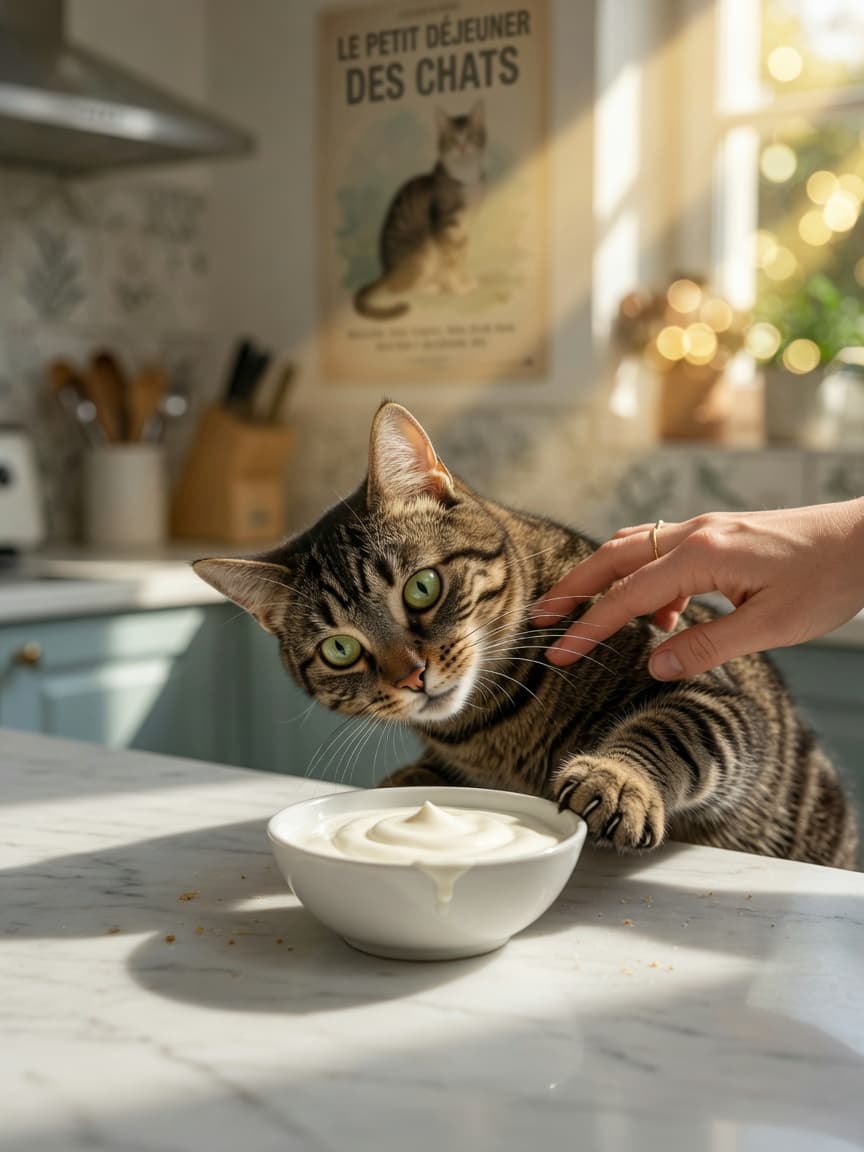
Verdict: Not Recommended
Yoghurt is not a food you should be actively feeding your cat. Adult cats are largely lactose intolerant, and while the live bacterial cultures in yoghurt do break down some lactose during fermentation, a meaningful amount remains. Add to that the fat content, the total absence of nutritional necessity for an obligate carnivore, and the very real danger of flavoured or sweetened varieties, and the case for yoghurt as a cat food or treat simply does not exist. A tiny lick of plain, unsweetened Greek yoghurt is unlikely to cause serious harm. Anything beyond that is a risk not worth taking.
Cats and Lactose Intolerance
Like all mammals, kittens produce lactase — the enzyme that digests lactose, the primary sugar in milk. Once kittens are weaned, lactase production declines because there is no longer any biological need for it. Most adult cats retain only a fraction of their kittenhood lactase activity, which means lactose passes through the small intestine undigested and reaches the large intestine intact.
There, gut bacteria ferment the lactose, producing gas and drawing fluid into the bowel. The practical outcome is bloating, flatulence, loose stools, or diarrhoea — sometimes within hours of eating dairy. Individual cats vary in how severely they react, but the underlying biology is the same across the species.
Does Yoghurt's Live Culture Make It Safer?
Yoghurt is made by fermenting milk with live bacterial cultures, most commonly Lactobacillus bulgaricus and Streptococcus thermophilus. During fermentation, these bacteria consume much of the lactose, converting it to lactic acid. This is why some lactose-intolerant humans find yoghurt more digestible than plain milk.
The same partial reduction applies to cats. Plain, unsweetened, full-fat Greek yoghurt — which is strained and therefore lower in lactose than regular yoghurt — is probably the least problematic dairy product you could offer a cat. However, "least problematic" is a long way from "safe" or "beneficial." Enough lactose remains to cause digestive upset in sensitive cats, the fat content is still a concern, and the nutritional case remains nonexistent.
Xylitol: The Hidden Danger
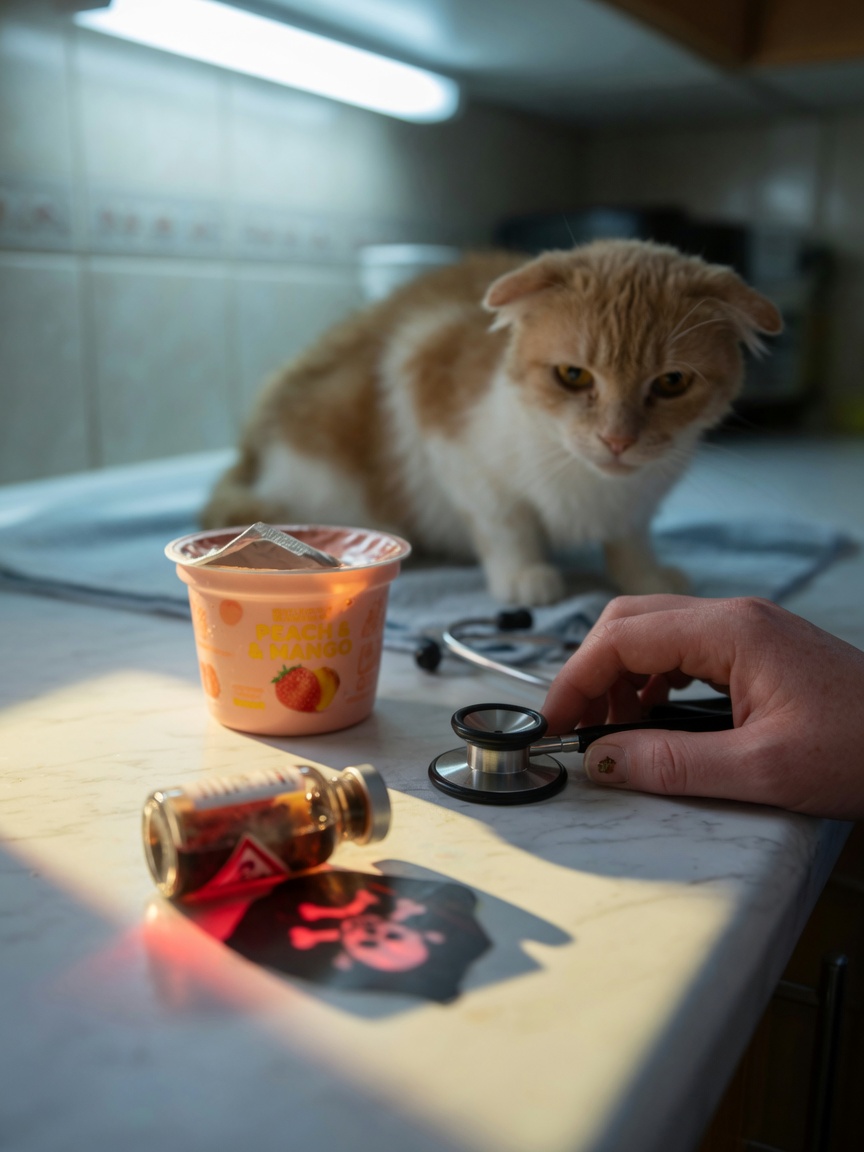
This deserves its own section because the risk is serious. Many flavoured, low-fat, or "diet" yoghurts are sweetened with xylitol, an artificial sweetener that is well established as toxic to dogs and is also considered dangerous to cats. Xylitol can cause a rapid drop in blood sugar (hypoglycaemia) and, at higher doses, liver damage.
Always check the ingredient list of any yoghurt before it comes anywhere near your cat. Xylitol may be listed under other names including E967, birch sugar, or wood sugar. If there is any doubt, keep the yoghurt away from your cat entirely. The consequences of xylitol ingestion can be severe and require emergency veterinary attention.
Yoghurts to Avoid Completely
- Any yoghurt containing xylitol or other artificial sweeteners
- Fruit-flavoured yoghurts: often contain grapes or raisins (toxic to cats), as well as high sugar levels
- Chocolate or cocoa varieties: chocolate is toxic to cats
- Yoghurts with added vanilla extract: extract contains alcohol
- Low-fat or fat-free yoghurts: often contain more sugar or artificial sweeteners to compensate for the removed fat
- Flavoured Greek yoghurts marketed as "healthy" for humans: these frequently contain sweeteners or fruit purees that are not suitable for cats
What About Probiotic Yoghurt for Gut Health?
You may have heard that the live cultures in yoghurt can benefit a cat's digestive system in the same way that probiotics benefit humans. It is a reasonable idea in theory, but there are two practical problems with it. First, the bacterial strains found in human yoghurt are not the same strains that naturally colonise a cat's gut, so their ability to take hold and provide lasting benefit is questionable. Second, any modest probiotic effect is outweighed by the lactose and fat the yoghurt delivers alongside it.
If your vet recommends probiotic support for your cat — for example, following a course of antibiotics or during a period of digestive trouble — there are cat-specific probiotic products that deliver appropriate strains without the dairy. These are a far better approach than yoghurt.
Signs of a Problem After Dairy Ingestion
If your cat has eaten yoghurt, watch for the following in the hours afterwards:
- Loose stools or diarrhoea
- Vomiting
- Flatulence or bloating
- Discomfort when the abdomen is touched
- Lethargy or reduced appetite
Mild symptoms from a small exposure typically resolve within 24 hours without intervention beyond ensuring your cat has access to fresh water. If symptoms are severe, prolonged, or you suspect the yoghurt contained xylitol or another toxic ingredient, contact your vet without delay.
What Cats Actually Thrive On
Cats are obligate carnivores with no biological need for dairy at any stage of adult life. Their protein requirements are high and must be met through animal-based sources — meat, poultry, and fish. A nutritionally complete commercial cat food, formulated to meet FEDIAF or AAFCO standards, provides everything a cat needs without the risks that dairy carries.
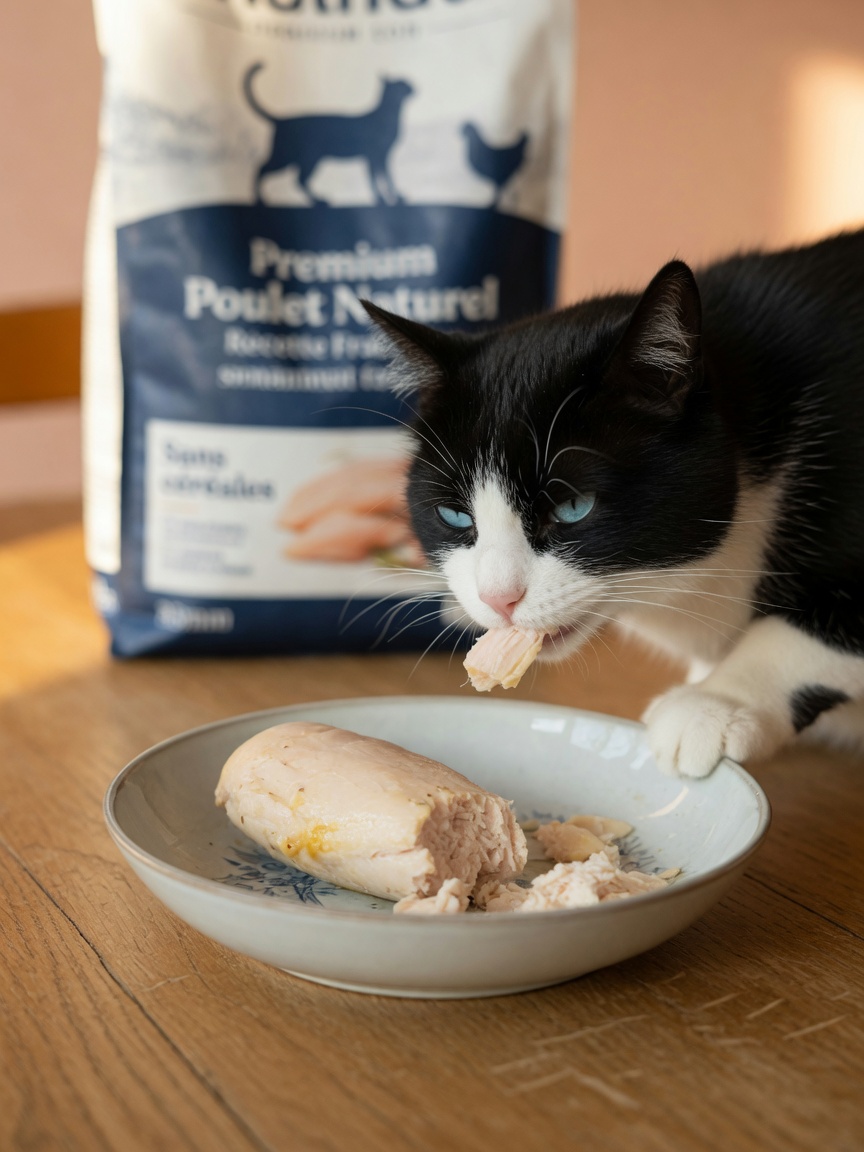
If you want to give your cat an occasional treat with some protein content, small pieces of plain cooked chicken or white fish are a far more appropriate choice — enjoyed by most cats, easily digested, and nutritionally aligned with what their bodies are designed to process.
The Bottom Line
If your cat sneaked a lick of plain yoghurt off a spoon, do not panic. Monitor for digestive symptoms and ensure they have plenty of water. But do not make yoghurt a habit, do not use it as a probiotic substitute, and never give a cat flavoured, sweetened, or artificially sweetened yoghurt under any circumstances. When in doubt about your cat's diet, your vet is the right person to ask.