
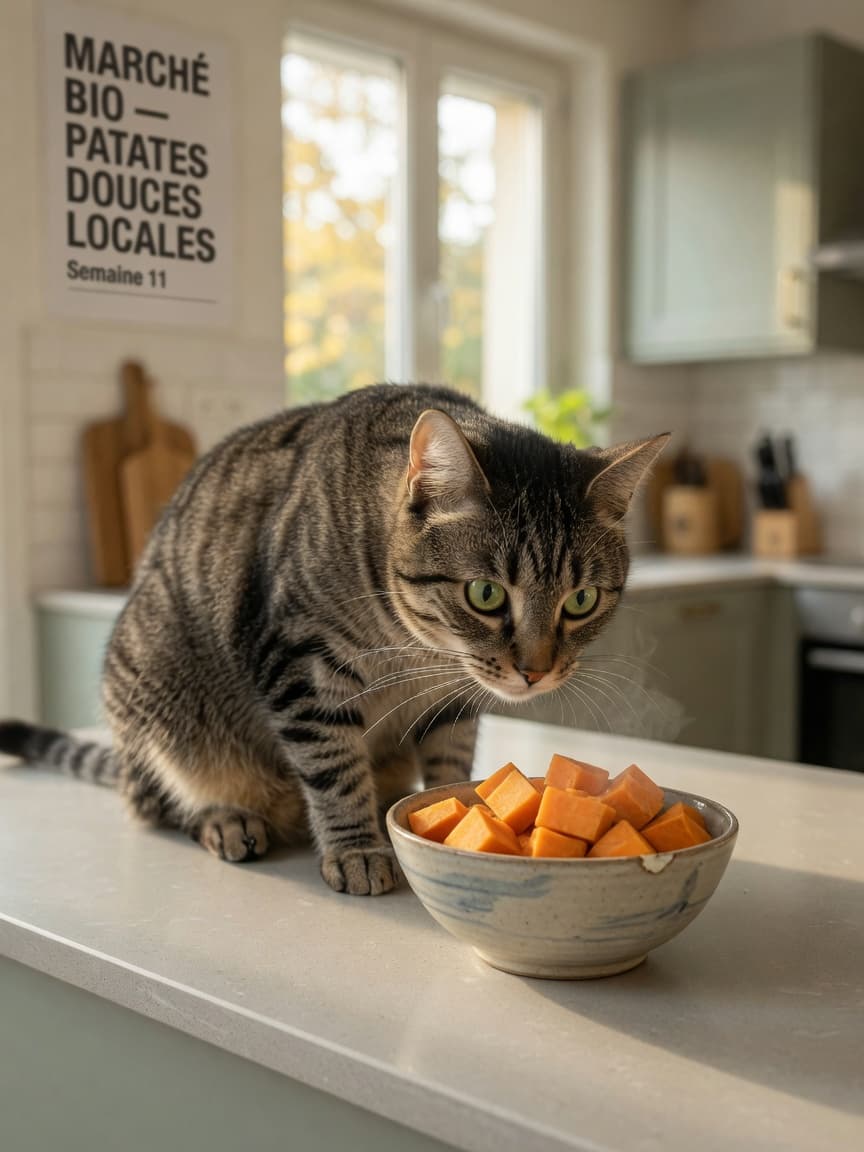
Can Cats Eat Sweet Potatoes?
By Julia Wrenfield, Pet Wellness Researcher
Sweet potatoes are celebrated as a human superfood — packed with beta-carotene, vitamins, and fiber. When a cat shows curiosity about what's on your plate, it's natural to wonder whether sharing a small piece is safe. The answer is nuanced: cooked plain sweet potato is not toxic to cats, but that doesn't mean it belongs in their diet in any meaningful quantity. Here is what you need to know.
Cats Are Obligate Carnivores — Carbs Are Not Part of the Plan
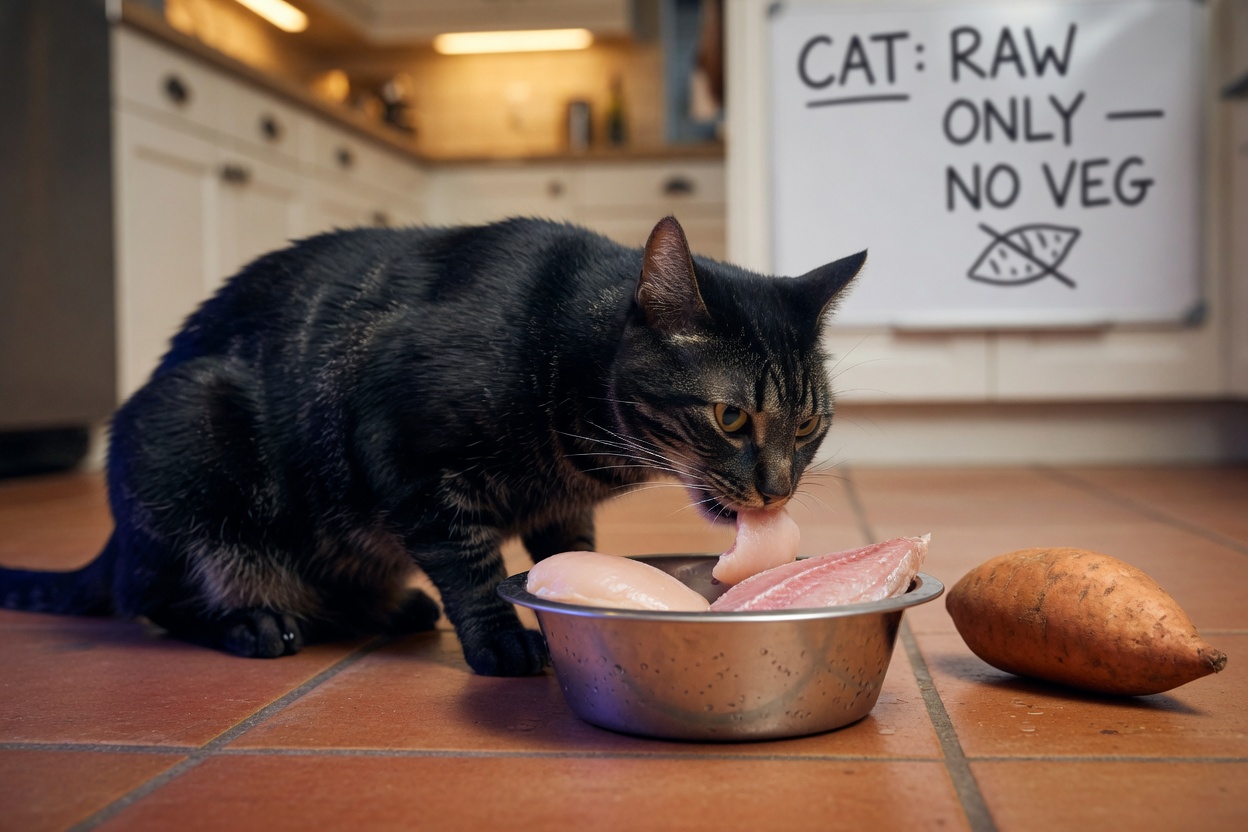
To understand why sweet potatoes occupy such a complicated position in feline nutrition, you first need to understand the fundamental biology of cats. Unlike dogs or humans, cats are obligate carnivores. This means they are biologically required to obtain their nutrients from animal-based protein and fat. Their digestive systems, metabolic pathways, and organ functions have evolved over millions of years to process meat — not plants, grains, or carbohydrates.
Cats lack certain enzymes that allow other animals to efficiently metabolize carbohydrates. For example, their liver has a very limited ability to down-regulate glucokinase activity in response to a high-carbohydrate meal, meaning their blood glucose management is simply not designed for sugar-heavy foods. They also have a significantly lower activity of intestinal disaccharidases — the enzymes that break down complex carbohydrates — compared to omnivores like dogs or humans.
Sweet potatoes are dense in carbohydrates and natural sugars. While this makes them an excellent energy source for humans, it makes them largely unnecessary — and potentially problematic — for cats.
Is Cooked Sweet Potato Safe for Cats?
Yes, with important caveats. Plain cooked sweet potato — steamed, baked, or boiled with no additives — is not toxic to cats. The ASPCA does not list sweet potato on its list of foods toxic to cats. In tiny amounts, it is unlikely to cause harm in a healthy adult cat.
Some commercial cat foods include small amounts of sweet potato as a carbohydrate source and a source of dietary fiber. In this context, the quantities are controlled and formulated to meet overall nutritional balance. This is very different from giving your cat a large piece of sweet potato as a treat.
If your cat steals a small bite of plain cooked sweet potato, there is no need for alarm. Offered deliberately, keep it to a very small amount — a few small pieces no larger than a pea — and make sure it is plain.
Why Raw Sweet Potato Is Dangerous
Raw sweet potato is a different matter. Raw sweet potatoes contain compounds that are significantly harder for cats to digest, and they also contain oxalates — naturally occurring compounds found in many root vegetables. While oxalates are more of a concern in other foods (like spinach), they are present in raw sweet potato and can irritate the digestive tract.
Beyond oxalates, the hard, starchy texture of raw sweet potato poses a choking hazard and can cause intestinal blockage or significant gastrointestinal upset. Cats cannot break down raw starch efficiently, leading to bloating, gas, and diarrhea.
Always ensure sweet potato is fully cooked and cooled before allowing your cat any access to it.
What About Sweet Potato Preparations — Casseroles, Fries, Mash?
This is where things become clearly unsafe. The sweet potato dishes humans typically enjoy are full of ingredients that are harmful or outright toxic to cats:
- Butter and cream: High fat content, and many cats are lactose intolerant. Can cause vomiting and diarrhea.
- Salt and seasonings: Salt toxicity is a real risk in cats. Spices like cinnamon, nutmeg, and allspice are toxic to felines.
- Marshmallows: A common sweet potato casserole topping — pure sugar with no nutritional value and potentially containing xylitol, which is toxic to pets.
- Brown sugar or maple syrup: Concentrated sugar with no place in a cat's diet.
- Garlic and onion: Both are highly toxic to cats and destroy red blood cells, causing hemolytic anemia.
The rule is simple: if a human has seasoned, dressed, or sweetened the sweet potato in any way, it is not appropriate for your cat.
Sweet Potatoes and Diabetic Cats
If your cat has been diagnosed with diabetes mellitus or is at risk of diabetes due to obesity, sweet potato should be avoided entirely. Sweet potatoes have a high glycemic index — they cause a rapid rise in blood glucose levels. For a cat whose insulin response is already compromised, this can destabilize blood sugar control and complicate management of their condition.
Diabetic cats require carefully controlled diets that are typically high in protein and very low in carbohydrates. Even small additions of high-glycemic foods can interfere with treatment. Always consult your veterinarian before making any dietary changes if your cat has diabetes or metabolic disease.
Nutritional Reality: What Cats Actually Need
It is worth reframing the conversation. Sweet potatoes offer humans beta-carotene, vitamin C, potassium, and fiber — all valuable nutrients. But cats have very different needs. They synthesize vitamin A directly from animal liver (they cannot convert beta-carotene as humans do), they produce their own taurine requirements from meat, and their energy needs are met through protein and fat metabolism, not carbohydrate combustion.
Giving a cat sweet potato provides them with nutrients they cannot properly use, in a form their digestive system is not optimized to process. It is a treat that benefits your desire to share food far more than it benefits your cat's health.
Key Takeaways
- Cooked, plain sweet potato is not toxic to cats and is safe in very small occasional amounts.
- Cats are obligate carnivores with no biological need for carbohydrates — sweet potato offers them no meaningful nutritional benefit.
- Raw sweet potato is harmful — it is hard to digest and contains compounds that can irritate the gut.
- Never serve sweet potato with butter, salt, spices, marshmallows, or any seasoning used in human recipes.
- Cats with diabetes should avoid sweet potato entirely due to its high glycemic index.
- A balanced, meat-based commercial cat food already meets all of your cat's nutritional needs without plant-based additions.
References
- Kienzle E. "Carbohydrate metabolism in the cat. 4. Activity of maltase, sucrase, lactase, and trehalase in the gastrointestinal tract of the cat." Journal of Animal Physiology and Animal Nutrition. 1993;70(1-5):89–96. PMID: 8363882.
- Zoran DL, Buffington CA. "Effects of nutrition choices and lifestyle changes on the well-being of cats, a carnivore that has moved indoors." Journal of the American Veterinary Medical Association. 2011;239(5):596–606. PMID: 21879966.