
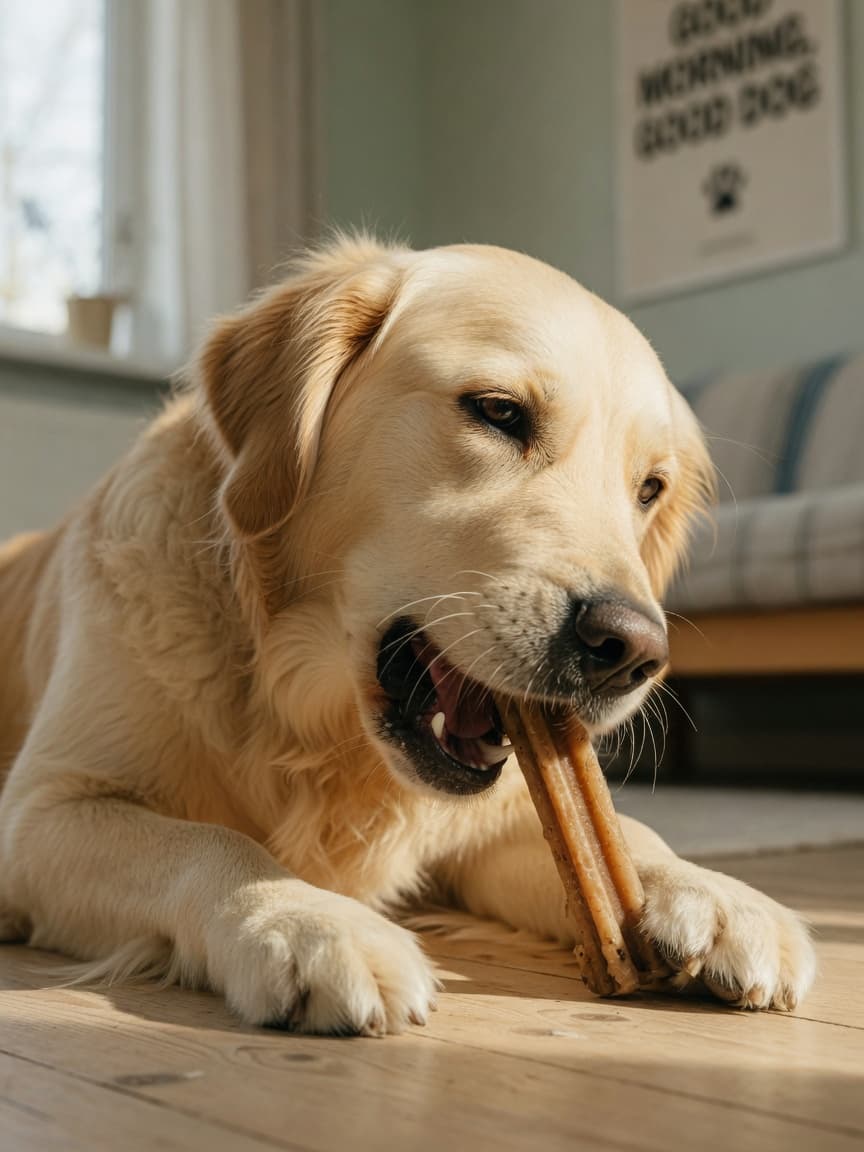
Best Dental Chews for Dogs: VOHC-Approved Options
How Dental Chews Work
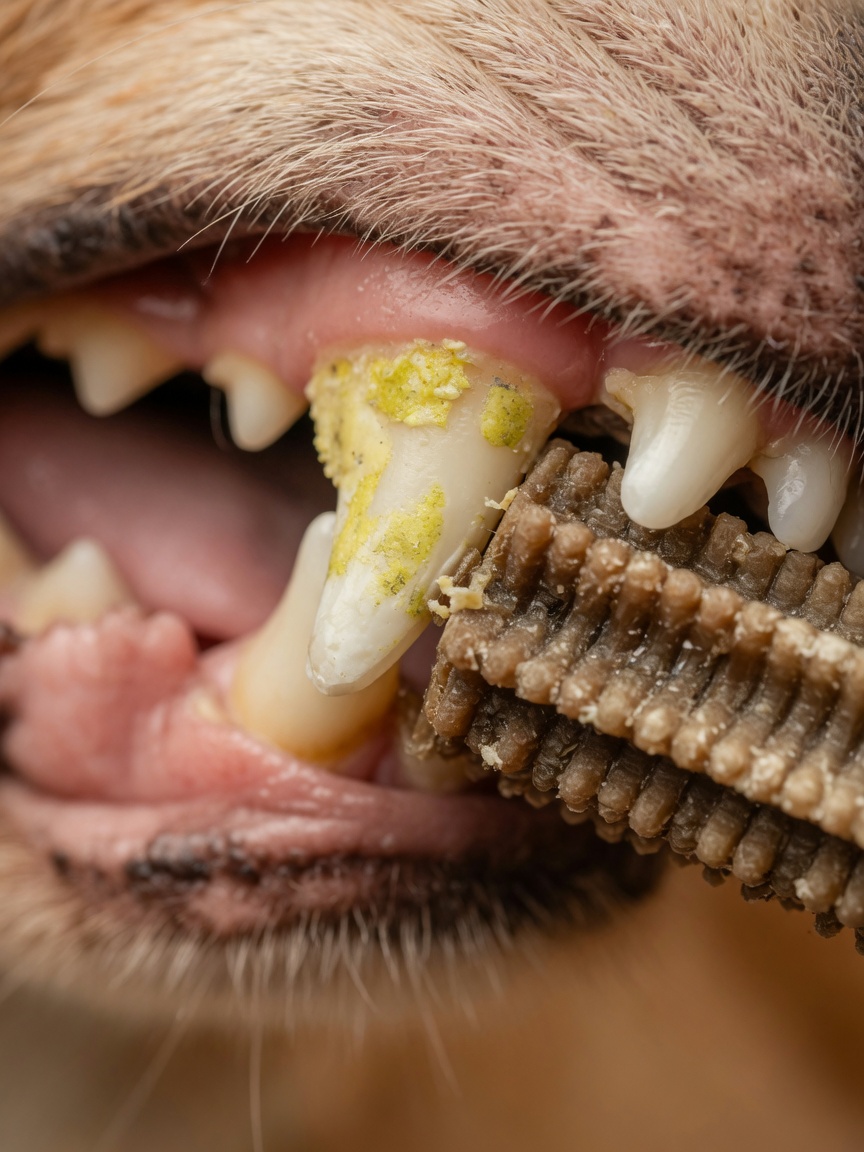
Dental chews are not simply flavored treats. The best ones are specifically engineered to create mechanical abrasion against the tooth surface as your dog chews. This scrubbing action disrupts the biofilm of bacteria — called plaque — that accumulates continuously on tooth enamel. Left undisturbed, plaque mineralizes within 24 to 48 hours into calculus, the hard yellowish tartar that requires professional scaling to remove.
The texture of a dental chew is everything. Products that are too soft offer no meaningful abrasive contact and essentially function as regular treats. Products that are too hard — think antlers, cooked bones, or nylon chews — can fracture teeth, a painful and expensive injury known as a slab fracture. VOHC-approved chews are designed to sit in the middle: firm enough to scrub, but with enough give that they compress rather than crack. Some chews also incorporate active ingredients such as sodium hexametaphosphate, an anti-tartar compound that binds calcium in saliva and inhibits tartar crystal formation, or chlorhexidine, a broad-spectrum antimicrobial commonly used in veterinary dentistry.
The mechanical chewing action concentrates mostly on the premolars and carnassial teeth — the large shearing teeth toward the back of the mouth. These are also the teeth most prone to tartar accumulation and periodontal disease, which makes the location of the abrasive action particularly relevant to long-term dental health outcomes.
The VOHC Seal: Why It's Non-Negotiable
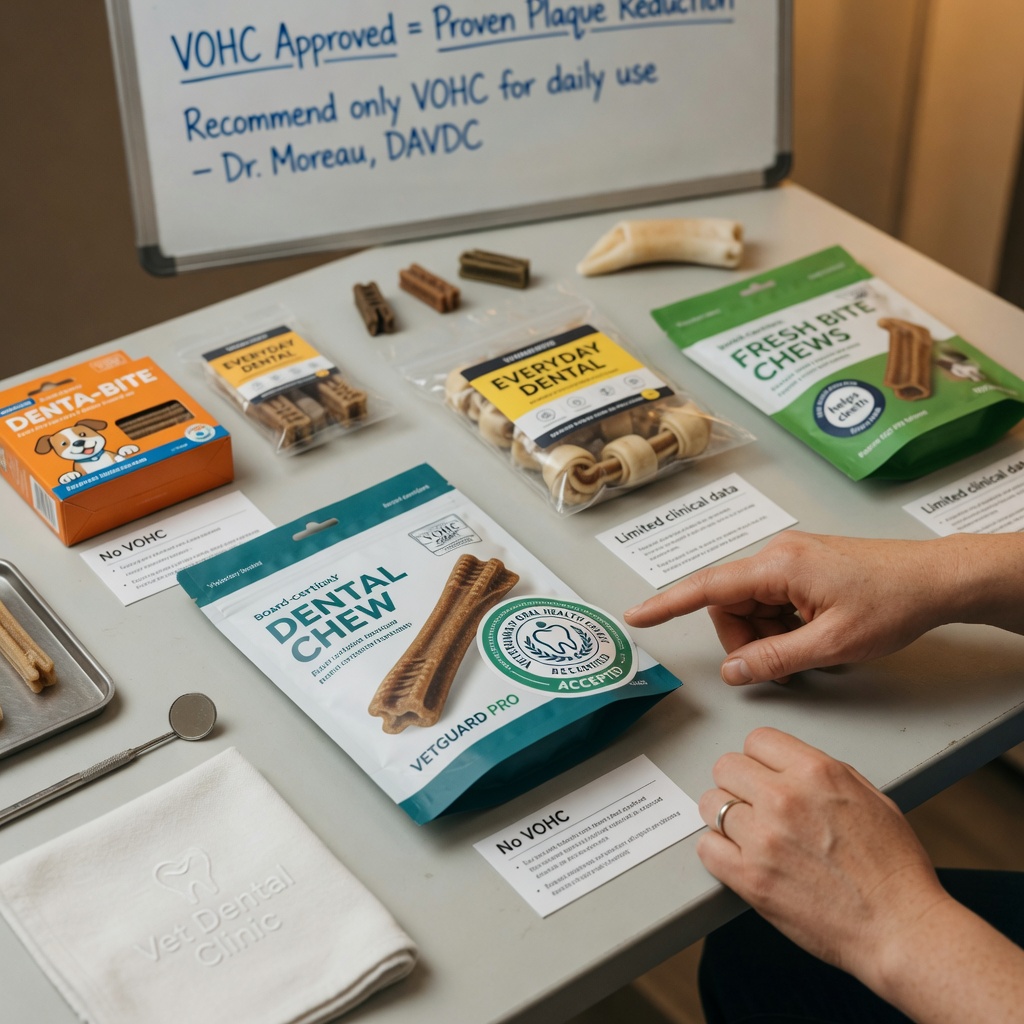
The Veterinary Oral Health Council is an independent nonprofit organization staffed by board-certified veterinary dentists and scientists. Companies submit their products voluntarily for evaluation. To earn VOHC acceptance, the manufacturer must conduct randomized, controlled, masked clinical trials — the same standard applied to human dental products evaluated by the American Dental Association. Trials must demonstrate a statistically significant reduction of at least 25% in plaque accumulation, tartar accumulation, or both, compared to a control group over a defined study period.
This threshold matters because the pet dental product market is largely unregulated. Any company can print "supports dental health" or "helps clean teeth" on packaging without a shred of clinical evidence. Some products make vague claims about "freshening breath" — which can be achieved simply by adding mint flavoring — while doing nothing for the underlying bacterial biofilm driving periodontal disease. The VOHC seal cuts through this marketing noise entirely. When you see it, you know independent clinical data backs the specific claim on the label.
It is also worth noting that VOHC acceptance is product-specific, not brand-wide. A company may have one VOHC-approved chew and ten other dental products without the seal. Always look for the specific product bearing the VOHC stamp, and verify whether it was accepted for plaque reduction, tartar reduction, or both — the label will specify.
Top VOHC-Approved Dental Chews
Greenies Original Dental Chews are among the most widely recognized VOHC-accepted products and have maintained that acceptance through consistent clinical performance. They have a distinctive firm-yet-yielding texture that creates sustained abrasive contact throughout the chewing session, and they are available in a full size range from Teenie (for dogs under 2 kg) to Large. Greenies are made with highly digestible ingredients — an important safety distinction discussed below — and have one of the largest bodies of post-market safety data of any dental chew on the market.
Virbac CET Enzymatic Oral Hygiene Chews combine dual-enzyme technology — glucose oxidase and lactoperoxidase — with mechanical abrasion. This enzymatic system generates a low-level sustained antimicrobial effect that supplements the physical scrubbing action. CET chews carry VOHC acceptance and are frequently recommended by board-certified veterinary dentists. They are available in poultry, beef, and fish flavors, which is helpful for picky or allergy-prone dogs.
OraVet Dental Hygiene Chews use a patented delmopinol hydrochloride active ingredient that forms a physical barrier on tooth and gum surfaces, preventing bacterial adhesion before biofilm can establish. This mechanism works upstream of plaque formation rather than disrupting existing plaque, making OraVet a strong complement to other dental care strategies. These chews are VOHC-accepted and are widely distributed through veterinary clinics.
Purina Pro Plan Veterinary Diets Dental Chewz have also earned VOHC acceptance for tartar control and represent an option with strong institutional backing. Purina's research division has a long history of rigorous clinical work in companion animal health, and this product is frequently stocked in veterinary practices as a recommendation from the clinical team.
Choosing the Right Size for Your Dog
Size selection is critical for both safety and effectiveness. A chew intended for a large breed will be too dense for a small dog to compress properly during chewing, meaning the dog gains minimal abrasive benefit and risks swallowing large chunks. Conversely, a chew designed for a Chihuahua will disappear in seconds for a Labrador, providing no meaningful contact time with tooth surfaces.
Most VOHC-approved brands offer five size tiers: extra small (under 5 kg), small (5 to 11 kg), medium (11 to 22 kg), large (22 to 40 kg), and extra large (over 40 kg). Always match the chew to your dog's current actual weight, not their breed standard or ideal weight. Dogs at the lower boundary of a size range sometimes do better with the smaller size, since the fit of the chew in the mouth directly influences the chewing mechanics and thus the abrasive contact achieved.
Caloric load deserves attention, particularly for dogs managing their weight. A single large Greenies chew contains approximately 90 to 100 calories. For a 25 kg dog on a 1,200-calorie daily maintenance diet, that represents nearly 8% of total daily intake. Build dental chews into your dog's daily caloric budget from the start, and reduce meal portions accordingly rather than adding the chew as an extra.
Safety Tips Every Owner Should Know
Always supervise your dog during chewing sessions, especially with a new product or if your dog is known to chew aggressively. Watch for signs of gulping or swallowing oversized pieces. Breeds like Labrador Retrievers, Beagles, Golden Retrievers, and many terriers tend to prioritize swallowing food quickly over thorough chewing, which creates a gastrointestinal obstruction risk if the chew is not properly sized or is not highly digestible.
Never give dental chews to puppies under six months of age, as their deciduous teeth are not suited to the mechanical demands of firm chews. Dogs with existing cracked teeth, recovering from oral surgery, or undergoing dental treatment should only receive chews following specific veterinary clearance. Digestibility of the product is a key safety factor: if a dog swallows a large piece, a highly digestible chew will pass safely through the GI tract, while a poorly digestible product may cause obstruction. Raw hides, despite their popularity, are broadly discouraged by veterinary dentists for exactly this reason.
Dental Chews vs. Brushing: What the Research Says
Daily tooth brushing with a veterinary enzymatic toothpaste remains the single most effective home dental care method available. Multiple controlled studies show that consistent brushing achieves plaque reduction levels that no dental chew can replicate alone. Brushing reaches the gingival margin — the junction between tooth and gum where plaque causes the most destructive inflammation — at every site in the mouth, something that chewing mechanics achieve inconsistently.
However, compliance is the real-world limiting variable. Research indicates that a large proportion of dog owners who intend to brush their dog's teeth regularly abandon the practice within weeks. In these cases, a VOHC-approved dental chew used daily represents a meaningful, evidence-based contribution to oral health — not a perfect substitute for brushing, but far superior to doing nothing. The most practical approach for most households is a combination: brush when possible, supplement with a VOHC chew every day. Professional veterinary dental cleanings under general anesthesia remain necessary regardless of how thorough home care is, typically every one to three years depending on breed, age, and individual oral health status.
Key Takeaways
- The VOHC seal is the only independent verification that a dental chew has been clinically proven to reduce plaque or tartar by at least 25%.
- Top VOHC-approved options include Greenies, Virbac CET Enzymatic Chews, OraVet, and Purina Pro Plan Dental Chewz.
- Always match chew size to your dog's actual current weight — incorrect sizing reduces effectiveness and creates safety risk.
- Supervise all chewing sessions and account for chew calories within your dog's daily dietary allowance.
- Dental chews significantly supplement but cannot replace brushing; professional cleanings under anesthesia remain essential.
Shop VOHC-approved dental chews for every dog size at Zooplus — free delivery available.
Browse Dental Chews at ZooplusReferences
- Stookey GK, Warrick JM, Miller LL. Effect of sodium hexametaphosphate on dental calculus formation in dogs. Am J Vet Res. 1995;56(7):913-918. PMID: 7574161.
- Quest BW. Oral health benefits of a daily dental chew in dogs. J Vet Dent. 2013;30(2):84-87. PMID: 24008088.