
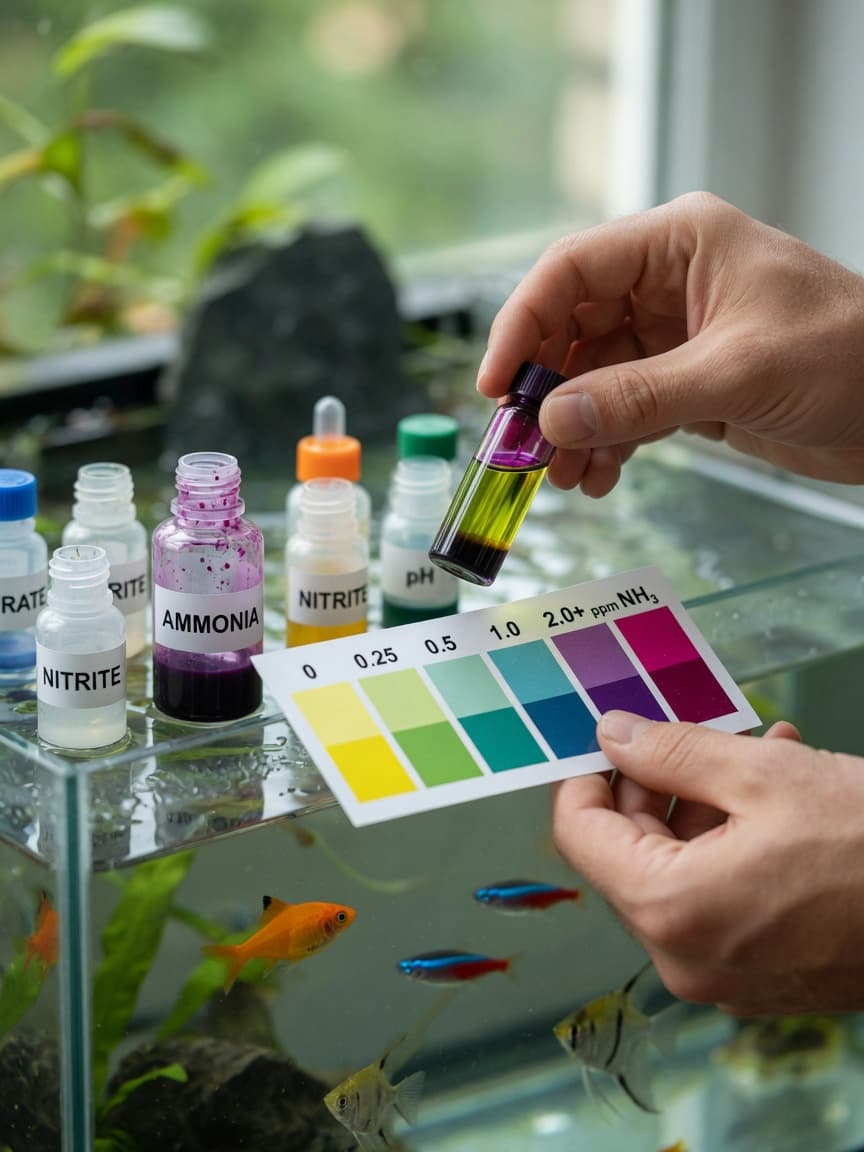
Aquarium Water Parameters: pH, Ammonia, Nitrite & Temperature Guide
Why Water Parameters Matter More Than Anything Else
In the terrestrial animal world, we monitor food quality, environment, and health symptoms. In the aquatic world, water quality is all of those things combined — fish breathe it, live in it, and cannot escape it if it becomes toxic. Poor water quality is the single most common cause of disease, stress, and death in aquarium fish. Understanding the key parameters and what they mean for your fish is the foundation of successful fishkeeping.
This guide covers the six most critical water parameters for freshwater aquariums: ammonia, nitrite, nitrate, pH, temperature, and hardness. For each, you'll find what it is, why it matters, what range is safe, and what to do when it's wrong.
Ammonia (NH₃/NH₄⁺)
What It Is
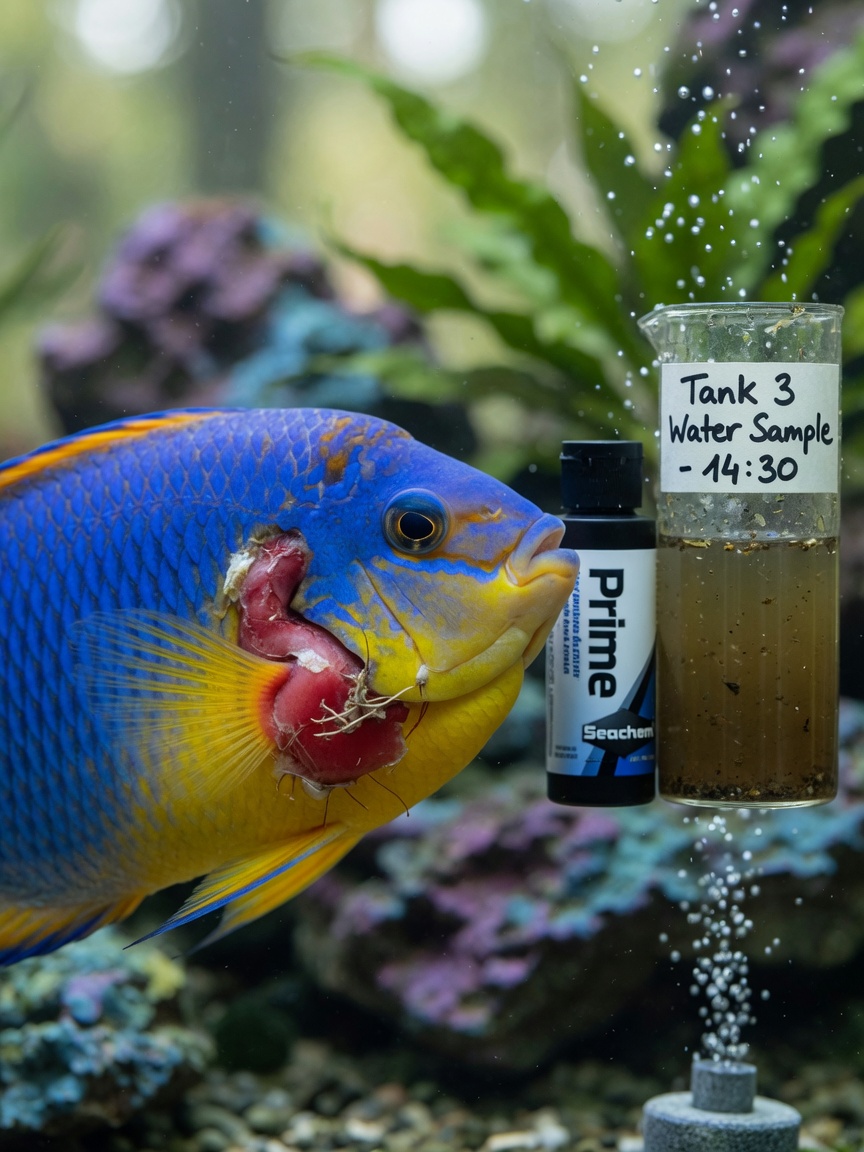
Ammonia is the primary nitrogenous waste product excreted by fish through their gills and produced by decaying organic matter (uneaten food, dead plant material, fish waste). It exists in two forms: un-ionized ammonia (NH₃), which is highly toxic and crosses biological membranes easily, and ammonium (NH₄⁺), which is far less toxic. The ratio between these forms depends on pH and temperature — higher pH and higher temperature mean more of the toxic NH₃ form.
Safe Range
0 ppm. Any detectable ammonia is a problem. At 0.5 ppm, gill damage begins. At 2 ppm, fish experience severe toxicity. Chronic low-level ammonia exposure (even 0.25 ppm) causes cumulative gill damage, immune suppression, and shortened lifespan even without acute symptoms.
What to Do if Ammonia Is Elevated
Perform an immediate 25–50% water change. Dose Seachem Prime, which detoxifies ammonia temporarily (for 24–48 hours) while your biological filter processes it. Identify the cause: is the tank uncycled? Was there a filter failure? Did you add too many fish at once? Did you recently use antibiotics? Address the root cause while managing ammonia with water changes and Prime.
Nitrite (NO₂⁻)
What It Is
Nitrite is the intermediate product of the nitrogen cycle — produced when beneficial bacteria (Nitrosomonas species) oxidize ammonia. It is the second most acutely toxic compound in aquarium water. Nitrite enters fish through the gills and binds to hemoglobin in a process similar to carbon monoxide poisoning, creating methemoglobin — a form of hemoglobin that cannot carry oxygen. This causes "brown blood disease," where fish suffocate despite adequate dissolved oxygen in the water.
Safe Range
0 ppm. Any detectable nitrite indicates the tank is either uncycled or experiencing a cycle crash. Nitrite above 0.5 ppm is dangerous; above 5 ppm can be rapidly lethal.
What to Do if Nitrite Is Elevated
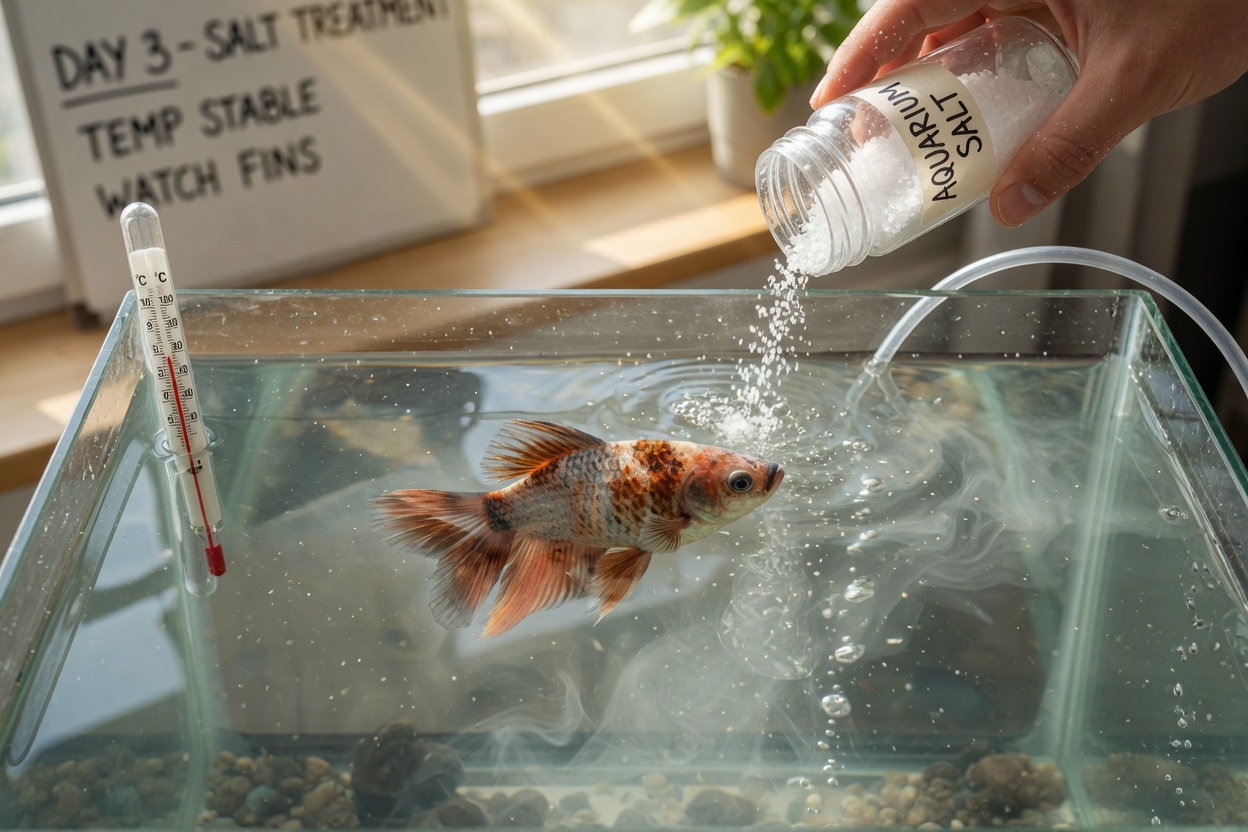
Large water changes (50% or more) are the immediate response. Add aquarium salt at 1 teaspoon per gallon — chloride ions compete with nitrite for uptake through the gills, providing significant protection. Dose Prime to detoxify nitrite temporarily. Investigate why nitrite has appeared: new tank, recent filter disruption, or sudden bioload increase.
Nitrate (NO₃⁻)
What It Is
Nitrate is the end product of the nitrogen cycle, produced when Nitrospira bacteria oxidize nitrite. It is substantially less toxic than ammonia or nitrite but accumulates over time and becomes harmful at high concentrations. Nitrate is removed by partial water changes and absorbed by aquatic plants.
Safe Range
Below 20 ppm for sensitive fish (discus, wild-caught species, invertebrates); below 40 ppm for most community fish. Goldfish are more nitrate-sensitive than commonly realized — keep their nitrate below 20 ppm. Above 80 ppm, even hardy fish show chronic stress symptoms over time.
What to Do if Nitrate Is Elevated
Regular partial water changes of 25–30% weekly are the primary control mechanism. Live plants (especially fast growers like hornwort, water wisteria, and guppy grass) consume nitrate actively. Reduce feeding if overfeeding is contributing. A nitrate remover resin can be used in the filter for heavily stocked tanks. Fishkeeping World's water parameter guide includes excellent species-specific nitrate tolerance data.
pH
What It Is
pH measures the acidity or alkalinity of water on a scale from 0 (extremely acidic) to 14 (extremely alkaline), with 7.0 being neutral. In aquariums, pH affects fish osmoregulation, medication effectiveness, bacterial activity, and the toxicity of ammonia (higher pH = more toxic ammonia). Most aquarium fish come from environments between pH 6.0 and 8.0.
Species Ranges
- Bettas: 6.5–7.5
- Neon tetras, discus, South American cichlids: 5.5–7.0 (soft, acidic)
- Goldfish, livebearers (guppies, mollies, platies): 7.0–8.0
- African cichlids (Malawi/Tanganyika): 7.8–9.0 (very alkaline)
- General community fish: 6.8–7.6
Stability Matters More Than the Exact Number
A pH of 6.8 that is rock-stable is far less stressful for fish than a pH that swings between 7.0 and 7.8 across a 24-hour period. pH can drop significantly overnight in planted tanks as CO2 builds up (plants respire CO2 at night). Buffering capacity (KH — carbonate hardness) prevents these swings. If your pH swings more than 0.3–0.5 units daily, increase KH with crushed coral or sodium bicarbonate.
How to Adjust pH
To lower pH: use peat, driftwood, Indian almond leaves, or RO/DI water. To raise pH: crushed coral, limestone rock, or sodium bicarbonate. Avoid chemical pH adjusters (pH Up/Down products) — they're unstable and can cause dangerous pH crashes. SeriouslyFish's water chemistry knowledge base covers buffering and pH management in depth.
Temperature
Why Temperature Is Critical
Fish are ectothermic — their body temperature matches the water around them. Their metabolism, immune function, digestion, and all biochemical processes are temperature-dependent. Outside their optimal range, fish become immunocompromised and vulnerable to disease. Temperature fluctuations are often more damaging than a stable temperature at the edge of their range.
Key Temperature Ranges
- Tropical community fish (tetras, danios, corydoras, bettas): 72–82°F (22–28°C)
- Bettas: 76–82°F (24–28°C) — stricter than general tropical range
- Discus: 82–88°F (28–31°C) — warmest of common aquarium fish
- Goldfish: 65–72°F (18–22°C) — cold water; no heater needed in most homes
- African cichlids: 75–82°F (24–28°C)
- Axolotls: 60–68°F (16–20°C) — require chilling in warm climates
Use a reliable aquarium heater with an external thermostat and a separate thermometer to verify temperature accuracy. Aquarium heater thermostats can fail — always cross-check with a second thermometer. Daily fluctuations of more than 2–3°F increase susceptibility to ich and other diseases.
Hardness: GH and KH
General Hardness (GH)
GH measures the concentration of dissolved calcium and magnesium ions. Fish need a minimum level of GH for osmoregulation, gill function, and reproduction. Very soft water (GH below 3 dGH) can cause mineral deficiencies. Very hard water stresses soft-water species.
Carbonate Hardness (KH)
KH measures the buffering capacity of water — its ability to resist pH changes. Low KH (below 3–4 dKH) makes pH unstable and prone to dangerous crashes. Maintaining adequate KH is more important for most hobbyists than hitting a specific pH number.
Practical Ranges
- Soft-water fish (tetras, discus, bettas): GH 3–8 dGH, KH 2–5 dKH
- General community: GH 5–12 dGH, KH 4–8 dKH
- Hard-water fish (goldfish, African cichlids, livebearers): GH 10–20 dGH, KH 8–12 dKH
Dissolved Oxygen
Dissolved oxygen (DO) is essential for fish respiration and for the aerobic bacteria in your filter. It is depleted by fish respiration, bacterial activity, and warm temperatures (warm water holds less oxygen). Adequate surface agitation — rippling the water surface — promotes gas exchange. Signs of low oxygen: fish gasping at the surface, clustering near filter outlets, or reduced activity. All fish species should have adequate surface agitation from a filter, airstone, or powerhead.
Key Takeaways
- Ammonia and nitrite must always be 0 ppm — any reading is a problem requiring immediate action
- Nitrate should stay below 20 ppm for sensitive species, below 40 ppm for most community fish
- pH stability matters more than hitting an exact number — maintain adequate KH (4–8 dKH) to prevent swings
- Match temperature to species needs; fluctuations of 2–3°F daily increase disease risk significantly
- Use a liquid test kit — strip tests are inaccurate and can give false negatives for dangerous parameters
- Test water weekly in established tanks; daily during cycling or illness
References
- Randall DJ, Tsui TK. "Ammonia toxicity in fish." Marine Pollution Bulletin. 2002. PMID: 12069466
- Jensen FB. "Nitrite disrupts multiple physiological functions in aquatic animals." Comparative Biochemistry and Physiology Part A. 2003. PMID: 14529757