
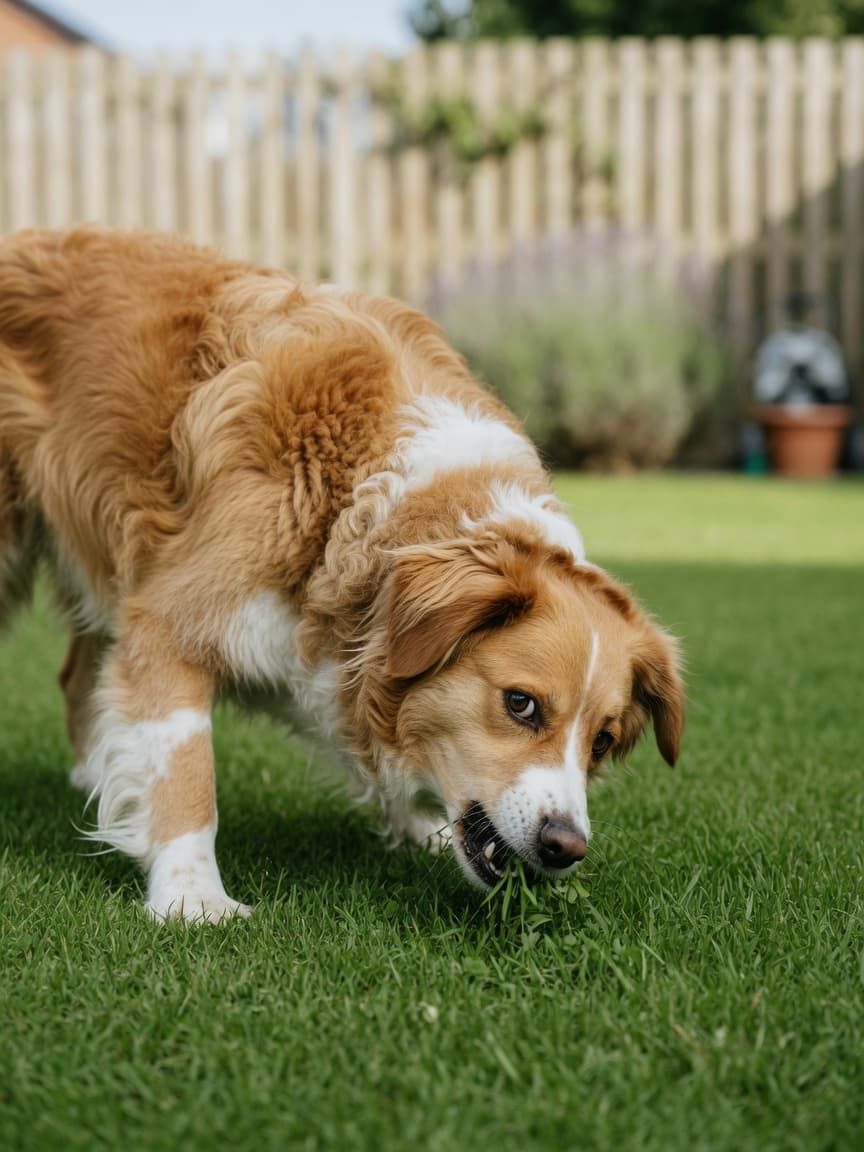
Pourquoi Mon Chien Mange de l'Herbe ? Faut-il S'Inquiéter ?
Mis à jour : Juin 2026
Demandez à n'importe quel groupe de propriétaires de chiens et presque tous auront une histoire à raconter sur leur chien en train de brouter comme une petite vache duveteuse. Manger de l'herbe est l'un des comportements canins les plus couramment observés — et les plus mal compris. Pendant des années, la croyance dominante était que les chiens mangent de l'herbe pour se faire vomir quand ils se sentent malades. Il s'avère que la science raconte une histoire plus nuancée. Voici ce que nous savons vraiment sur la raison pour laquelle les chiens mangent de l'herbe, et quand c'est un signal d'alarme.
1. L'Instinct et le Comportement Ancestral
Les canidés sauvages — loups, coyotes et renards — consomment régulièrement des matières végétales, et ce comportement semble profondément enraciné dans la génétique canine. L'analyse des excréments de loups montre que l'herbe et autres végétations constituent un élément constant de l'alimentation des chiens sauvages. Nos chiens domestiques conservent de nombreux comportements ancestraux, et le broutage occasionnel d'herbe peut simplement être une expression de cette programmation évolutive. Le comportement ne nécessite pas une explication basée sur la maladie ou la carence — parfois les chiens mangent de l'herbe pour la même raison qu'ils se roulent dans des choses qui sentent mauvais : parce qu'ils sont programmés pour le faire.
2. Le Besoin de Fibres
L'herbe est riche en fibres insolubles, et certains nutritionnistes pensent que les chiens pourraient la chercher quand leur alimentation est pauvre en fibres. Les fibres jouent un rôle important dans la santé digestive — elles ajoutent du volume aux selles, soutiennent la motilité intestinale saine et nourrissent les bactéries intestinales bénéfiques. Si votre chien suit un régime très transformé, pauvre en fibres et mange fréquemment de l'herbe, il pourrait être utile de discuter de la teneur en fibres alimentaires avec votre vétérinaire ou un nutritionniste vétérinaire. Certains propriétaires rapportent une réduction de la consommation d'herbe après être passés à un régime riche en fibres ou après avoir ajouté une petite quantité de légumes cuits (comme les haricots verts, les petits pois ou 3. Trouble Gastrique et Automédication (La Théorie du Vomissement)
La croyance populaire selon laquelle les chiens mangent de l'herbe pour induire le vomissement a une certaine logique intuitive mais est largement non soutenue par la recherche. Une étude publiée dans la revue Applied Animal Behaviour Science a constaté que moins de 25 % des chiens qui mangent de l'herbe vomissent par la suite, et la plupart des chiens ne semblent pas malades avant de manger de l'herbe. Cela suggère que pour la plupart des chiens, manger de l'herbe n'est pas provoqué par la nausée. Cependant, certains chiens individuels semblent manger de l'herbe spécifiquement quand ils se sentent mal, et pour ces animaux, il peut y avoir un élément d'automédication en jeu. Si votre chien spécifique mange constamment de l'herbe et puis vomit, la nausée peut être un facteur à investiguer avec votre vétérinaire. Les chiens sont des animaux intelligents et actifs, et quand ils ne sont pas suffisamment stimulés, ils trouvent leur propre divertissement — y compris le broutage d'herbe. L'ennui et l'anxiété peuvent conduire à des comportements répétitifs chez les chiens, et si le broutage d'herbe de votre chien s'intensifie quand il est laissé seul pendant de longues périodes, ou semble compulsif et difficile à interrompre, des facteurs comportementaux pourraient être en jeu. Augmenter l'exercice quotidien, la stimulation mentale (distributeurs de croquettes, séances d'entraînement, jouets interactifs) et l'interaction sociale réduisent souvent les comportements liés à l'anxiété. Si le comportement semble compulsif ou si le chien devient stressé quand on l'empêche de manger de l'herbe, parlez à votre vétérinaire des stratégies possibles de gestion de l'anxiété. L'explication la plus directe mérite peut-être plus de crédit : les chiens mangent peut-être de l'herbe parce qu'ils apprécient le goût et la texture. L'herbe jeune et tendre du printemps a une saveur douce et fraîche. Les chiens sont connus pour avoir des préférences pour des saveurs et des textures spécifiques, et une parcelle de pelouse luxuriante pourrait simplement être attrayante. Cette explication est soutenue par l'observation que la consommation d'herbe augmente souvent au printemps quand la nouvelle croissance apparaît, indépendamment du régime ou du statut de santé du chien. Si votre chien grignote enthousiaste d'herbe sans détresse apparente avant ou après, cette explication bénigne pourrait être la plus précise. Certains chercheurs ont proposé que les chiens pourraient instinctivement chercher des minéraux traces, de la chlorophylle ou des phytonutriments présents dans la matière végétale qui sont absents d4. L'Ennui et l'Anxiété
5. Ils Aiment Simplement le Goût
6. Comportement de Recherche Nutritionnelle