
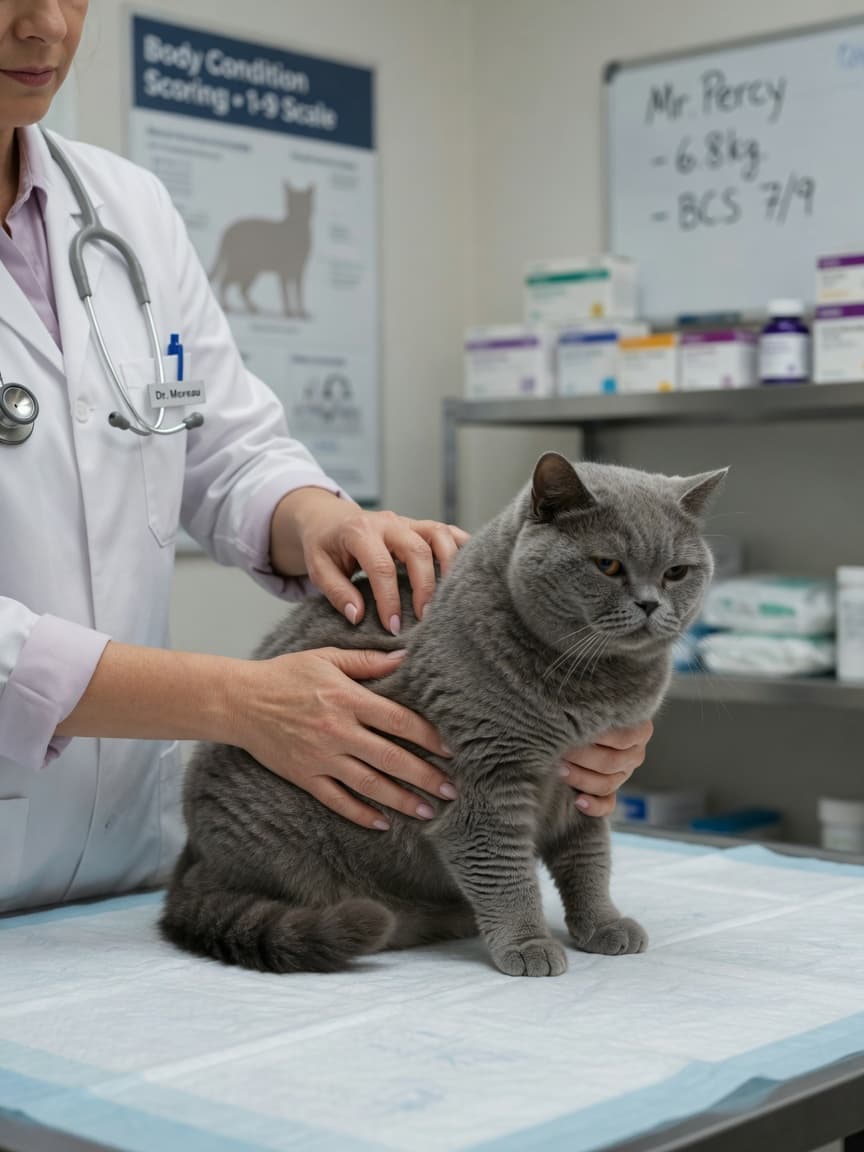
Obesidad en el gato British Shorthair: riesgos y manejo
El British Shorthair es la raza de gato con pedigrí más popular de Europa, apreciada por su cara redonda, su pelaje denso y aterciopelado y su temperamento tranquilo. Sin embargo, la constitución robusta y compacta de la raza y su actitud generalmente relajada ante el ejercicio la convierten en una de las razas felinas más susceptibles a la obesidad. Un British Shorthair con sobrepeso puede parecer atractivamente redondito, pero el exceso de grasa corporal conlleva consecuencias graves para la salud que acortan significativamente la esperanza de vida y reducen la calidad de vida.
Por qué los British Shorthair engordan con facilidad
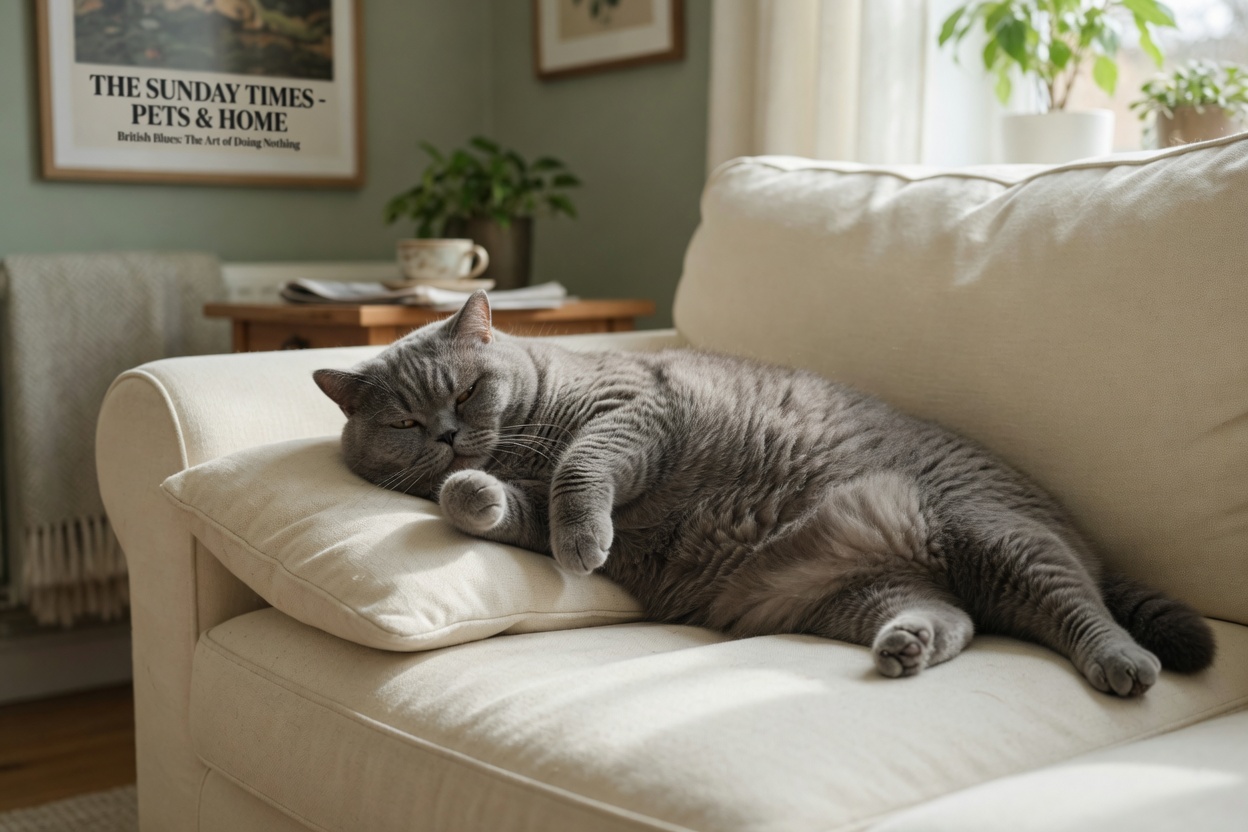
Varias características de la raza contribuyen a la tendencia del British Shorthair al sobrepeso:
- Nivel de actividad naturalmente bajo — los British Shorthair son gatos famosamente plácidos que prefieren estar tumbados al juego vigoroso. Gastan menos calorías que razas más activas como el Bengalí o el Abisinio.
- Predisposición genética — la raza presenta una constitución naturalmente más gruesa y musculosa que puede derivar fácilmente en una obesidad real sin un manejo cuidadoso
- Estilo de vida de interior — la mayoría de los British Shorthair viven completamente dentro de casa, lo que reduce aún más el gasto calórico
- Esterilización — la esterilización quirúrgica reduce la tasa metabólica y aumenta el apetito, lo que agrava el riesgo en una raza ya sedentaria
Consecuencias para la salud de la obesidad en los British Shorthair
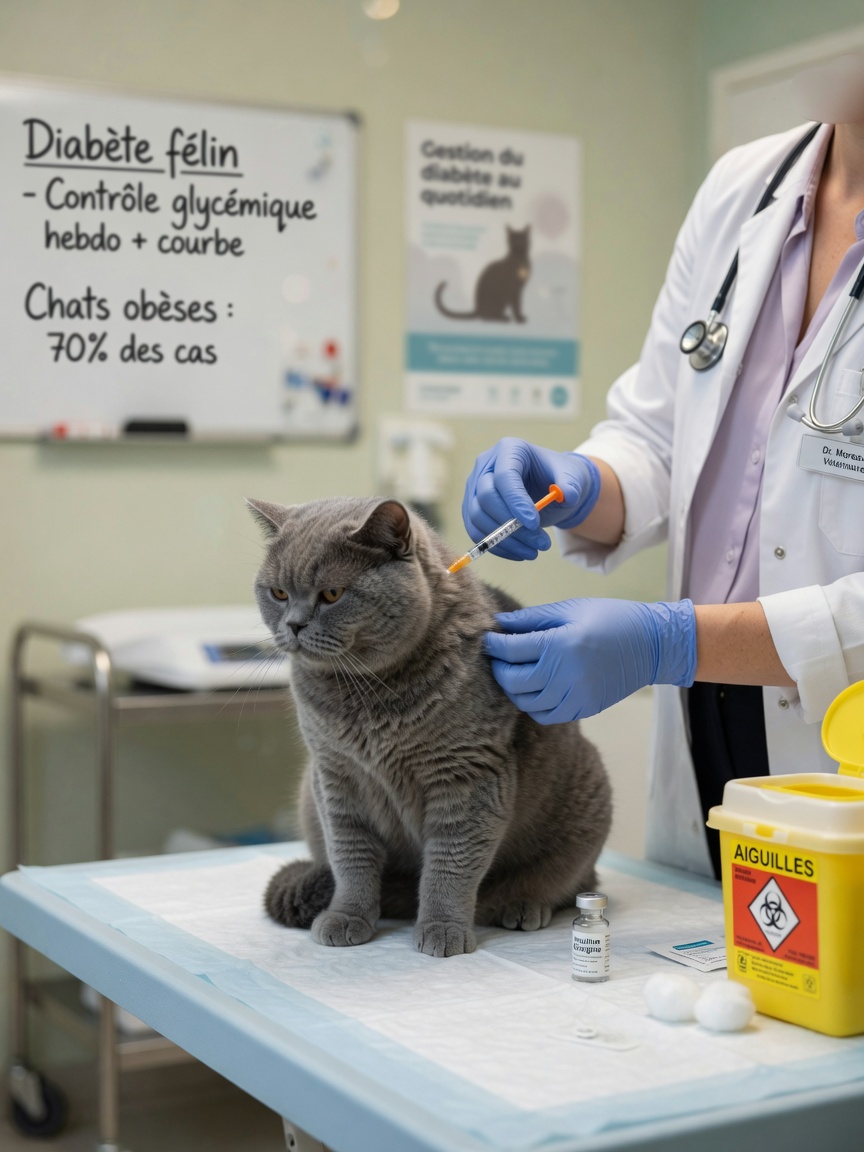
La obesidad no es una cuestión estética: es un estado patológico con graves efectos secundarios:
Diabetes mellitus
Los gatos obesos tienen una probabilidad significativamente mayor de desarrollar diabetes mellitus de tipo 2. El exceso de tejido adiposo provoca resistencia periférica a la insulina, lo que obliga al páncreas a producir cantidades cada vez mayores de insulina hasta que ya no puede compensar. Los gatos diabéticos necesitan inyecciones diarias de insulina y un manejo dietético de por vida. La buena noticia es que muchos gatos logran la remisión diabética si el peso corporal se normaliza en una fase temprana de la enfermedad.
Enfermedad articular degenerativa
El exceso de peso somete a las articulaciones a una carga mecánica adicional, lo que acelera la degradación del cartílago y el desarrollo de artrosis. Esto resulta especialmente relevante en los British Shorthair, que además presentan un riesgo elevado de displasia de cadera en comparación con muchas otras razas felinas. Un gato con artrosis se moverá aún menos, lo que crea un círculo vicioso de aumento de peso y dolor creciente.
Lipidosis hepática (hígado graso)
Los gatos obesos tienen un riesgo mayor de lipidosis hepática, una enfermedad hepática potencialmente mortal que se desencadena cuando el gato deja de comer, ya sea por enfermedad, estrés o un cambio de dieta. La movilización de grandes depósitos de grasa desborda la capacidad de procesamiento del hígado y provoca un deterioro rápido. La lipidosis hepática requiere una intervención veterinaria intensiva, que incluye soporte nutricional mediante sonda de alimentación. Este riesgo subraya por qué la pérdida de peso en los gatos debe ser siempre gradual y supervisada.
Enfermedad del tracto urinario
La cistitis idiopática felina (CIF), una enfermedad inflamatoria de la vejiga relacionada con el estrés, es más frecuente en gatos de interior con sobrepeso y poco estimulados. Los gatos obesos también tienen un riesgo mayor de desarrollar cristales urinarios y obstrucción uretral, siendo esta última una urgencia potencialmente mortal en los machos.
Reducción de la esperanza de vida
Los estudios en gatos han demostrado de forma constante que los gatos con sobrepeso viven menos que los gatos delgados. La carga acumulada de enfermedades metabólicas, ortopédicas y cardiovasculares asociadas a la obesidad crónica resta años de vida a un British Shorthair.
Cómo valorar el peso de tu gato
Utiliza un sistema de puntuación de condición corporal (BCS): la mayoría de las clínicas veterinarias emplean una escala del 1 al 9, en la que del 4 al 5 es lo ideal. Con un peso ideal:
- Las costillas se palpan con facilidad, pero no se ven de forma prominente
- Se aprecia una ligera cintura al mirar al gato desde arriba
- El abdomen presenta un ligero recogimiento visto de perfil
Si cuesta palpar las costillas a través de una capa de grasa, o si tu gato no tiene cintura visible y presenta un abdomen péndulo, es probable que tenga sobrepeso u obesidad. Pesa a tu gato en casa con una balanza digital una vez al mes y lleva un registro.
Manejo del peso: dieta y control calórico
Un manejo del peso eficaz requiere reducir la ingesta calórica por debajo del gasto energético del gato. Entre los principios clave están:
- Medición precisa — utiliza una balanza de cocina para pesar la comida con exactitud; el método de «medir a ojo con el cacito» siempre acaba en sobrealimentación
- Elige una dieta adecuada — las dietas de control de peso o «light» son restringidas en calorías, pero mantienen el contenido proteico para preservar la masa muscular durante la pérdida de peso; la comida húmeda suele ser superior para el control del peso por su alto contenido en agua y su menor densidad calórica
- Pérdida de peso solo gradual — el objetivo es no perder más del 0,5 al 1 % del peso corporal por semana para evitar desencadenar una lipidosis hepática; la pérdida de peso rápida en gatos es peligrosa
- Varias comidas pequeñas — reparte la ración diaria en 3 o 4 comidas pequeñas en lugar de dejar comida a libre disposición; esto reduce la conducta de pedir comida y regula el metabolismo
En Zooplus hay disponible una gama de dietas veterinarias de control de peso formuladas para gatos esterilizados y razas poco activas, con opciones tanto húmedas como secas de marcas como Hill's Metabolic, Royal Canin Satiety y Purina Pro Plan Weight Management.
Enriquecimiento ambiental y actividad
Fomentar la actividad en una raza naturalmente sedentaria requiere creatividad:
- Utiliza comederos tipo puzle y juguetes dispensadores de comida para que las comidas resulten estimulantes a nivel mental y físico
- Esparce porciones de pienso seco por la casa para fomentar la conducta de forrajeo
- Ofrece árboles para gatos, repisas en las ventanas y oportunidades para trepar
- Realiza sesiones de juego interactivo con caña dos veces al día, de diez minutos cada una
- Considera el adiestramiento con clicker: los British Shorthair son inteligentes y responden bien al refuerzo positivo
Control de la salud cardíaca
Los British Shorthair también presentan un riesgo elevado de miocardiopatía hipertrófica (MCH), independientemente de su peso. Se recomienda una auscultación cardíaca anual y, en el caso de los gatos reproductores, un cribado ecocardiográfico. La obesidad empeora el pronóstico de cualquier cardiopatía subyacente, lo que supone una razón adicional y convincente para mantener a tu British Shorthair delgado durante toda su vida.
Cuándo acudir al veterinario
Consulta a tu veterinario antes de iniciar cualquier programa de pérdida de peso y programa una revisión veterinaria que incluya análisis de glucosa en sangre y enzimas hepáticas para cualquier gato con un sobrepeso importante. Tu veterinario puede ayudarte a fijar un peso objetivo adecuado, recomendar una dieta apropiada y descartar causas médicas subyacentes del aumento de peso, como el hipotiroidismo (poco frecuente en gatos) o el hiperadrenocorticismo.