
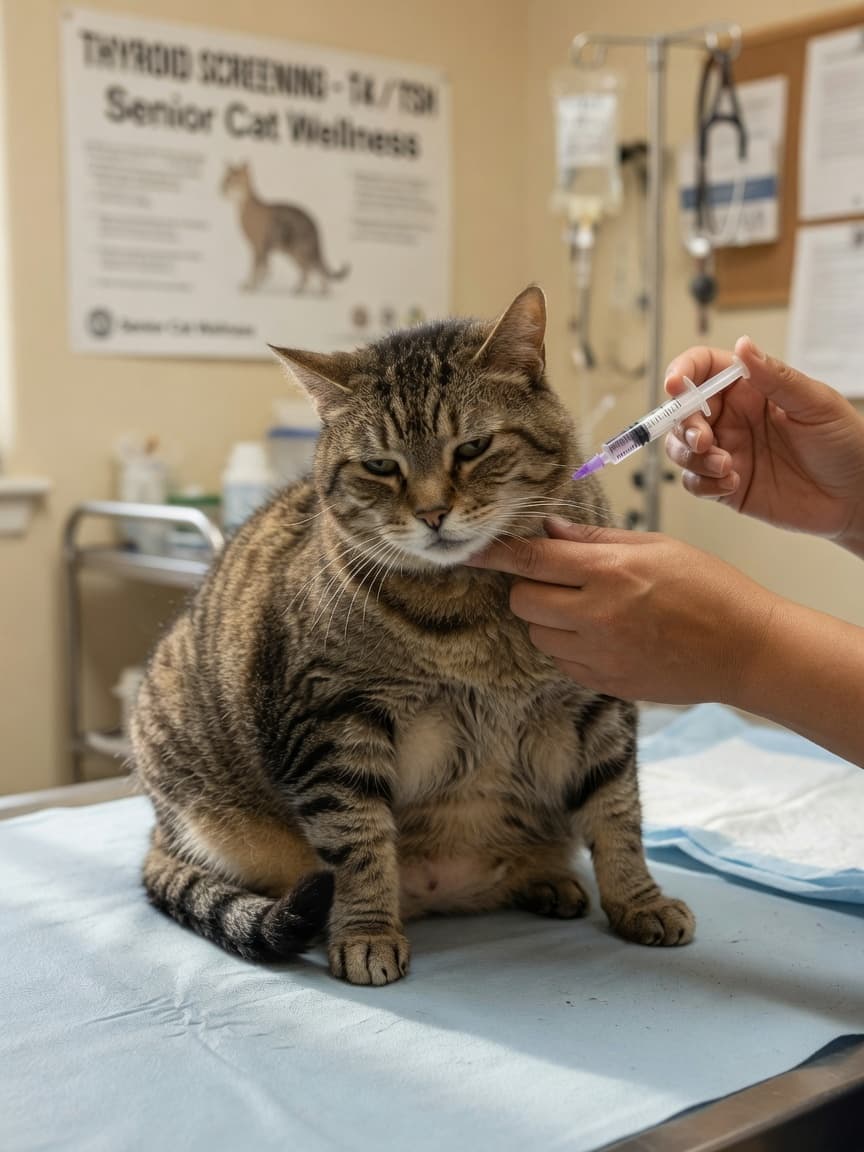
When Treatment Goes Further Than Intended
Treating hyperthyroidism in cats is generally very successful, but occasionally the thyroid pendulum swings too far in the other direction. When too much thyroid tissue is destroyed or suppressed — whether through radioactive iodine therapy, surgical thyroidectomy, or even long-term use of anti-thyroid medication — the cat can become hypothyroid, meaning thyroid hormone production drops below what the body needs to function normally.
Hypothyroidism arising as a spontaneous condition in cats without prior thyroid treatment is genuinely rare, occurring in a small number of cats with congenital thyroid abnormalities or very occasionally as a consequence of lymphocytic thyroiditis. Post-treatment hypothyroidism is far more clinically significant and worth understanding if your cat has been through any form of hyperthyroidism management.
Why Post-Treatment Hypothyroidism Happens
The thyroid gland has two lobes, and in hyperthyroid cats, one or both are typically overactive. Radioactive iodine works by concentrating in active thyroid tissue and delivering localised radiation. In most cats this corrects the overactivity beautifully, but in a percentage — estimates vary between five and twenty per cent depending on the study — thyroid hormone levels fall too low after treatment.
Surgical removal carries a similar risk if the remaining thyroid tissue does not compensate adequately. With medication such as methimazole or carbimazole, the effect is dose-dependent and reversible — if hypothyroidism develops, reducing the dose or briefly stopping treatment will restore levels — but cats on long-term medication can occasionally drift into a subclinical low-thyroid state that is easy to miss.
Recognising the Signs in Your Cat
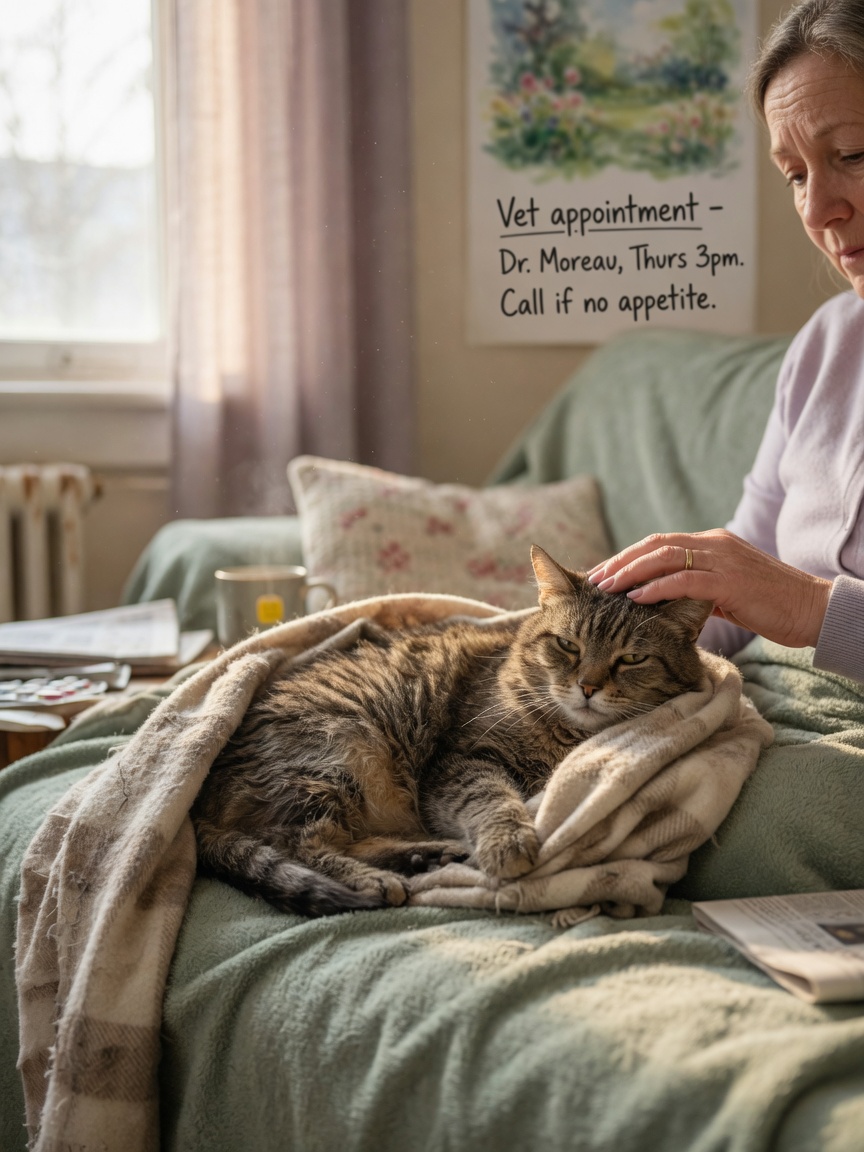
Hypothyroidism produces a profile almost opposite to what you saw during the hyperthyroid phase. Instead of an energetic, ravenous cat losing weight, you may notice:
- Lethargy and reduced activity levels
- Weight gain despite no significant increase in food intake
- Dull, thickened, or matted coat
- Reduced tolerance to cold temperatures
- Slow heart rate (bradycardia)
- Facial swelling or puffiness in some cases
- General mental dullness or reduced alertness
These signs tend to develop gradually, and because cats who have been hyperthyroid for a long time were often underweight and hyperactive, owners sometimes interpret the early stages of hypothyroidism as their cat finally settling down and returning to normal. This can delay recognition.
The Connection With Kidney Disease
This is arguably the most clinically important aspect of post-treatment hypothyroidism, and one your vet will have discussed before initiating treatment. Hyperthyroidism increases the glomerular filtration rate — in simple terms, it pushes more blood through the kidneys than normal. This can mask underlying chronic kidney disease (CKD), which is extremely common in older cats.
When thyroid hormone levels normalise after treatment, that artificially elevated kidney blood flow drops away, and kidney disease that was previously hidden may become apparent. If thyroid levels fall into the hypothyroid range, kidney function can drop further still, potentially to a point where the cat develops uraemic symptoms — vomiting, reduced appetite, and profound lethargy.
This is why vets will typically recheck kidney function values — creatinine, urea, and phosphate — shortly after initiating hyperthyroid treatment. If CKD is unmasked, managing both conditions simultaneously becomes the goal.
How Hypothyroidism Is Diagnosed After Treatment

Diagnosis requires blood testing. A total T4 level below the reference range, combined with clinical signs, is usually sufficient. Some vets also measure thyroid stimulating hormone (TSH) where feline-specific assays are available, though these are not universally accessible. TSH would be expected to be elevated if the pituitary gland is signalling the thyroid to produce more hormone that it is failing to provide.
It is worth noting that in the weeks immediately following radioactive iodine treatment, T4 levels naturally fluctuate as surviving thyroid tissue recovers. Many vets prefer to wait at least thirty days before drawing firm conclusions about whether post-treatment hypothyroidism is truly established or merely transient.
Managing Hypothyroidism in Cats
Where post-treatment hypothyroidism is confirmed and causing clinical problems, the standard treatment is oral levothyroxine supplementation. This is the same synthetic thyroid hormone used in humans and dogs, though cats metabolise it differently and typically require lower doses relative to body weight than dogs do.
Starting doses are conservative, with T4 levels and clinical signs monitored closely at four to eight week intervals until stability is achieved. The goal is not to push T4 to the middle of the normal range — in cats with concurrent kidney disease, maintaining thyroid levels at the lower end of normal is often preferable, as this preserves kidney blood flow better than a fully suppressed state.
When Mild Hypothyroidism May Be Left Untreated
This is where feline medicine differs meaningfully from human or canine practice. In cats where T4 is mildly low but the cat is clinically well — a good coat, stable weight, normal activity for their age — many vets elect to monitor rather than immediately supplement. The relationship between a slightly low T4 and actual clinical harm in cats is less well established than in other species.
Moreover, there is emerging evidence that cats with post-radioiodine hypothyroidism may actually have better long-term kidney outcomes than those who normalise into the middle of the reference range. The mechanisms behind this are not fully understood, but it has led to a more nuanced, individualised approach to post-treatment management.
Long-Term Outlook
Cats who have been successfully treated for hyperthyroidism and are being appropriately monitored generally do well. Post-treatment hypothyroidism, where it occurs, is manageable with the right approach. The critical element is consistent follow-up. T4 levels, kidney values, blood pressure, and body weight should all be tracked at regular intervals — typically every three to six months depending on how stable the cat is.
Open communication with your vet about any changes you notice at home — shifts in energy, appetite, coat quality, or drinking habits — remains the most powerful tool for keeping your cat comfortable through the years following treatment.