
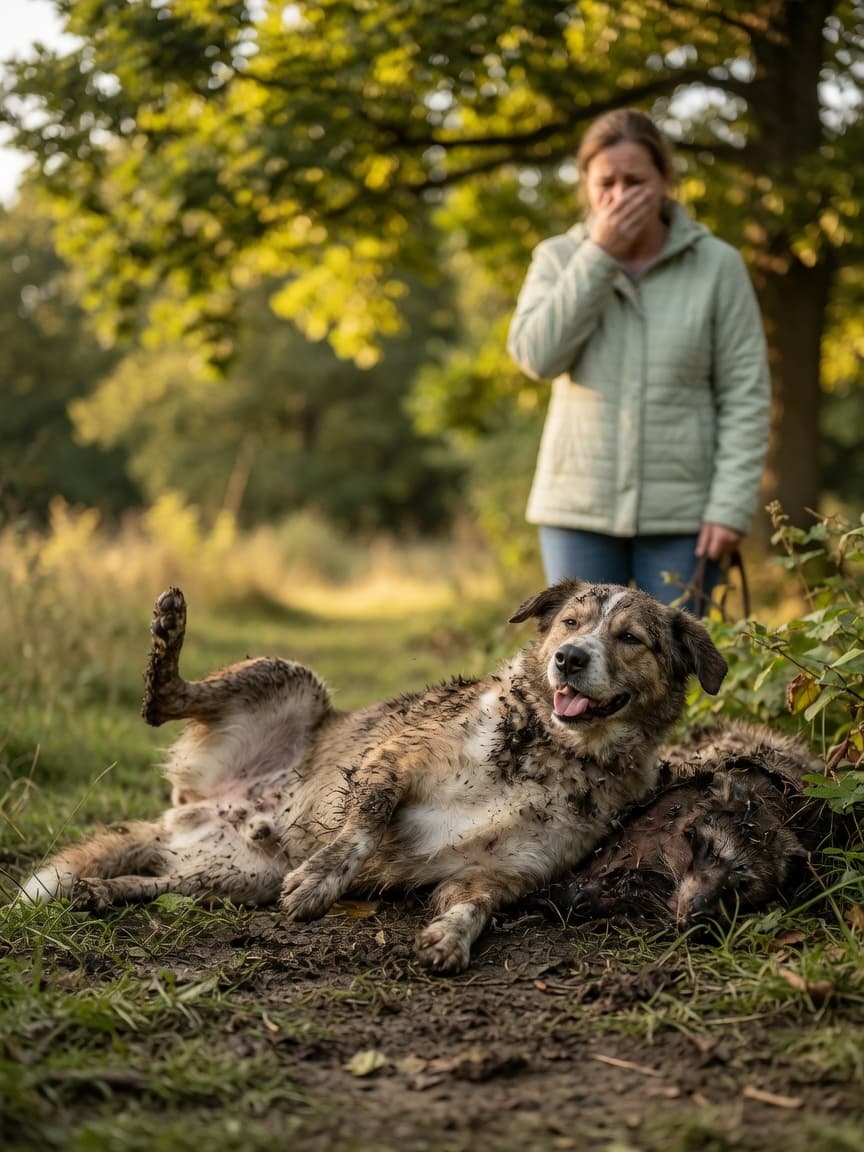
Why Dogs Roll in Dead Things: The Gross Evolutionary Reason
Your dog just found a dead bird, a decomposing fish, or something unidentifiable in the undergrowth — and before you could shout their name, they were shoulder-deep in it, writhing with visible ecstasy. The smell is catastrophic. Your dog looks triumphant. The most likely evolutionary explanation is that they're doing exactly what their wolf ancestors did: masking their own scent with a powerful environmental odour before a hunt. It's disgusting, it's ancient, and from their perspective, they have done something magnificent.
The Scent-Masking Hunting Theory
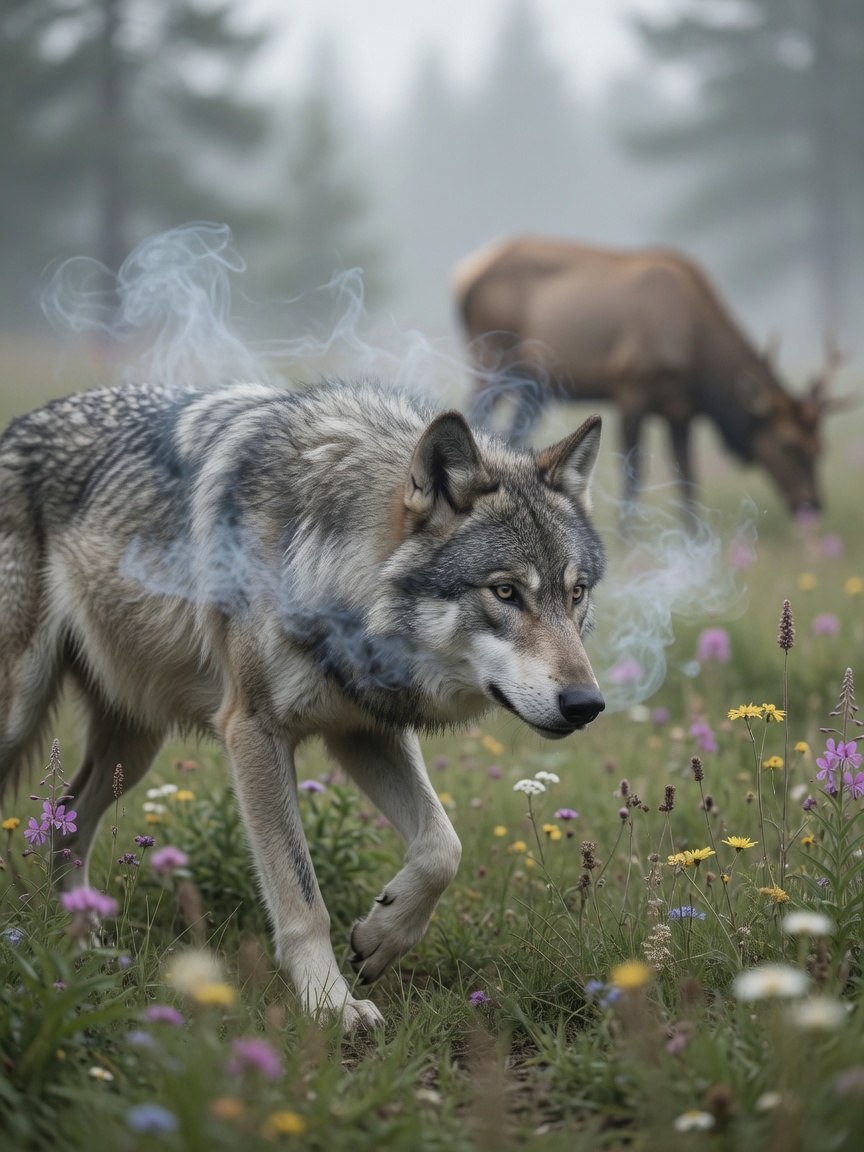
The leading scientific explanation is that wild canids — wolves, foxes, and wild dogs — roll in strong odours to mask their own scent before approaching prey. A predator that smells like rotting flesh is far less alarming to prey animals than one that smells like wolf. By coating themselves in the scent of carrion or other powerful environmental smells, they effectively camouflage themselves olfactorily. Prey animals rely heavily on scent to detect predators, and a wolf that smells like last week's dead elk is not registering as a threat. It's stealth technology, biological style.
The Scent-Broadcasting Theory
A competing theory suggests the opposite purpose: rather than masking their own smell, dogs roll in interesting odours to bring information back to the pack. Under this hypothesis, a dog returning to the group smelling of a specific dead animal is essentially delivering a location report — "there is carrion here, in this direction, with this specific composition." Pack members sniff the returning dog, process the olfactory data, and potentially follow it back to the food source. The dog is a living scent-memo. Several wolf behaviour studies support this theory, having observed wolves sniffing returning pack members intensely after they'd been away from the group.
Pure Scent Preference
There's also a simpler, less flattering explanation: dogs might just really like the smell. While this seems incomprehensible to humans — whose olfactory system is estimated to be about 10,000 to 100,000 times less sensitive than a dog's — the scent world dogs experience is radically different from ours. What we register as overwhelmingly revolting decomposition, a dog experiences as an extraordinarily rich, complex, information-dense chemical landscape. It's not that they have bad taste — it's that their sensory system is calibrated for a completely different register of the smell world. Rotting things are interesting, layered, and stimulating in ways we literally cannot perceive.
Why Do They Look So Happy Doing It?
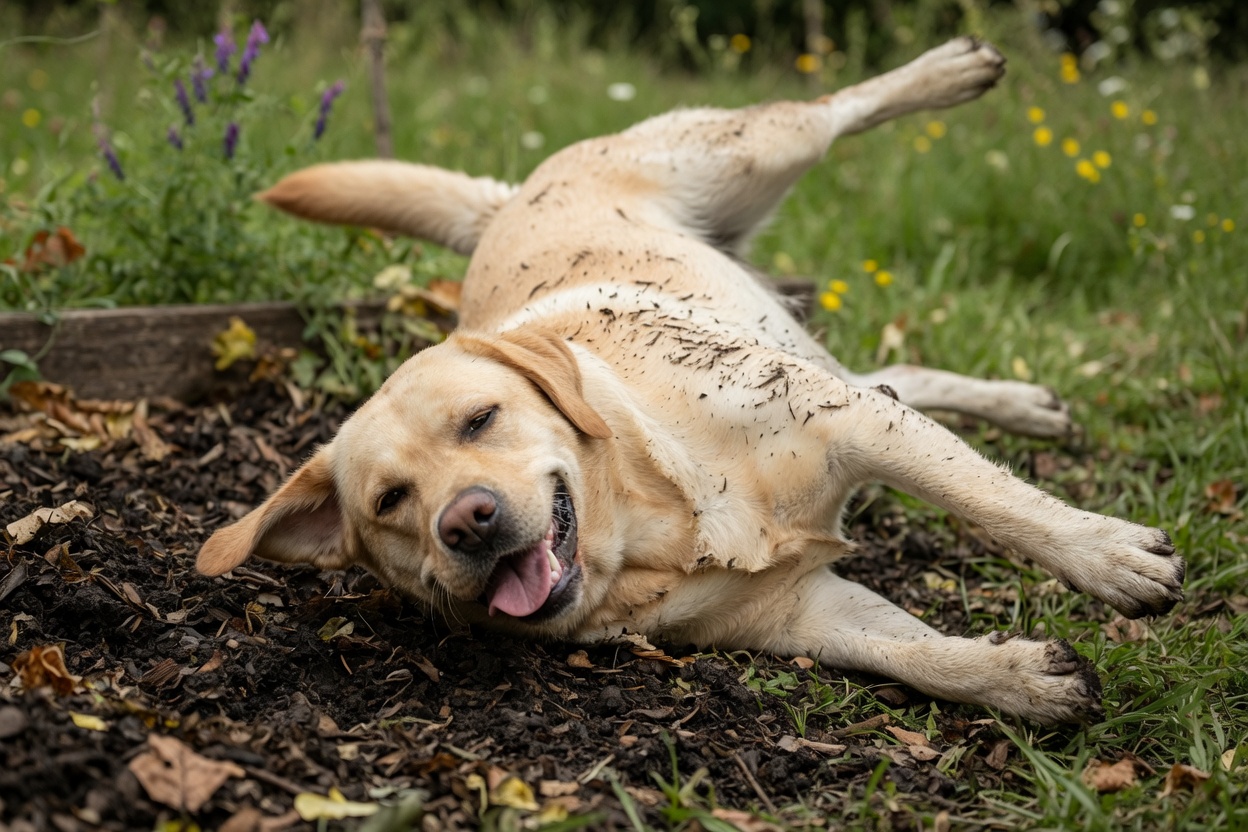
The body language during the roll is unmistakable: dogs approach a dead smell, pause, and then drop to one shoulder with what can only be described as absolute joy. They writhe, they wriggle, they make sure to get the scent onto their neck, shoulders, and back — the areas they can't easily reach with their mouth or paws. The behaviour is accompanied by visible relaxation and pleasure. This is because the rolling behaviour likely triggers a dopamine release — it's a deeply satisfying, instinctively rewarding action. Your dog is not being disgusting; they're experiencing something their brain genuinely rewards them for.
Why Neck and Shoulders Specifically?
Dogs are quite deliberate about where they apply the scent. They almost always target the neck, shoulders, and upper back — areas that are highly visible to other dogs and prominent in close-contact sniffing interactions. If the purpose is communication (whether to pack members or as camouflage), coating the areas that other dogs and animals will most likely investigate first makes perfect sense. A dog doesn't roll so that their paw smells interesting — they roll so that the first thing any animal encounters when approaching them is that powerful scent on their most forward-facing surfaces.
Is It More Common in Some Dogs?
Virtually all dogs will roll in dead things given the opportunity, but some individuals and breeds do it with more frequency and enthusiasm. Dogs with strong scent drives — hounds, retrievers, spaniels, and working breeds — tend to be particularly enthusiastic rollers. Age is also a factor: adolescent dogs and young adults are often the most committed, while very old dogs may lose interest. There's also an individual personality element — some dogs will spend twenty minutes systematically applying dead fish to every part of their upper body, while others sniff, think about it, and move on.
How to Prevent It (Or At Least Reduce It)
Complete prevention requires one of two things: a rock-solid recall command, or keeping your dog on lead in areas where dead things are likely to be found. The recall approach is more sustainable. "Leave it" and "come" as trained, proofed commands that work even in high-distraction situations can interrupt the roll before it begins — but you need to catch it in the sniff-and-pause phase before the shoulder drop. Once they're mid-roll, the dopamine has already been triggered and you've lost.
- Train "leave it" to a very high standard — practice with progressively more interesting items.
- Walk on lead in areas known for dead wildlife (lakesides, woodland with hunting activity, beaches).
- Watch for the pre-roll body language: intense sniffing, slowing down, circling, and that tell-tale sideways lean.
- Reward heavily for responding to recall in those moments — the recall needs to be more rewarding than the roll.
What to Do After the Roll
Wash them before they come inside. Use a dog-specific shampoo with enzymatic odour-neutralising properties — regular shampoo will make them smell better temporarily but won't break down the chemical compounds causing the smell. Towel dry thoroughly and check for ticks and fleas, especially around the neck and shoulder area where the roll concentrated contact. Monitor for any signs of illness in the next 48–72 hours, particularly vomiting, diarrhoea, lethargy, or skin irritation.
Key Takeaways
- The most likely reason dogs roll in dead things is evolutionary scent-masking before a hunt, though pack scent-communication is also a credible theory.
- Dogs may also simply find the smell genuinely stimulating — their olfactory experience of decomposition is radically different from ours.
- They target the neck and shoulders deliberately — the areas most visible and accessible to other animals during close encounters.
- Rolling triggers a dopamine release, making it deeply rewarding and self-reinforcing.
- Prevention requires a strong, proofed recall. Post-roll, wash with enzymatic shampoo and check for parasites.
Sources
- Asa CS, Mech LD, Seal US. "The use of urine, faeces, and anal-gland secretions in scent-marking by a captive wolf pack." Animal Behaviour. 1985;33(3):1034-1036. doi:10.1016/S0003-3472(85)80035-6.
- Horowitz A. "Inside of a Dog: What Dogs See, Smell, and Know." Scribner; 2009. PubMed PMID: 19780526.
Written by Julia Wrenfield, Pet Wellness Researcher | ForPetsHealthcare.com