
Why Cats Hide Pain
Understanding why cats conceal pain is the first step towards recognising it. This behaviour is not stubbornness or deception — it is a deeply ingrained survival mechanism. In the wild, an animal that visibly signals weakness or injury becomes a target for predators and may be displaced from resources by rivals. Even though domesticated cats have lived alongside humans for thousands of years, this instinct remains essentially intact.
The result is that cats are often in considerable discomfort before their owners notice anything is wrong. By the time a cat is showing obvious signs of pain — crying, limping dramatically, refusing all food — the underlying condition may already be quite advanced. Learning to read subtler signals is one of the most valuable skills any cat owner can develop.
Behavioural Signs of Pain
Changes in behaviour are often the earliest and most telling indicators that a cat is experiencing pain. Because every cat has a unique baseline personality, you are in the best position to notice when something is "off." Trust your instincts — if your cat is acting differently from their normal self, it is worth investigating.
Hiding and Withdrawal
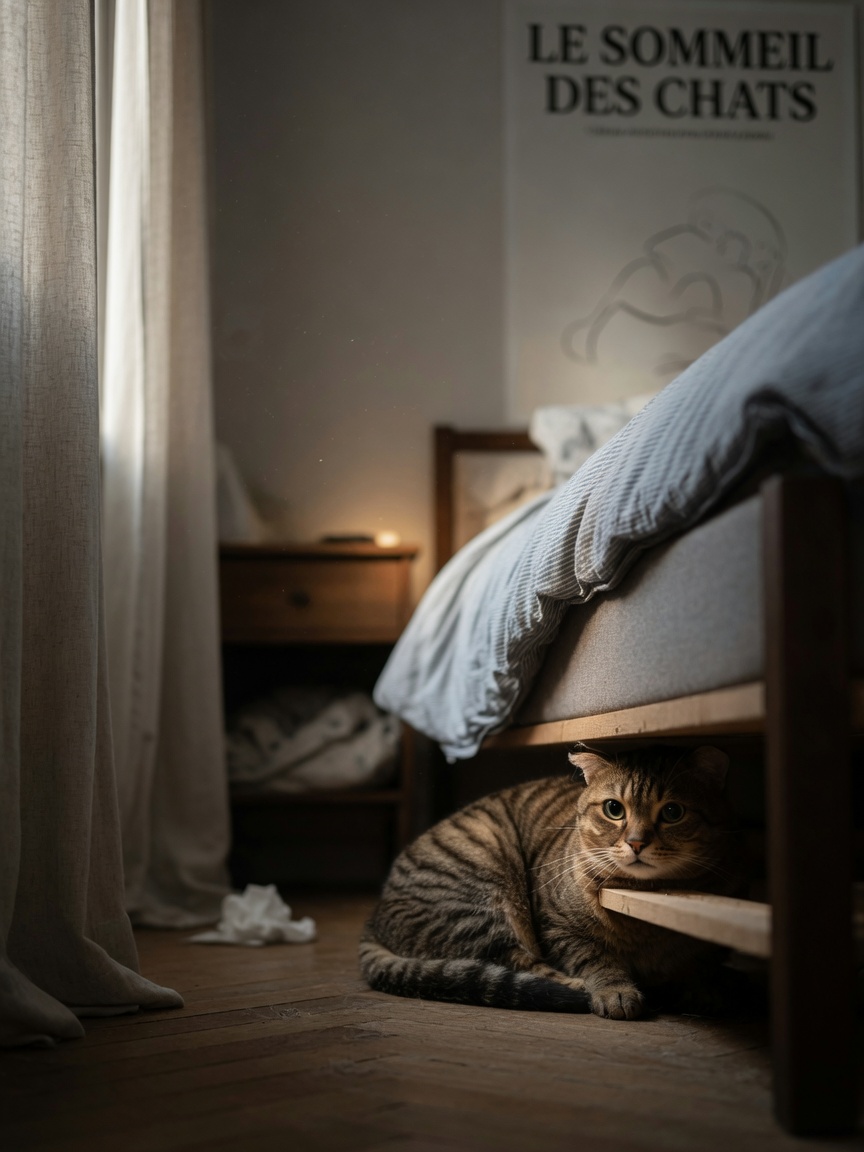
A cat in pain will often seek out confined, quiet spaces — under the bed, behind furniture, inside a wardrobe — and spend much longer there than usual. This is self-protective behaviour. If your cat, who normally moves freely around the home and seeks company, is consistently hiding, take it seriously. Forced withdrawal is rarely a sign of a cat simply wanting "alone time."
Uncharacteristic Aggression
A normally gentle cat who suddenly hisses, swipes, or bites when touched in a particular area is communicating pain in the most direct way available to them. Do not punish this behaviour — it is a pain response. Note which body part or type of handling provokes the reaction, as this information is useful for your vet.
Reduced or Absent Grooming
Cats are meticulous groomers; a healthy cat spends a significant portion of each day maintaining their coat. Pain, particularly pain that limits movement — such as arthritis or abdominal pain — makes grooming difficult or impossible. Look for a dull, matted, or greasy coat, particularly around the hindquarters and base of the tail, areas that require flexibility to reach.
Overgrooming or Excessive Licking
Paradoxically, some cats respond to localised pain by licking the affected area excessively. A cat repeatedly licking their abdomen may have abdominal pain; persistent licking of a limb or joint may indicate musculoskeletal pain or a wound.
Reduced Appetite and Thirst
Pain suppresses appetite in cats just as it does in people. A cat who turns away from food they normally enjoy, or who approaches the bowl and then walks away without eating, may be in pain. Dental pain in particular often manifests this way — the cat is hungry but eating hurts. Changes in water intake (particularly increased drinking) can also signal underlying conditions including kidney disease or diabetes that may be causing discomfort.
Changes in Posture and Movement
Watch how your cat moves and rests. A cat in pain may move more stiffly, hesitate before jumping onto furniture they previously leapt onto easily, or choose lower resting spots than usual. They may sit or lie in an unusual, hunched, or tense position rather than the relaxed loaf or sprawl of a comfortable cat.
Vocalisation Changes
Some cats in pain vocalise more — particularly crying, yowling, or growling when touched or when moving. Others become unusually quiet. Any significant change in your cat's normal vocal patterns warrants attention.
Physical Signs of Pain

In addition to behavioural changes, there are observable physical signs that suggest a cat is in discomfort.
Hunched Back and Tucked-In Posture
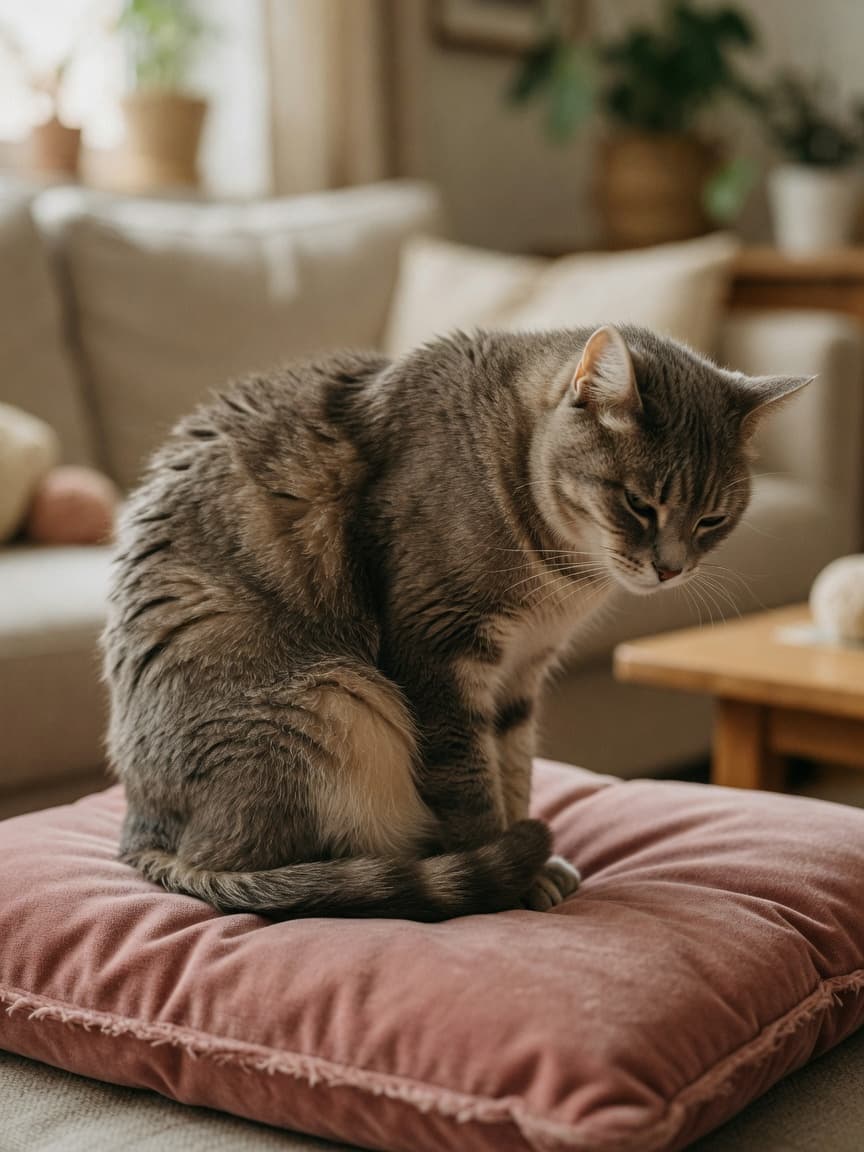
A cat sitting with their back arched upward, spine tense, and head held lower than usual is often exhibiting a pain posture. This is particularly associated with abdominal pain but can indicate generalised discomfort. Combined with a reluctance to move, it is a meaningful signal.
Squinting or Partially Closed Eyes
Half-closed eyes in a cat that is alert and not sleepy are a consistent indicator of pain. This is different from the slow blink of a relaxed, content cat — it is a tense, drawn-looking partial closure. Eye pain itself (from injury, infection, or glaucoma) will often cause squinting in the affected eye specifically, sometimes with visible discharge or redness.
Piloerection
Piloerection — where the fur along the back or tail stands on end — is usually associated with fear or aggression, but it can also occur in cats experiencing acute pain. If you see piloerection in a context where fear or a territorial threat is not present, pain may be the cause.
Rapid or Shallow Breathing
Pain can cause a cat to breathe more rapidly or shallowly than normal, particularly if the pain is in the chest or abdomen. Any significant change in breathing pattern should be treated as a potential emergency.
Reluctance to Be Touched
Beyond outright aggression, many cats in pain simply move away or tense visibly when you try to touch a particular area. Running your hands gently along your cat's body — including the spine, abdomen, and limbs — occasionally can help you notice areas of sensitivity before they become severe.
The Feline Grimace Scale
In recent years, researchers have developed a validated tool for assessing pain in cats called the Feline Grimace Scale (FGS). It evaluates five facial action units:
- Ear position: ears rotated forward and flattened indicate pain
- Orbital tightening: squinting or partially closed eyes
- Muzzle tension: tense, rounded muzzle rather than relaxed and rounded
- Whisker position and shape: whiskers pulled back or bunched rather than fanned out naturally
- Head position: head hanging below the shoulders rather than held level
The scale was originally developed for use by veterinary professionals, but free training materials are available online from the University of Montreal, which developed the tool. Familiarising yourself with the scale gives you an evidence-based framework for assessing your cat's facial expression, which can be particularly useful when deciding whether to seek veterinary attention.
Common Causes of Pain in Cats
Dental Disease
Dental pain is one of the most prevalent and underdiagnosed causes of discomfort in cats. Studies suggest that the majority of cats over three years of age have some degree of dental disease. Signs include changes in chewing behaviour, drooling, pawing at the mouth, and dropping food. Regular dental checks with your vet are essential.
Arthritis
Feline osteoarthritis is far more common than previously recognised. Research suggests that the majority of cats over ten years old have radiographic evidence of arthritis, even if they do not show dramatic symptoms. Reduced jumping ability, stiffness after rest, reluctance to use the litter tray (particularly if it has high sides), and changes in grooming are the most common signs.
Urinary Tract Conditions
Feline idiopathic cystitis, urinary crystals, and urinary blockages (particularly in male cats) are all acutely painful. Signs include straining to urinate, frequent visits to the litter tray producing little or no urine, crying during urination, and blood in the urine. A male cat that is straining and producing no urine is a veterinary emergency.
Internal Conditions
Kidney disease, inflammatory bowel disease, pancreatitis, and various cancers can all cause significant pain in cats, often without obvious external signs in the early stages. Regular veterinary check-ups, including blood and urine tests in senior cats, are the most reliable way to detect these conditions before they become severe.
When to Call the Vet Immediately
The following signs require urgent veterinary attention — do not wait to see if they improve on their own:
- A male cat straining to urinate and producing no urine
- Collapse or inability to stand
- Laboured or open-mouth breathing
- Paralysis or dragging of the hind limbs
- Sudden, severe vocalisation suggesting acute pain
- Suspected trauma or poisoning
- Complete refusal to eat for more than 24 hours alongside other symptoms
Pain in cats is never something to watch and wait on. If you are unsure whether your cat is in discomfort, the safest and kindest choice is always to call your vet for advice. A brief phone consultation can help you decide whether the situation requires immediate attention or a scheduled appointment — and it may make a profound difference to your cat's wellbeing.