
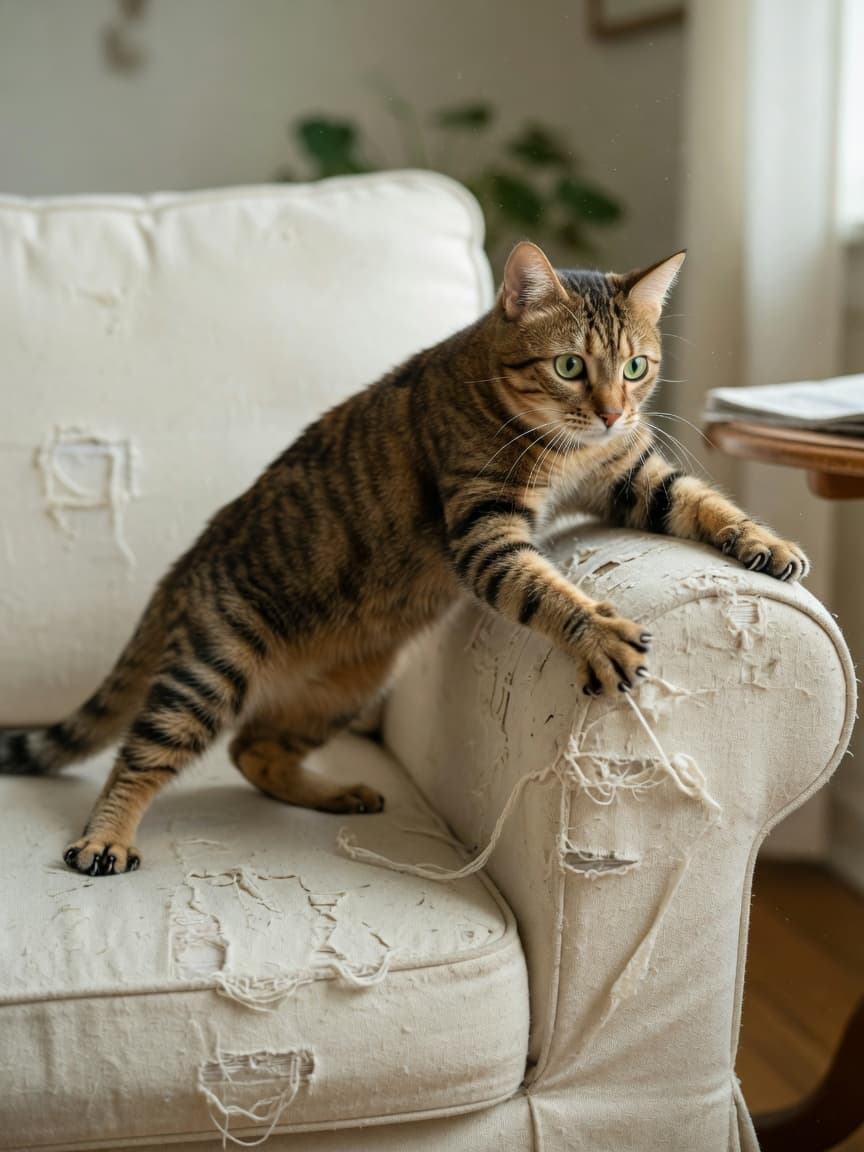
Scratching Is Not Misbehaviour — It Is Biology
If your sofa has been reduced to a collection of threads, you are not alone. Scratching is one of the most common feline behaviour complaints reported to vets and behaviourists in the UK. But understanding why cats scratch changes how you respond to it — and whether your response actually works.
Cats scratch for several overlapping reasons: to shed the outer sheath of their claws, to stretch the muscles of the back and shoulders, to mark territory visually and through scent glands in the paws, and to self-soothe during moments of stress or excitement. Attempting to eliminate scratching entirely is neither realistic nor fair to the cat. The goal is to redirect it to appropriate surfaces.
What Actually Works
Providing Suitable Scratching Surfaces
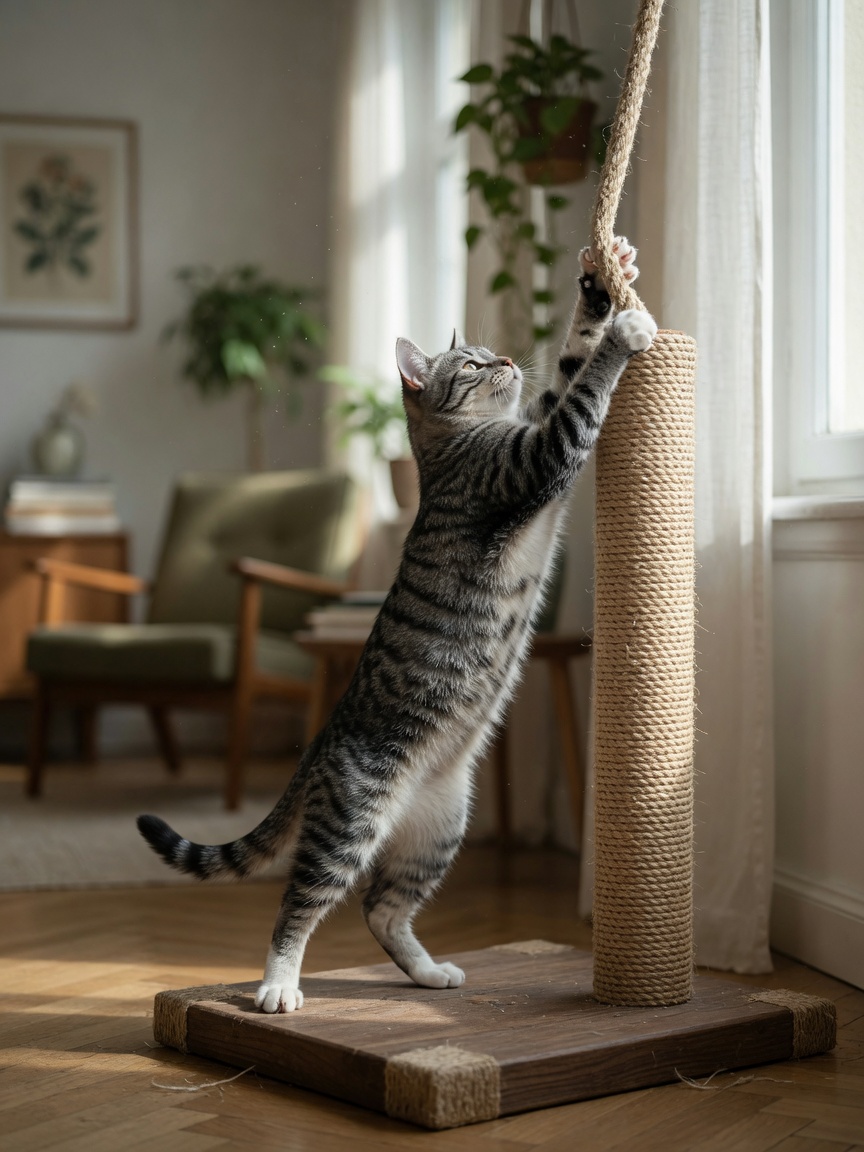
The single most effective intervention is providing scratching posts that meet the cat's actual preferences, positioned in the right locations. Most cats prefer a surface that is tall enough to allow a full body stretch — for an average adult cat, this means a minimum of 60 to 70 centimetres. Posts that wobble or tip are typically rejected quickly, since cats rely on resistance when scratching. A heavy, stable base is non-negotiable.
Texture preference varies by individual, but sisal rope and corrugated cardboard are consistently popular. Some cats prefer horizontal scratching surfaces — a flat cardboard scratcher on the floor may be worth trying if your cat is targeting carpet or rugs rather than vertical surfaces.
Location Is Everything
A scratching post hidden in a spare bedroom will not be used. Cats scratch in socially significant locations — near sleeping spots, close to entry points, and in rooms where the family spends time. Place scratching posts near the furniture currently being targeted. Yes, this means a post next to your sofa. Once the cat is reliably using the post, you can gradually move it — a few centimetres per day — to a more convenient position.
Positive Reinforcement
When you see your cat using a scratching post, reward the behaviour immediately with a treat, praise, or play. Do not wait — the reward must come within a second or two of the behaviour for the association to form. Catnip sprinkled on the post or rubbed into the sisal can increase initial interest, though not all cats respond to catnip (sensitivity is genetic and roughly half the cat population does not react to it).
Protecting Furniture in the Meantime
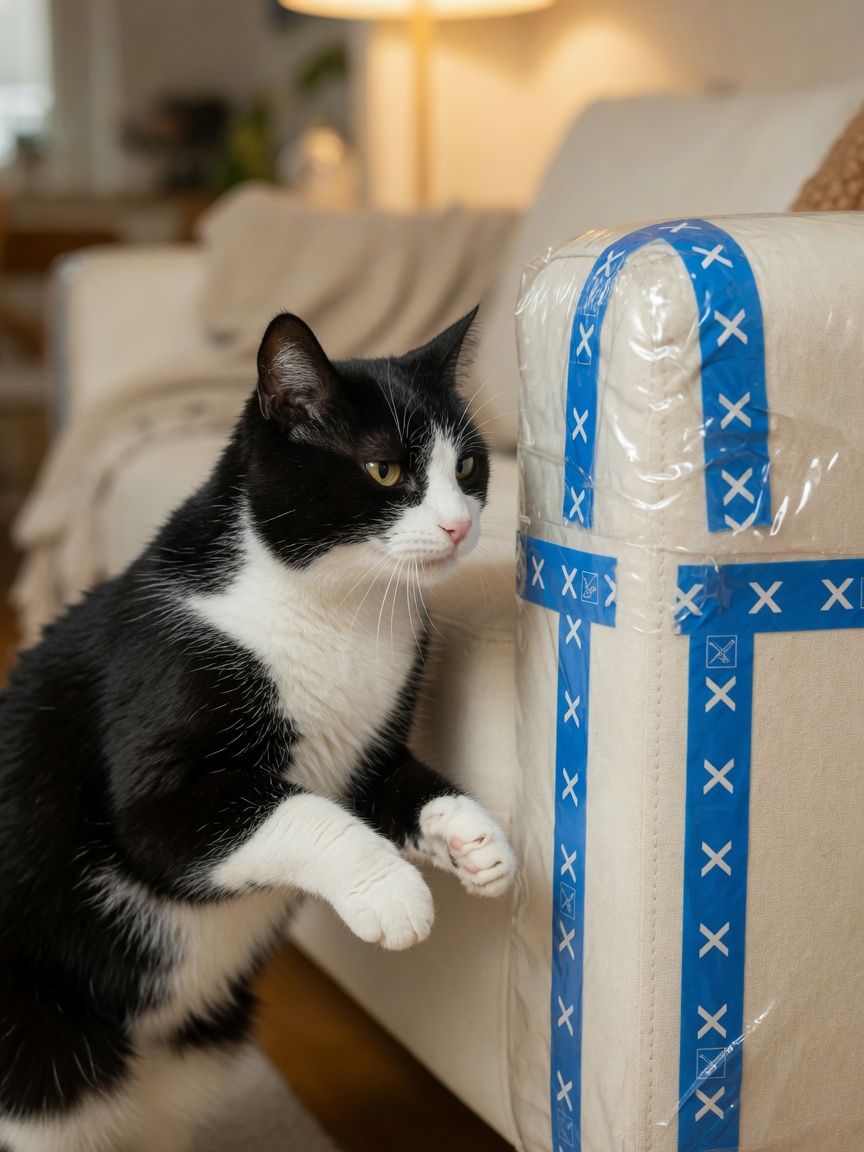
While you are building a new habit, protecting the furniture from further damage makes sense. Double-sided sticky tape applied to scratched areas is highly aversive to most cats — they dislike the sensation on their paws and will typically avoid the surface. Specialist cat-deterrent tape is available and designed not to damage upholstery. Temporary covers such as throws or plastic corner guards can also reduce access.
Pheromone sprays designed for cats can be applied to furniture to reduce the territorial marking drive in that specific location. These work best as part of a broader strategy rather than as a standalone solution.
What Does Not Work
Punishment
Shouting at a cat, spraying it with water, or physically moving it away from furniture while vocalising displeasure is largely ineffective and often counterproductive. Cats do not connect a delayed or indirect punishment with the scratching behaviour — they connect it with your presence. The result is frequently a cat that scratches when you are not in the room rather than a cat that stops scratching. Punishment also erodes trust, which matters for the long-term relationship.
Declawing
Declawing — the surgical removal of the last bone of each toe — is illegal in the UK and most of Europe, and rightly so. It causes chronic pain, alters gait, and is associated with increased aggression and litter tray avoidance. It is not a solution and should not be considered.
Single Posts in Isolated Locations
One small post in a back room is not sufficient. Most cats that scratch furniture do so because they lack adequate, well-positioned alternatives. Households with multiple cats particularly need multiple posts, as resource competition is a common driver of stressed scratching behaviour.
Managing Multi-Cat Households
In homes with more than one cat, scratching frequency often increases because it becomes a method of asserting presence and territory. Ensure there are at least as many scratching posts as there are cats, positioned in different rooms. Vertical territory — shelving, cat trees with integrated scratching surfaces, wall-mounted platforms — reduces overall competition and stress, which in turn reduces stress-driven scratching.
If scratching is sudden, intense, or accompanied by other changes in behaviour such as hiding, aggression, or changes in appetite, consult your vet. Sudden increases in scratching can occasionally signal pain or anxiety that deserves professional attention.
A Practical Action Plan
- Provide at least one tall, stable sisal or cardboard scratcher per cat
- Place posts next to currently targeted furniture — not in a separate room
- Reward use of the post immediately with treats or play
- Apply double-sided tape or deterrent spray to furniture being scratched
- Trim claws every two to three weeks to reduce damage potential
- Add horizontal scratching surfaces if carpet or rugs are targeted
- In multi-cat homes, increase the number of posts and vertical spaces available
- Contact your vet if scratching behaviour changes suddenly or is accompanied by other signs of distress