
Making the Most of Your Puppy's First Vet Appointment
Bringing a new puppy home is one of life's great joys, but the first veterinary visit can feel overwhelming if you are not sure what to expect. The good news is that a little preparation goes a long way. Knowing what to bring and which questions to ask means you walk out of that clinic with a clear health plan and a lot less anxiety.
When Should You Book the First Appointment?
Most veterinary organisations, including the British Veterinary Association, recommend scheduling your puppy's first check-up within 48 to 72 hours of bringing them home. At this stage the vet is not just checking for obvious illness — they are establishing a baseline for your puppy's health and setting up a vaccination, deworming, and flea prevention schedule. Early visits also help your puppy form positive associations with the clinic before anything uncomfortable happens, which pays dividends for years to come.
What to Bring to the Appointment

Health and Vaccination Records
If your puppy came from a breeder or rescue organisation, you should have received a puppy pack containing any vaccinations already given, deworming treatments, microchip registration details, and sometimes a pedigree certificate. Bring all of it. Even if the records look incomplete, the vet can work with whatever is there. If your puppy came without any documentation, do not worry — the vet will simply start from scratch.
A Stool Sample
This one surprises many new owners, but a fresh faecal sample collected within 24 hours of the appointment gives the vet a chance to check for intestinal parasites such as roundworm, hookworm, giardia, and coccidia. Young puppies are frequently infected with worms even when they appear perfectly healthy, because worm larvae can be transmitted in utero or through the mother's milk. Pop the sample into a clean, sealed container or a zip-lock bag.
Your Questions — Written Down
Veterinary appointments tend to move quickly, and it is easy to forget half of what you wanted to ask once you are in the room with a wriggling puppy. Write your questions down in advance. Covering nutrition, behaviour, toilet training, and socialisation in one visit is entirely reasonable — vets expect new puppy owners to have a lot on their minds.
Questions Worth Asking Your Vet
Vaccination Schedule
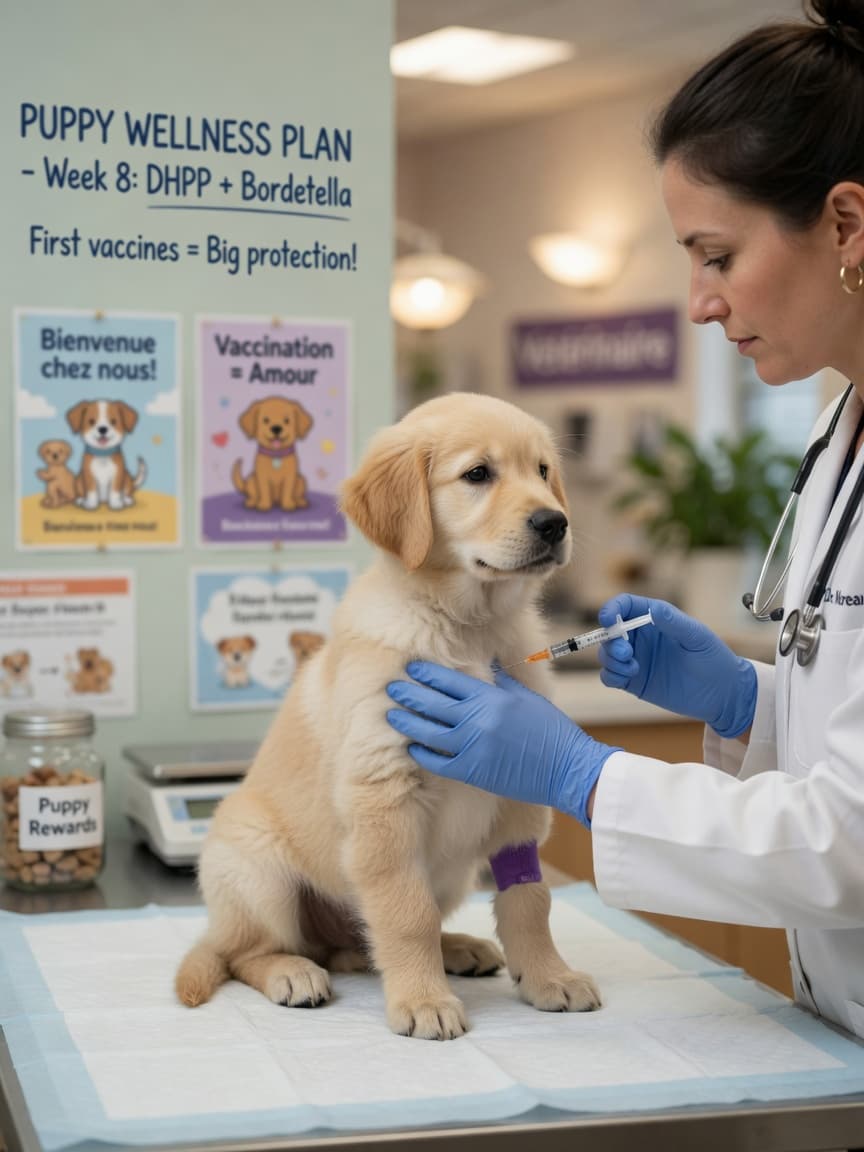
Ask for a clear timeline. In the UK, the core puppy vaccination course typically involves a primary injection at around eight weeks of age, a second at ten to twelve weeks, and in some protocols a third at sixteen weeks. Protection against canine parvovirus, distemper, hepatitis, and leptospirosis forms the backbone of these jabs. Ask when your puppy will be considered fully protected and safe to socialise outdoors, as this affects your training and exercise planning significantly.
Nutrition and Feeding
Growth requirements in puppies differ substantially from those of adult dogs, and large-breed puppies have different calcium-to-phosphorus ratios than small breeds. Ask your vet whether the food you are currently using is appropriate, how much to feed, and when to transition to adult food. This is particularly important because overfeeding in puppies — especially large breeds — has been linked to developmental orthopaedic disease.
Parasite Prevention
Fleas, ticks, roundworm, and lungworm are all relevant in the UK depending on your region and lifestyle. Ask for a monthly parasite prevention plan rather than waiting until you spot a problem. Your vet can recommend prescription-only treatments that are considerably more effective than over-the-counter options sold in supermarkets.
Neutering
The timing of neutering has become a more nuanced conversation in recent years. Research published in journals such as Frontiers in Veterinary Science suggests that early neutering in some large breeds may increase the risk of joint disorders and certain cancers. Ask your vet for a breed-specific recommendation rather than a one-size-fits-all answer.
Microchipping
In England, Scotland, and Wales, microchipping is a legal requirement for dogs over eight weeks of age. If your puppy has not yet been chipped, the first vet visit is a practical time to get it done. Confirm that your contact details are correctly registered on a compliant database such as Petlog or Microchip Central.
What the Vet Will Check
A standard puppy examination covers a remarkable amount of ground in a short time. The vet will assess your puppy's weight and body condition score, listen to the heart and lungs, palpate the abdomen for any organ abnormalities, inspect the eyes, ears, and mouth, check the skin and coat, and evaluate the musculoskeletal system. In male puppies they will also confirm that both testicles have descended into the scrotum — a condition called cryptorchidism, where one or both remain undescended, requires monitoring and eventually surgical intervention.
Managing Your Puppy's Anxiety at the Clinic
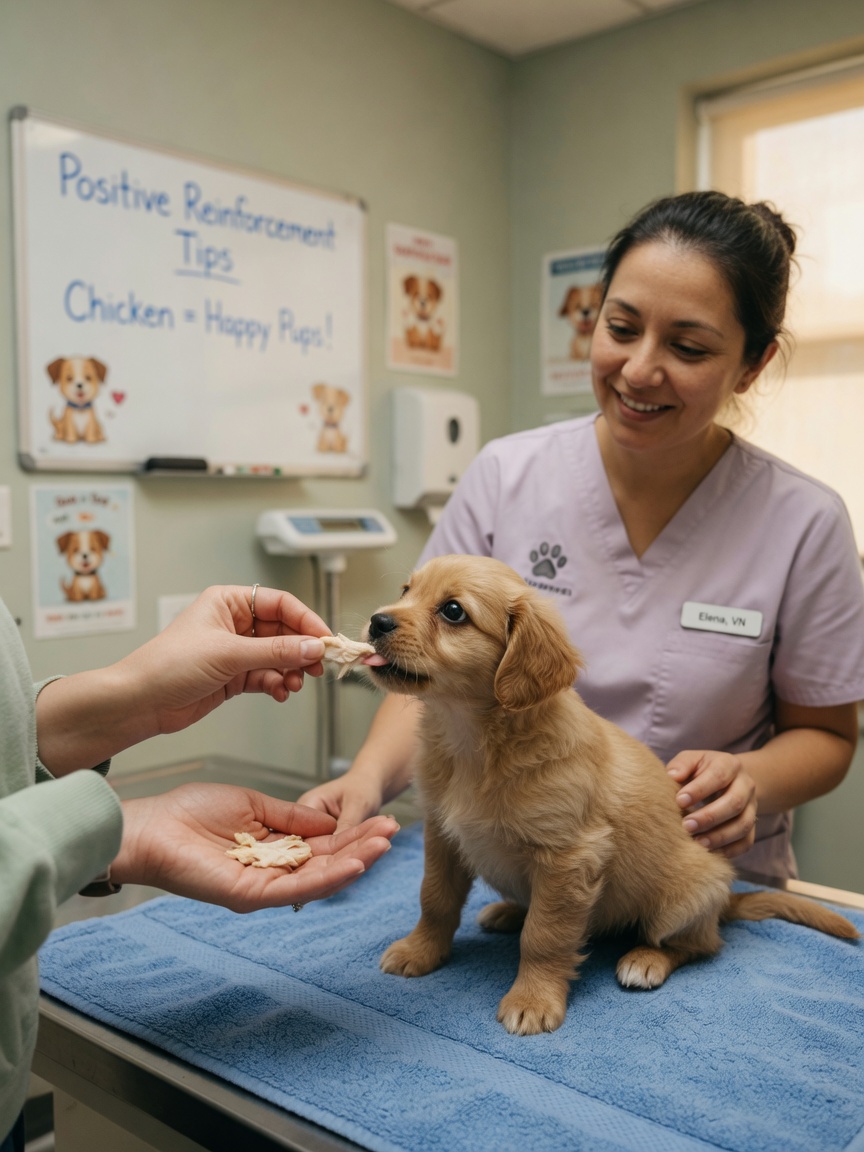
Bring a few high-value treats your puppy has not encountered before — small pieces of cooked chicken or cheese work well. These can help create positive associations during what might otherwise be a stressful experience. Some clinics offer dedicated puppy-friendly appointments or nurse consultations between vet visits, which are worth asking about. The more pleasant these early experiences, the easier every future visit will be.
After the Appointment
Before you leave, ask for a written summary of what was discussed, what treatments were given, and when the next appointment is due. Many clinics now offer this via an app or client portal. Keep your puppy's records somewhere accessible — you will need them if you travel, switch vets, or need emergency care. A well-documented health history is one of the most useful things you can give your dog throughout their life.