

Are Tulips Toxic to Dogs?
Updated: June 2026
Spring's Most Popular Flower Carries a Hidden Risk
Tulips are among the most beloved flowers in the world. Billions are planted each year in gardens, sold in markets, and displayed in homes as spring arrives. Their cheerful colors and classic shape make them irresistible — but for dog owners, they represent a genuine and underappreciated risk. Every year, veterinary clinics see a spike in tulip-related poisoning cases in spring, when the bulbs are being planted or dug up, and when fresh cut tulips arrive in homes in abundance.
The toxic compounds in tulips are tulipalin A (alpha-methylene butyrolactone) and tulipalin B, lactone glycosides that are present throughout the entire plant but concentrated most heavily in the bulb. Tulipalins are released when the plant tissue is damaged — chewed, crushed, or broken — making the act of a dog chewing a tulip bulb particularly efficient at releasing toxins. These compounds cause direct irritation to the gastrointestinal tract and, in sufficient quantities, can affect the cardiovascular system.
Additionally, tulips contain allergenic compounds (including tuliposide A and B) that can cause contact dermatitis in humans and may contribute to skin and mucous membrane irritation in dogs. The combination of these compounds makes tulips meaningfully toxic, not just mildly irritating.
The Bulb: The Most Dangerous Part
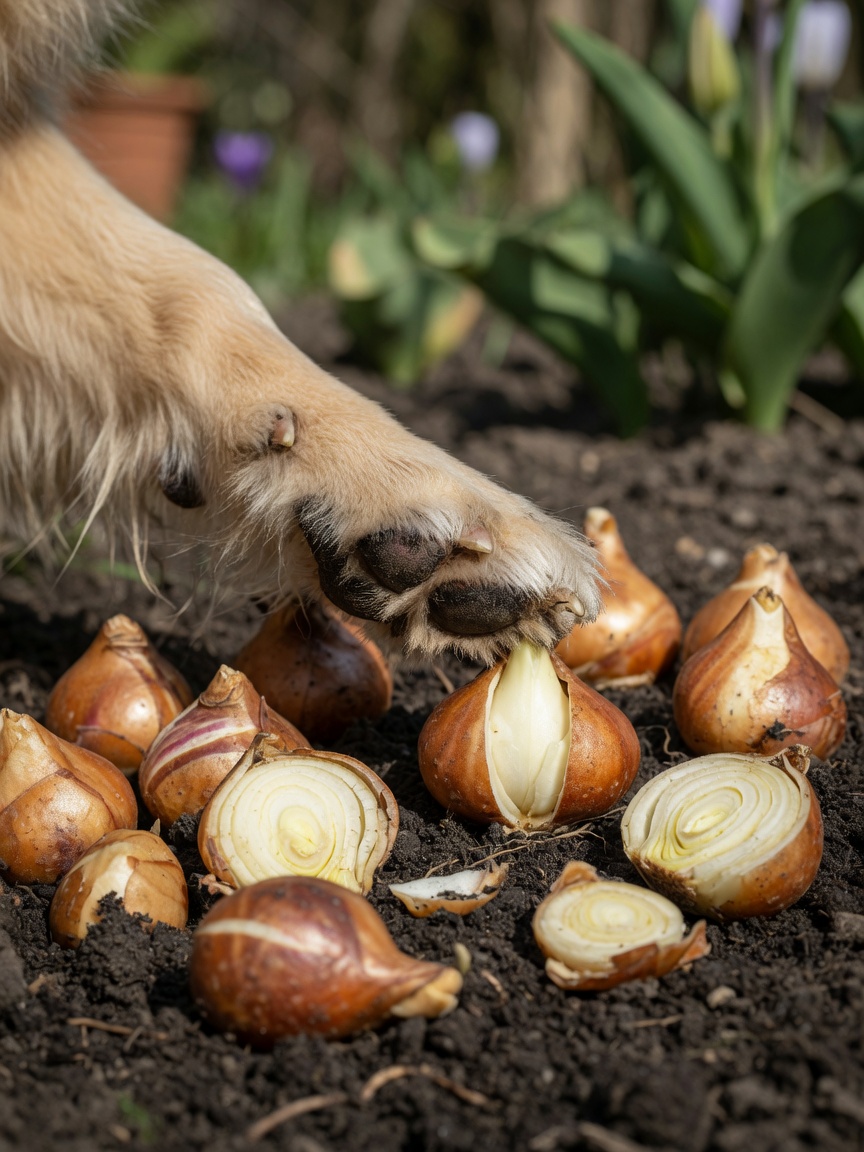
Not all parts of the tulip plant are equally dangerous. The risk gradient is as follows, from most to least toxic:
- The bulb — by far the most concentrated source of tulipalins; a single large bulb can cause significant illness in a small dog
- The stem — contains moderate levels of toxins
- The leaves — lower concentration but still toxic
- The flower petals — least toxic, but not safe to eat
The danger of bulbs is particularly acute in autumn, when gardeners plant tulip bulbs throughout yards and sometimes store them in garages or garden sheds. Dogs are remarkably good at finding and digging up freshly planted bulbs — the earthy smell is attractive to them. A dog that gets into a bag of tulip bulbs in a garage or digs up a freshly planted bed may consume multiple bulbs in a short time, significantly multiplying the toxic dose.
Spring brings a different risk: as bulbs are dug up for division or replanting, they may be left temporarily accessible. Cut tulips in vases also pose a risk — the water in the vase picks up compounds from the stem, and dogs may drink from flower vases.
Symptoms of Tulip Poisoning in Dogs
Symptoms vary based on the amount consumed and which part of the plant was eaten. Minor nibbling of petals may cause only mild GI upset, while ingestion of one or more bulbs can produce a more alarming clinical picture.
Mild to moderate toxicity (petals, leaves, or small amounts):
- Drooling and salivation
- Nausea and vomiting
- Diarrhea
- Loss of appetite
- Mild lethargy
Moderate to severe toxicity (bulbs, large quantities):
- Profuse vomiting and diarrhea, potentially bloody
- Severe depression and weakness
- Abdominal pain
- Increased heart rate (tachycardia) or irregular heart rhythm (arrhythmia)
- Low blood pressure
- Difficulty breathing
- Tremors in severe cases
- Collapse
The cardiac effects deserve particular attention. While they are not the first manifestation of tulip toxicity, they represent the aspect of the poisoning that can escalate into a life-threatening emergency. If your dog has consumed multiple tulip bulbs and is showing signs of weakness, irregular heartbeat, or difficulty breathing, treat this as an emergency.
What to Do If Your Dog Eats Tulips
Call your vet immediately — do not wait to see how symptoms develop. The ASPCA Animal Poison Control Center is available 24 hours a day at (888) 426-4435. Be prepared to describe:
- What part of the plant was eaten (bulb, flower, leaf)
- An estimate of how much was consumed
- Your dog's weight
- When ingestion occurred
- Any symptoms already present
If ingestion was recent (within one to two hours) and the dog is not yet vomiting, your vet may instruct you to bring the dog in for induced emesis (vomiting). Do not attempt this at home without guidance. Activated charcoal may be administered to reduce further toxin absorption. Treatment is primarily supportive — IV fluids, anti-nausea medications, heart monitoring if cardiac effects are suspected, and close observation.
Most dogs that receive prompt veterinary care recover fully. However, delayed treatment in cases of bulb ingestion can allow toxins to reach concentrations that are much harder to manage.
Protecting Your Dog During Tulip Season
Tulip season creates multiple windows of risk for dogs. To protect your pet:
- Store tulip bulbs in sealed containers in locations your dog cannot access
- Supervise your dog while gardening — never leave freshly planted bulbs unattended
- Use physical barriers (chicken wire, raised beds) to prevent digging in tulip beds
- Keep cut tulip bouquets out of reach and discard vase water your dog might access
- After a dog has shown interest in your garden, inspect the area for dug-up or partially chewed bulbs
Key Takeaways
- Tulips are toxic to dogs due to tulipalin A and B glycosides — the bulbs are the most dangerous part.
- Symptoms range from vomiting and drooling to cardiac arrhythmias and collapse in severe cases involving bulb ingestion.
- Multiple bulb ingestion is particularly dangerous and should be treated as an urgent emergency.
- Call your vet immediately or ASPCA Poison Control at (888) 426-4435 if your dog eats any part of a tulip.
- Spring planting and autumn bulb storage create the highest-risk windows — supervise dogs during these activities.
- Vase water from cut tulips is also contaminated and should not be accessible to dogs.
References
- Spoerke DG, Smolinske SC. Toxicity of Houseplants. CRC Press, 1990. Referenced in: Richardson JA. "Management of acetaminophen and ibuprofen toxicoses in dogs and cats." Journal of Veterinary Emergency and Critical Care. 2000. PMID: 11016083
- Van Damme P, Schmelzer M, Vanparys C. "Tulipalin content of tulip species and their sensitivity to Botrytis." Phytochemistry. 1990;29(9):2823-2825. PMID: not indexed (journal-level citation, Phytochemistry vol. 29, 1990)