
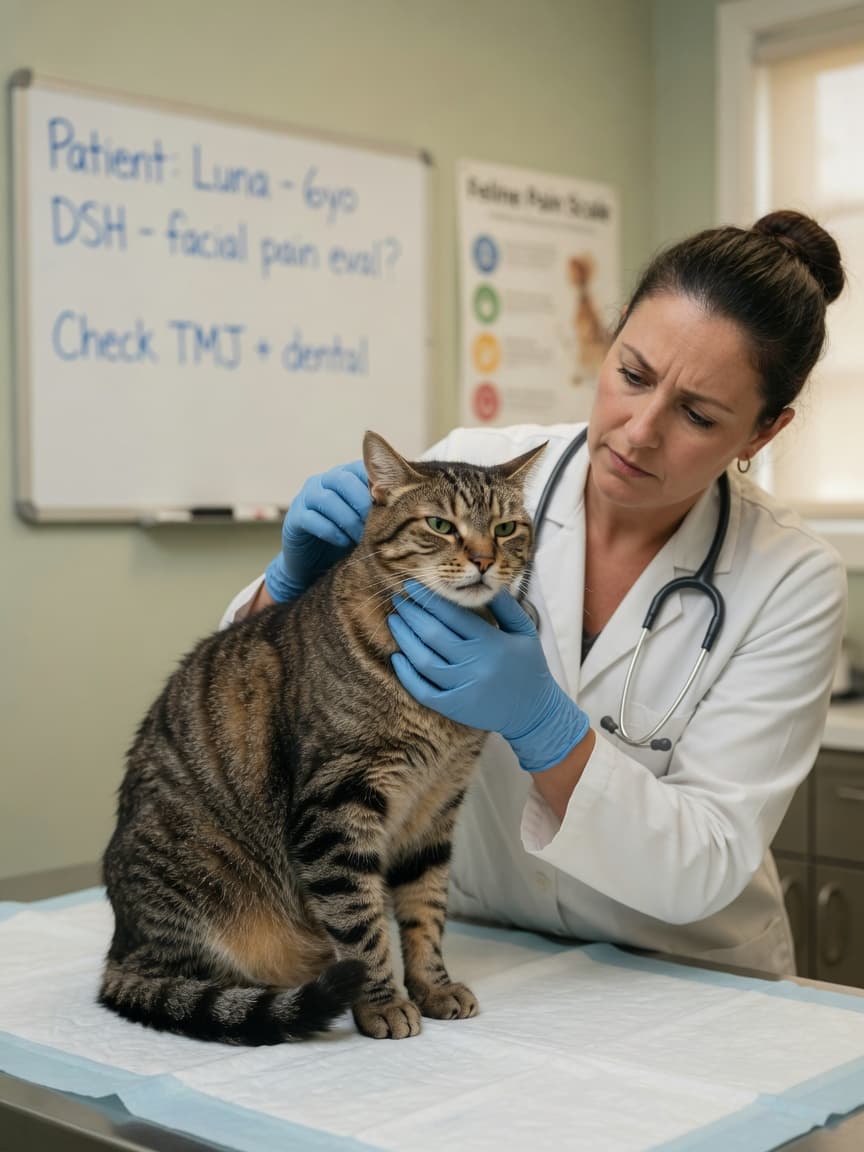
The Survival Instinct Behind Feline Stoicism
If you have ever taken a cat to the vet only to be told the condition was already well advanced, you are not alone — and you are not to blame. The tendency of cats to conceal signs of illness and pain is not stubbornness or indifference. It is a deeply ingrained survival strategy rooted in evolutionary biology. Understanding why cats behave this way is the first step toward catching health problems before they become crises.
In the wild, a visibly injured or unwell animal is a target. Predators detect weakness, and even social species that might otherwise offer protection can turn on a sick member of the group. Cats, though domesticated, retain the neural wiring of their wild ancestors. When in pain or distress, the default response is to withdraw, remain still, and suppress outward signs of vulnerability. This served them well in the wild. In the home, it makes early diagnosis extraordinarily difficult.
What Pain Actually Looks Like in Cats

Because cats do not vocalise pain in the obvious ways dogs do, many owners assume a quiet, still cat is a content cat. The opposite is frequently true. The behavioural signs of feline pain are subtle and easy to misinterpret as personality quirks, ageing, or laziness.
- Reduced grooming, or alternatively, excessive grooming focused on one area of the body — both can indicate localised discomfort.
- Changes in posture: a cat in pain may sit hunched with their back slightly rounded and their head lowered rather than held up with normal alertness.
- Reluctance to jump, climb, or use the litter tray — particularly significant in a cat that previously had no trouble with these activities.
- Withdrawal from social interaction, hiding in unusual places, or spending significantly more time alone.
- Reduced appetite or complete disinterest in food, which in cats can escalate rapidly to hepatic lipidosis if sustained for more than 24 to 48 hours.
- Facial changes: a flattened ear position, narrowed eyes, and a tense muzzle area have been validated by researchers as reliable indicators of acute pain in cats.
The Grimace Scale: What Research Tells Us
The development of the Feline Grimace Scale by researchers at the University of Montreal has been a significant advance in feline pain assessment. The scale identifies five facial action units — ear position, orbital tightening, muzzle tension, whisker change, and head position — and scores each on a three-point scale. Validated through peer-reviewed research, it is now used by veterinary professionals worldwide and is freely available to the public.
What the Feline Grimace Scale has confirmed is that pain in cats produces measurable, observable changes in facial expression — even in cats that show no other obvious signs of distress. Learning to read these subtle cues, or at minimum photographing your cat's face when you suspect something is wrong and sharing those images with your vet, can genuinely improve diagnostic outcomes.
Chronic Pain and Why It Is So Frequently Missed

Acute pain — from an injury or sudden illness — sometimes produces more detectable signs. Chronic pain is far harder to identify because it develops gradually, and both the cat and the owner adapt incrementally. Osteoarthritis is a prime example. It is estimated that over 90 percent of cats over the age of twelve have radiographic evidence of joint disease, yet it is dramatically underdiagnosed because the changes in behaviour happen slowly and are often attributed to normal ageing.
A cat that no longer jumps onto the sofa is not necessarily getting old — they may be in significant pain every time they attempt it. A cat that has started using a litter tray with lower sides, or that takes longer to settle into a comfortable resting position, or that reacts with uncharacteristic irritability when touched near the back end, may be living with chronic musculoskeletal pain that is entirely manageable with appropriate veterinary treatment.
Dental Pain: The Hidden Epidemic
Dental disease is one of the most painful conditions a cat can experience, and one of the most frequently undetected by owners. Tooth resorption — a condition in which the tooth structure is progressively destroyed, often from the inside — affects roughly half of all adult cats and causes significant chronic pain. Cats with severe dental disease continue to eat because the alternative, not eating, is perceived as a greater survival threat. They adapt their chewing patterns, favour one side of the mouth, or swallow food with minimal chewing. None of this is obvious to watch.
Foul breath, drooling, pawing at the mouth, or dropping food are signs most owners recognise. However, many cats with significant dental pain show none of these. The only reliable way to assess dental health is through a thorough oral examination by a veterinarian, ideally including dental radiographs.
When Hiding Becomes Dangerous
Several conditions progress from manageable to life-threatening within hours once cats begin showing obvious signs of illness. Urinary blockages in male cats, for instance, are often preceded by days of subtle discomfort — straining in the litter tray, visiting it repeatedly, seeming unsettled — before the cat reaches acute crisis. By the time a cat is crying out, unable to move, or collapsed, an emergency situation has developed that could have been addressed earlier at considerably lower cost and risk.
Similarly, breathing difficulties in cats may not be obvious until the cat is in significant respiratory distress. A cat that sits with elbows slightly out, breathes with an open mouth, or shows visible chest movement at rest may be in urgent need of veterinary attention even if they appear calm and are not vocalising.
Becoming a Better Observer
The most effective tool any cat owner has is attentive, consistent observation. Know your cat's baseline: how much they normally eat, how they move, where they typically rest, how they interact with you. Deviations from that baseline — however minor — are worth noting. Keep a brief record if you notice changes, including when they started and how they have progressed. This information is genuinely useful to a vet trying to piece together a picture of what has been happening.
Cats cannot tell us where it hurts. But they do communicate through behaviour, posture, and expression. Learning their language is not just compassionate — it is one of the most practical things you can do for their long-term health.