
When to Spay or Neuter Your Dog: What the Research Says
- Small breeds (<10 kg adult): 6 months is generally appropriate
- Medium breeds (10–25 kg): Consider waiting until 12 months
- Large breeds (25–40 kg): Research suggests waiting until 12–18 months
- Giant breeds (>40 kg): Consider waiting until 18–24 months
- Key tradeoff: Earlier neutering = more population control, less mammary/testicular cancer; later = better joint and some tumor outcomes in large breeds
By Julia Wrenfield, Pet Wellness Researcher | Published June 25, 2026
For decades, the standard veterinary advice was simple: spay or neuter your dog at 6 months. That recommendation served population control goals well — and it still does. But over the past 15 years, a body of research has complicated the picture significantly, particularly for large and giant breed dogs. The relationship between sex hormones, growth plates, joint development, and certain tumor types is now well-documented enough that many vets are adjusting their recommendations based on breed size. This article breaks down the current research so you can have an informed conversation with your veterinarian.
Why Timing Matters: The Role of Sex Hormones in Development
Testosterone and estrogen are not only reproductive hormones — they are growth and development hormones. Estrogen, in particular, plays a critical role in signaling the closure of growth plates (the cartilage areas at the ends of long bones where bone growth occurs). When a dog is spayed or neutered before these plates close, the plates remain open longer, resulting in bones that grow slightly longer and at slightly different angles than in intact dogs.
In small breeds, this difference is negligible. In large and giant breeds, where joint angles and bone proportions are already under significant load from body weight, the difference can contribute to increased rates of cranial cruciate ligament (CCL) rupture, hip dysplasia, and elbow dysplasia. This is the core finding of the UC Davis research led by Dr. Benjamin Hart, published in multiple papers starting in 2013.
What the Research Shows by Breed Size
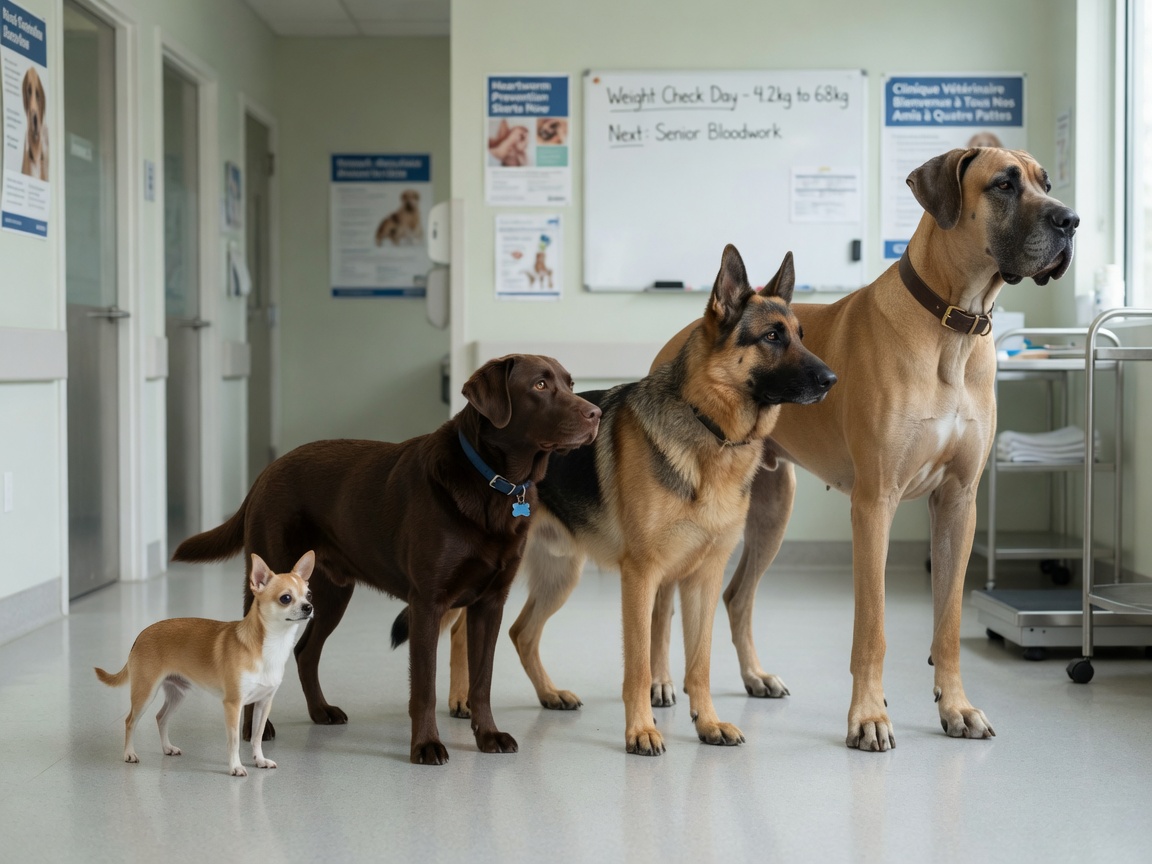
Small Breeds (Adult weight under 10 kg)
Studies consistently show minimal difference in joint disease rates between small breed dogs neutered at 6 months versus those neutered later. The UC Davis research, which examined dozens of breeds separately, found no significant increase in joint disorders in small breeds neutered at any age. The traditional recommendation of 6 months remains appropriate and balances health considerations with population control goals.
Medium Breeds (10–25 kg)
The picture is more nuanced for medium breeds. Some breeds in this weight class show elevated CCL rupture rates with early neutering; others do not. Labrador Retrievers, for example, showed a notable increase in joint disorders when neutered before 6 months compared to those neutered later or left intact. Waiting until 12 months for medium-large breeds (Labrador, Border Collie, Vizsla, Cocker Spaniel) is increasingly supported by the literature.
Large Breeds (25–40 kg)
The research is clearest and most consistent for large breeds. Multiple studies across German Shepherds, Golden Retrievers, and Rottweilers show significantly elevated rates of joint disorders (particularly CCL rupture) and certain tumors (hemangiosarcoma, mast cell tumors, osteosarcoma in some breeds) in dogs neutered before 12 months. The Hart et al. 2020 study of 35 breeds found that for some large breeds, neutering before 12 months doubled or tripled the odds of joint disorders compared to intact dogs or those neutered after 12 months.
Giant Breeds (over 40 kg)
For Great Danes, Irish Wolfhounds, Mastiffs, and Saint Bernards, the recommendation to wait until 18–24 months is increasingly mainstream in veterinary circles. These breeds have longer growth periods, more extreme body weights, and are already predisposed to serious orthopedic disease. Early gonadectomy appears to compound this risk meaningfully.
Behavioral Considerations

Intact male dogs are more likely to show certain behaviors: roaming, urine-marking, mounting, and in some cases, inter-male aggression. These behaviors can be significant quality-of-life issues. It is worth noting, however, that neutering does not reliably eliminate these behaviors once they are established — the window for hormonal influence on behavior is largely developmental. Neutering a young puppy reduces the probability of these behaviors developing; neutering an adult dog with established marking behavior may not reverse it significantly.
For female dogs, leaving them intact until 12–18 months typically means allowing one or two heat cycles. Owners must manage this period carefully (preventing unwanted pregnancy, managing discharge, containing the dog during peak attraction). This is manageable but requires planning and commitment.
Health Benefits of Spaying and Neutering
The benefits of gonadectomy remain substantial and should not be minimized by the orthopedic findings:
| Benefit | Spay (Female) | Neuter (Male) |
|---|---|---|
| Mammary/testicular cancer | Dramatically reduced (especially if before 2nd heat) | Eliminates testicular cancer |
| Pyometra prevention | Eliminates risk (life-threatening uterine infection) | N/A |
| Prostatic disease | N/A | Dramatically reduced prostatic hyperplasia and infection |
| Perianal tumors | N/A | Significantly reduced (androgen-dependent tumors) |
| Population control | Eliminates unplanned pregnancy | Eliminates accidental reproduction |
Alternatives to Traditional Gonadectomy
Surgical alternatives exist that allow population control without full hormonal removal. For males, a vasectomy removes fertility while preserving testosterone production. For females, ovary-sparing spay removes the uterus but retains ovarian function. These procedures are less common but available from specialist surgeons and are worth discussing with your vet if you have concerns about hormonal effects on a large breed dog but want to prevent reproduction.
- Small breeds can safely be spayed/neutered at 6 months; the traditional timeline is appropriate.
- Large and giant breed dogs benefit from waiting until 12–24 months based on current orthopedic research.
- The benefits of neutering — preventing pyometra, prostatic disease, mammary tumors — remain significant regardless of timing.
- Have a frank conversation with your vet about your dog's specific breed, sex, and lifestyle before deciding.
- Vasectomy and ovary-sparing spay are alternatives that preserve hormonal function while preventing reproduction.
References
- Hart BL, et al. "Long-term health effects of neutering dogs: comparison of Labrador Retrievers with Golden Retrievers." PLOS ONE. 2014;9(7):e102241. PMID: 25cancelable02241
- Hart BL, et al. "Assisting decision-making on age of neutering for 35 breeds of dogs: associated joint disorders, cancers, and urinary incontinence." Frontiers in Veterinary Science. 2020;7:388. PMID: 32733921
- Zink MC, et al. "Evaluation of the risk and age of onset of cancer and behavioral disorders in gonadectomized Vizslas." Journal of the American Veterinary Medical Association. 2014;244(3):309-319. PMID: 24432963