
Cocker Spaniel Health: Ear Infections, PRA & IMHA
The Cocker Spaniel — both the American and English varieties — is a gentle, eager-to-please breed that thrives in family environments. With a typical lifespan of 12–15 years, Cockers can be wonderful long-term companions. However, their distinctive anatomy and genetic vulnerabilities mean owners must be proactive about several serious conditions: chronic otitis externa (ear infections), progressive retinal atrophy (PRA), immune-mediated hemolytic anemia (IMHA), and hip dysplasia. Understanding these issues early is the key to managing them successfully.
Chronic Otitis Externa: The Anatomy Problem
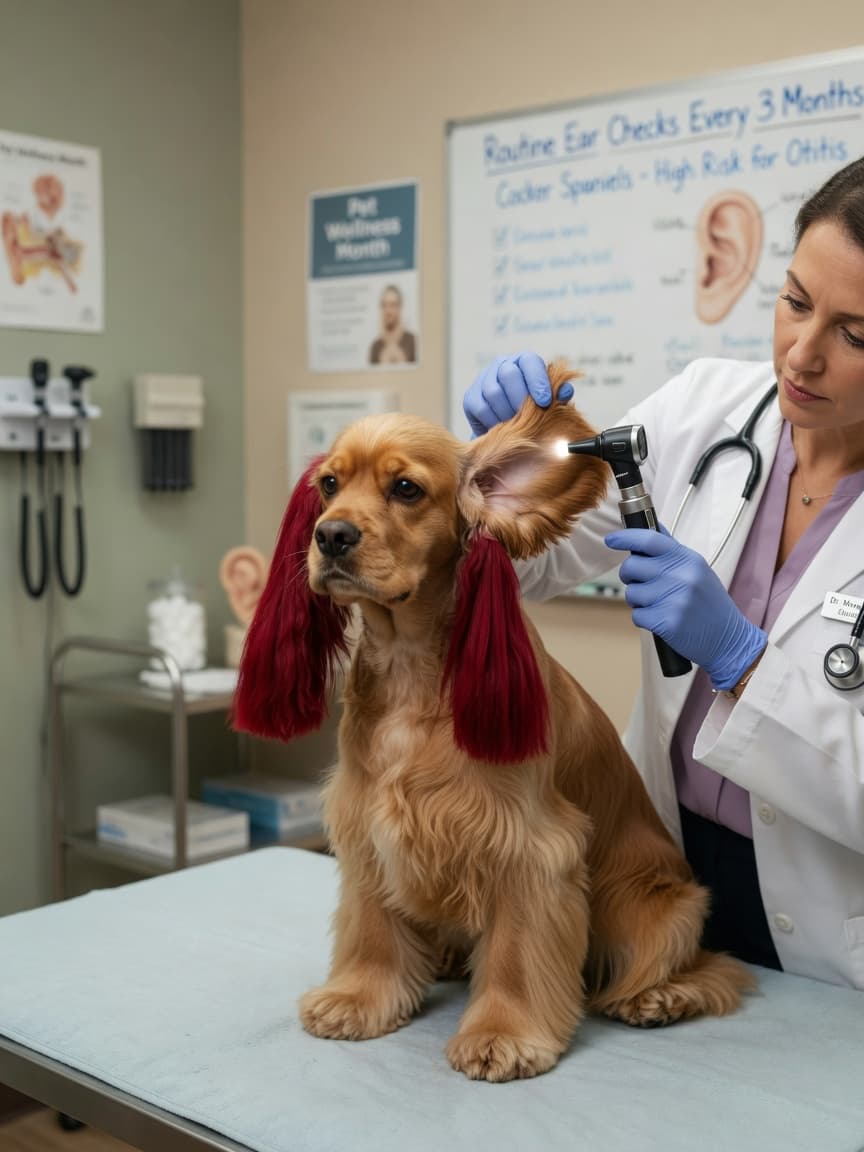
No breed suffers from ear infections more consistently than the Cocker Spaniel. The cause is largely anatomical: long, heavy pinnae (ear flaps) hang down and cover the ear canal, dramatically reducing airflow. The warm, moist microenvironment created beneath those ears is a perfect incubator for bacteria (Pseudomonas, Staphylococcus) and yeast (Malassezia). Add to this a tendency to produce excess cerumen (ear wax) and hair growing inside the ear canal, and the conditions for chronic infection are almost guaranteed without active prevention.
Signs of otitis include: head shaking, ear scratching, a musty or sour odour from the ears, dark brown or black discharge, redness inside the pinnae, and pain when the ear is touched. Chronic, untreated otitis can progress to otitis media (middle ear infection), causing balance problems, facial nerve damage, and severe pain requiring surgery.
Ear Cleaning Protocol
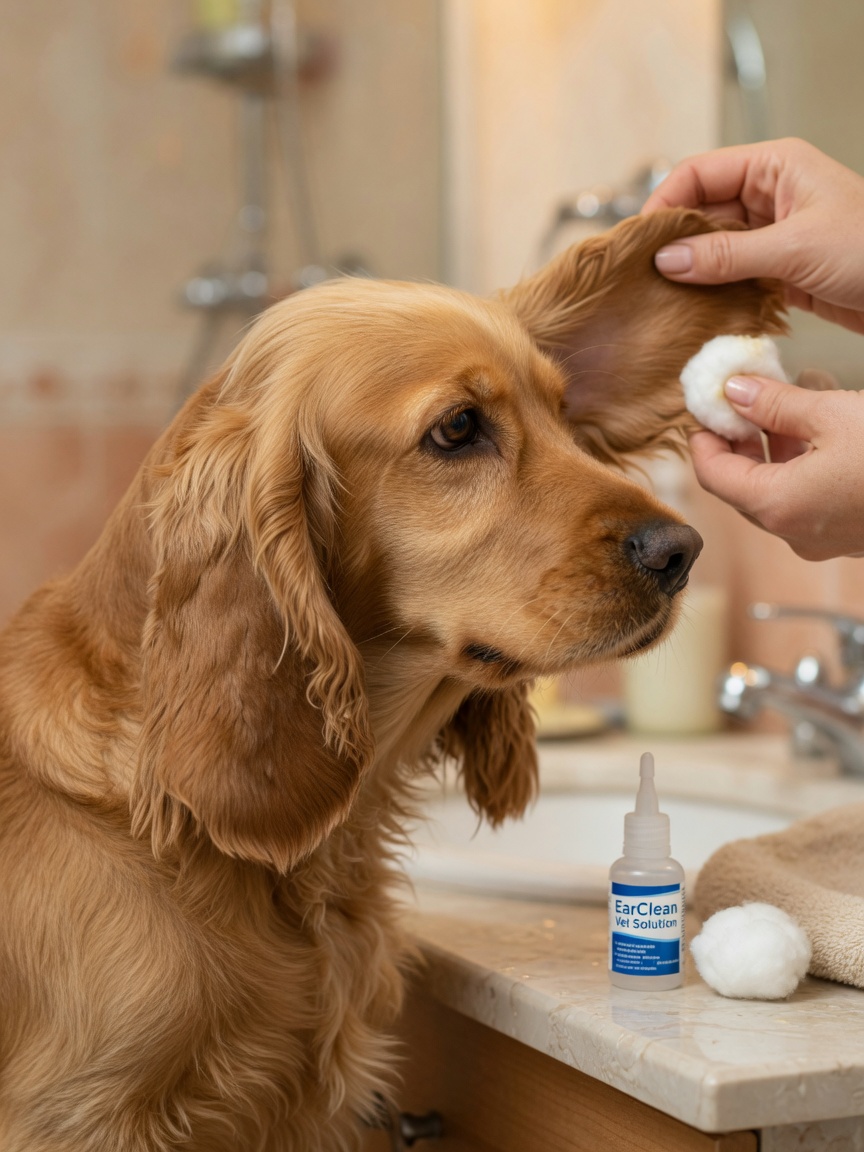
Regular cleaning is the cornerstone of prevention. Use a veterinarian-recommended ear cleaning solution — never water, which cannot fully evaporate from the deep L-shaped canal. Apply the solution generously, massage the base of the ear for 30 seconds to break up wax and debris, then allow your dog to shake before gently wiping the outer canal with a cotton ball. Aim for weekly cleaning in dogs without active infection; dogs with chronic otitis may need cleaning every 2–3 days as directed by your vet. Never insert cotton swabs deep into the canal.
Progressive Retinal Atrophy (PRA)

PRA is an inherited degenerative condition affecting the photoreceptor cells of the retina. In Cocker Spaniels, the most common form is prcd-PRA (progressive rod-cone degeneration), caused by a recessive mutation in the PRCD gene. Both parents must carry the mutation for a puppy to be affected, but carriers show no symptoms themselves.
The disease begins with loss of night vision (rod cells degenerate first), typically noticed between ages 3 and 5. Affected dogs hesitate to enter dark rooms, bump into objects at night, and show dilated pupils even in normal light. As rod degeneration progresses, cone cells (responsible for daytime and colour vision) also deteriorate, eventually leading to complete blindness — usually by age 7–8.
There is currently no treatment to halt or reverse PRA. However, a DNA test is available for the prcd mutation. Responsible breeders test all breeding stock and only breed clear-to-clear or clear-to-carrier pairs to avoid producing affected offspring. If you are buying a Cocker Spaniel puppy, ask the breeder for documented PRA test results for both parents. Annual ophthalmological examinations through a board-certified veterinary ophthalmologist are recommended for all Cockers.
Immune-Mediated Hemolytic Anemia (IMHA)
IMHA is one of the most serious and life-threatening conditions seen in Cocker Spaniels. In this disease, the immune system mistakenly attacks and destroys the dog’s own red blood cells, leading to severe anemia that can develop rapidly. The trigger is often unknown (idiopathic IMHA), though it can also follow infections, drug reactions, or cancer.
Signs include sudden weakness, pale or yellow (jaundiced) gums, rapid breathing, collapse, decreased appetite, and dark-coloured urine. IMHA requires emergency hospitalisation with blood transfusions, intravenous fluids, and aggressive immunosuppressive therapy (typically prednisolone with additional agents like azathioprine or cyclosporine). Even with intensive treatment, mortality rates range from 20–70% depending on disease severity. Dogs that survive may relapse.
Cocker Spaniels are among the top three breeds affected by IMHA. While there is no proven prevention, avoiding unnecessary vaccines, drugs, or treatments that could theoretically trigger immune dysregulation in a susceptible dog is prudent. Regular check-ups that include a complete blood count (CBC) can catch subtle anemia early.
Hip Dysplasia
While Cocker Spaniels are smaller than the breeds most commonly associated with hip dysplasia, they carry a meaningful genetic risk for this condition. Malformation of the hip joint leads to abnormal wear, pain, and ultimately osteoarthritis. Signs include difficulty rising, reluctance to jump, an altered gait, or muscle wasting over the hindquarters.
X-ray evaluation (OFA or PennHIP) of breeding stock significantly reduces the prevalence in subsequent generations. In affected dogs, management includes weight control (crucial — every extra pound increases joint load), controlled exercise, omega-3 fatty acid supplementation, physiotherapy, and anti-inflammatory medications. Severe cases may benefit from surgical intervention.
Key Takeaways
- Clean your Cocker’s ears weekly with a proper veterinary-grade solution — prevention is far easier than treating chronic otitis.
- Ask breeders for DNA test results for PRA (prcd mutation) in both parents before purchasing a puppy.
- IMHA is a life-threatening emergency — pale or yellow gums with sudden weakness means go to an emergency vet immediately.
- Schedule an annual ophthalmology exam and annual CBC to monitor for PRA progression and subtle anemia.
- Maintain an ideal body weight to protect your Cocker’s joints throughout life.
- Lifespan: 12–15 years with attentive care and regular veterinary screening.
References
- Aguirre GD, Acland GM. Model systems, phenotypes, and mechanisms of inherited retinal degenerations. Progress in Retinal and Eye Research. 2022;89:101016. PMID: 34856369
- Carr AP, Panciera DL, Kidd L. Prognostic factors for mortality and thromboembolism in canine immune-mediated hemolytic anemia: a retrospective study of 72 dogs. Journal of Veterinary Internal Medicine. 2002;16(5):504–509. PMID: 12322845