
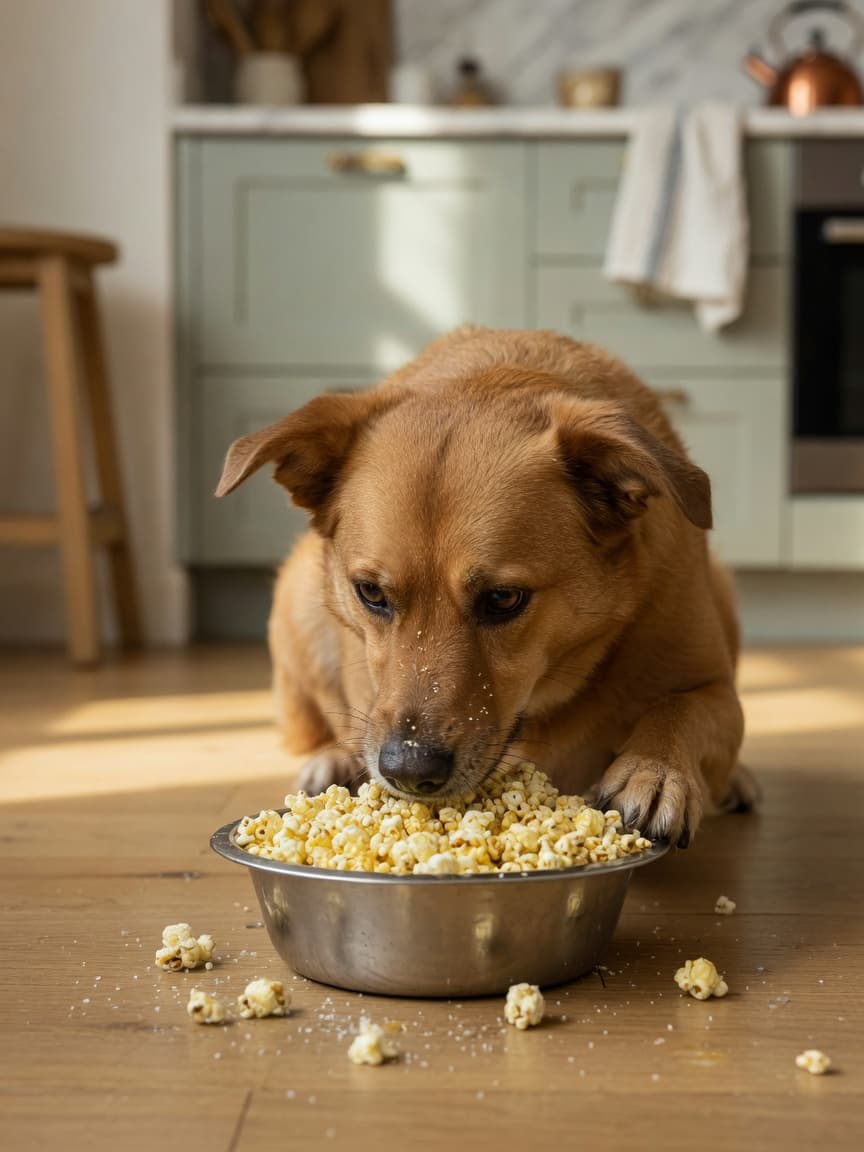
Can Dogs Eat Popcorn?
Popcorn is one of those snacks that dogs seem magnetically drawn to — possibly because of the smell, possibly because they notice you eating it and assume it must be worth having. The answer to whether dogs can eat it is not a simple yes or no. Plain, air-popped popcorn is not toxic to dogs. The version most people actually eat, however, is rarely plain.
What Makes Plain Popcorn Acceptable
At its most basic, popcorn is just a whole grain — maize that has been heated until it expands. In this form it contains small amounts of fibre, magnesium, phosphorus, zinc, and B vitamins. These are not present in quantities that make popcorn a meaningful nutritional contribution to a dog's diet, but they do mean the base product is not nutritionally worthless either.
Plain, air-popped popcorn without any additives is generally considered safe for dogs in small quantities. The emphasis here is heavily on "plain." The moment flavourings, oils, salt, or butter enter the picture, the risk profile changes considerably.
The Salt Problem
Salt is the most common popcorn additive and one of the more significant concerns for dogs. Dogs have a much lower sodium tolerance than humans. Excessive salt intake can lead to increased thirst and urination in the short term, and in larger quantities can cause sodium ion poisoning — a condition characterised by vomiting, diarrhoea, tremors, elevated body temperature, and in severe cases, seizures.
Dogs with existing heart conditions, kidney disease, or hypertension are particularly vulnerable. Even in healthy dogs, regularly feeding salted popcorn contributes to unnecessary sodium load. A few stray pieces that fall on the floor during a film night are unlikely to cause harm, but deliberately sharing a bowl of salted popcorn is not a habit worth establishing.
Why Butter Is a Problem
Butter adds fat and dairy to an already calorie-dense snack. Dogs are not well-equipped to digest large amounts of fat, and high-fat foods can trigger pancreatitis — a painful and potentially serious inflammation of the pancreas. Symptoms include vomiting, abdominal pain, loss of appetite, and lethargy. Repeated exposure to fatty foods significantly raises the risk, particularly in breeds that are already predisposed to pancreatitis such as Miniature Schnauzers and Cocker Spaniels.
Many dogs are also lactose intolerant to varying degrees, meaning the dairy component of butter can cause gastrointestinal upset even without the fat content being an issue. Buttered popcorn, as a regular treat, is not appropriate for dogs.
Other Flavourings to Avoid
Beyond salt and butter, commercial popcorn often contains additional seasonings that range from unhelpful to dangerous for dogs:
- Garlic and onion powder — both are toxic to dogs and can cause haemolytic anaemia with repeated exposure
- Artificial sweeteners, particularly xylitol — found in some flavoured popcorn products and deeply toxic to dogs
- Cheese flavouring — high in salt and artificial additives
- Caramel coating — high in sugar, sometimes contains xylitol, and sticky enough to cause dental issues
Always check the ingredient list of any commercially prepared popcorn before assuming it is safe to share, even in small amounts.
The Choking and Dental Risk
Unpopped or partially popped kernels — often called "old maids" — are a genuine choking hazard and can also crack teeth. This is true for both dogs and humans, but dogs are less likely to notice the kernel's firmness and more likely to swallow without adequate chewing. A broken tooth or kernel lodged in the throat are real risks that make removing all unpopped kernels essential if you are going to share any popcorn with your dog.
For smaller dogs, even fully popped pieces can occasionally present a risk if eaten too quickly. Dogs that eat enthusiastically should be offered individual pieces rather than a small pile.
Safe Ways to Share Popcorn
If you want to share popcorn with your dog, the safest approach is:
- Use an air popper rather than oil or microwave bags
- Add no salt, butter, or any flavouring
- Check through the popped corn and remove any unpopped kernels
- Offer only a few pieces as an occasional treat
- Avoid commercial microwave popcorn entirely due to the additives and artificial flavourings typically present
How Much Is Reasonable
Even plain popcorn should be treated as an occasional snack rather than a regular addition to your dog's diet. A few pieces for a small dog, a small handful for a medium or large dog — and only infrequently. Popcorn adds empty calories without significant nutritional benefit, so there is no compelling reason to make it a staple.
Dogs with digestive sensitivities, weight issues, or health conditions should not be given popcorn at all. For healthy dogs, a small amount of plain, well-prepared popcorn now and then is unlikely to cause any harm.