

A Question Worth Taking Seriously
As plant-based diets have become more mainstream in human nutrition, a growing number of dog owners have begun asking whether the same approach is appropriate for their pets. The question is legitimate and the answer is more nuanced than either enthusiastic advocates or dismissive critics tend to allow. Dogs are not obligate carnivores like cats, and their nutritional physiology differs from wolves in ways that make the question genuinely open to scientific debate.
What Dogs Actually Are: Omnivores with Carnivore Heritage
The domestic dog, Canis lupus familiaris, diverged from wolves approximately 15,000 years ago. A landmark 2013 study published in Nature identified that dogs carry multiple copies of the AMY2B gene, which encodes salivary amylase and enables starch digestion. Wolves carry very few copies. This genetic adaptation reflects thousands of years of co-evolution with humans and grain-based food sources, suggesting that dogs are genuinely omnivorous rather than obligate carnivores.
This does not mean a vegan diet is automatically suitable — it means the blanket claim that dogs must eat meat for biological reasons is overstated. What matters is whether nutritional requirements can be met through plant-based sources and supplementation.
The Nutrients That Require Careful Attention

Several nutrients that dogs require are found primarily or exclusively in animal-derived foods in their most bioavailable forms. Meeting these requirements on a vegan diet is possible but requires careful formulation.
- Vitamin B12 is found almost exclusively in animal products and must be supplemented in vegan dog foods
- Vitamin D3, the form dogs utilise most efficiently, comes primarily from animal sources; plant-derived D2 is less bioavailable
- Taurine is synthesised by dogs from cysteine and methionine, but synthesis rates vary and deficiency has been linked to dilated cardiomyopathy
- L-carnitine, important for fatty acid metabolism, is found in much higher concentrations in meat than in plant foods
- Arachidonic acid, an omega-6 fatty acid, must either be consumed or synthesised from linoleic acid — a conversion that is not always efficient in dogs
- Zinc and iron from plant sources are less bioavailable than from animal sources due to phytate content in legumes and grains
The Taurine and DCM Debate
Dilated cardiomyopathy (DCM) is a serious heart condition that has attracted significant attention in the context of grain-free and legume-heavy dog diets. In 2018 the US Food and Drug Administration began investigating a potential link between grain-free diets — which often rely heavily on peas, lentils, and chickpeas as protein sources — and increased DCM diagnoses in breeds not typically predisposed to the condition.
The connection is not fully resolved. Some researchers believe the issue relates to taurine deficiency caused by interactions between legume compounds and taurine synthesis or absorption. Others point to low methionine and cysteine content in certain formulations. What is clear is that vegan dog foods relying heavily on legumes without careful taurine supplementation carry a plausible cardiac risk that owners must take seriously.
A well-formulated vegan diet with adequate taurine supplementation may not carry this risk, but the evidence base is not yet sufficient to confirm this with certainty.
What Existing Research on Vegan Dogs Shows
A 2022 study published in PLOS ONE examined health outcomes in over 2,500 dogs fed conventional meat-based, raw, or vegan diets. The researchers found that dogs fed vegan diets were no more likely — and in some indicators marginally less likely — to suffer from health problems compared to conventionally fed dogs. The study was large and peer-reviewed, but it relied on owner-reported health data rather than veterinary clinical assessment, which limits its conclusions.
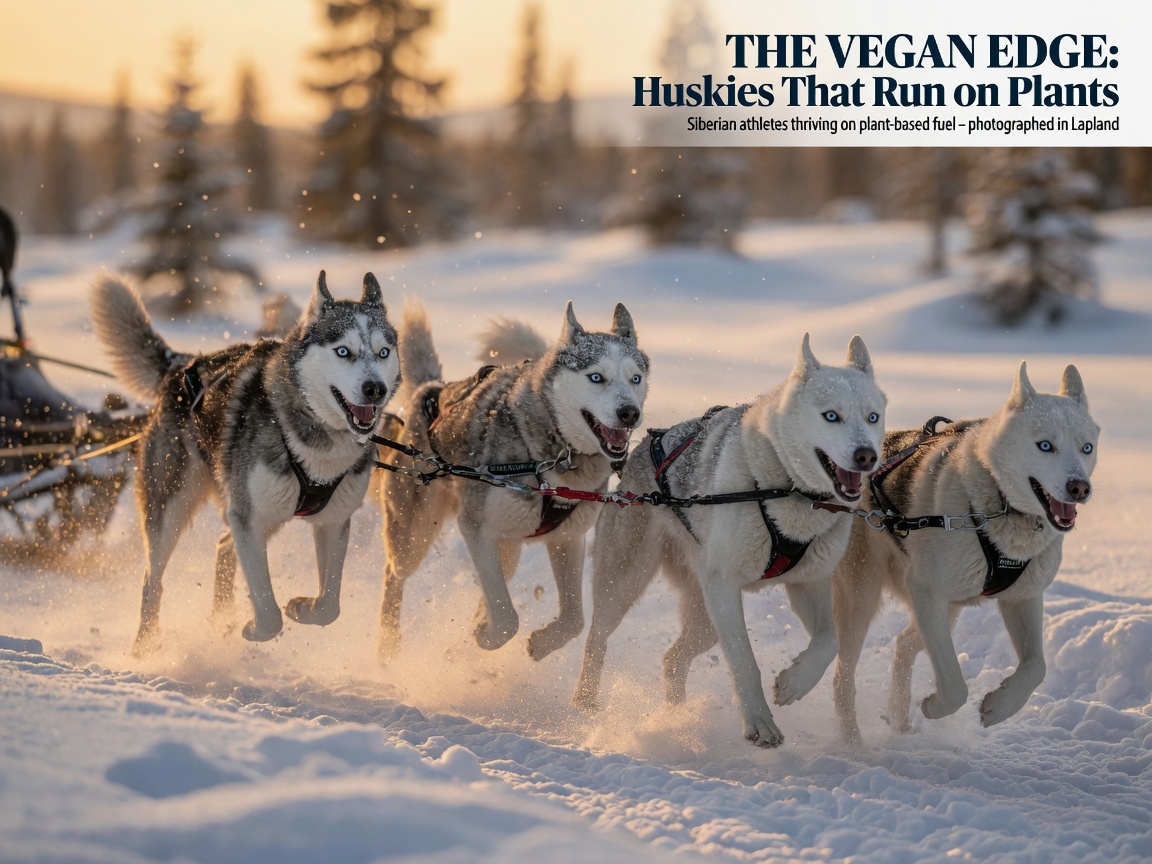
A smaller but clinically robust 2009 study followed sled dogs on a carefully formulated vegan diet through a competitive racing season and found no evidence of nutritional deficiency or reduced performance. This study demonstrated that athletic performance and health maintenance are possible on a vegan diet when formulation is done correctly.
Commercial Vegan Dog Foods Versus Home Preparation
There is a substantial difference between a commercially produced vegan dog food that has undergone feeding trials and nutritional testing, and a home-prepared vegan diet assembled from whole plant foods. The former can be nutritionally complete if it meets AAFCO or FEDIAF standards. The latter is very likely to contain deficiencies unless formulated by a board-certified veterinary nutritionist using supplementation protocols.
If you are considering a vegan diet for your dog, choosing a commercial product that has passed feeding trials is the minimum standard. Reviewing the ingredient panel for explicit taurine and L-carnitine supplementation, and for vitamin D3 rather than D2 alone, is worthwhile.
When Vegan Diets Are Clinically Indicated
There are circumstances where a vegan diet is not merely an ethical choice but a medical one. Dogs with severe protein allergies to multiple animal proteins, cutaneous adverse food reactions that have not responded to hydrolysed or novel protein diets, and certain urinary conditions may benefit from a plant-based diet under veterinary supervision. In these cases, the risk-benefit calculation shifts considerably.
The Bottom Line on Plant-Based Feeding
A vegan diet can be nutritionally complete for most healthy dogs if it is carefully formulated, commercially tested to recognised standards, and includes appropriate supplementation of the nutrients most at risk of deficiency. It is not the most straightforward dietary approach, and it carries specific risks — particularly around taurine, vitamin D, and mineral bioavailability — that require informed management. Regular veterinary monitoring including blood work is advisable for any dog fed a vegan diet long-term.