
Tortoise Diet Guide: What to Feed by Species
By Julia Wrenfield, Pet Wellness Researcher
Feeding a tortoise seems straightforward until you realize that a Mediterranean Hermann's tortoise and an African Sulcata have almost nothing in common nutritionally. One thrives on dry, fiber-rich weeds; the other browses through tropical fruit with abandon. Get the species wrong and you are setting your animal up for metabolic bone disease, kidney failure, or obesity. This guide breaks down species-specific nutrition so you can feed your tortoise correctly from day one.
The Universal Rules of Tortoise Nutrition
Before diving into species differences, every tortoise keeper needs to understand two non-negotiables: the calcium-to-phosphorus ratio and the role of fiber.
Tortoises require a calcium-to-phosphorus ratio of approximately 2:1. When phosphorus outpaces calcium — as happens with many vegetables and fruits — the body pulls calcium from bones to maintain blood levels, causing metabolic bone disease (MBD). Shells soften, limbs deform, and the tortoise suffers chronically. Always supplement with a phosphorus-free calcium source, and always monitor the ratio of foods offered.
Fiber is equally critical. The tortoise digestive tract is built for slow fermentation of high-cellulose plant material. A low-fiber diet leads to loose stools, bacterial dysbiosis in the gut, and over time, renal stress. Leafy greens with tough cell walls, hay, and grasses are the backbone of any tortoise diet.
Mediterranean Tortoises: Hermann's and Spur-Thighed
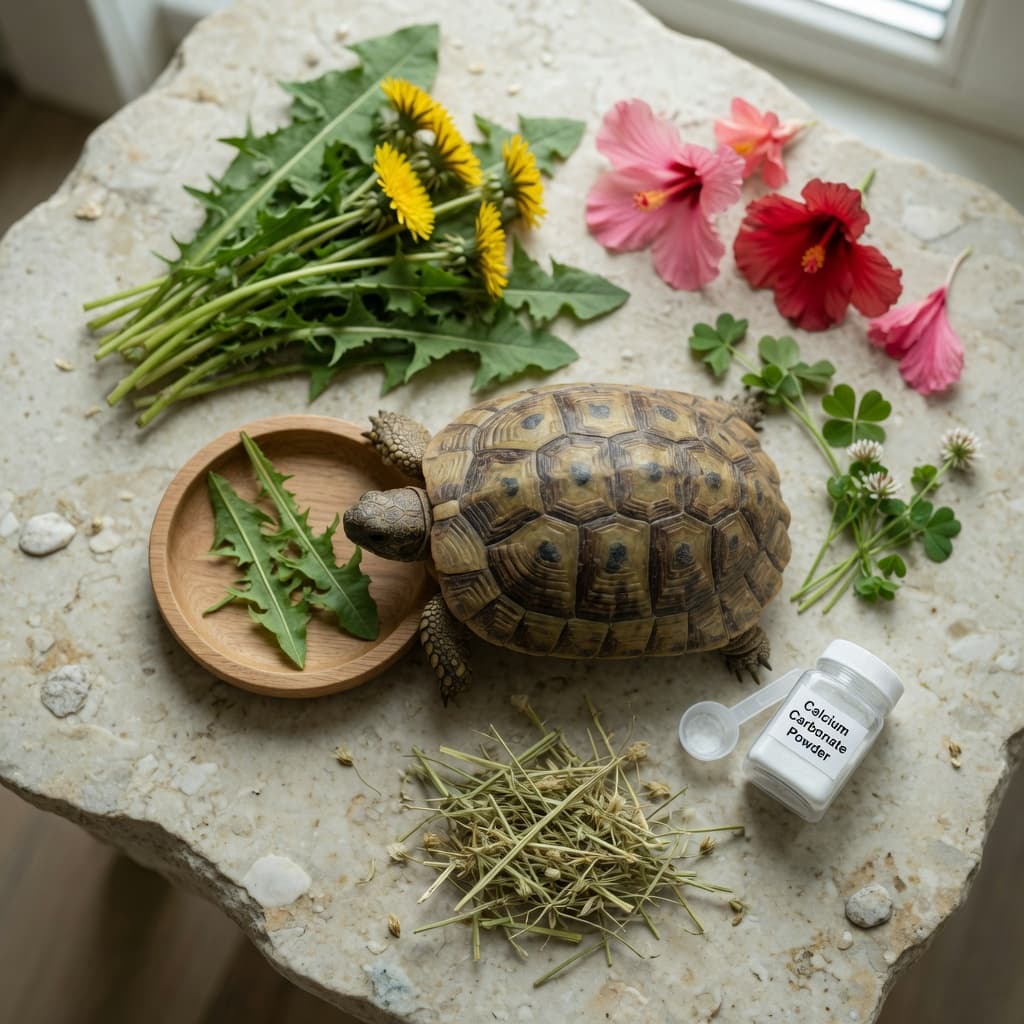
Testudo hermanni (Hermann's) and Testudo graeca (Spur-thighed) are native to dry, rocky Mediterranean scrubland. Their natural diet is almost entirely fibrous weeds, grasses, and wildflowers — very little fruit, minimal moisture-heavy vegetables.
Safe staple foods: dandelion greens and flowers, plantain (Plantago spp.), clover, chicory, endive, escarole, opuntia cactus pads (remove spines), hibiscus flowers and leaves, dried grasses and hay.
Limit severely: fruit (no more than 5% of diet, occasionally — high sugar disrupts gut flora), spinach, beet greens, Swiss chard (high oxalic acid binds calcium), kale and cabbage (goitrogenic in excess), and any nightshades.
Never feed: avocado, rhubarb, daffodil, buttercup, foxglove, or any plant treated with pesticides.
These species are not adapted to fruit sugars. Even a small amount of high-sugar food ferments rapidly in the gut, causing bloating, diarrhea, and dysbiosis. Many keepers mistakenly think fruit is a treat — for Testudo species, it is a health hazard.
Sulcata (African Spurred Tortoise): The Grazer
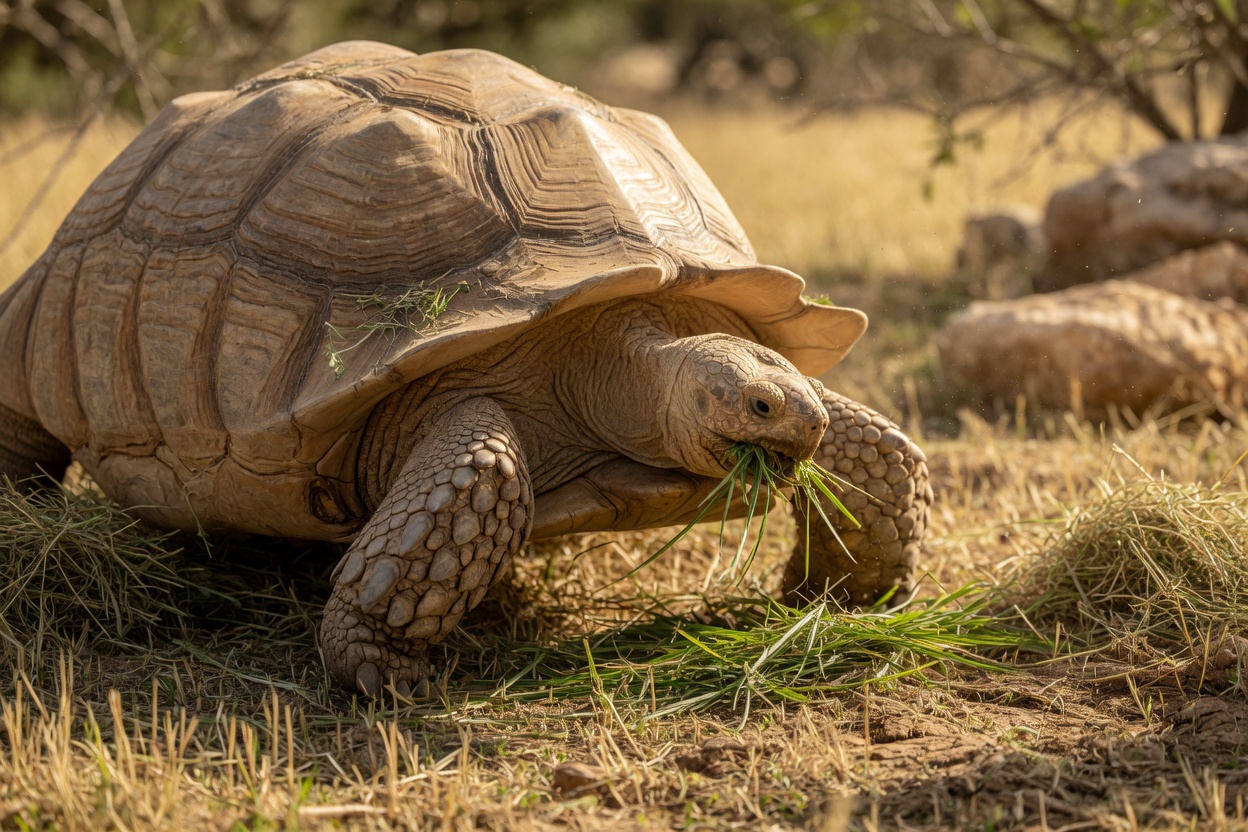
Centrochelys sulcata is the third-largest tortoise in the world, native to the Sahel region of sub-Saharan Africa. In the wild, these animals walk miles daily grazing on dry grasses and cactus. They are built for bulk fiber intake.
The Sulcata diet should be 75-90% grass and hay — Timothy hay, orchard grass, Bermuda grass, and dried grasses. Fresh grasses are excellent. Dark leafy greens like romaine and dandelion can supplement but should not dominate. Fruit is essentially never appropriate for this species. High-protein foods, including legumes, cause pyramiding of the shell and accelerated growth that shortens the animal's lifespan.
Sulcatas grow fast and can reach 70-100 lbs. What they eat in the first two years shapes their skeletal structure for life. A diet even slightly too rich leads to bumpy, deformed shells — a sign of nutritional mismanagement that cannot be reversed.
Red-Footed Tortoise: The Omnivore Exception
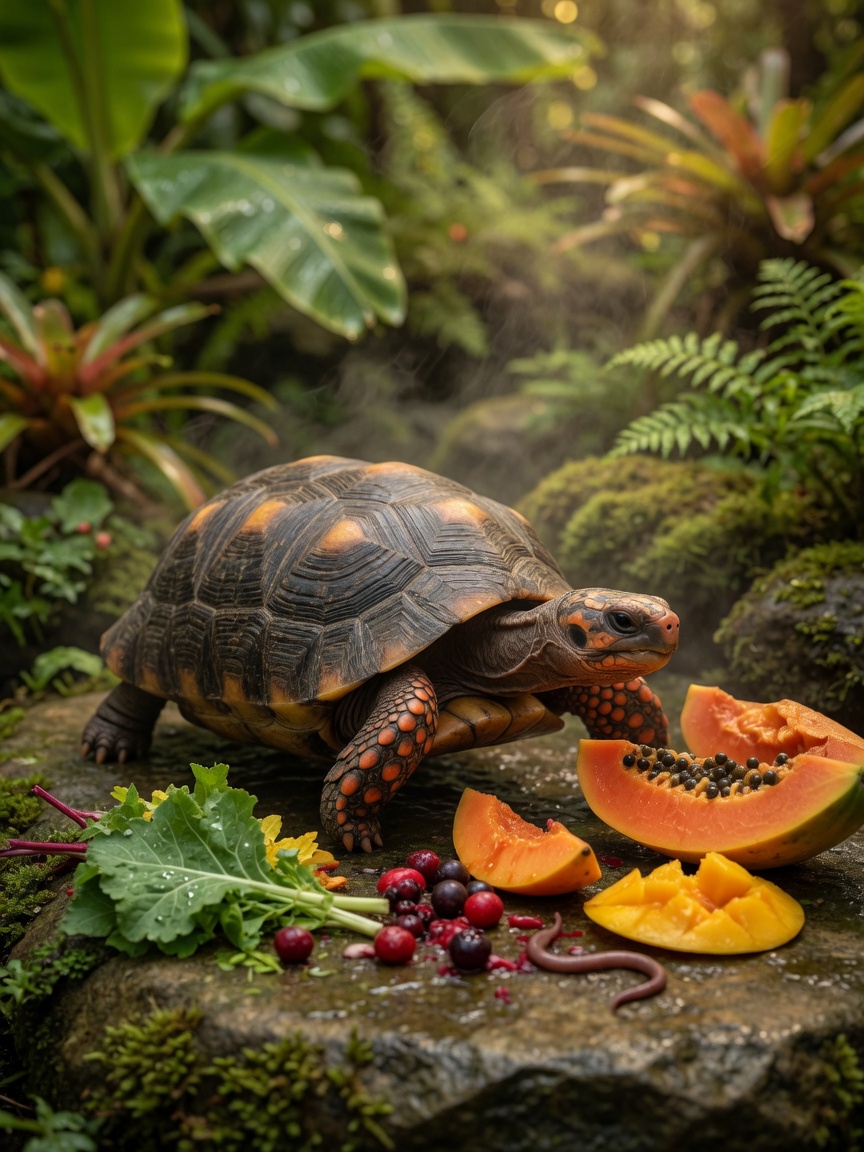
Chelonoidis carbonarius, native to South American rainforests, is the notable exception to the low-fruit rule. Red-foots naturally consume fallen fruit, fungi, carrion, and leafy vegetation. Their gut flora is adapted for variety and some fermentable sugars.
A balanced Red-foot diet: 50-60% leafy greens (collard, mustard greens, romaine, endive), 20-30% fruit (papaya, mango, banana, berries), and up to 10% animal protein (earthworms, cooked egg, low-fat cat kibble occasionally). This species benefits from dietary variety more than any other common tortoise.
Even so, oxalate-rich foods like spinach and beet tops should be limited. Calcium supplementation remains essential.
Russian Tortoise: The Desert Browser
Agrionemys horsfieldii hails from Central Asian steppes — dry, sparse, and cold in winter. Their diet in the wild is coarse weeds, grasses, and tough wildflowers. Like Mediterranean species, they should receive minimal fruit and high fiber.
Russian tortoises are particularly prone to obesity in captivity because keepers over-supplement with water-rich vegetables. Focus on dry weeds, hay, and sparse leafy greens. Cucumber and lettuce — high water, low nutrition — should be rare if offered at all.
UVB, Vitamin D3, and Cuttlebone
No dietary guide is complete without addressing UVB. Tortoises synthesize vitamin D3 through UV-B radiation on the skin. Without adequate UVB — whether from outdoor sun or a high-output UVB bulb (10.0 or 12% UV index for most species) — they cannot absorb dietary calcium, regardless of how much you provide. A tortoise fed the perfect diet but kept under standard lighting will still develop MBD.
Cuttlebone, placed in the enclosure, provides a free-choice calcium source that tortoises will gnaw when they need it. It is phosphorus-free, palatable, and one of the most practical supplements available. You can find cuttlebone and quality calcium supplements at well-stocked reptile retailers.
For keepers looking for a reliable source of tortoise hides, UV lighting, and feeding supplies, Zooplus carries a range of reptile enclosure essentials worth browsing, particularly for European tortoise keepers.
Gut-Loading Live Plants
Gut-loading — the practice of feeding nutritious plants to feeder insects before offering them to a reptile — also applies in a different sense to tortoise keeping. Growing live "tortoise-safe" plants in or around the enclosure (dandelion, plantain, sow thistle, hibiscus) ensures the animal browses on living, nutrient-dense food rather than wilted store produce. Freshness matters enormously for bioavailable vitamins, especially vitamin A and C.
Grow a small patch of tortoise-safe weeds in a pesticide-free area, or use an indoor planter under grow lights. This approach mimics natural grazing behavior and significantly improves nutritional variety with zero cost.
Key Takeaways
- Species identity determines diet entirely — never apply Mediterranean tortoise rules to Sulcatas or Red-foots.
- Maintain a 2:1 calcium-to-phosphorus ratio; high-oxalate greens (spinach, beet) block calcium absorption.
- Mediterranean and Russian tortoises should receive almost no fruit; Red-foots tolerate up to 30%.
- Sulcatas must eat primarily grass and hay; protein and fruit cause irreversible shell deformity.
- UVB lighting is non-negotiable — calcium cannot be absorbed without vitamin D3 synthesis.
- Cuttlebone is an easy, free-choice calcium supplement suitable for all species.
- Always work with an exotic reptile vet, not a general veterinarian, for dietary assessments.
References
- Highfield, A.C. & Martin, J. (1989). Nutritional secondary hyperparathyroidism in tortoises: clinical findings and dietary etiology. Journal of Small Exotic Animal Medicine, 1(2), 54-61. PMID: 2487291
- McArthur, S., Wilkinson, R., & Meyer, J. (2004). Calcium metabolism and metabolic bone disease in chelonians. Veterinary Clinics of North America: Exotic Animal Practice, 7(3), 711-739. PMID: 15474971