
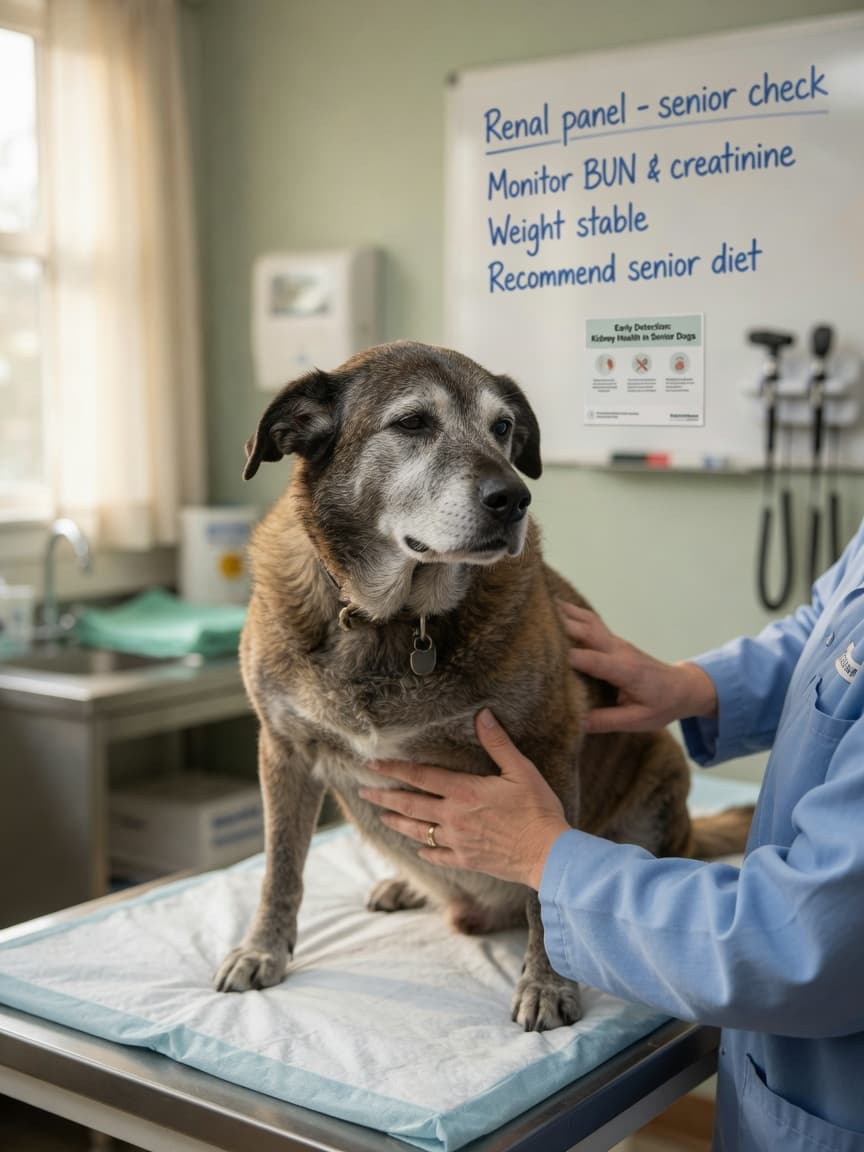
Understanding What the Kidneys Do
The kidneys are remarkable organs that work continuously to filter waste products from the blood, regulate fluid and electrolyte balance, control blood pressure, and produce hormones involved in red blood cell production. A dog has two kidneys, and together they process the entire blood volume many times each day. When kidney function declines, these processes are compromised — and the effects ripple across nearly every body system.
Kidney disease in dogs falls into two broad categories: acute kidney injury, which comes on suddenly and is often reversible if caught quickly, and chronic kidney disease (CKD), which develops gradually over months or years and cannot be reversed but can be managed effectively with the right care.
Why Early Detection Is So Difficult
One of the most challenging aspects of chronic kidney disease is that dogs typically show no clinical signs until at least 67% of kidney function has already been lost. The kidneys have a remarkable compensatory capacity — they adapt and continue functioning even as nephrons (the functional units within the kidney) are progressively lost. By the time symptoms are obvious, the disease is often already at an intermediate or advanced stage.
This is why routine blood and urine testing is genuinely valuable, even in dogs that appear perfectly healthy. Annual wellness screening from middle age onwards — or from around five years in large and giant breeds — offers the best chance of catching changes before significant function is lost.
Early Signs of Kidney Disease

When symptoms do appear, they tend to be subtle initially and are easily attributed to ageing or minor illness. Knowing what to look for helps ensure a prompt diagnosis.
Signs that may indicate kidney disease
- Increased thirst and urination — the kidneys lose the ability to concentrate urine, so more water is consumed and passed
- Weight loss and reduced muscle mass
- Decreased appetite or complete loss of interest in food
- Lethargy and general dullness
- Vomiting, sometimes with blood
- Pale gums, indicating anaemia
- Bad breath with a chemical or ammonia-like smell, known as uraemic breath
- Mouth ulcers in advanced cases
Staging Chronic Kidney Disease
The International Renal Interest Society (IRIS) has developed a widely adopted staging system that helps vets categorise the severity of CKD and guide treatment decisions. The system uses blood creatinine levels and a marker called SDMA (symmetric dimethylarginine), which can detect kidney dysfunction earlier than creatinine alone.
The four IRIS stages
- Stage 1: Creatinine within normal limits, SDMA may be mildly elevated. No clinical signs. The focus is on identifying the underlying cause and monitoring closely.
- Stage 2: Mildly elevated creatinine. Subtle signs such as increased thirst may appear. Dietary modification is typically introduced at this stage.
- Stage 3: Moderately elevated creatinine. Clinical signs become more apparent. Active management of symptoms and complications is required.
- Stage 4: Severely elevated creatinine. Significant clinical illness. Quality of life management becomes the primary focus.
Each stage is further sub-staged based on blood pressure and the degree of protein in the urine, both of which accelerate kidney damage if not controlled.
Dietary Management: The Cornerstone of CKD Care

Nutrition is one of the most powerful tools available for managing chronic kidney disease. A well-formulated renal diet does not cure the disease, but it significantly reduces the workload placed on damaged kidneys and slows the progression of decline.
Key dietary principles
- Reduced phosphorus: High phosphorus is directly toxic to kidney tissue and accelerates disease progression. Renal diets are carefully formulated to contain far less phosphorus than standard adult maintenance diets.
- Moderate, high-quality protein: While protein restriction was historically advocated, current evidence suggests the priority is quality over severe restriction. High biological value protein produces less nitrogenous waste, reducing the burden on the kidneys.
- Increased omega-3 fatty acids: EPA and DHA from fish oil have anti-inflammatory effects within the kidney and may help slow progression.
- Adequate caloric density: Dogs with CKD are prone to weight loss, so food must be energy-dense enough to maintain body condition.
- Sodium control: Moderate sodium restriction supports blood pressure management, though extreme restriction is not generally recommended.
Phosphate binders — medications or supplements given with food to bind phosphorus in the gut before it is absorbed — are commonly used alongside dietary restriction in moderate to advanced CKD to achieve adequate phosphorus control.
Hydration: Simple but Critical
Keeping a dog with CKD well hydrated is essential. Dehydration accelerates kidney damage and worsens clinical signs. Many dogs benefit from wet food rather than dry kibble, as the moisture content contributes meaningfully to daily fluid intake. Some vets recommend adding warm water or low-sodium broth to meals to further encourage intake.
In more advanced cases, subcutaneous fluid administration at home — where the owner gives fluids under the skin — can maintain hydration between vet visits. This technique is simpler than it sounds and many owners manage it confidently with proper training and guidance.
Monitoring and Long-Term Management
Dogs with CKD require regular veterinary monitoring, typically every three to six months depending on the stage and stability of the condition. Blood pressure, urine protein, blood urea nitrogen, creatinine, SDMA, and electrolytes are assessed at each visit, allowing the care plan to be adjusted as the disease evolves.
Medications may include anti-nausea drugs, phosphate binders, drugs to manage high blood pressure, and erythropoiesis-stimulating agents to address anaemia. Every dog is different, and management plans are tailored individually.
A diagnosis of kidney disease is not a death sentence. Dogs managed appropriately with dietary intervention, good hydration, and regular monitoring can maintain a comfortable quality of life for months to years after diagnosis.