
How Common Is Arthritis in Cats?
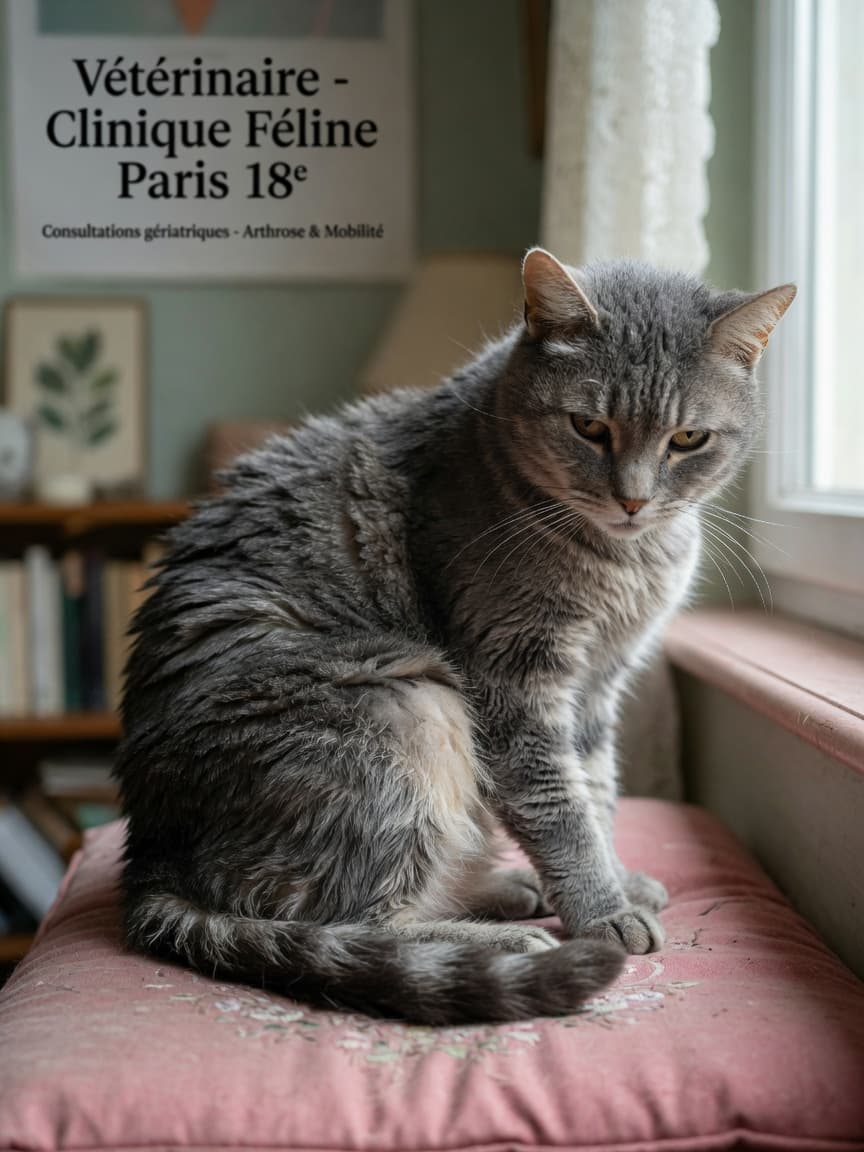
Osteoarthritis is far more prevalent in cats than the veterinary profession once believed. Studies using radiography have found that the majority of cats over twelve years of age have evidence of degenerative joint disease in at least one joint, with the elbows, hips, stifles, and tarsus (ankle) being most commonly affected. Despite this, feline arthritis remains vastly underdiagnosed in clinical practice.
The reason for this gap is not simply veterinary oversight — it is the extraordinary ability of cats to conceal pain. As small predators, cats are instinctively driven to hide vulnerability. Unlike dogs, they rarely cry out or limp obviously in the early to moderate stages of joint disease. Instead, their pain manifests as subtle behavioural and postural changes that owners and even vets can easily attribute to age rather than a treatable condition.
Recognising Arthritis in Cats
Because cats do not show pain in the same way as dogs, knowing what to look for is essential. The signs of feline arthritis are primarily changes from normal behaviour rather than obvious physical indicators.
- Reluctance to jump up to previously favoured surfaces such as windowsills, sofas, or cat trees
- Jumping lower than usual, or choosing to use intermediate surfaces as stepping stones
- Reduced grooming, particularly around the lower back, base of the tail, and hindquarters — areas difficult to reach with stiff joints
- A matted, unkempt, or greasy coat resulting from reduced self-grooming
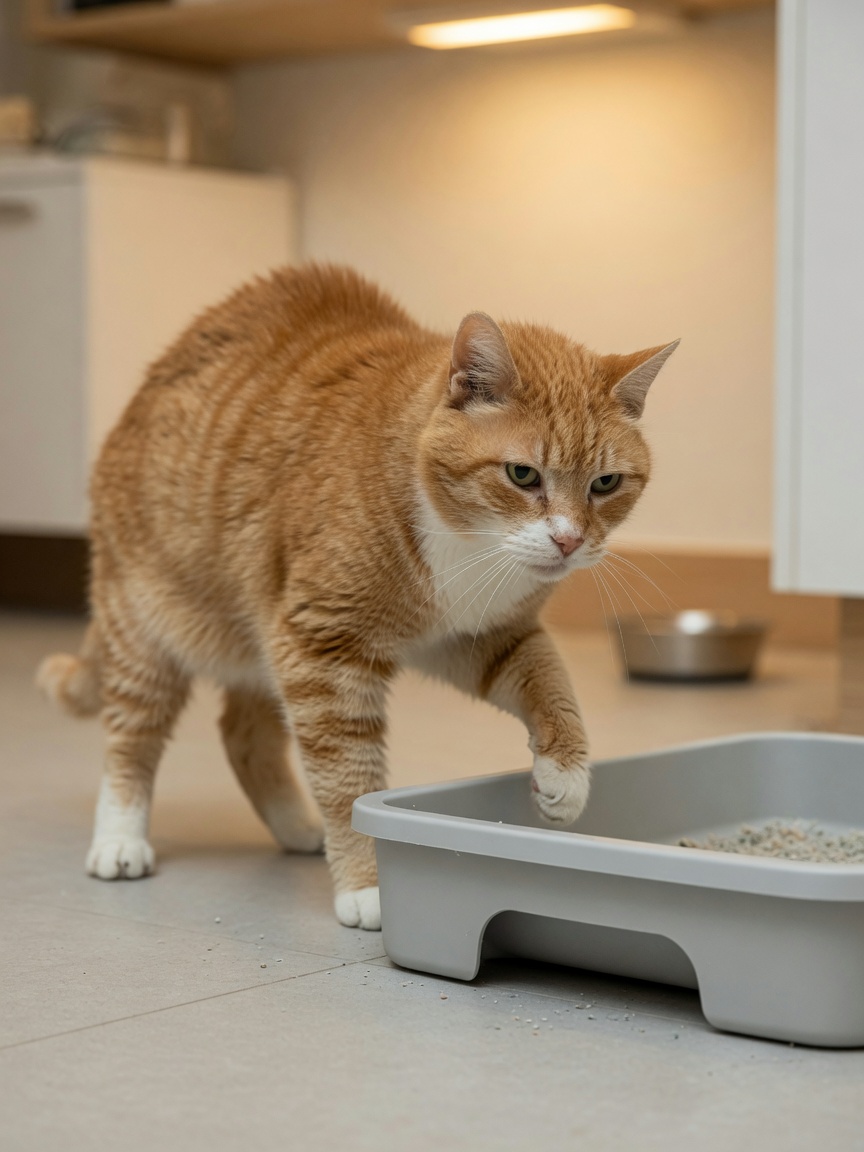
- Difficulty or hesitation when getting in and out of the litter tray
- Toileting outside the litter tray — often mistaken for a behavioural issue when it is pain-related
- Reduced activity and increased sleeping
- Muscle wasting, particularly over the hindquarters and lower back
- Irritability or aggression when handled, especially in the back end
If you notice any of these changes in your older cat, a veterinary assessment for arthritis is warranted.
Grooming Difficulties as a Key Pain Indicator
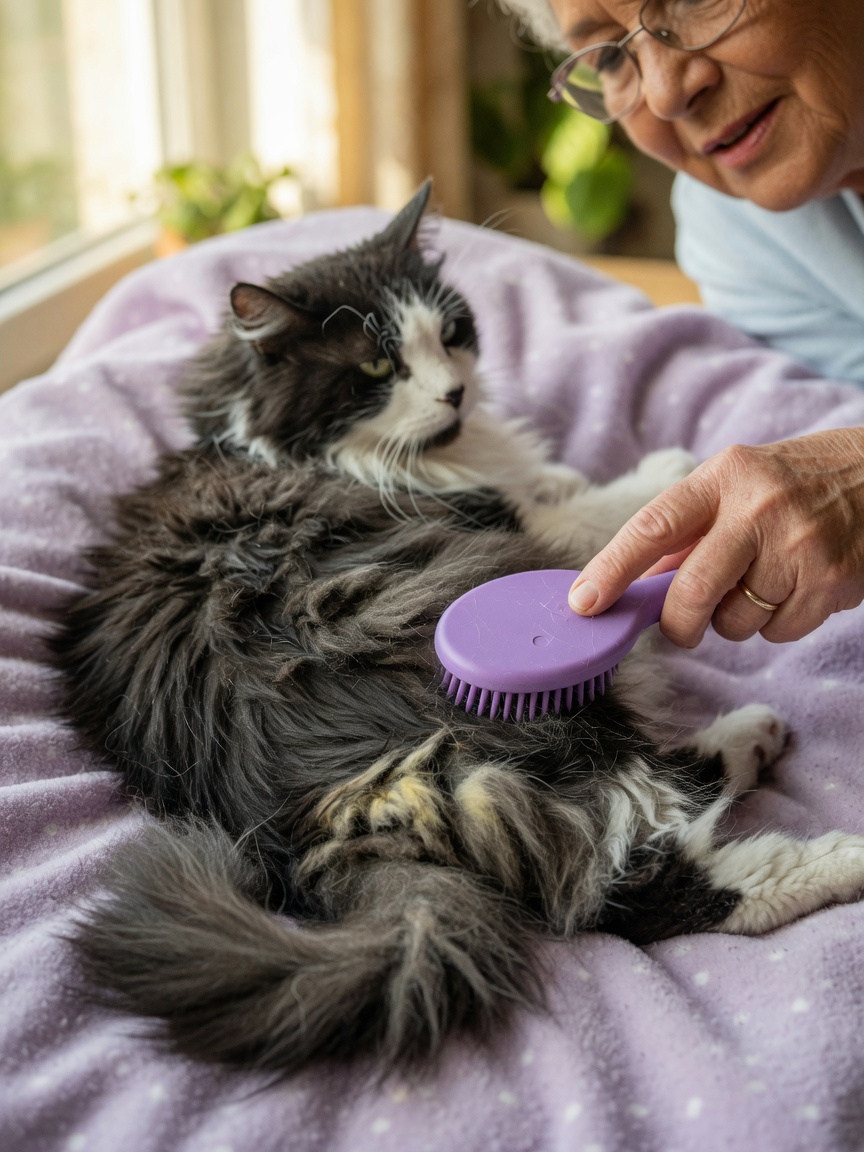
One of the most reliable and underappreciated indicators of arthritis in cats is a change in grooming behaviour. Cats are meticulous self-groomers, and a cat that begins to look unkempt is almost always experiencing some form of discomfort or illness. When arthritis affects the spine, hips, or limbs, the twisting and reaching required for grooming becomes painful, and the cat begins to avoid it.
If you find yourself needing to brush areas your cat used to manage independently, particularly around the base of the tail and the lower back, this is a meaningful signal that something is wrong. Helping your cat with grooming in these areas is kind and reduces the risk of matting, but addressing the underlying pain with your vet is equally important.
Solensia: A Breakthrough for Feline Arthritis Pain
Until relatively recently, managing chronic pain in cats was hampered by the limited number of safe long-term options available. This changed significantly with the introduction of Solensia (frunevetmab), a monthly injectable monoclonal antibody treatment specifically developed and licensed for managing osteoarthritis pain in cats.
Solensia works by targeting and neutralising nerve growth factor (NGF), a protein that plays a central role in chronic pain signalling. Because it is a feline-specific antibody, it is well tolerated with a low risk of adverse effects. It is administered as a subcutaneous injection by your vet once a month, and clinical trials have demonstrated meaningful improvements in owner-assessed mobility and comfort scores.
Solensia represents a genuine advance in feline pain management, particularly for cats who cannot safely use anti-inflammatory drugs. It has no known interaction with most other medications and does not require regular blood monitoring in the same way as NSAIDs.
NSAIDs in Cats: A Narrow Safety Margin
Non-steroidal anti-inflammatory drugs (NSAIDs) can be used in cats, but the safety margin is significantly narrower than in dogs. Cats metabolise many drugs differently — they lack certain liver enzymes that allow other species to break down NSAIDs efficiently, making them particularly susceptible to toxicity if dosing is not carefully managed.
Meloxicam
Meloxicam is the most commonly used NSAID in cats in the UK and Europe, where it is licensed for long-term use in cats at very low doses. When used correctly — at the appropriate feline dose, not a dog or human dose — and with regular veterinary monitoring, it can be effective for managing chronic arthritis pain. Long-term use requires periodic blood and urine tests to monitor kidney and liver function, as renal disease is common in older cats and can be exacerbated by NSAID use.
Never administer NSAIDs designed for humans or dogs to a cat without explicit veterinary instruction. Ibuprofen and aspirin, for example, are toxic to cats even in small amounts. Always follow your vet's guidance precisely regarding dose and frequency.
Environmental Adaptations for Arthritic Cats
Managing the home environment is one of the most effective and immediate ways to reduce pain and improve quality of life for a cat with arthritis. Unlike medication, which requires veterinary involvement, environmental changes can be implemented straightaway and at low cost.
Litter Tray Access
Providing a litter tray with low entry sides is one of the single most impactful adaptations for an arthritic cat. Standard litter trays require a cat to step over a relatively high edge, which can be uncomfortable or even impossible for a cat with painful hips or knees. Shallow, open-topped trays with a low front entry point allow the cat to walk in and out with minimal effort. Place trays on every floor of the house to reduce the distance your cat needs to travel to reach one.
Ramps and Steps
Jumping places significant strain on arthritic joints, both on the way up and especially on landing. Providing pet ramps or steps to allow gradual, low-impact access to favourite resting places — a sofa, a windowsill, a bed — removes the need for high jumps and allows the cat to continue accessing valued spaces without pain.
Heated Beds
Warmth provides genuine comfort to arthritic joints. Heated pet beds — either electrically warmed or using self-heating materials — can significantly reduce stiffness and discomfort, particularly during cold weather. Place beds at floor level or on low platforms to ensure easy access, and in draught-free areas away from external walls.
Food, Water, and General Accessibility
- Place food and water at a height that does not require uncomfortable stretching or crouching
- Ensure all essential resources — food, water, litter, resting areas — are on the same floor if possible, or replicated on each floor
- Use shallow food bowls that do not require the cat to dip their head deeply, reducing strain on the neck and shoulders
- Keep pathways around the home clear so the cat does not need to navigate over or around obstacles
Regular Monitoring and Veterinary Partnership
Arthritis in cats requires ongoing management rather than a one-off treatment decision. Your vet is a crucial partner in this process — able to adjust pain management approaches as the condition progresses, monitor for medication side effects, and assess overall quality of life. Six-monthly check-ups are recommended for most senior cats, and more frequent visits may be appropriate if pain management is being actively titrated.
With attentive care, the right treatment, and thoughtful home adaptations, many arthritic cats go on to live comfortably well into their senior years.