

Why Diarrhoea in a Kitten Is Never Just Diarrhoea
A kitten losing fluid through severe diarrhoea can deteriorate to a critical state within hours. The young, the small, and the not-yet-fully-immunised are exquisitely vulnerable to enteric pathogens that older cats shrug off. Two viruses — rotavirus and feline parvovirus — sit at opposite ends of the severity spectrum but both demand urgent attention when kittens are affected.
Feline Parvovirus: The Greater Threat
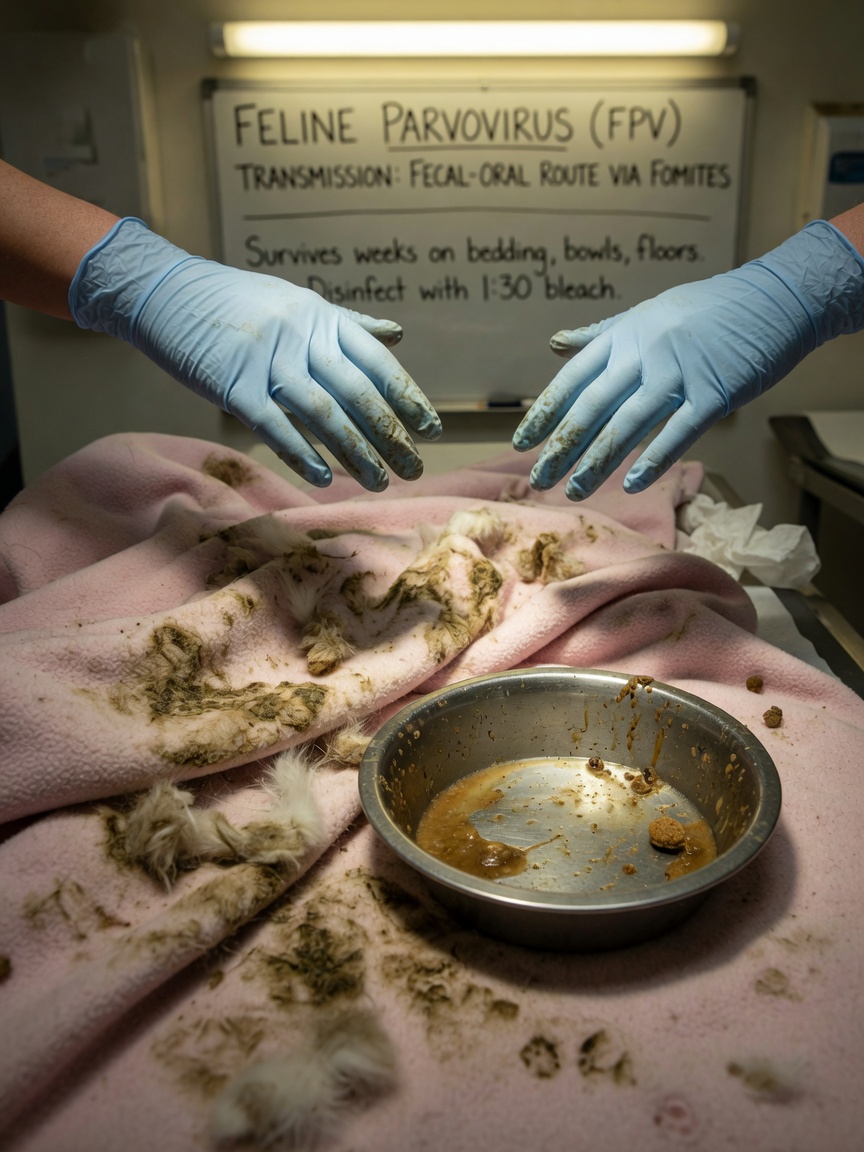
Feline parvovirus (FPV), the cause of feline panleukopenia, is one of the most resilient and dangerous viral pathogens in veterinary medicine. The virus is stable in the environment for over a year, resistant to many disinfectants, and can be transmitted without direct cat-to-cat contact. Contaminated bedding, food bowls, human hands, and clothing can all carry it.
How Parvovirus Destroys
FPV targets rapidly dividing cells. In kittens, this means the crypts of the small intestinal epithelium — the cells that regenerate the gut lining — are destroyed, causing haemorrhagic diarrhoea and collapse of intestinal barrier function. Simultaneously, the virus attacks bone marrow progenitor cells, causing panleukopenia: a catastrophic fall in white blood cell count that leaves kittens defenceless against secondary bacterial infection. In foetuses and neonates, the virus attacks the developing cerebellum, causing cerebellar hypoplasia — an irreversible condition affecting coordination.
Clinical Signs of Panleukopenia
- Sudden, severe vomiting and profuse, often bloody diarrhoea
- Extreme lethargy and depression
- High fever followed by hypothermia in severe cases
- Abdominal pain and bloating
- Rapid dehydration
- Death within 24–48 hours in untreated severe cases
Mortality rates in unvaccinated kittens can exceed 90% without intensive veterinary care.
Rotavirus in Kittens: Milder but Still Dangerous
Feline rotavirus is considerably less dramatic than parvovirus but should not be dismissed in very young or already compromised kittens. Rotaviruses infect the mature enterocytes of the small intestinal villi, impairing absorption and causing osmotic diarrhoea. The illness is typically self-limiting in otherwise healthy kittens but can cause dangerous fluid and electrolyte losses in neonates under four weeks of age.
Rotavirus is shed in large quantities in faeces and spreads rapidly in environments housing multiple kittens, including shelters and breeding catteries. Co-infection with other pathogens — Clostridium perfringens, Cryptosporidium, or concurrent FPV — worsens outcomes significantly. Signs include watery yellow or brown diarrhoea, mild lethargy, and variable appetite. Fever is uncommon.
Diagnosis
Parvovirus Testing
Rapid antigen tests (often the same lateral flow test used for canine parvovirus, as the viruses are closely related) can be run in-clinic on faecal samples and provide results within minutes. False negatives can occur in the first 24 hours of infection or in recently vaccinated kittens. PCR testing provides greater sensitivity and is the preferred method when clinical suspicion is high and the rapid test is negative.
Rotavirus Testing
Electron microscopy, ELISA, and PCR can detect feline rotavirus in faeces. In practice, rotavirus is often diagnosed presumptively in shelters or catteries experiencing outbreaks of mild self-limiting diarrhoea in young kittens, with confirmation sought only when cases are severe or unusual.
A full blood count is essential in any kitten with severe diarrhoea. A dramatically low white blood cell count in a sick kitten is strongly suggestive of parvovirus even before specific test results are available.
Treatment: Supportive Care Is Everything
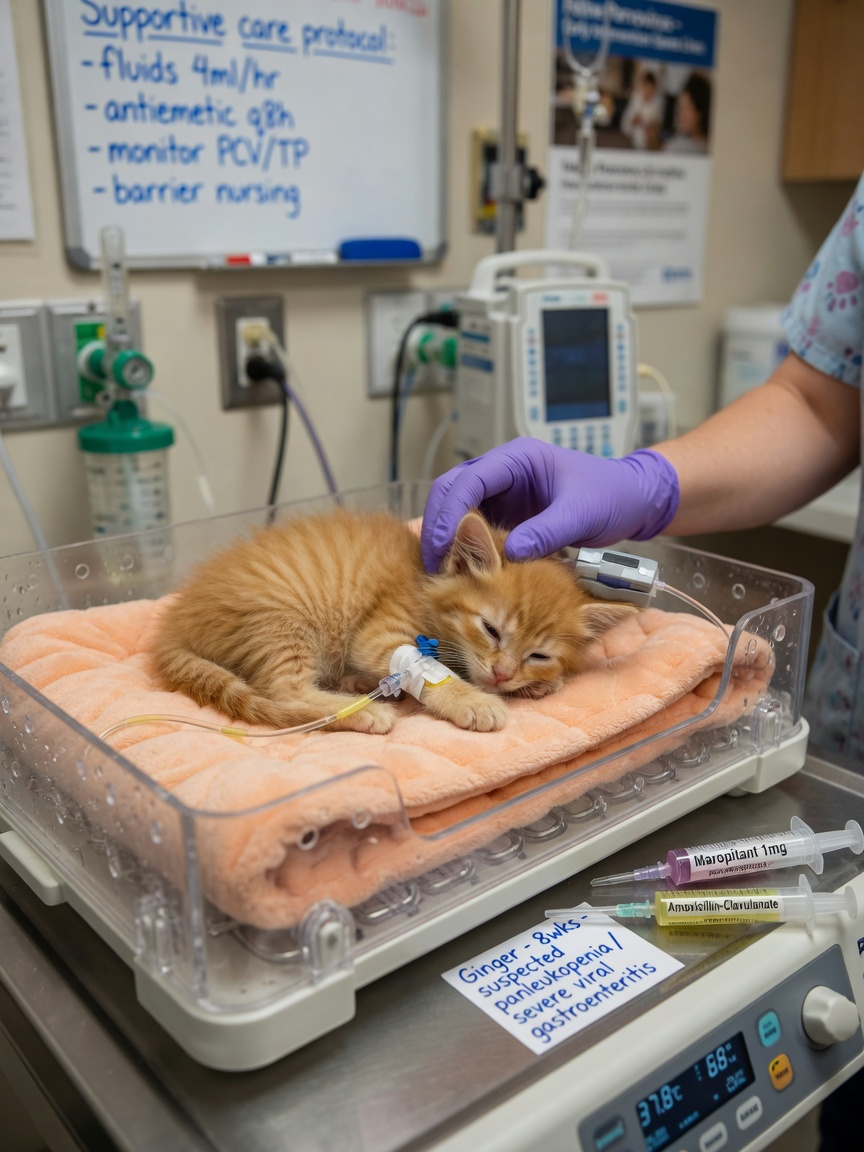
There is no antiviral treatment for either feline rotavirus or feline parvovirus. Management is entirely supportive, but aggressive support is life-saving.
- Intravenous or intraosseous fluid therapy to correct dehydration and electrolyte imbalances
- Antiemetics to control vomiting and allow fluid retention
- Broad-spectrum antibiotics to prevent or treat bacterial translocation across the damaged gut wall
- Nutritional support, including assisted feeding or feeding tubes in prolonged cases
- Warmth and strict isolation to prevent spread and protect the immunosuppressed patient
- Blood or plasma transfusions in severely affected parvovirus cases
Kittens requiring this level of care must be hospitalised. Home management of a kitten with suspected parvovirus is not appropriate — deterioration is too rapid. Contact your vet or an emergency clinic immediately if a kitten shows vomiting, bloody diarrhoea, or sudden severe lethargy.
Vaccination: The Non-Negotiable Protection
Feline parvovirus is entirely vaccine-preventable. The core feline vaccine — the tricat or FVRCP — includes parvovirus and provides excellent, long-lasting immunity. Kittens should receive their primary course starting at 8–9 weeks, with boosters at 12 and 16 weeks. Maternally derived antibodies can interfere with earlier vaccination, making the timing and completion of the primary course important.
Unvaccinated adult cats in a household with a parvovirus-exposed kitten are also at risk. There is no licensed vaccine for feline rotavirus. Environmental decontamination with a parvocidal disinfectant — such as diluted bleach — is essential after any confirmed parvovirus case, given the organism's environmental persistence.
Action Points for Kitten Carers
- Complete the full vaccination course — parvovirus is life-threatening and preventable
- Any kitten with vomiting and diarrhoea warrants same-day veterinary assessment
- Isolate affected kittens immediately to protect littermates and other household cats
- Do not share feeding equipment, bedding, or litter trays between sick and healthy kittens
- Decontaminate the environment thoroughly after any confirmed parvovirus case
- New kittens entering a rescue or cattery should be isolated for a minimum of two weeks