
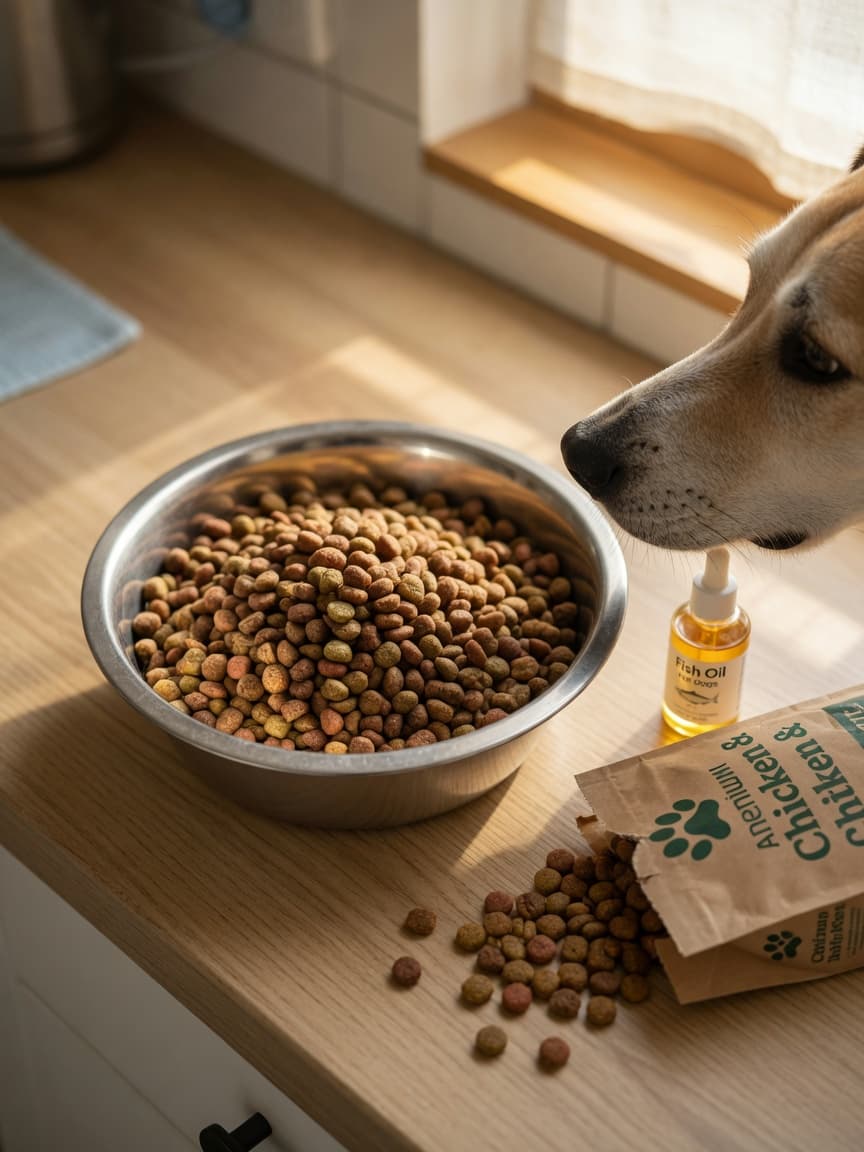
Why Dog Food Needs Preservatives at All
Fats go rancid. Bacteria multiply. Without some form of preservation, commercially produced dog food would spoil before it reached your home, let alone sat in a cupboard for six months waiting to be opened. Preservatives are a practical necessity in any food with a meaningful shelf life — and understanding which ones are in your dog's food, and what the research says about them, is worth your time.
The conversation about preservatives in pet food tends to generate more heat than light. Some owners avoid all additives on principle; others pay no attention whatsoever. The reality sits somewhere more nuanced in between.
What Preservatives Are Actually Doing
Preservatives in dog food serve two main functions. Antimicrobial preservatives prevent the growth of bacteria, yeast, and mould. Antioxidant preservatives prevent the oxidation of fats — the process that makes oils and animal fats turn rancid, which can cause digestive upset and destroy fat-soluble vitamins like A, D, E, and K in the process.
Dry kibble, wet food in cans or pouches, and raw or fresh foods all use different preservation methods. Canned food is sterilised by heat during the canning process and typically requires fewer added preservatives once sealed. Dry kibble relies heavily on antioxidant preservatives to protect the fat content. Fresh and raw foods are usually refrigerated or frozen rather than chemically preserved.
Synthetic Preservatives: The Ones That Raise Concern
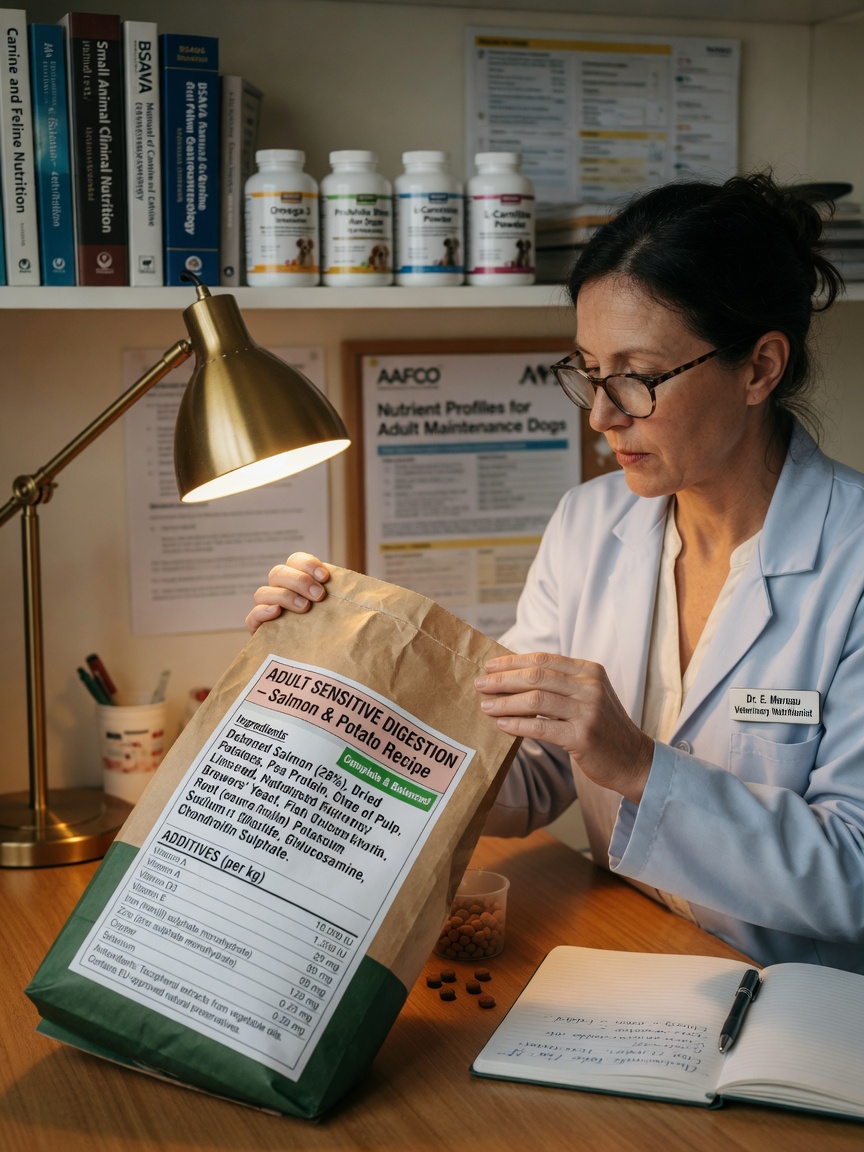
The synthetic preservatives that appear most frequently in discussions about dog food safety are BHA (butylated hydroxyanisole), BHT (butylated hydroxytoluene), and ethoxyquin. All three are antioxidants used to prevent fat oxidation.
BHA and BHT are permitted food additives in the UK and EU for use in both human and animal foods, within regulated limits. However, both have been flagged in animal studies as potential carcinogens at high doses. The International Agency for Research on Cancer classifies BHA as possibly carcinogenic to humans (Group 2B). The doses used in these studies are typically far higher than what a dog would consume through food, and the evidence in companion animals specifically is limited. That said, many owners and veterinary nutritionists prefer to err on the side of caution given that safer alternatives exist.
Ethoxyquin has a more troubled history. Originally developed as a pesticide and rubber stabiliser, it was widely used as a preservative in fish meal for many years. Following consumer pressure and a voluntary review, the European Food Safety Authority (EFSA) completed a re-evaluation and in 2015 concluded that the existing safety data was insufficient, leading to restrictions on its use. Ethoxyquin should not appear on UK or EU pet food labels today as a direct additive, though trace amounts may be present in fish meal that was preserved with it before reaching the manufacturer — a loophole that is difficult to regulate.
Propylene Glycol: One to Avoid
Propylene glycol deserves a specific mention. It is used as a humectant in some semi-moist dog foods to maintain texture and moisture. While it is permitted in dog food, it is banned for use in cat food in the EU because cats cannot metabolise it adequately and it can cause damage to red blood cells. In dogs the risk is lower, but given that semi-moist foods offer limited nutritional advantages over wet or dry alternatives, propylene glycol is one ingredient many nutritionists suggest avoiding where possible.
Natural Preservatives: What They Are and How Well They Work
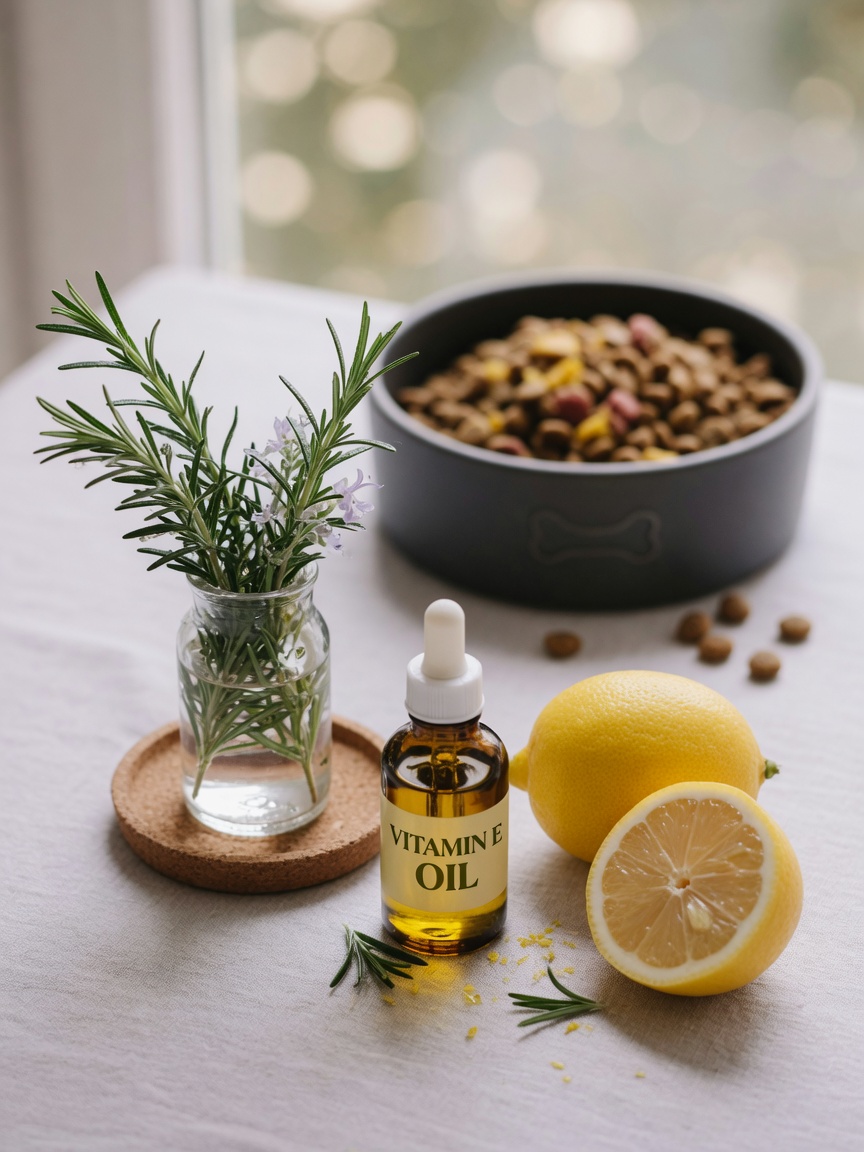
The most common natural preservatives used in quality dog foods are mixed tocopherols (vitamin E), rosemary extract, and ascorbic acid (vitamin C). These are antioxidants derived from natural sources, and they are generally considered safe and well-tolerated.
Mixed tocopherols are the most effective natural option for preventing fat oxidation and are widely used in premium dog foods. You will see them listed on ingredient panels as "mixed tocopherols" or "vitamin E supplement." They are less potent than synthetic options, which means foods preserved this way have a shorter shelf life — typically around 12 months versus 18 or more for synthetically preserved kibble.
Rosemary extract is commonly seen alongside tocopherols for additional antioxidant support. It is worth noting that rosemary in large quantities may be contraindicated for dogs with epilepsy, though the amounts used in food preservation are generally very low.
Ascorbic acid (vitamin C) is water-soluble and less effective at preventing fat rancidity than tocopherols, so it tends to be used as a supporting preservative rather than a primary one.
Reading the Label for Preservatives
Finding preservatives on a dog food label requires knowing where to look and what names to search for. In the UK, additives including preservatives must be declared in a separate "additives" or "composition" section, often distinct from the main ingredient list. They may be listed by name, by E number, or both.
- E306–E309 are tocopherol-based antioxidants (natural vitamin E).
- E320 is BHA and E321 is BHT.
- E324 is ethoxyquin — rarely seen now in EU-sold foods but worth checking.
- E1520 is propylene glycol.
- E300 is ascorbic acid.
If a food is labelled "preserved with natural antioxidants" or "no artificial preservatives," look for tocopherols, rosemary extract, or ascorbic acid to confirm the claim is backed up by the actual additive list.
Putting Risk in Perspective
The honest answer is that the risk posed by BHA and BHT in regulated quantities in commercially produced dog food is probably low for most healthy adult dogs. The evidence for harm at typical dietary exposure levels in dogs is not strong. But if you are choosing between two otherwise comparable foods and one uses mixed tocopherols while the other uses BHA, the natural option is a reasonable preference.
Where preservatives become a more pressing concern is in dogs fed a diet heavily reliant on processed treats, training rewards, and multiple different commercial foods simultaneously — the cumulative load from several preserved products adds up in a way that a single well-chosen food does not.
Check the additive section of your dog's current food. If you see E320, E321, or propylene glycol and a naturally preserved alternative is available at a similar price point and nutritional profile, it is worth making the switch. If the food is already using tocopherols and rosemary, you are in a good position.