
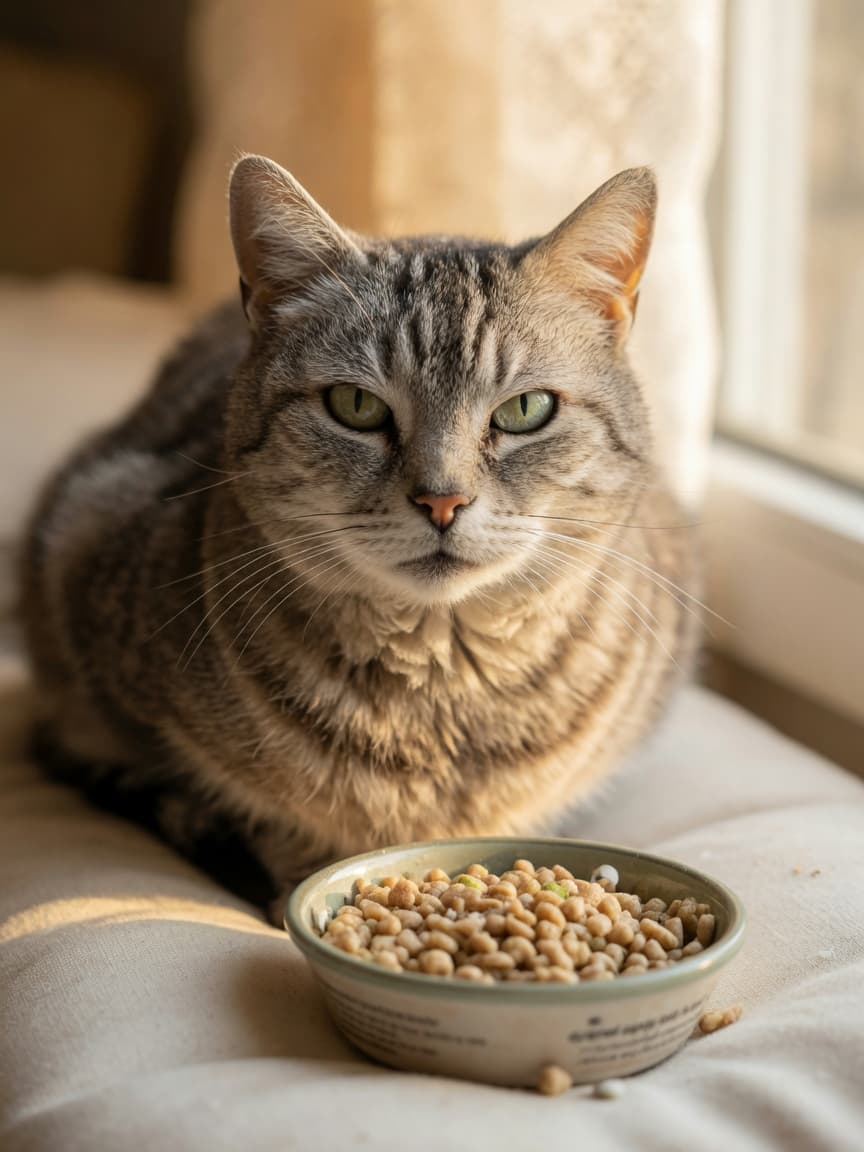
The Mineral That Quietly Shapes Your Cat's Kidney Function
Phosphorus rarely makes headlines in cat nutrition conversations, yet it is one of the most consequential minerals in a feline diet — particularly as cats age. Chronic kidney disease, or CKD, is the leading cause of death in older cats. Phosphorus management sits at the very centre of both its progression and its management. Understanding the relationship between dietary phosphorus and kidney function can genuinely extend your cat's life.
How Phosphorus Works in the Body
Phosphorus is an essential mineral. It plays a structural role in bones and teeth, where approximately 85% of the body's phosphorus is stored in combination with calcium. The remaining 15% is distributed throughout soft tissues, where it participates in energy metabolism through its role in ATP, contributes to DNA and RNA structure, and helps regulate acid-base balance.
The kidneys are responsible for filtering excess phosphorus out of the blood and excreting it in urine. In a healthy cat with normal kidney function, this system works efficiently. Dietary phosphorus is absorbed from the gut, enters the bloodstream, and is cleared by the kidneys as needed. The problem arises when kidney function declines.
Chronic Kidney Disease and the Phosphorus Problem
CKD in cats is extraordinarily common — studies suggest it affects roughly 30 to 40 percent of cats over the age of 10. As kidney tissue is progressively lost, the remaining nephrons must work harder to maintain the same level of filtration. One of the things they struggle to excrete adequately is phosphorus.
When phosphorus accumulates in the bloodstream, a condition called hyperphosphataemia develops. The body attempts to compensate by secreting parathyroid hormone, which pulls calcium from bones and works to lower blood phosphorus levels. This secondary hyperparathyroidism has damaging downstream effects. It accelerates the deterioration of remaining kidney tissue, causes bone demineralisation, and contributes to cardiovascular complications. Research has consistently shown that elevated blood phosphorus is one of the strongest predictors of shortened survival time in cats with CKD.
The Protein Paradox in Renal Diets
Here is where feline nutrition becomes genuinely complicated. Phosphorus in cat food comes primarily from protein — specifically from animal-derived protein, which is exactly what cats need. Meat, fish, and organ tissue are all rich in phosphorus. This creates a genuine tension in dietary management of CKD cats.
Early approaches to feline renal diets focused heavily on protein restriction as a strategy to reduce phosphorus intake and reduce the nitrogen load on compromised kidneys. However, more recent research and clinical guidance has shifted this thinking. Protein restriction in cats carries its own risks — muscle wasting, immune suppression, and reduced quality of life. Current consensus tends to favour phosphorus restriction achieved through careful selection of ingredients and the use of phosphorus binders, rather than aggressive protein reduction.
A cat with CKD still needs adequate protein to maintain lean body mass. The goal is not to eliminate animal protein but to moderate phosphorus content while preserving protein adequacy.
Phosphorus Sources Are Not Created Equal
Not all dietary phosphorus behaves the same way in the body, and this distinction matters enormously for cat food formulation. Phosphorus from organic sources — whole meat, fish, eggs — is bound to proteins and is absorbed at roughly 60 to 70 percent efficiency in the intestine. This is meaningful but not excessive in a cat with functional kidneys.
Phosphorus from inorganic additives is a different matter entirely. Inorganic phosphates, including dicalcium phosphate, monocalcium phosphate, and sodium hexametaphosphate, are commonly added to commercial cat foods as preservatives, acidulants, and moisture-binding agents. These additives are absorbed at rates approaching 100%, flooding the bloodstream with phosphorus at levels that organic sources simply do not match.
For healthy cats, this distinction may be manageable. For cats with early-stage kidney disease — which is often clinically silent and undetected — it represents a significant additional burden. Checking ingredient lists for inorganic phosphate additives is one of the most actionable things an owner can do, particularly for middle-aged and older cats.
How to Evaluate Phosphorus Content in Cat Food
Cat food labels in the UK are required to list phosphorus content as a percentage of the product. However, comparing across wet and dry foods requires converting to a dry matter basis, since the moisture content varies dramatically — wet food is typically 75 to 80 percent water, while dry food may be 10 percent or less.
For a healthy adult cat, phosphorus intake of around 0.5 to 0.8 percent on a dry matter basis is generally considered appropriate. For cats with known CKD, targets are typically lower — many veterinary renal diets aim for below 0.4 percent on a dry matter basis — and phosphorus binders prescribed by a vet may be added to the food to reduce intestinal absorption further.
Regular blood and urine testing is the only reliable way to know whether a cat's kidneys are under strain. Phosphorus and creatinine levels in the blood, along with urine specific gravity, provide the clearest picture. Annual screening for cats over seven years of age gives the best chance of catching early CKD before phosphorus becomes a crisis rather than a manageable variable.
Practical Steps for Kidney-Conscious Feeding
- Avoid cat foods with inorganic phosphate additives, particularly for cats over seven years old.
- Choose wet food over dry as the primary diet — the higher moisture content supports kidney hydration and dilutes phosphorus load.
- Request a blood phosphorus panel at annual veterinary check-ups for senior cats.
- If CKD is diagnosed, transition to a veterinary renal diet under guidance rather than attempting to manage the condition through commercial food selection alone.
- Do not restrict protein aggressively without veterinary supervision — muscle wasting in CKD cats is a serious welfare concern.
Phosphorus is not a nutrient to obsess over in a young, healthy cat eating a balanced diet. But understanding its role, and keeping it on your radar as your cat ages, is one of the most evidence-based things you can do for their long-term health.