
The Foundation of Every Working Dog
A working dog is only as capable as its feet allow it to be. Paw pads are remarkable structures — thick, keratinised, and highly vascularised — designed to absorb shock, provide traction, and insulate against temperature extremes. But they are not indestructible. In active and working dogs, pad injuries are among the most common reasons for a dog to be pulled from work, and they are frequently both preventable and avoidable with the right management approach.
Whether your dog is running rough terrain in a field trial, pulling a sled, working daily on concrete or tarmac, or competing in agility, understanding how pad injuries occur, what they look like, and how to treat and prevent them is essential knowledge for any serious handler.
Anatomy of the Pad and Why It Matters
The digital and metacarpal or metatarsal pads are composed of a tough outer layer of keratinised stratified squamous epithelium, beneath which lies a thick layer of adipose and fibrous tissue that serves as a shock absorber. Blood vessels supply the pad extensively, which is why even superficial pad injuries often bleed more than their size would suggest.
The condition of the pad surface — its thickness, moisture content, and integrity — changes in response to the surfaces the dog works on and the intensity of work. Dogs that work regularly on natural surfaces like grass, soil, and sand develop pads that are toughened but retain some flexibility. Dogs working primarily on hard, abrasive surfaces like tarmac, concrete, or gravel develop thicker but sometimes more brittle pads that crack more readily.
Common Types of Pad Injury in Active Dogs
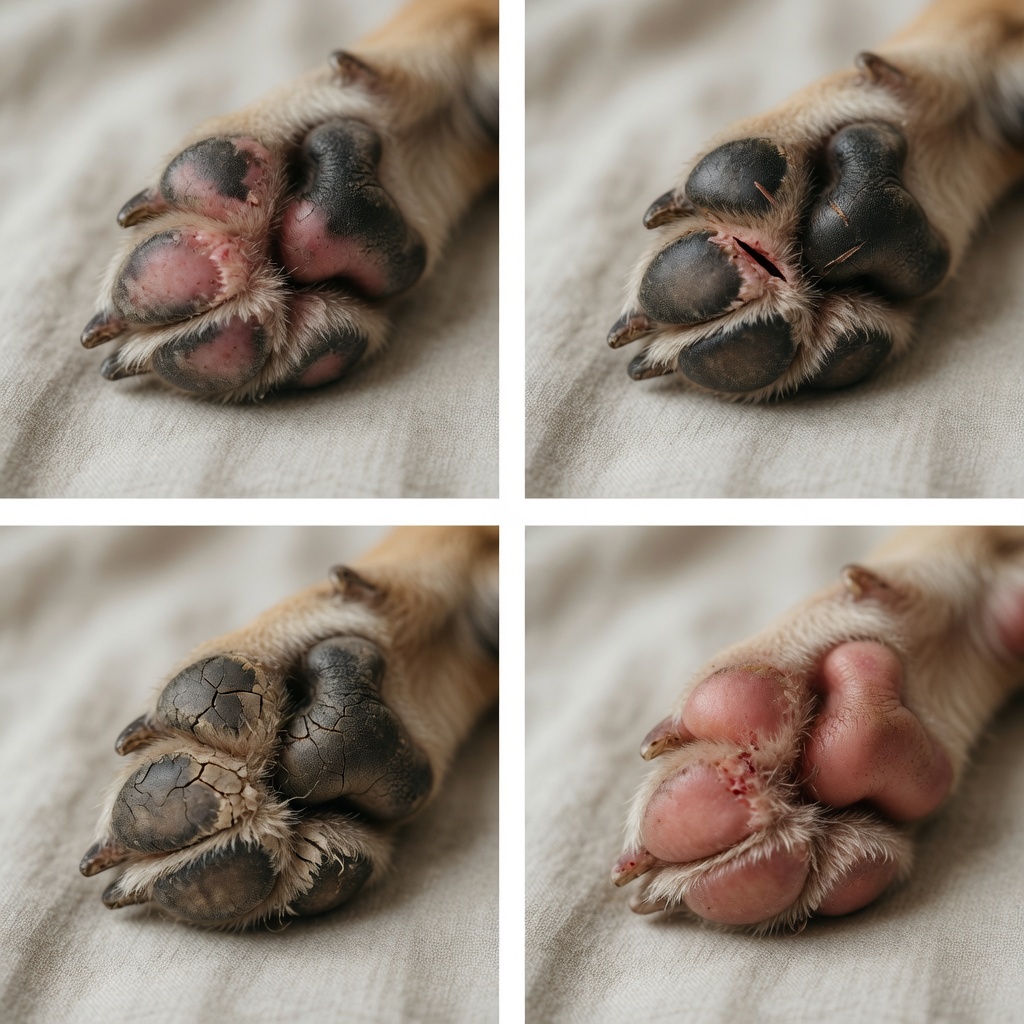
The injuries seen in active dogs fall into a few recurring categories, each with slightly different causes and management needs:
- Abrasions: superficial wearing away of the pad surface, common after work on rough or abrasive ground, or when a dog has been working longer or harder than the pads are conditioned for
- Lacerations: cuts from sharp objects including glass, stones, wire, or ice. Can be superficial or extend into deeper pad tissue and may require suturing
- Pad burns: thermal injuries from hot tarmac in summer or frictional heat from rough terrain at speed. Common in greyhounds and sprint dogs
- Pad cracking: horizontal fissures in dry or overly keratinised pad tissue. Often start as superficial and deepen with continued work
- Interdigital issues: inflammation, foreign body penetration, or furunculosis between the toes, often secondary to repeated trauma or moisture accumulation
- Haematomas: blunt trauma can cause bleeding within the pad tissue without breaking the surface
Recognising Injury in a Working Dog
Dogs often do not stop working when pad injury occurs. Adrenaline and drive mask discomfort until conditions worsen. Active handlers should incorporate pad checks as a standard part of before, during, and after work routines. Signs to look for include:
- Visible redness, swelling, or raw-looking tissue on pad surfaces
- Licking or chewing at paws after work
- Subtle gait changes such as landing differently on one foot or a shortening of stride
- Bleeding on the ground or the dog's coat
- Reluctance to bear weight on a limb when at rest
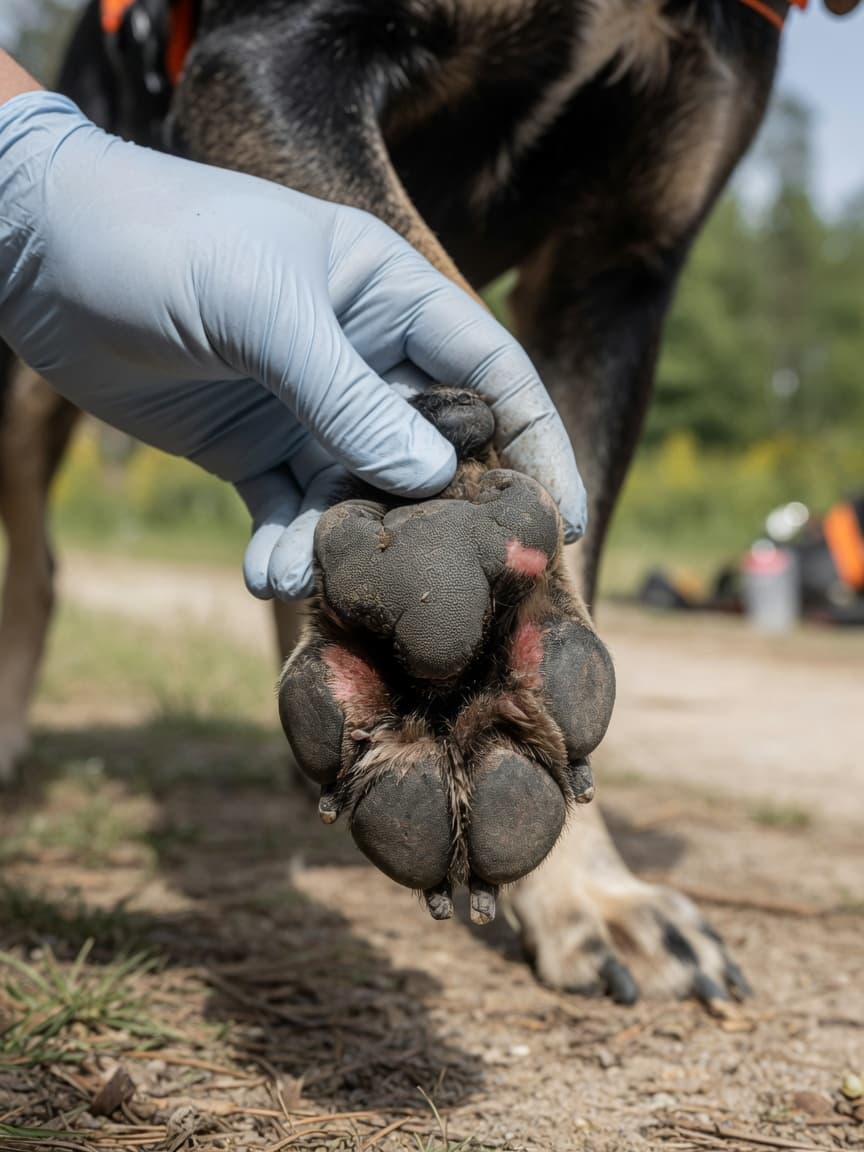
Pads should be physically inspected after every working session in high-demand environments. Run a clean cloth or gloved hand across each pad surface and between the toes to check for cuts, embedded debris, or heat.
Immediate Treatment of Pad Injuries in the Field
For abrasions and minor lacerations, the initial priorities are cleaning and protection. Rinse the affected area thoroughly with clean water or sterile saline to remove debris. Avoid hydrogen peroxide or alcohol-based products — these damage tissue and slow healing. A dilute povidone-iodine solution (diluted to a weak tea colour) is an appropriate antiseptic for field use.
Once clean, the pad should be protected. A non-adherent dressing applied directly to the wound, followed by a gauze pad and bandaging material, will protect the area and allow the dog to be transported for veterinary assessment. Vet wrap applied with moderate tension is useful, but avoid wrapping too tightly as this restricts circulation.
Lacerations that penetrate deeply, bleed significantly, or expose underlying tissue require veterinary attention. Deep lacerations may need suturing, though the location and constant movement of pads make wound healing technically challenging. Some vets prefer surgical glue or tissue adhesive for smaller pad cuts.
Conditioning Pads for Work
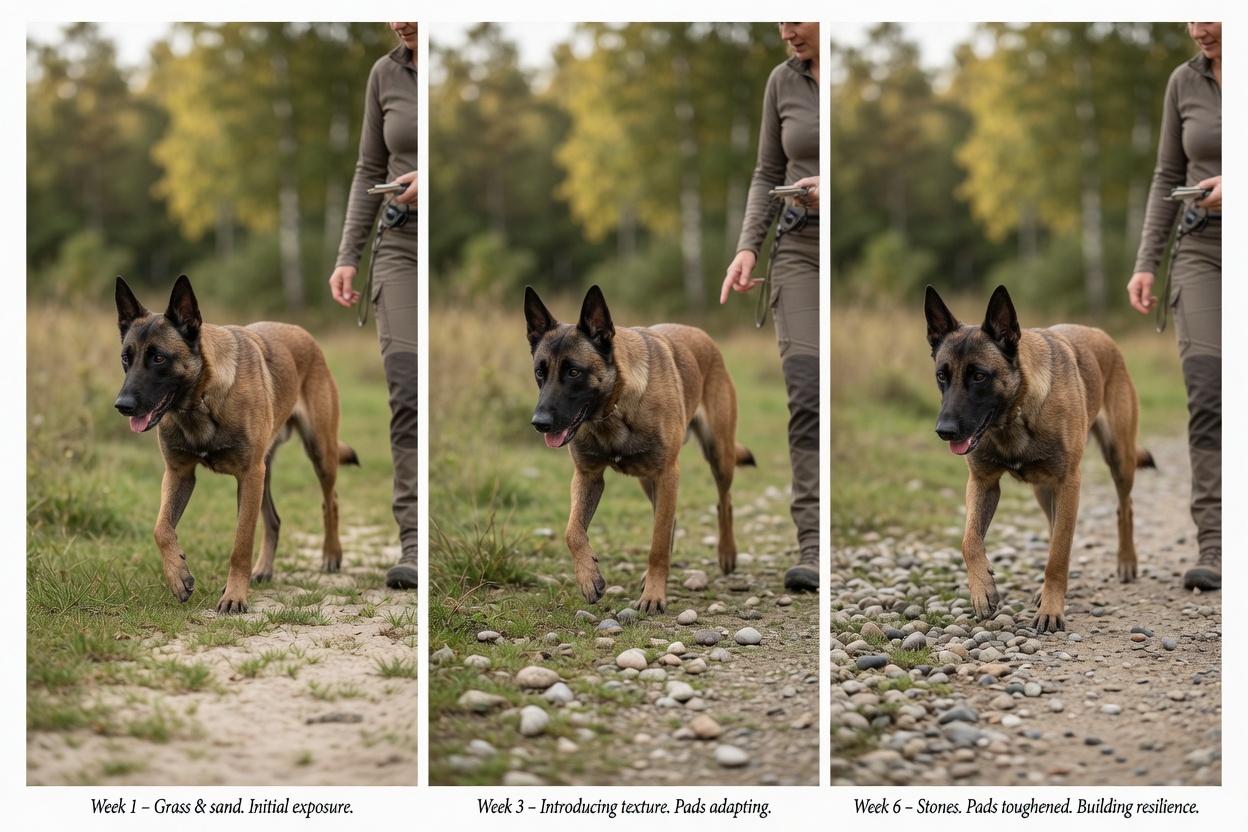
New or deconditioned dogs should not be placed immediately into demanding terrain or high-intensity work. Pad conditioning follows the same principle as cardiovascular conditioning — progressive loading over time. Beginning with shorter sessions on milder surfaces and gradually increasing duration, terrain difficulty, and speed allows pad tissue to toughen appropriately.
Topical pad conditioners, applied regularly to working dogs, serve a valuable role. Products containing beeswax, shea butter, or lanolin maintain adequate moisture in pad tissue, reducing cracking and brittleness without softening the pad excessively. Pads that are too soft are as problematic as pads that are too dry — flexibility and toughness need to be balanced.
Seasonal and Terrain-Specific Precautions
Hot weather introduces a significant hazard. Tarmac and artificial surfaces can reach temperatures far exceeding ambient air temperature on sunny days. The back-of-hand rule — if you cannot hold your hand comfortably on the surface for five seconds, it is too hot for your dog's pads — is a practical field test. Early morning or evening working in summer reduces this risk substantially.
Winter brings its own challenges. Ice, compacted snow, and road gritting salt all contribute to pad damage. Salt in particular is a chemical irritant and should be rinsed off pads after exposure. Protective boots, once dismissed by many handlers as unnecessary, have become increasingly accepted in working dog communities for use in extreme conditions. Modern designs are better fit and more durable than earlier versions, and many dogs adapt to them readily.
Proper pad care is not a luxury add-on in working dog management. It is a fundamental responsibility. A dog with sore, injured, or poorly conditioned pads cannot perform, cannot focus, and cannot achieve what its genetics and training make possible.