
Why Cats Get Stressed and How to Recognise It
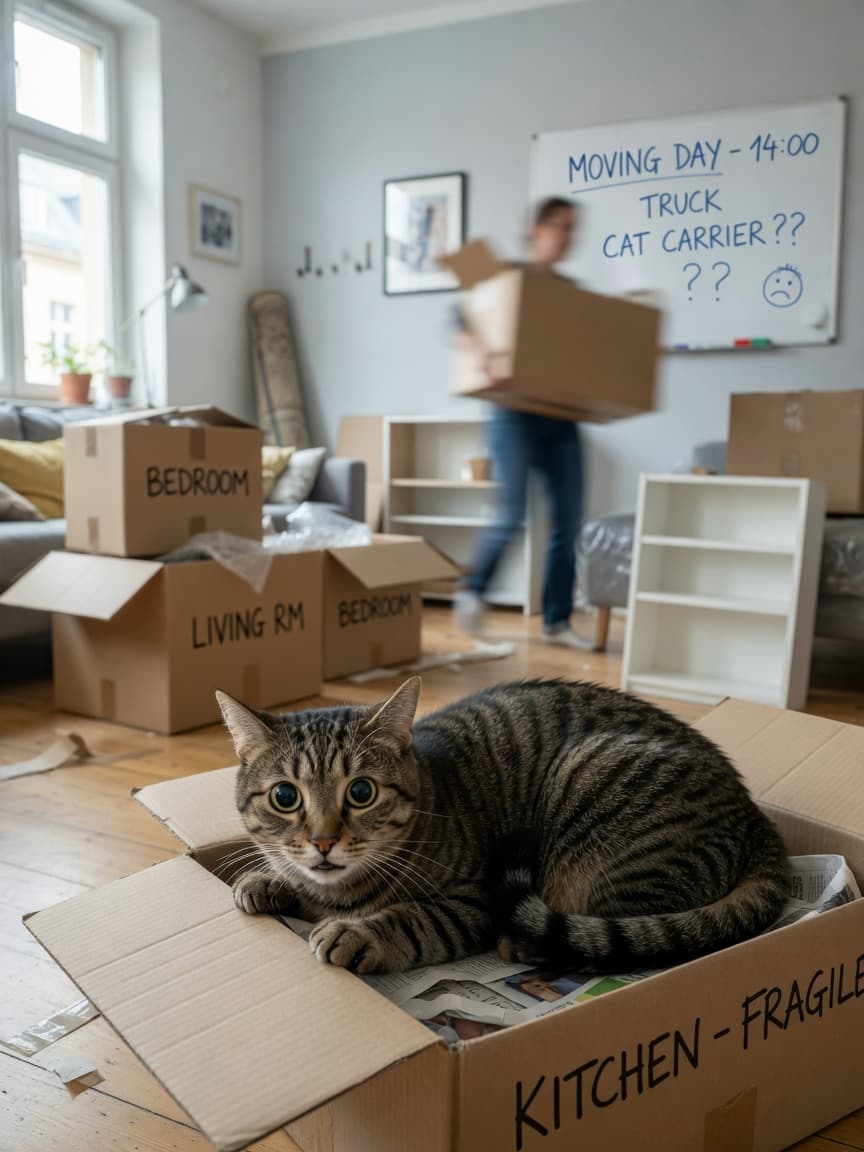
Cats are creatures of habit, and disruptions to their environment or routine can trigger significant stress. Common causes include moving house, the arrival of a new pet or baby, building work, changes to feeding schedules, multi-cat household conflict, and even alterations in furniture layout. Because cats are masters at concealing vulnerability, stress is often missed until it becomes a medical problem.
Signs of stress in cats include hiding more than usual, changes in appetite, over-grooming or hair loss, inappropriate elimination (urinating or defecating outside the litter tray), aggression, and reduced interest in play or interaction. Stress is also a major trigger for feline idiopathic cystitis — a painful bladder condition that has no bacterial cause and is directly linked to psychological wellbeing.
Feliway Pheromones: The Best-Evidenced Option
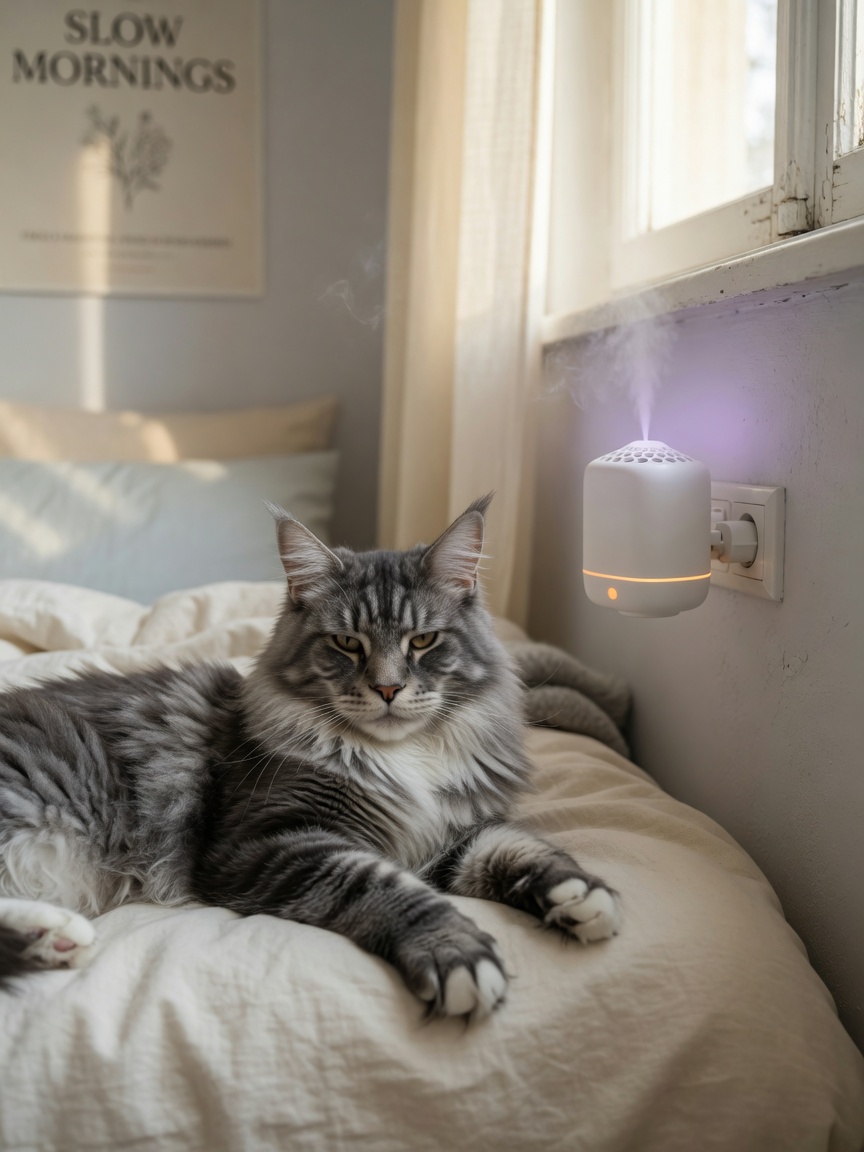
Feliway is a synthetic version of the feline facial pheromone — the scent cats deposit when they rub their face against objects to mark them as safe. Available as a plug-in diffuser, spray, and collar (Feliway Friends targets multi-cat conflict with a different pheromone), Feliway has more published research behind it than almost any other natural cat stress product.
Studies have demonstrated its effectiveness in reducing urine marking, hiding behaviour, and general signs of stress. It is not effective in every cat, and some studies show modest results, but the evidence base is robust enough that veterinary organisations frequently recommend it as a first-line environmental intervention. Feliway diffusers cover an area of approximately 50 to 70 square metres and should be plugged in continuously in the room where your cat spends most of its time. Zooplus stocks both the classic Feliway range and the Friends variant for households with multiple cats.
Zylkene: A Gentle Supplement With Supporting Evidence
Zylkene contains alpha-casozepine, a bioactive peptide derived from hydrolysed milk protein. It works by binding to receptors in the brain associated with calming and relaxation — the same receptors targeted by benzodiazepine drugs, but with a far milder and non-sedating effect. Several clinical studies in cats have found that Zylkene reduces anxiety-related behaviours in situations such as travel, veterinary visits, and household changes.
It is available without prescription across the EU, is generally well-tolerated, and can be used short-term for predictable stressors or longer-term for ongoing anxiety. The capsules can be opened and mixed into food, which makes administration relatively straightforward even for cats who resist tablets. Zooplus carries Zylkene in formats suitable for cats.
Catnip: Fun, But Not an Anxiolytic
Catnip (Nepeta cataria) contains nepetalactone, which produces a well-known euphoric response in many cats. However, this response is genetic — approximately 50 to 70 per cent of cats respond to catnip, and kittens under six months typically do not react at all. The response involves rolling, rubbing, and vocalising, and lasts around 10 minutes before the cat becomes temporarily refractory.
While catnip can provide enrichment and stimulation, there is no meaningful evidence that it reduces anxiety or stress in any lasting way. It is not harmful, and the brief stimulation it provides may be enjoyable for responsive cats, but it should not be relied upon as a stress management tool.
Valerian for Cats
Valerian root has a sedative reputation in human herbalism, and some cats show a response similar to their reaction to catnip when exposed to it. However, the evidence for valerian as a genuine anxiolytic in cats is very limited. Most available research is anecdotal or extrapolated from human studies. Some cats find the smell of valerian attractive and it may provide a brief period of stimulation or relaxation, but definitive clinical evidence of anxiety reduction is lacking. Valerian-based toys or sprays are unlikely to cause harm, but should be viewed as enrichment rather than treatment.
Environmental Management: Often the Most Powerful Tool
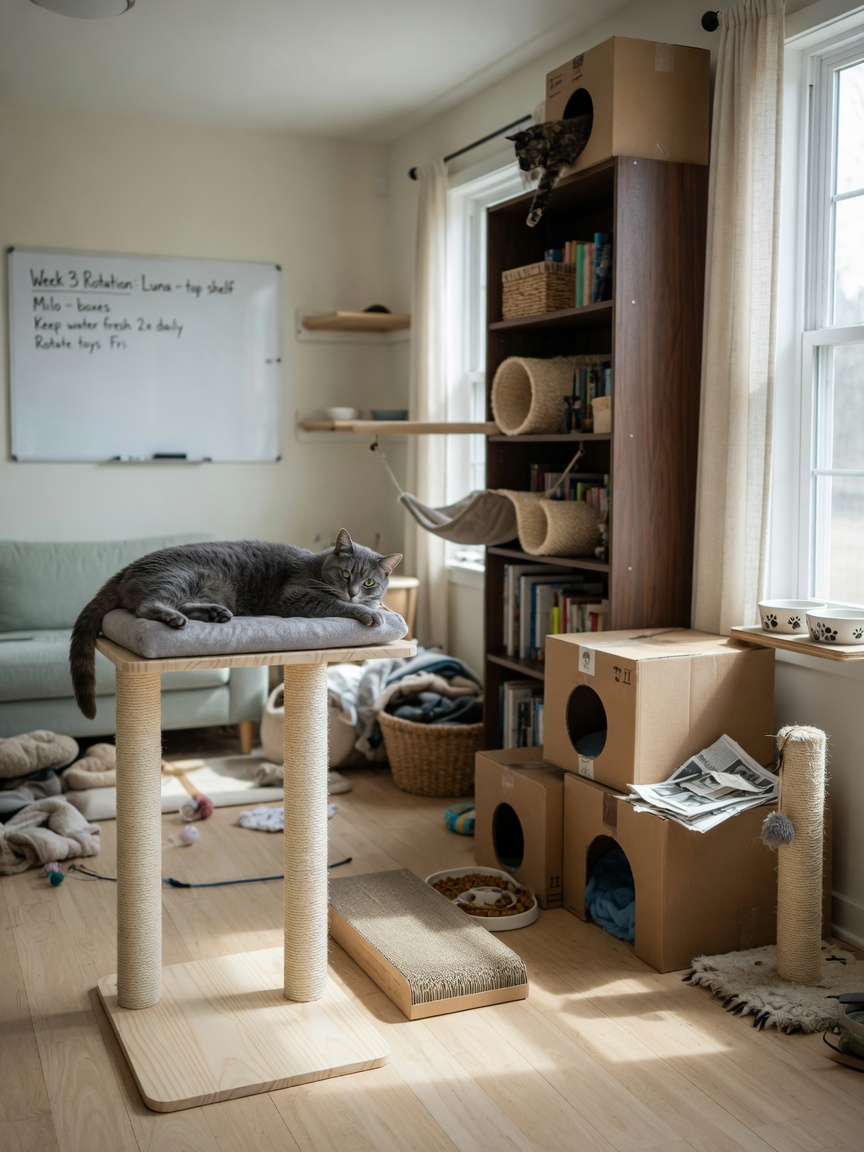
Environmental changes frequently outperform any supplement when it comes to feline stress. Cats need to feel in control of their environment, and providing choices is central to this. Ensure your cat has access to multiple high resting spots — cats feel safer when they can survey their surroundings from above. Provide enough resources in multi-cat households: the general guidance is one litter tray per cat plus one extra, and the same principle applies to food and water stations.
Hiding spots are equally important. Cardboard boxes, covered beds, and quiet corners allow stressed cats to retreat without feeling trapped. If conflict between cats is a source of stress, consider whether their territories overlap too much and whether feeding, sleeping, and toilet areas can be separated.
Scratching posts serve a dual purpose — physical maintenance and scent marking — and their presence can reduce stress in cats who feel the need to claim their space. Place them in prominent locations rather than tucked away in corners.
The Importance of Routine
Cats thrive on predictability. Consistent feeding times, regular play sessions, and a stable household routine all contribute to lower baseline stress levels. If a known stressor is approaching — such as a house move, a new baby, or a period of building work — begin environmental preparation in advance. Introduce Feliway diffusers two weeks before the event and make sure your cat has access to a quiet, undisturbed space throughout the disruption.
Interactive play is another underused stress-reduction tool. Even ten to fifteen minutes of daily play with a wand toy or feather lure can meaningfully reduce anxiety by giving cats an outlet for predatory behaviour and providing positive interaction with their owner.
When Stress Becomes a Medical Issue
Feline stress is not merely a behavioural concern — it has direct physical consequences. Cats under chronic stress are at significantly higher risk of feline idiopathic cystitis, which causes painful urination, blood in the urine, and sometimes complete urinary blockage. They are also more prone to upper respiratory infections, skin conditions from over-grooming, and gastrointestinal upset.
If your cat is showing signs of physical illness alongside stress behaviours, veterinary assessment is essential. What appears to be a behavioural issue may have a medical component, and what appears to be a medical issue may be stress-driven. Your vet can rule out infection, assess for pain, and discuss prescription options if natural approaches have not been sufficient. Medications such as gabapentin or amitriptyline are sometimes used in cats with severe or persistent anxiety, always alongside environmental and behavioural support.
Practical Steps to Take Today
- Add a Feliway diffuser to the room where your cat spends the most time — this is the single most evidence-backed natural intervention available.
- Audit your home for resource provision: enough litter trays, feeding stations, water bowls, and resting spots.
- Consider Zylkene if a specific stressor is approaching or if stress has been ongoing for more than a few weeks.
- Establish a regular daily play session to provide mental stimulation and physical outlet.
- Maintain feeding and care routines as consistently as possible.
- If stress symptoms are worsening or your cat is showing physical symptoms, book a veterinary appointment — do not rely solely on supplements.
Choosing the Right Products
When selecting supplements or pheromone products for your cat, purchase from reputable retailers. Zooplus offers a reliable range of Feliway products, Zylkene, and other cat wellness supplements with clear product information. Avoid unverified products making extravagant claims, particularly those sold without clear ingredient lists or manufacturer information. If in doubt, ask your vet for a recommendation before purchasing.