
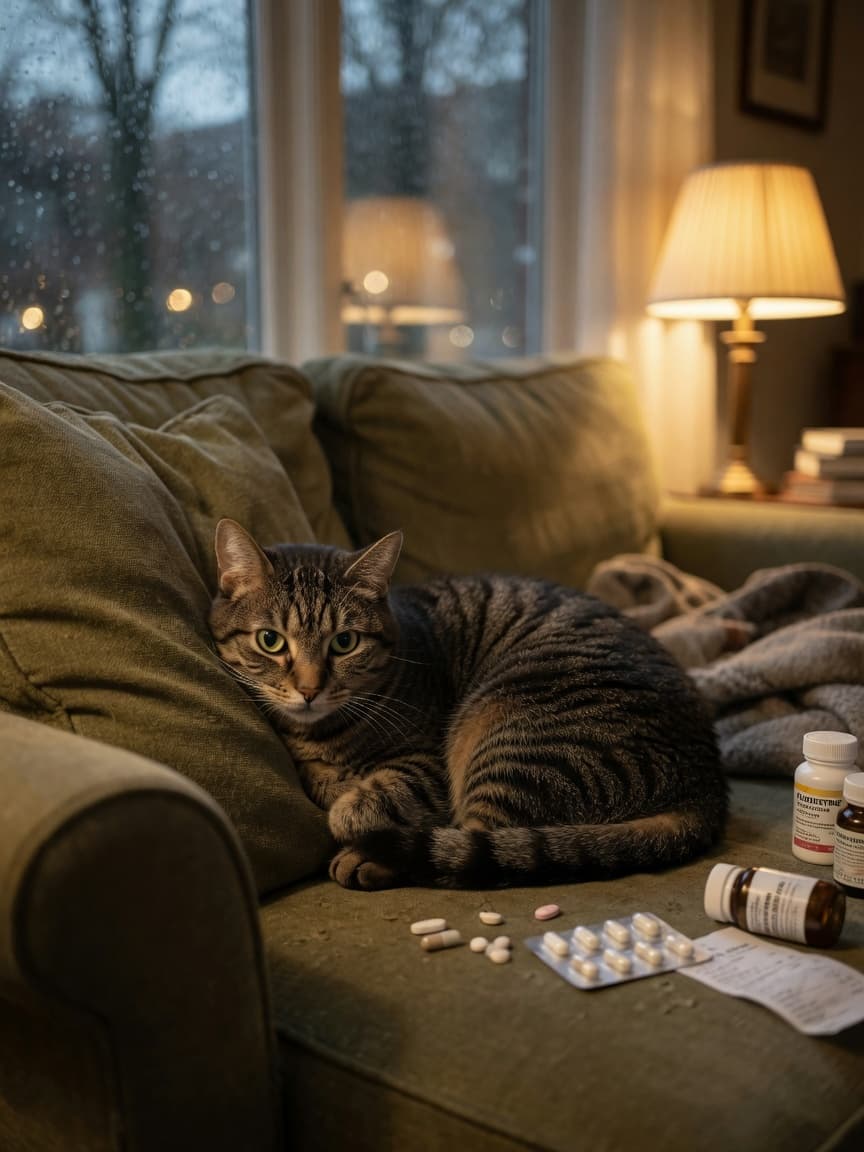
When Medication Becomes Part of the Conversation
For many dog owners, the idea of putting their dog on psychiatric medication feels like a significant step — and it often is. But for dogs with moderate to severe anxiety disorders, medication is not a last resort or a sign of failure. It is a legitimate, evidence-based component of treatment that can meaningfully improve quality of life and, importantly, make behaviour modification far more effective. A dog in a state of chronic stress has a nervous system that is not well-positioned to learn. Medication can lower that baseline arousal enough that training and conditioning can actually take hold.
Three medications are most commonly discussed in the context of canine anxiety: fluoxetine, clomipramine, and trazodone. They are not interchangeable, and understanding their differences helps explain why vets prescribe them in different situations.
Fluoxetine: The Daily Baseline Medication
Fluoxetine is a selective serotonin reuptake inhibitor (SSRI), the same class of drug used in humans to treat depression, OCD, and anxiety disorders. In dogs, it is licensed under the brand name Reconcile specifically for the treatment of separation anxiety, and it is also used off-label for generalised anxiety, compulsive disorders, and aggression with an anxiety component.
It works by blocking the reabsorption of serotonin in the brain, increasing the availability of this neurotransmitter in synaptic spaces. This gradually moderates mood and reduces the intensity of fear and anxiety responses over time. The word gradually is important: fluoxetine typically requires four to eight weeks of daily dosing before full therapeutic effects are seen. It is not useful for acute, situational anxiety.
Common side effects include reduced appetite, mild sedation, and gastrointestinal upset, particularly in the first week or two of treatment. Most dogs tolerate it well once past the initial adjustment period. Fluoxetine should always be combined with a structured behaviour modification programme — it is not intended to be used as a standalone treatment.
Clomipramine: The Tricyclic Option
Clomipramine is a tricyclic antidepressant (TCA) that inhibits the reuptake of both serotonin and norepinephrine, giving it a dual-action profile. In Europe and many other markets it is licensed for dogs under the name Clomicalm, specifically indicated for separation anxiety in conjunction with behaviour therapy.
Like fluoxetine, clomipramine requires several weeks to reach full effect and is intended for daily, ongoing use rather than situational dosing. Some clinicians consider it slightly more sedating than fluoxetine, which in anxious dogs that also struggle with sleep or hyperarousal can be a useful property. It tends to be prescribed when there is a prominent compulsive behaviour component alongside the anxiety, as its serotonergic action appears particularly effective for OCD-like presentations such as excessive licking, tail chasing, or repetitive pacing.
Side effects can include dry mouth, constipation, urinary retention, and cardiac conduction changes at higher doses. For dogs with pre-existing heart conditions, an ECG may be recommended prior to starting treatment. It has more potential for drug interactions than fluoxetine, so a full medication history should always be shared with your vet.
Trazodone: The Situational Sedative
Trazodone occupies a different niche to both fluoxetine and clomipramine. It is a serotonin antagonist and reuptake inhibitor (SARI) primarily used in dogs as a short-acting anxiolytic and mild sedative for situational stress rather than as a daily maintenance medication — though it can be used in both roles.
Its most common applications in veterinary practice include pre-medicating for vet visits, grooming appointments, car journeys, or events such as fireworks and thunderstorms. It generally takes effect within one to two hours and produces a noticeably calming, mildly sedating effect in most dogs. Some dogs become quite sleepy on it; others maintain more alertness but are less reactive.
- Trazodone is often added on top of a daily SSRI or TCA to provide extra situational support during high-stress events
- It can be used alone as a first prescription for dogs whose anxiety is primarily event-driven
- It is sometimes used post-surgically to encourage rest and reduce agitation during recovery
Side effects include sedation, ataxia (unsteadiness), and in some cases, paradoxical excitability. Because individual responses vary quite a bit, a trial dose given at home before the intended event is advisable — you do not want to discover that your dog becomes hyperactive on trazodone for the first time on the morning of a vet procedure.
Choosing Between Them: Key Differences at a Glance
- Fluoxetine: daily SSRI, best for separation anxiety and generalised anxiety, four to eight week onset, well-studied in dogs
- Clomipramine: daily TCA, suited to separation anxiety with compulsive elements, similar onset to fluoxetine, more drug interactions
- Trazodone: situational or daily SARI, rapid onset, useful for event-based anxiety and as an adjunct to SSRIs or TCAs
What Medication Cannot Do
Anxiety medications do not erase fear or reprogram responses to triggers. A dog that is terrified of strangers will still be afraid of strangers on fluoxetine — it will simply be slightly less overwhelmed, which creates a therapeutic window in which behaviour modification can begin to work. The medication changes the neurological context; the training changes the learned response. Both matter.
Prescribing without behaviour guidance is considered poor practice in veterinary behavioural medicine. If your vet prescribes anxiety medication without discussing a behaviour plan or referring you to a behaviourist, it is entirely reasonable to ask about this component of care.
Working With Your Vet
None of these medications should be started, adjusted, or stopped without veterinary guidance. Regular check-ins — typically at the four-week mark and then every three to six months — allow the dose to be assessed and adjusted if needed. Most dogs do not need medication permanently; many can be tapered off once the behaviour modification work has progressed sufficiently. The goal is a dog that has genuinely improved its relationship with its triggers, not one that is simply medicated into compliance.