
Maine Coon Heart Disease: Understanding Hypertrophic Cardiomyopathy
The Maine Coon is the largest domesticated cat breed and one of the most popular in Europe, beloved for its tufted ears, bushy tail, and sociable personality. However, the breed carries a significant genetic predisposition to hypertrophic cardiomyopathy (HCM) — the most common heart disease in cats and the leading cause of sudden cardiac death in Maine Coons.
Understanding HCM is essential for every Maine Coon owner and anyone considering purchasing a Maine Coon kitten. The condition is manageable with early detection, and responsible breeding can reduce its prevalence over time.
What Is Hypertrophic Cardiomyopathy?
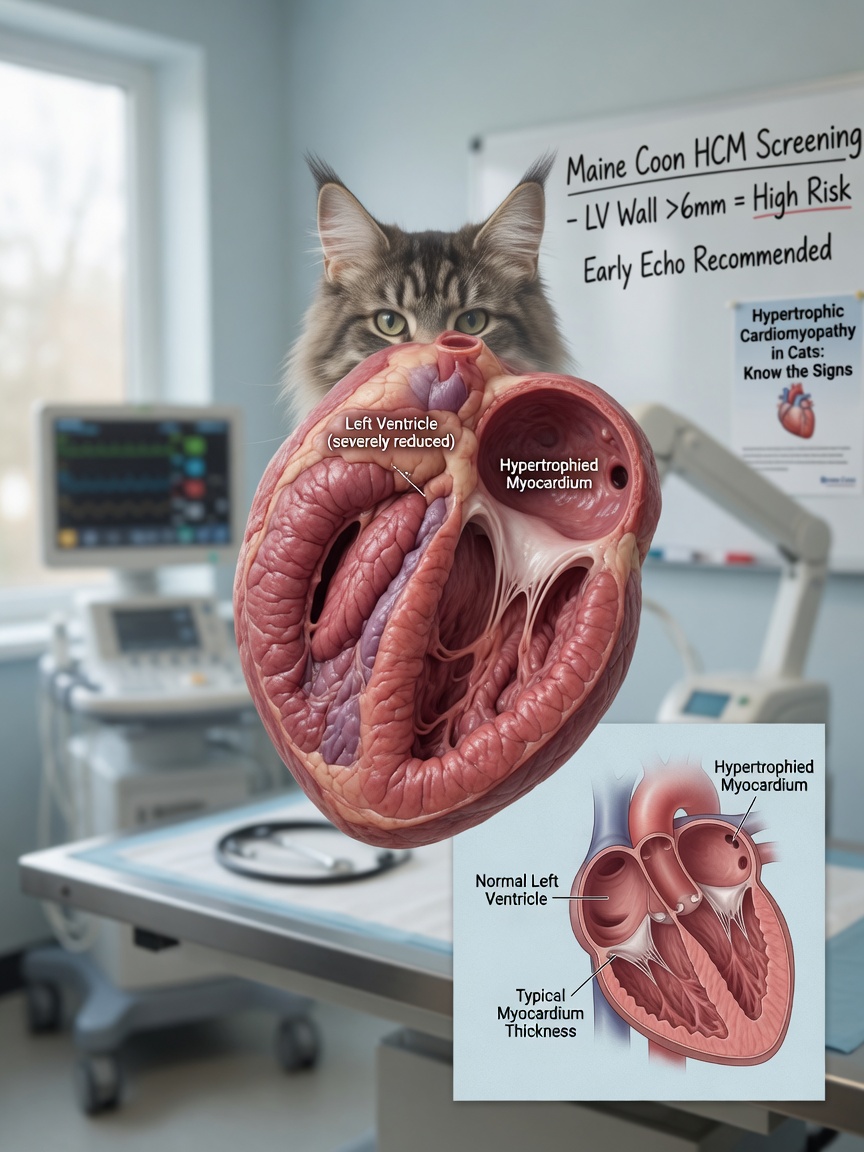
Hypertrophic cardiomyopathy is a disease of the heart muscle (myocardium) in which the muscle abnormally thickens (hypertrophies), particularly affecting the left ventricle — the chamber responsible for pumping oxygenated blood to the body. As the muscle thickens, the ventricular cavity becomes smaller, reducing the amount of blood pumped with each heartbeat. The thickened, stiffened muscle also relaxes poorly between beats, impairing the filling of the ventricle.
The consequences of HCM include:
- Reduced cardiac output and decreased exercise tolerance
- Abnormal heart rhythms (arrhythmias)
- Congestive heart failure — fluid accumulation in or around the lungs, causing respiratory distress
- Aortic thromboembolism (ATE) — blood clots that typically lodge at the aortic trifurcation, causing sudden paralysis of the hindlimbs (known as "saddle thrombus")
- Sudden cardiac death, particularly in younger cats
The MYBPC3 Mutation in Maine Coons
A specific mutation in the MYBPC3 gene (encoding cardiac myosin-binding protein C) has been identified as a cause of HCM in Maine Coons. This mutation — A31P — is inherited in an autosomal dominant pattern, meaning a cat with just one copy of the mutant gene will develop some degree of HCM. Cats with two copies (homozygous) typically develop more severe disease at an earlier age.
DNA tests for the A31P mutation are widely available across Europe through accredited veterinary genetics laboratories. However, a crucial caveat must be understood: not all Maine Coon HCM is caused by the MYBPC3 A31P mutation. A cat that tests DNA-negative (clear) for A31P can still develop HCM due to other, as yet uncharacterised, genetic causes. DNA testing therefore complements but does not replace echocardiographic screening.
Echocardiogram Screening in Europe
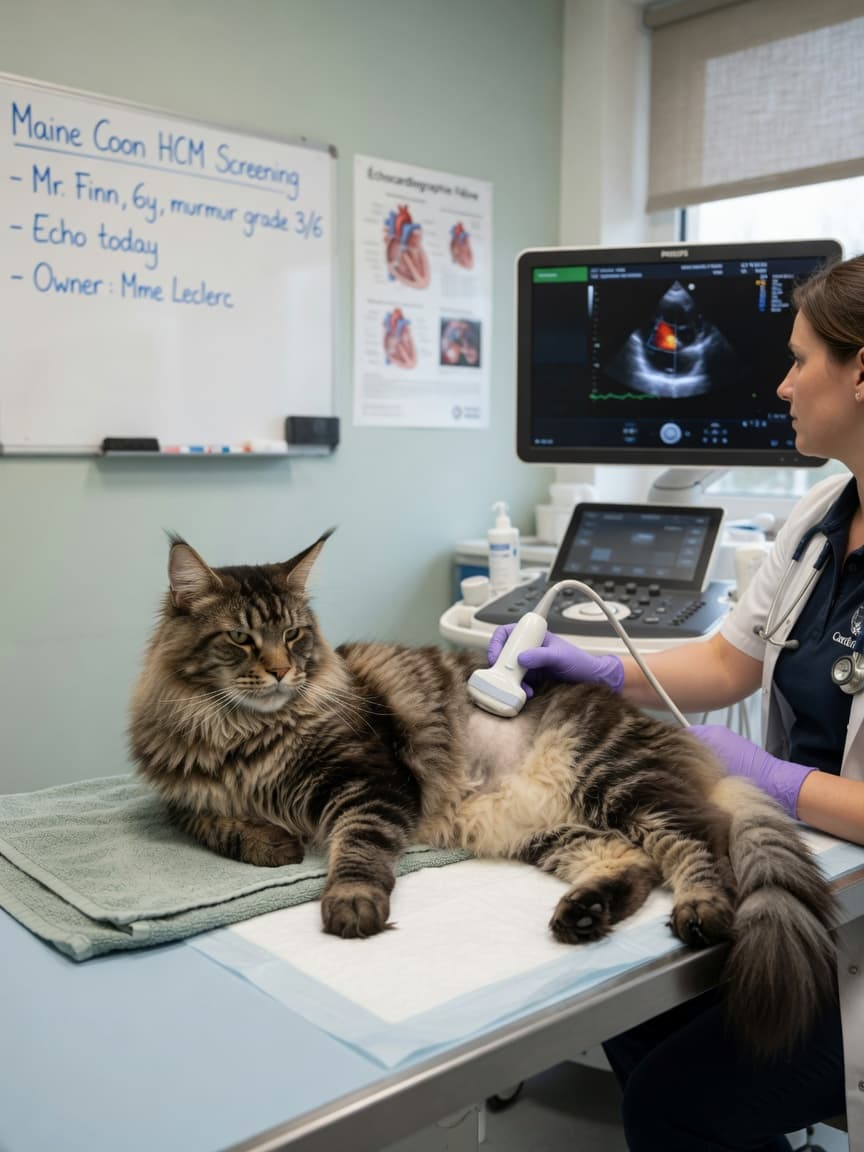
Echocardiography (cardiac ultrasound) is the gold standard for detecting HCM in cats. It allows direct visualisation of the heart muscle thickness, ventricular dimensions, and cardiac function. Many European Maine Coon breed clubs run organised cardiac screening days at veterinary cardiology centres, where cats can be examined by a Diplomate of the European College of Veterinary Internal Medicine (DECVIM-CA, Cardiology).
Screening recommendations for Maine Coons:
- First echocardiogram at 12 to 18 months of age for breeding cats
- Annual re-examination for breeding animals, as HCM can develop at any age
- Any Maine Coon showing clinical signs (rapid breathing, lethargy, hindlimb weakness) should be examined urgently regardless of previous clear results
The Maine Coon breed clubs of the UK, Germany, Scandinavia, the Netherlands, and France all promote cardiac screening as a requirement for responsible breeding. Some clubs publish the results of screened cats in a public database.
Symptoms of Heart Disease in Maine Coons
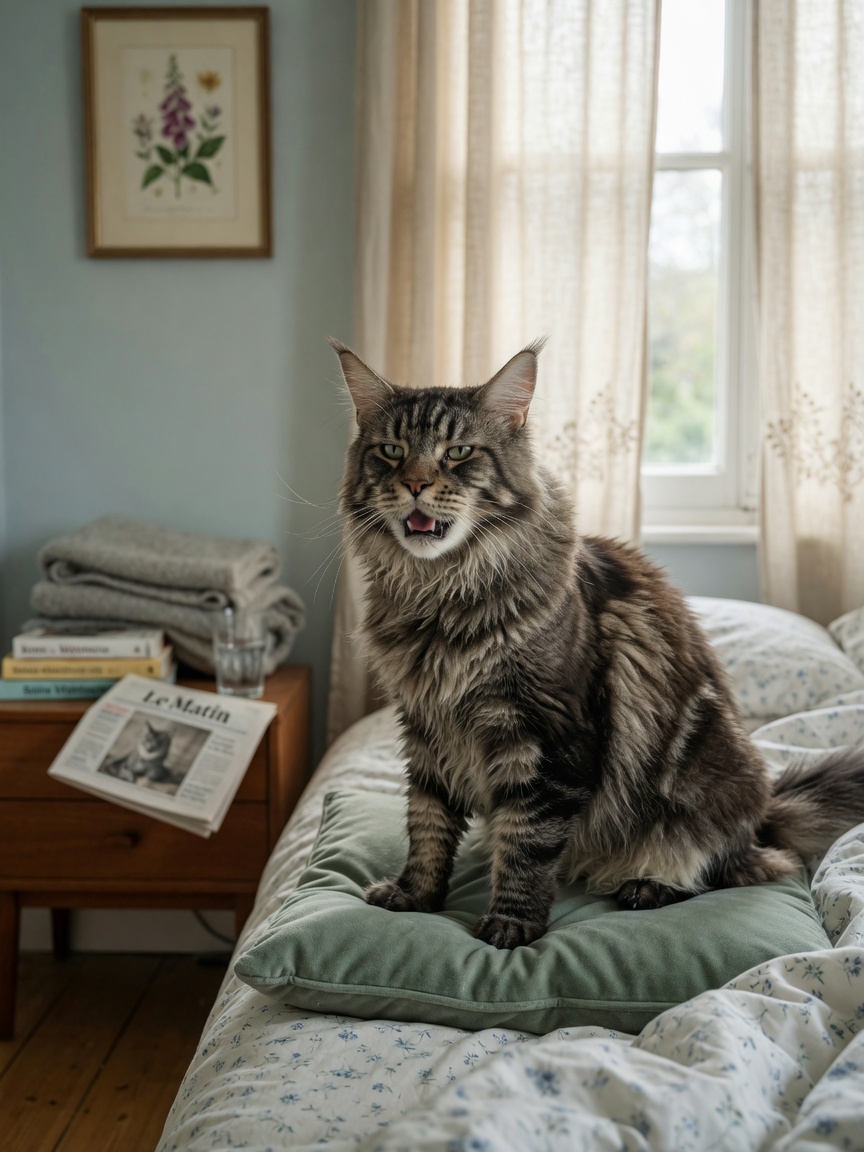
HCM can remain subclinical (producing no outward signs) for months to years before causing noticeable illness. When symptoms do develop, they may include:
- Rapid, laboured, or open-mouth breathing — a sign of pulmonary oedema (fluid in the lungs) and a potential emergency
- Lethargy and reduced activity
- Reduced appetite and weight loss
- Sudden onset of hindlimb paralysis or paresis, cold hind feet, and pain — indicating aortic thromboembolism
- Fainting episodes
Both congestive heart failure and aortic thromboembolism are acute emergencies requiring immediate veterinary care. If your Maine Coon is breathing rapidly or with obvious effort, or if hindlimb weakness develops suddenly, contact an emergency vet without delay.
Treatment and Management
There is currently no curative treatment for HCM. Management aims to slow disease progression, control symptoms, and prevent complications:
- Atenolol or diltiazem — medications that slow the heart rate and reduce the workload on the thickened muscle
- Diuretics (furosemide) — to remove fluid accumulation in congestive heart failure
- Clopidogrel (Plavix) — antiplatelet therapy to reduce the risk of thrombus formation; recommended for cats with left atrial enlargement on echocardiogram
- ACE inhibitors — used in some cases to reduce cardiac workload
Regular recheck echocardiograms every three to six months allow medication to be adjusted as the disease progresses. Stress should be minimised, as cats with HCM are less able to cope with physiological demands.
Nutrition and Lifestyle
Feed your Maine Coon a high-quality, balanced diet appropriate for their life stage. Taurine deficiency was historically a cause of dilated cardiomyopathy in cats, and all reputable commercial cat foods now contain adequate levels. Premium Maine Coon-specific and large-breed cat foods that support cardiac health are available at Zooplus. Maintain a lean body weight — obesity places additional strain on an already compromised heart.
Choosing a Healthy Maine Coon
When purchasing a Maine Coon kitten in Europe, ask for DNA test results for the MYBPC3 A31P mutation for both parents, and ask whether the parents are enrolled in a regular cardiac screening programme. While a DNA-clear status is valuable, it is not a guarantee of freedom from HCM. Enquire about the cardiac history of the breeding line. Reputable breeders will welcome these questions and be able to provide documentary evidence of screening.