
Heart Disease in Cats: HCM, Signs & Management
By Julia Wrenfield, Pet Wellness Researcher
Heart disease in cats is more common than most owners realize, and it is uniquely dangerous because cats are masters at concealing illness. By the time obvious symptoms appear — labored breathing, sudden collapse, or paralysis — the disease is often advanced. Hypertrophic cardiomyopathy (HCM), the most prevalent feline heart condition, can be silently present for years before a catastrophic event. Understanding how HCM works, what subtle signs to look for, and how modern medicine manages this condition can help you protect your cat's heart health proactively.
What Is Hypertrophic Cardiomyopathy (HCM)?
Hypertrophic cardiomyopathy is characterized by abnormal thickening (hypertrophy) of the heart muscle, most commonly affecting the left ventricle — the main pumping chamber. This thickening reduces the volume of blood the chamber can hold, impairs its ability to relax and fill between beats, and over time leads to elevated pressures within the heart that back up into the lungs, causing fluid accumulation (congestive heart failure, CHF) or into the atria, predisposing to blood clot formation.
HCM is the most common heart disease in cats, estimated to affect between 10–15% of the general cat population, with much higher rates in certain breeds. It affects cats of all ages but is most commonly diagnosed in middle-aged to older cats. Males are significantly more often affected than females and tend to develop more severe disease.
Breed Predispositions and Genetics
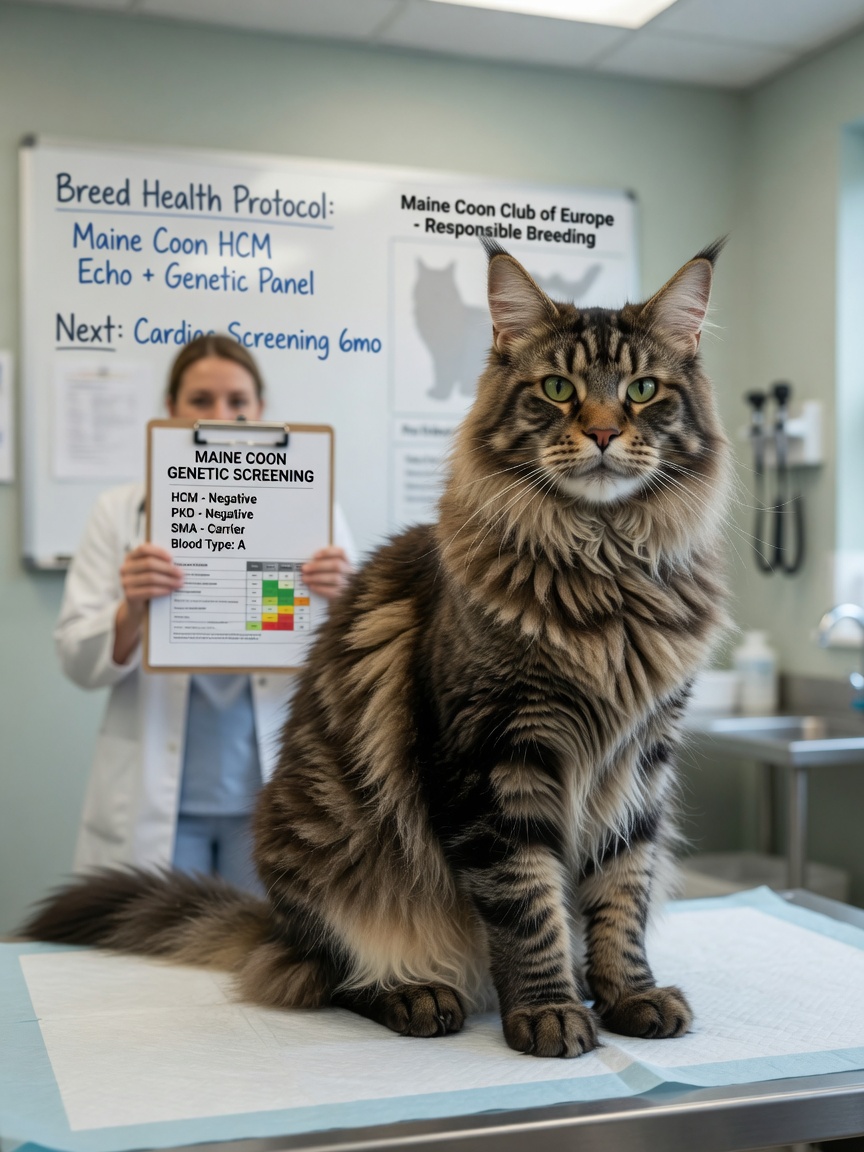
While HCM can occur in any cat, several breeds carry a significantly elevated risk:
- Maine Coon: A specific mutation in the MYBPC3 gene (the same gene implicated in human familial HCM) has been identified. Genetic testing is available and recommended for breeding cats.
- Ragdoll: A different MYBPC3 mutation has been identified in this breed.
- British Shorthair, Bengal, Persian, Sphynx, Scottish Fold, Norwegian Forest Cat: All have elevated breed prevalence, though specific causative mutations are not always identified.
If you own a high-risk breed, discussing HCM screening with your veterinarian — including annual or biannual echocardiography — is strongly advisable even for apparently healthy cats.
Signs and Symptoms
The insidious nature of HCM is that many cats remain apparently normal for years before decompensating rapidly. Signs to watch for include:
- Labored or rapid breathing: One of the most important warning signs. Cats normally breathe 20–30 times per minute at rest. Resting respiratory rates (RRR) consistently above 30 breaths per minute at home warrant veterinary evaluation. Many cardiologists recommend owners count their cat's sleeping respiratory rate nightly using a smartphone timer.
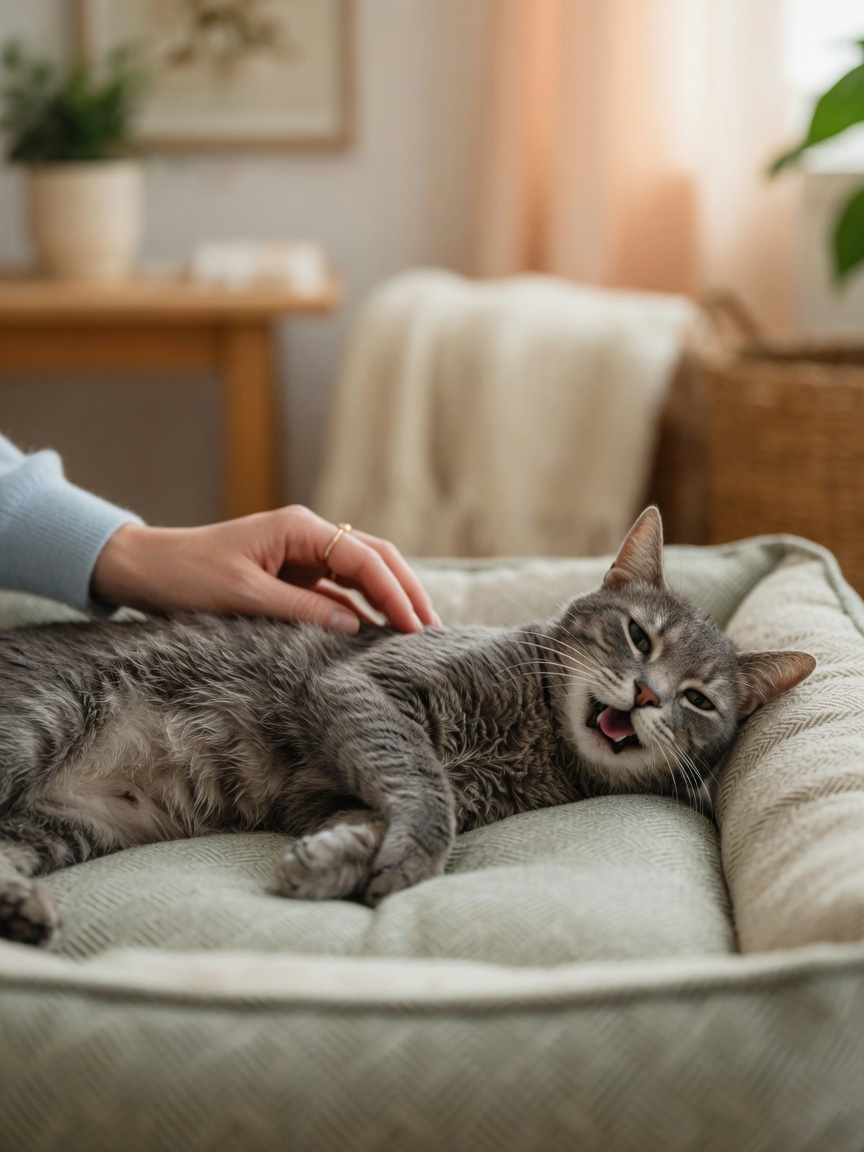
- Open-mouth breathing: Normal cats almost never breathe through their mouth. This is an emergency sign indicating respiratory distress — often from fluid in the lungs (pulmonary edema).
- Exercise intolerance and lethargy: Cats with HCM tire easily and may sleep more or refuse to jump to previously favorite spots.
- Heart murmur: Detected during physical examination with a stethoscope. However, murmurs in cats are not as reliably indicative of heart disease as in dogs — some cats with significant HCM have no detectable murmur, while some murmurs are innocent. An echocardiogram is required to evaluate the heart's structure.
- Gallop rhythm: An abnormal heart sound (a third or fourth heart sound) heard during auscultation is more specific to cardiac disease than a murmur and should prompt echocardiography.
- Hiding and behavior changes: Cats in cardiac discomfort often hide, become less social, or show subtle changes in behavior.
- Weight loss: Cardiac cachexia (muscle wasting due to heart failure) can occur in advanced disease.
Aortic Thromboembolism: The Saddle Thrombus
Perhaps the most feared complication of feline HCM is aortic thromboembolism (ATE), commonly called "saddle thrombus." Blood clots form in the enlarged, poorly contracting left atrium and are ejected into the aorta, where they lodge at the bifurcation into the rear limb arteries (the "saddle" position). This cuts off blood supply to the hind legs and causes sudden, dramatic paralysis, extreme pain, cold limbs, and absent pulses — a true emergency that is terrifying for both cat and owner.
Survival from ATE depends on the extent of clot burden and how quickly treatment is initiated. Approximately 50% of cats that survive the initial crisis recover sufficient limb function with supportive care, though the underlying cardiac disease remains and recurrence risk is significant.
Diagnosis: The Echocardiogram
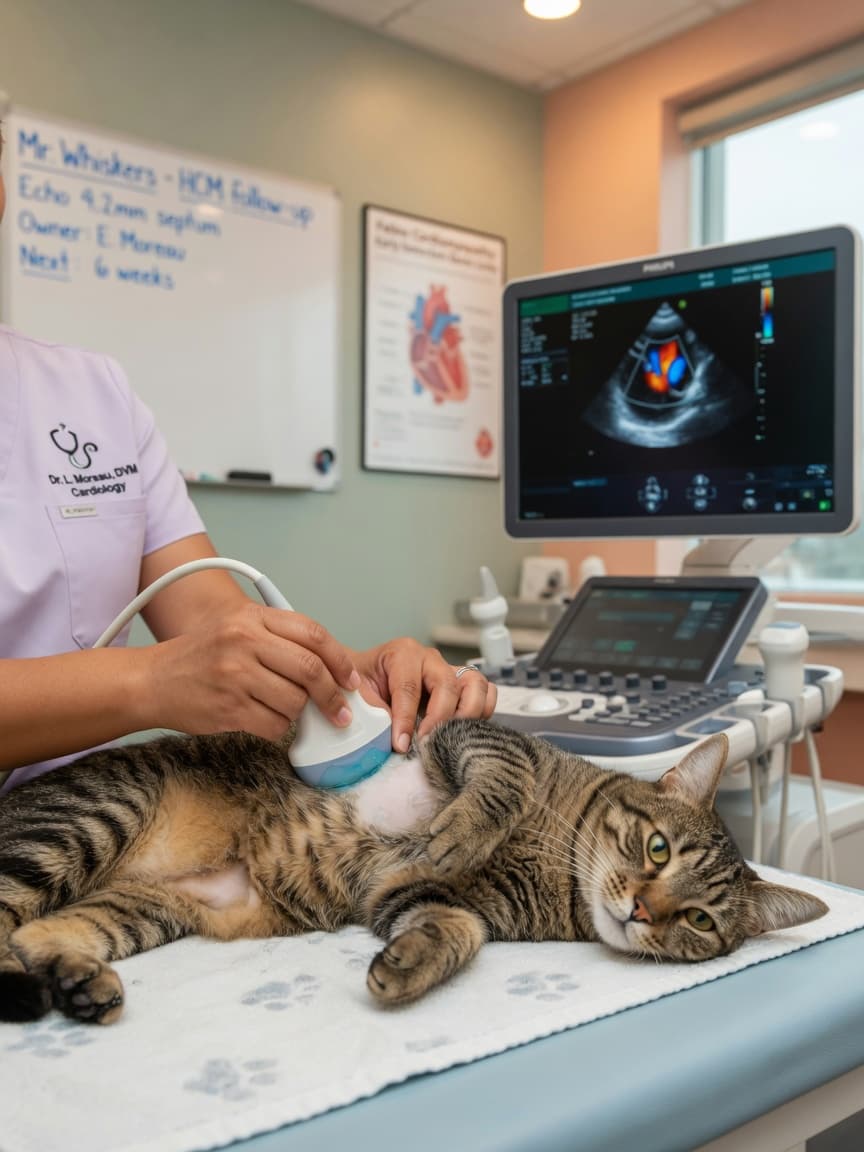
Echocardiography (cardiac ultrasound) is the gold standard for diagnosing and monitoring HCM. It allows direct measurement of wall thickness, chamber dimensions, and cardiac function. Chest X-rays can reveal cardiomegaly (enlarged heart) or pulmonary edema but cannot diagnose HCM specifically. The cardiac biomarker NT-proBNP is a blood test that, when elevated, increases suspicion for cardiac disease and may be useful as a screening tool in high-risk cats before echocardiography is pursued.
Medications for Feline HCM
Treatment is tailored to disease stage and the presence of complications:
- Furosemide (Lasix): A diuretic used to remove fluid from the lungs in congestive heart failure. It is the most urgently needed medication in a cat presenting in respiratory distress due to pulmonary edema. Often given by injection in the emergency setting and continued orally at home.
- Atenolol: A beta-blocker that slows heart rate and may reduce the dynamic outflow obstruction seen in some forms of HCM. It is one of the most commonly prescribed long-term medications in compensated HCM.
- Clopidogrel (Plavix): An antiplatelet drug that reduces blood clot formation and is strongly recommended for cats at high risk of ATE — particularly those with significantly enlarged left atria. The FATCAT study demonstrated that clopidogrel was superior to aspirin for preventing recurrent ATE in cats.
- ACE inhibitors (enalapril, benazepril): May be used in some cats with CHF to reduce cardiac workload, though their benefit in feline HCM specifically is less established than in canine heart disease.
- Spironolactone: A potassium-sparing diuretic sometimes added in refractory CHF.
The Taurine Connection
Taurine deficiency was recognized in the 1980s as a cause of dilated cardiomyopathy (DCM) in cats — a disease of a weak, poorly contracting heart, distinct from HCM. Since taurine became mandated in all commercial cat foods in the early 1990s, feline DCM has become rare. Cats cannot synthesize taurine themselves and must obtain it from diet; meat-based diets naturally provide adequate taurine, but some processed or grain-heavy diets may be marginal. Any cat being fed an unusual or unbalanced home-cooked diet should have taurine levels checked if cardiac disease is suspected.
Monitoring at Home
Counting your cat's resting respiratory rate (RRR) at home is one of the most powerful tools in managing HCM. Count breaths for 60 seconds while your cat is sleeping — not just resting, but in deep sleep. A consistent RRR above 30/minute warrants a call to your vet the same day. Some veterinary cardiologists provide apps specifically for this purpose. This simple habit has prevented many emergency presentations by catching decompensation early.
Key Takeaways
- HCM is the most common feline heart disease; 10–15% of cats may be affected.
- Maine Coon and Ragdoll cats have identified genetic mutations — testing is available.
- Monitor your cat's sleeping respiratory rate nightly; consistently above 30/min needs vet evaluation.
- Open-mouth breathing or sudden hind limb paralysis are cardiac emergencies — act immediately.
- Clopidogrel reduces ATE recurrence risk; furosemide manages congestive heart failure.
- Taurine deficiency causes dilated cardiomyopathy — ensure your cat's diet is complete and balanced.
References
- Hogan DF, et al. "Secondary prevention of cardiogenic arterial thromboembolism in the cat: The double-blind, randomized, positive-controlled feline arterial thromboembolism; clopidogrel vs. aspirin trial (FAT CAT)." Journal of Veterinary Cardiology. 2015;17(Suppl 1):S306-S317. PMID: 26776569
- Paige CF, et al. "Prevalence of cardiomyopathy in apparently healthy cats." Journal of the American Veterinary Medical Association. 2009;234(11):1398-1403. PMID: 19480619