
The Gecko That Seemed Fine Yesterday
Leopard geckos are celebrated for being hardy, manageable reptiles — and for the most part, they are. But that reputation occasionally lulls owners into complacency. Three conditions in particular tend to ambush gecko keepers: a parasitic infection that is notoriously difficult to treat, a neurological syndrome tied to selective breeding, and a refusal to eat that can persist for weeks. Each demands a different response.
Cryptosporidiosis
Cryptosporidiosis — caused by the protozoan parasite Cryptosporidium varanii — is one of the most serious diagnoses a leopard gecko can receive. It attacks the stomach lining, causing progressive wasting even when the gecko continues eating. There is currently no fully curative treatment in reptiles, which makes prevention critical.
Recognising the signs
- Rapid, visible weight loss despite apparent appetite
- A pronounced "stick tail" — the tail thins dramatically as fat reserves deplete
- Regurgitation shortly after feeding
- Mucoid or watery faeces
- Progressive weakness and lethargy
How it spreads and what to do
Crypto spreads through faecal contamination of enclosures, water bowls, and hands. If you keep multiple geckos, strict quarantine of any new animal for a minimum of 90 days is non-negotiable. Any gecko showing these signs should be isolated immediately and examined by a vet with experience in reptile parasitology. Diagnosis is confirmed by PCR testing or faecal analysis. Some long-term management protocols exist, but the prognosis for severely affected animals is poor. Hygiene between enclosures — including thorough disinfection with a veterinary-grade product — is essential.
Enigma Syndrome
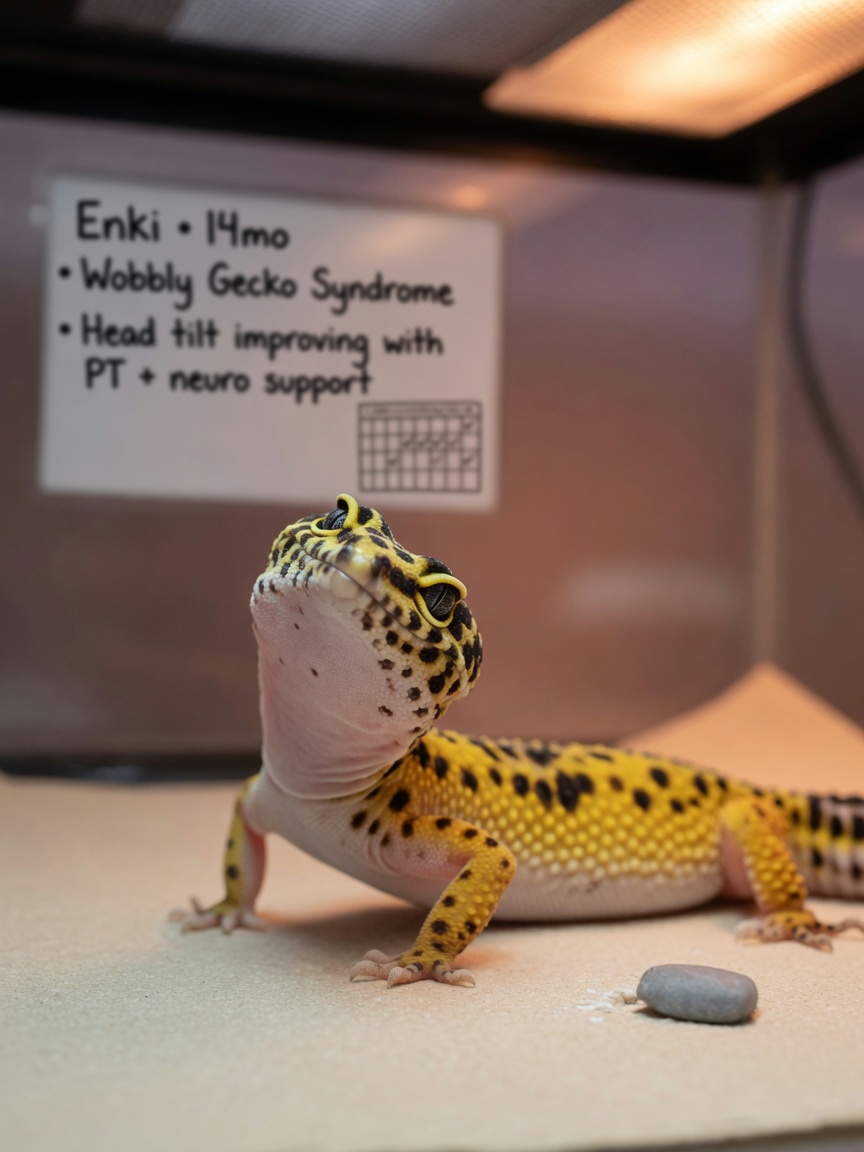
Enigma syndrome is a neurological condition seen exclusively in leopard geckos carrying the Enigma morph gene. It emerged as the morph became widespread in the hobby during the 2000s, and it represents one of the more uncomfortable conversations in reptile keeping: a condition caused directly by selectively breeding for appearance.
What it looks like
- Head tilting or circling to one side persistently
- Star-gazing — the gecko cranes its neck upward involuntarily
- Difficulty locating and striking prey
- Loss of balance, rolling, or inability to right itself
- Seizure-like episodes in severe cases
There is no cure. Mildly affected animals can live reasonably well with careful management: feeding with tongs directly in front of them, providing a simple enclosure without objects to fall from, and monitoring stress levels, which can worsen episodes. Severely affected individuals may have a significantly reduced quality of life. Prospective buyers should research morph genetics before purchasing and consider avoiding Enigma-line geckos entirely.
Anorexia in Leopard Geckos
A leopard gecko refusing food is one of the most common concerns raised by owners, and fortunately, in many cases it has a straightforward explanation. The challenge is distinguishing normal, temporary appetite reduction from a sign of underlying illness.
Common benign causes
- Shedding — geckos often stop eating a few days before and during a shed
- Seasonal slowdown — reduced photoperiod in winter naturally suppresses appetite
- Stress from a new environment, handling, or enclosure changes
- Boredom with a single feeder species
When to be concerned
A gecko that has not eaten for more than three to four weeks, is losing visible body condition, or shows other symptoms alongside food refusal should be assessed by a vet. Underlying causes can include parasites, respiratory infections, reproductive issues in females (who may develop follicles or eggs even without a male), and mouth rot. A vet can perform a physical examination and, where appropriate, imaging or faecal testing to identify the cause. Do not attempt force-feeding without veterinary guidance.
Husbandry Foundations That Prevent Problems
The majority of health issues in leopard geckos trace back to the enclosure. These animals are crepuscular ground-dwellers from arid environments. They need a thermal gradient with a warm hide sitting above a heat mat regulated by a thermostat (belly heat is more important than ambient air temperature for digestion), a cool hide, a humid hide to assist shedding, and darkness at night. Overheating, cold enclosures, and constantly bright lighting all generate chronic stress that suppresses immunity and appetite.
Practical Health Checklist
- Weigh your gecko monthly and keep a record — weight loss is often the first measurable sign of illness
- Quarantine all new geckos for at least 90 days before any contact with existing animals
- Research morph genetics carefully before buying, and be aware of health implications
- Provide a humid hide at all times, particularly during shed cycles
- Consult a reptile-experienced vet if food refusal extends beyond a month or is accompanied by other symptoms