

When Your Pond Fish Are Dying and You Do Not Know Why
Koi are among the most valuable ornamental fish in the world, with prized specimens selling for tens of thousands of pounds. Yet even a modest garden pond stocked with beloved koi can be devastated within days by certain diseases. Three conditions — koi herpesvirus, ulcer disease, and spring viraemia of carp — account for a disproportionate number of serious koi losses globally. Knowing how to recognise and respond to each could save your fish.
Koi Herpesvirus
Koi herpesvirus (KHV), formally known as Cyprinid herpesvirus 3, is a notifiable disease in the United Kingdom. This means any suspected case must be reported to the Animal and Plant Health Agency (APHA). It can cause mortality rates of up to 80–100% in infected populations within days of clinical signs appearing.
Signs and Transmission
KHV is most active in water temperatures between 16°C and 25°C — unfortunately, the same range at which koi are most active and feeding well. Affected fish typically show:
- Sunken eyes and pale or mottled gill tissue
- Gill necrosis — gills appear ragged, discoloured, and may bleed
- Lethargy and loss of coordination
- Skin lesions and increased mucus production
- Erratic swimming or gathering near water inlets
The virus spreads rapidly through direct contact between fish, contaminated water, and shared equipment. Fish that survive KHV infection become lifelong carriers and can shed the virus under stress, infecting naive fish with no visible illness in the carrier itself.
Response
There is no licensed treatment for KHV. If you suspect an outbreak, cease all water movement out of the pond, isolate surviving fish, and contact an aquatic vet and APHA immediately. Disinfection of equipment and careful biosecurity are critical to preventing spread to other water bodies.
Ulcer Disease
Ulcer disease — characterised by open, crater-like wounds on the body of koi — is one of the most commonly encountered serious conditions in pond fish. The wounds can range from small red patches to deep lesions exposing muscle tissue.
Causes
Ulcers in koi are typically caused by bacteria, most commonly Aeromonas salmonicida and motile Aeromonas species. These bacteria are opportunistic — present in most pond environments but only causing disease when fish are immunocompromised. Stress triggers include:
- Poor water quality, particularly elevated ammonia, nitrite, or low dissolved oxygen
- Temperature fluctuations, especially in spring and autumn
- Parasitic infestations that damage the skin barrier, allowing bacterial entry
- Physical injury from handling, netting, or pond furniture
- Overcrowding
Treatment
Small, early-stage ulcers in otherwise healthy fish may respond to topical treatment and improved water conditions. More significant lesions require veterinary intervention. Treatment typically involves:
- Professional wound cleaning and topical antiseptic application under appropriate handling conditions
- Injectable or oral antibiotics prescribed by a vet — self-medicating with over-the-counter pond treatments is frequently ineffective for true bacterial ulcers
- Addressing the underlying cause — water quality correction, parasite treatment, or reduction of stocking density
- Salt addition (sodium chloride) at therapeutic levels to reduce osmotic stress on the fish during healing
Left untreated, ulcers deepen, secondary infections establish, and the fish becomes progressively weaker. Mortality is high in advanced cases.
Spring Viraemia of Carp
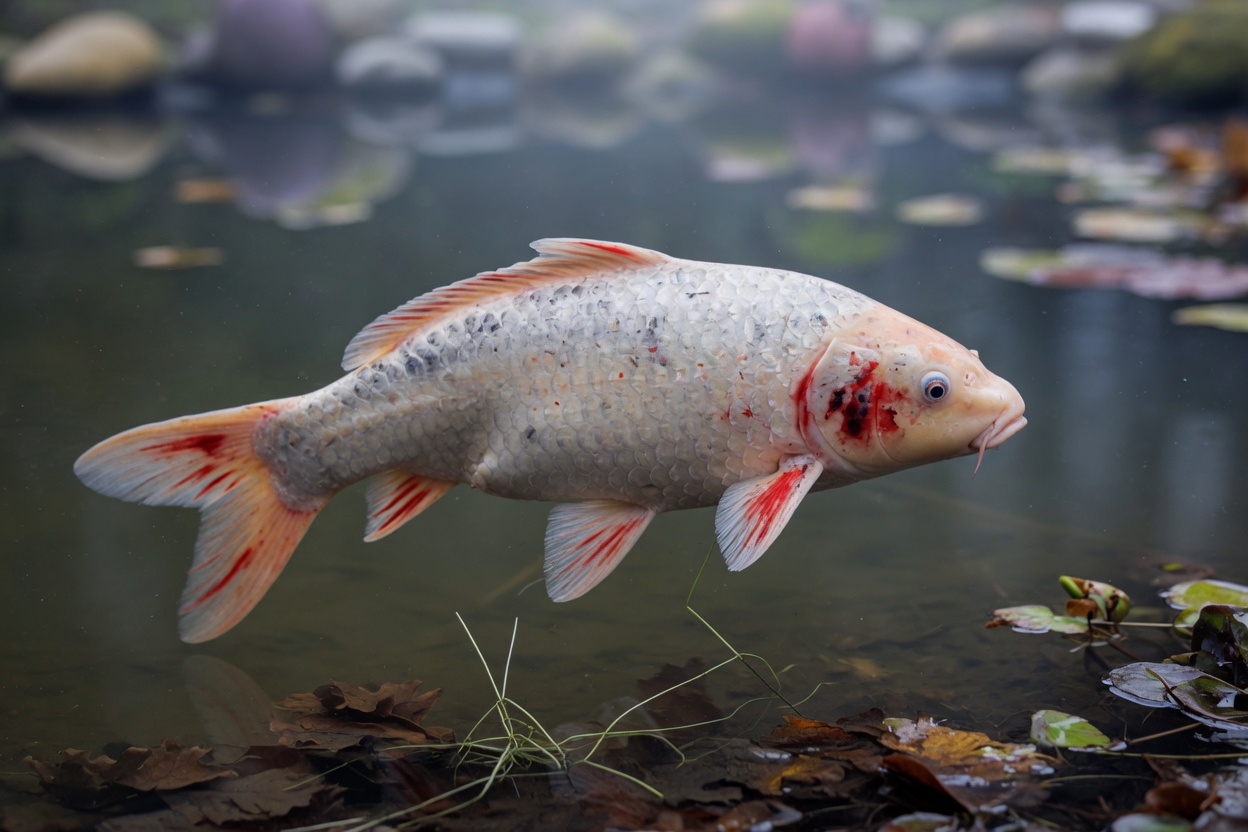
Spring viraemia of carp (SVC) is a viral haemorrhagic disease caused by a rhabdovirus. Like KHV, it is a notifiable disease in the UK. It affects carp species including koi and goldfish, and is most prevalent in early spring when water temperatures rise from below 10°C to around 17°C.
Clinical Signs
SVC causes haemorrhaging throughout the body, resulting in:
- Bloody streaking on the skin and fins
- Abdominal swelling and protruding scales (similar in appearance to dropsy)
- Pale or blood-spotted gills
- Trailing, pale faecal casts
- Loss of balance and inability to maintain normal swimming position
- Hanging near the surface or lying on the pond bottom
SVC spreads through infected water, direct contact, and via certain parasites that act as mechanical vectors. Wild birds visiting ponds may also introduce the virus.
Response and Legal Obligations
There is no treatment for SVC. Suspected cases must be reported to APHA. Mortality can be very high, though some fish survive acute infection. Survivors may carry the virus. Biosecurity — preventing the movement of fish, water, and equipment between water bodies — is the primary means of preventing introduction.
Biosecurity and Prevention for Koi Keepers
Given that several serious koi diseases are incurable and legally notifiable, prevention is essential rather than optional.
- Quarantine all new koi for a minimum of six weeks in a separate, isolated system before introducing them to an established pond.
- Never share nets, buckets, or equipment between ponds without thorough disinfection.
- Source fish only from reputable suppliers with documented health records.
- Monitor water quality consistently — particularly dissolved oxygen, ammonia, and temperature.
- Control parasites proactively, as skin damage from parasites is a gateway to bacterial infection.
- Keep a record of fish behaviour and body condition; subtle changes often precede serious illness by days.
If fish are dying in significant numbers, or if you observe any signs consistent with KHV or SVC, do not attempt home treatment. Contact an aquatic veterinarian immediately and follow their guidance on legal reporting obligations. Acting quickly is not just about your fish — it is about protecting koi populations more broadly.