
Three Diseases That Catch Tropical Fishkeepers Off Guard
Tropical fishkeeping is rewarding, colourful, and deeply absorbing — until your tank begins to look like a medical emergency. Three diseases, in particular, cause significant losses in tropical community tanks: velvet, columnaris, and hole-in-the-head disease. All three are preventable with good husbandry, and all three are treatable when caught early. The challenge is that early recognition requires knowing exactly what to look for.
Velvet Disease
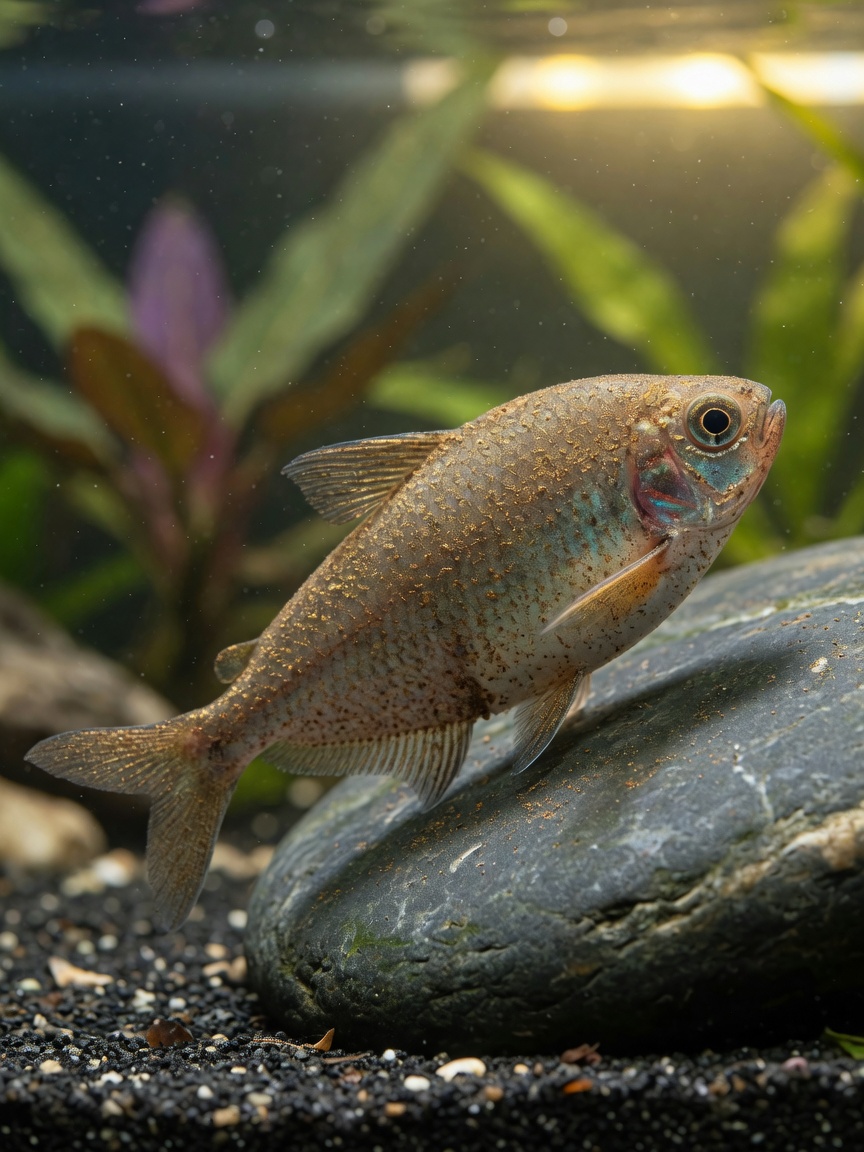
Velvet, caused by the dinoflagellate parasite Oodinium pilularis in freshwater tanks (and Amyloodinium ocellatum in marine systems), is sometimes mistaken for ich. The difference is scale and texture: velvet produces an extremely fine, dusty coating that resembles gold or rust-coloured powder on the skin, visible particularly under a torch held at an angle to the fish.
Why Velvet Is Dangerous
Velvet progresses much faster than ich. Heavy infestations can kill fish within days of visible signs appearing. The parasite feeds on skin cells and mucus, causing severe irritation, respiratory distress, and skin damage. Affected fish may:
- Flash — rubbing against surfaces to relieve irritation
- Clamp their fins close to their bodies
- Breathe rapidly or gasp at the surface
- Become lethargic and refuse food
- Show a visible gold or rust dusting across the body and fins
Treatment
Velvet is sensitive to light — the photosynthetic parasite requires light at certain lifecycle stages. Darkening the tank immediately by covering it with a cloth can help slow progression while treatment is prepared. Use a copper-based treatment or a product containing acriflavine, following dosing instructions precisely. Raise temperature slightly to accelerate the parasite's lifecycle. Remove activated carbon from the filter before treatment, as it will absorb medication. Treat for the full course — typically ten to fourteen days.
Columnaris Disease
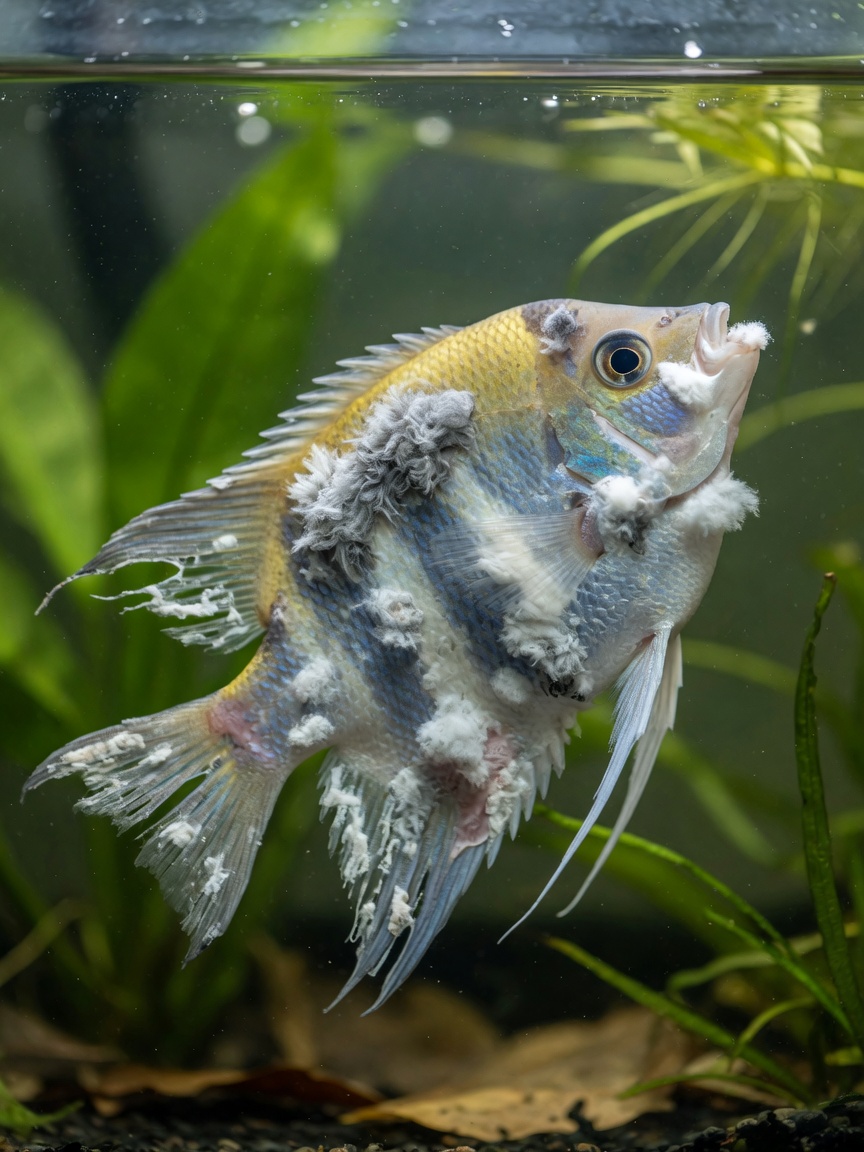
Columnaris, caused by the bacterium Flavobacterium columnare, presents in several distinct ways, which makes it confusing to identify. It can appear as white or grey patches on the skin, a saddle-shaped lesion behind the dorsal fin, fraying of the fins, white tufts at the mouth, or gill infection causing respiratory distress. It is sometimes called cotton mouth, saddleback disease, or guppy disease, though it infects a wide range of species.
Virulence and Water Temperature
Columnaris is significantly more virulent at higher water temperatures. In tanks above 28°C, the disease can kill fish within 24–48 hours of visible signs appearing. At lower temperatures, progression may be slower, allowing more time for intervention. This makes maintaining appropriate species-specific temperature ranges doubly important — not just for the fish's comfort but for disease resistance.
Treatment
- Bacterial infections require antibacterial treatment — salt baths and general tonics are insufficient for true columnaris.
- Products containing potassium permanganate or kanamycin may be effective; availability varies by country.
- Reduce temperature slightly if it is at the upper end of the acceptable range for your species.
- Improve oxygenation, as columnaris thrives in low-oxygen environments.
- Eliminate the stressors that triggered the outbreak — overcrowding, poor water quality, or incompatible tankmates.
- For severe or recurring infections, consult an aquatic veterinarian regarding prescription antibiotic options.
Hole-in-the-Head Disease
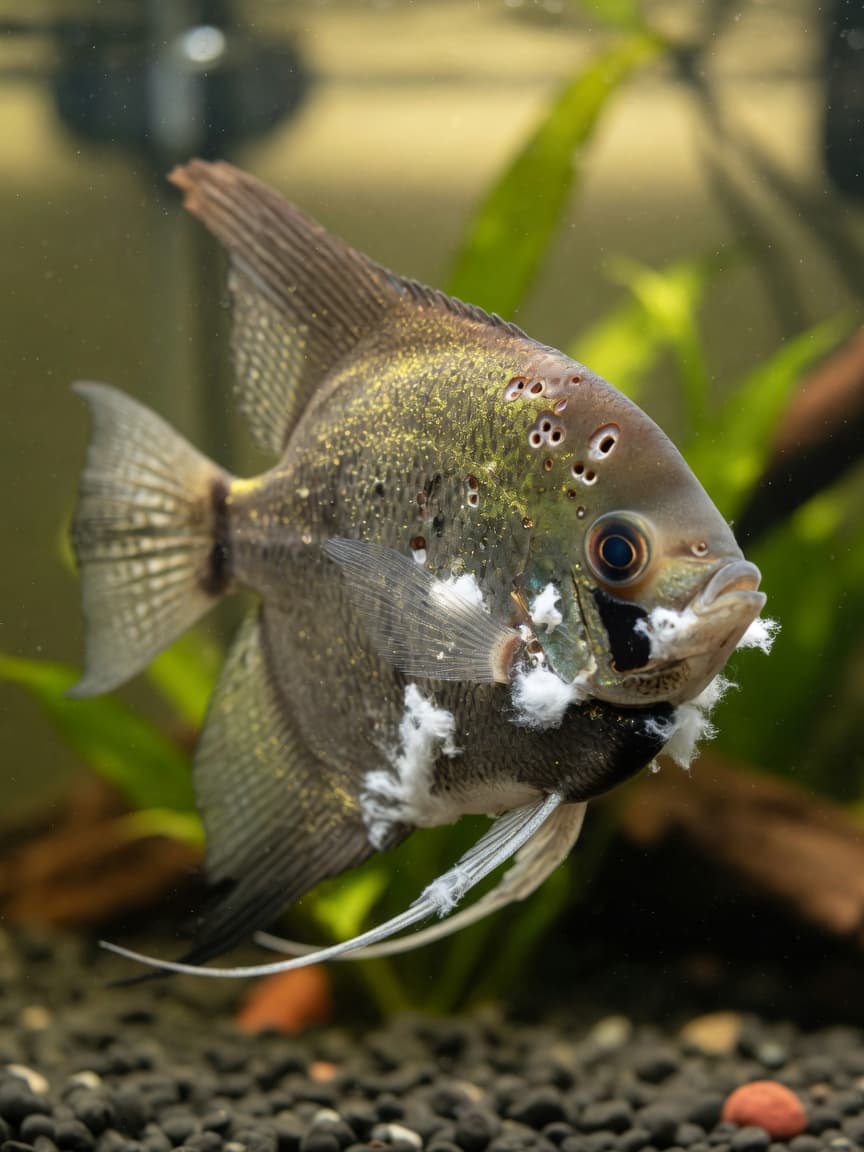
Hole-in-the-head disease — formally known as hexamitosis or head and lateral line erosion (HLLE) — is a chronic condition most commonly seen in cichlids, particularly oscars, discus, and green terrors, though it can affect other species. As the name suggests, it presents as pitting and erosion of the skin around the head and along the lateral line, creating crater-like lesions that may ooze white, stringy mucus.
Causes: A Contested Question
The exact cause of hole-in-the-head disease remains somewhat debated. A protozoan parasite, Spironucleus (formerly classified under Hexamita), is frequently implicated and found in the digestive tracts of affected fish. However, the condition is also strongly associated with:
- Chronic poor water quality, particularly elevated nitrates
- Activated carbon use over long periods, which may deplete trace minerals
- Nutritional deficiencies, especially vitamin C and vitamin D
- Overcrowding and chronic stress
It is likely that the parasite exploits immunocompromised fish, meaning environmental and nutritional factors create vulnerability that the pathogen then exploits.
Treatment and Management
- Improve water quality immediately — perform water changes to bring nitrates below 20 mg/L.
- Review diet; supplement with varied, nutritionally complete foods including fresh or frozen options rich in vitamins.
- Remove activated carbon from the filter and consider leaving it out long-term.
- Antiparasitic treatments containing metronidazole are commonly used and show reasonable effectiveness against Spironucleus — this medication typically requires a veterinary prescription in the UK.
- Early lesions may heal once conditions are corrected; advanced tissue erosion may leave permanent scarring even after successful treatment.
The Common Thread: Stress and Water Quality
What velvet, columnaris, and hole-in-the-head disease share is that all three are dramatically more likely to occur — and far more likely to prove fatal — in fish that are already compromised. Stress suppresses the immune system. Poor water quality, overcrowding, inappropriate temperature, nutritional deficiency, and incompatible tankmates all create the conditions under which pathogens gain the upper hand.
Practical Prevention Steps
- Test water parameters weekly and after any change to the tank.
- Quarantine new fish for a minimum of four weeks before introducing them.
- Match species carefully — do not mix fish with incompatible temperature, pH, or behavioural requirements.
- Feed a varied diet appropriate to each species, avoiding reliance on a single food type.
- Keep detailed notes on tank parameters and fish behaviour to catch changes early.
- Act quickly when disease signs appear — in tropical tanks, conditions can deteriorate rapidly.
If you are unsure of the diagnosis or if treatment is not producing improvement within the expected timeframe, seek advice from a veterinarian experienced in aquatic medicine. Misidentifying a disease and applying the wrong treatment wastes critical time and may cause additional harm.