
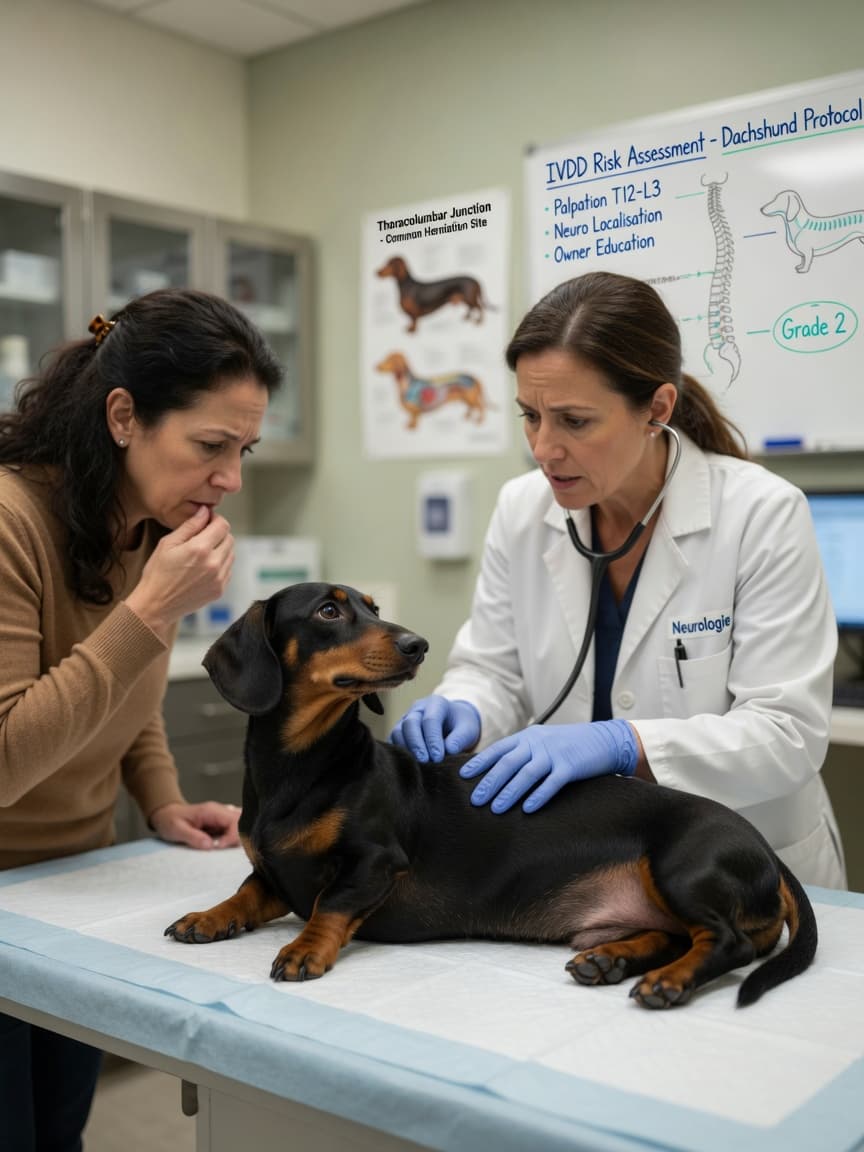
What Is Intervertebral Disc Disease?
Intervertebral disc disease, commonly abbreviated to IVDD, is one of the most significant spinal conditions affecting dogs. It occurs when one or more of the cushioning discs between the vertebrae of the spine deteriorate, bulge, or rupture, placing pressure on the spinal cord or associated nerves. The resulting signs range from mild pain and stiffness to complete paralysis, depending on the location and severity of the disc herniation.
Understanding IVDD is particularly important for owners of predisposed breeds, but it can affect any dog. Early recognition of symptoms and prompt veterinary attention are critical to achieving the best possible outcome.
The Anatomy Behind the Condition
The spine is composed of individual vertebrae separated by intervertebral discs, which act as shock absorbers and allow flexibility of movement. Each disc has two components: a tough outer fibrous ring called the annulus fibrosus, and a soft, gel-like inner core called the nucleus pulposus. When the disc degenerates or sustains injury, the nucleus can protrude or extrude into the spinal canal, compressing the delicate neural tissue within.
Hansen Type I Versus Hansen Type II
Veterinary neurologists classify IVDD into two main types, each with distinct characteristics.
Hansen Type I
This involves extrusion of the nucleus pulposus through the outer disc material, usually following degeneration of the disc. It tends to occur acutely and is most common in chondrodystrophic breeds — those with short legs and elongated bodies. The disc material may calcify over time, and extrusion can happen with minimal trauma.
Hansen Type II
This is a more gradual process involving bulging of the disc without full extrusion. It is more common in larger, non-chondrodystrophic breeds and tends to present with slowly progressive signs rather than sudden onset. It is associated with normal ageing of the disc rather than premature degeneration.
Breeds Most Commonly Affected
Chondrodystrophic breeds carry a significantly elevated risk of Type I IVDD due to the premature degeneration of their disc material, which begins in some individuals as early as two years of age. The most commonly affected breeds include:
- Dachshunds, who account for a disproportionately high number of IVDD cases
- French Bulldogs
- Pembroke Welsh Corgis
- Beagles
- Basset Hounds
- Shih Tzus
- Pekingese
Larger breeds such as German Shepherds, Labrador Retrievers, and Dobermanns are more susceptible to Type II IVDD, typically presenting in middle to older age.
Recognising the Symptoms
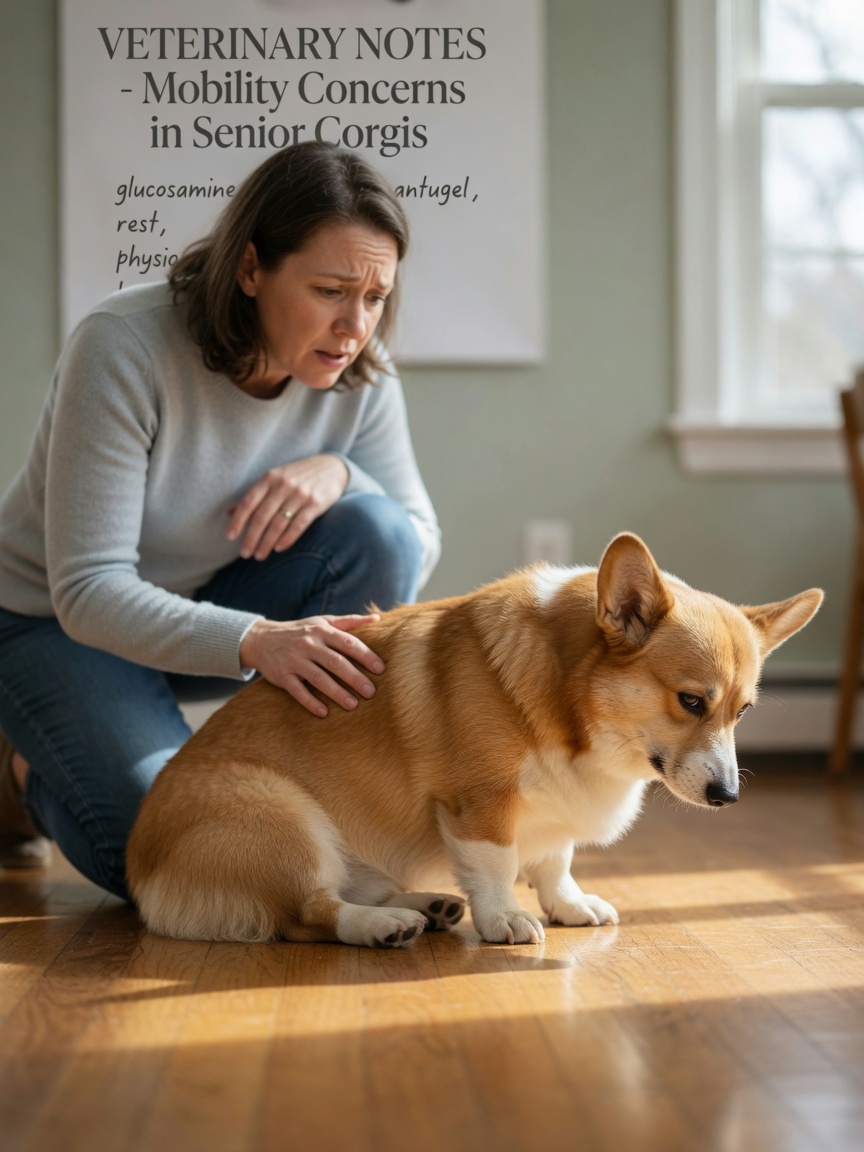
The clinical signs of IVDD depend on the region of the spine affected and the degree of spinal cord compression. Cervical disc disease, affecting the neck, tends to produce severe pain and muscle spasm. Thoracolumbar disease, affecting the mid-back, is more commonly associated with hindlimb dysfunction.
Signs to watch for include:
- Reluctance to move, jump, or climb stairs
- Crying out when picked up or touched along the back or neck
- A hunched posture or lowered head carriage
- Weakness or wobbliness in the hindlimbs
- Knuckling of the paws, where the dog walks on the top of its feet rather than the pads
- Loss of bladder or bowel control
- Complete paralysis of the hindlimbs in severe cases
Any sudden change in mobility or the onset of apparent back pain should be treated as a potential emergency and assessed by a vet without delay.
Diagnosis
Initial assessment involves a neurological examination to determine the location and severity of the lesion. Your vet will grade the neurological deficit on a scale that helps guide treatment decisions. Spinal radiographs may reveal calcified disc material or narrowing of disc spaces, although they cannot confirm spinal cord compression definitively.
Advanced imaging — MRI or CT myelography — is required to confirm the diagnosis and identify the precise location of the herniated disc. This is typically performed at a referral centre with specialist equipment.
Treatment Options
Conservative Management
Dogs with mild signs and no loss of motor function may be managed conservatively with strict cage rest for four to six weeks, anti-inflammatory medication, and pain relief. This approach aims to allow the spinal cord to recover without surgical intervention. Owners must understand that conservative management requires absolute restriction of activity — short, lead-controlled toilet breaks only — and adherence is critical to its success.
Surgical Treatment
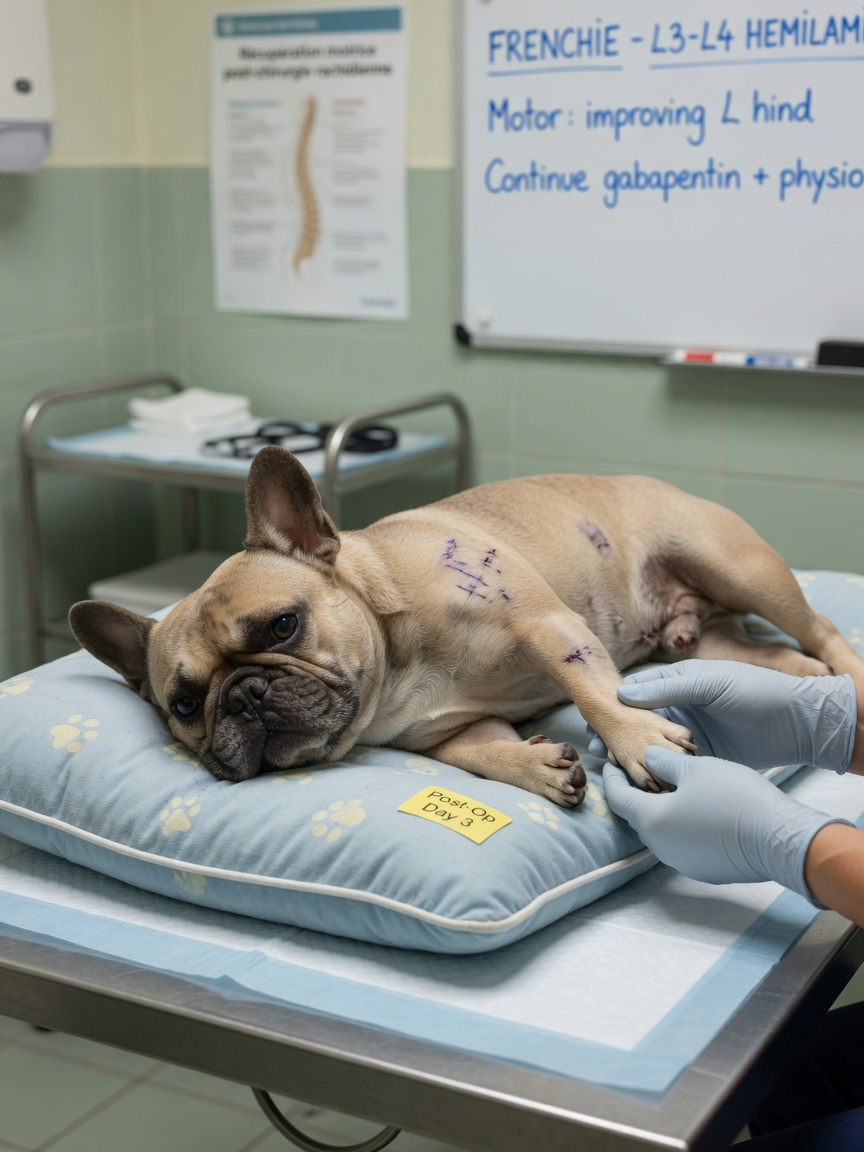
Surgery is recommended for dogs with moderate to severe neurological deficits, those who fail to respond to conservative management, or those who experience recurrent episodes. The most common procedure is a hemilaminectomy, which involves removing a portion of the vertebral bone to decompress the spinal cord and remove the offending disc material. When performed promptly, surgical outcomes are significantly better — dogs that retain some pain sensation and are operated on within 24 to 48 hours of onset have the best prognosis for regaining function.
Rehabilitation and Long-Term Care
Post-operative or post-conservative management rehabilitation plays a vital role in recovery. Physiotherapy, hydrotherapy, and acupuncture are all used to support neurological recovery, rebuild muscle strength, and improve mobility. Many specialist veterinary centres have dedicated rehabilitation teams.
For breeds at risk, long-term management includes maintaining a healthy body weight to reduce spinal load, avoiding activities that place excessive stress on the spine such as jumping on and off furniture, and using ramps rather than stairs where possible. Harnesses are preferable to neck collars in chondrodystrophic breeds to avoid placing traction on the cervical spine.
Genetic testing is now available for dachshunds carrying the FGF4 retrogene associated with chondrodystrophy. Responsible breeding programmes are increasingly incorporating this into breeding decisions, which may help to reduce the prevalence of IVDD in future generations.