
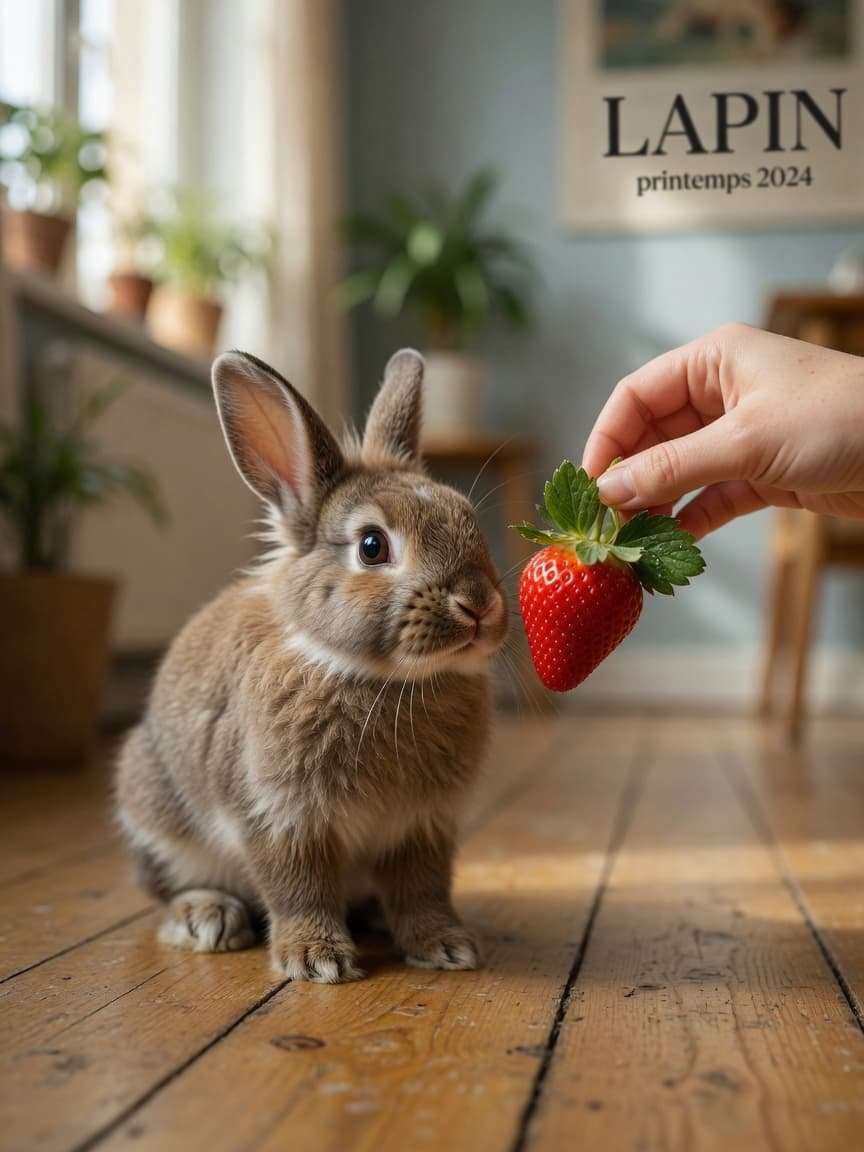
Fruits, Rabbits, and the Sugar Problem
If you have ever sat down with a punnet of strawberries and caught your rabbit watching you with those enormous eyes, you have probably wondered whether sharing is a good idea. The short answer is yes, rabbits can eat strawberries — but the longer answer involves understanding how a rabbit's digestive system works and why sugar is far more problematic for them than most owners realise.
Rabbits are obligate herbivores built for a high-fibre, low-sugar diet. In the wild, they would spend the majority of their day grazing on grasses, hay, and leafy vegetation. Fruit, in nature, is a rare seasonal treat — not a dietary staple. When we bring rabbits into our homes and offer them fruit freely, we are working against millions of years of evolutionary design.
Can Rabbits Eat Strawberries?
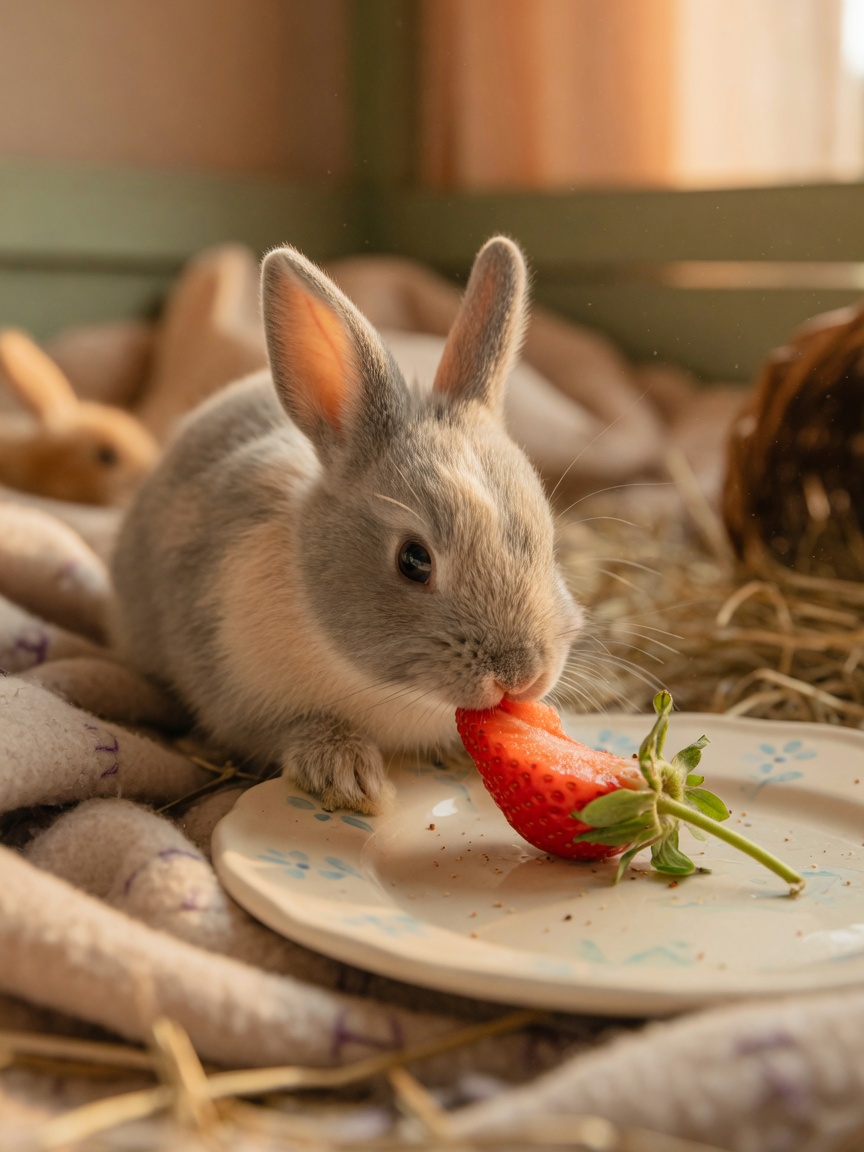
Yes, strawberries are safe for rabbits in small quantities. They are non-toxic and most rabbits find them highly palatable. A single small strawberry — roughly the size of your thumbnail — given once or twice a week is a reasonable treat for an adult rabbit. Both the flesh and the leafy green tops are safe, and some rabbits actually prefer the tops, which are lower in sugar.
However, safe does not mean unlimited. Strawberries contain around 4.9 grams of sugar per 100 grams, which may sound modest compared to other fruits, but for a rabbit whose gut bacteria are finely tuned to ferment fibre rather than sugar, even moderate amounts can cause disruption.
What Happens When Rabbits Eat Too Much Sugar
The rabbit's digestive system relies on a delicate balance of gut flora in the caecum — a specialised pouch where fibre is fermented to produce essential nutrients. When excess sugar arrives in the gut, it feeds the wrong kinds of bacteria, leading to an overgrowth that can cause gas, bloating, and a serious condition called gastrointestinal stasis. GI stasis occurs when gut motility slows or stops entirely. It can be life-threatening and requires urgent veterinary attention.
Repeated high-sugar feeding also contributes to dental disease, obesity, and — in severe or chronic cases — can predispose rabbits to conditions such as hepatic lipidosis (fatty liver disease). These are not rare complications; they are well-documented consequences of inappropriate diets seen regularly in rabbit-specialist veterinary practices.
Safe Fruits for Rabbits: A Practical Guide
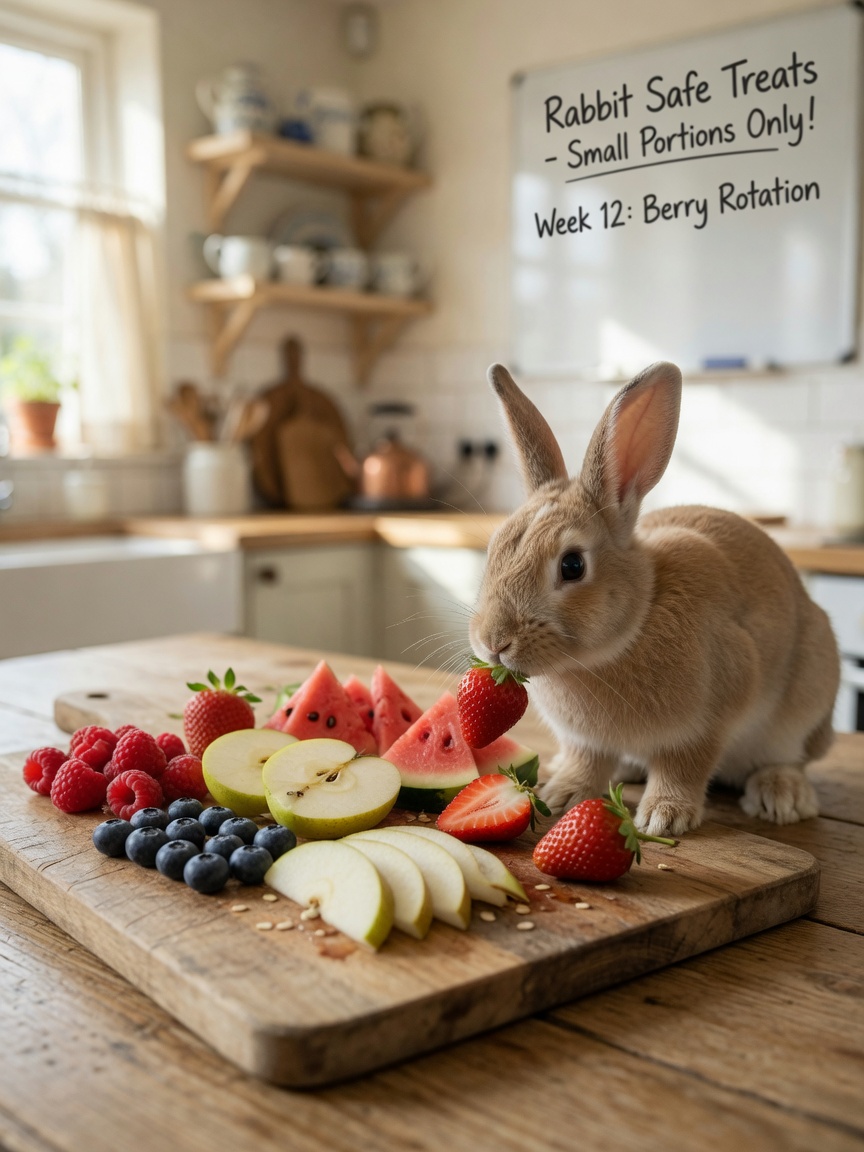
Fruit should never exceed roughly five to ten percent of a rabbit's total diet, with the vast majority of that diet made up of unlimited fresh hay (timothy or orchard grass), a smaller portion of leafy greens, and a very limited amount of high-quality pellets. Within that small fruit allowance, the following options are considered safe:
- Strawberries (including the green tops)
- Blueberries
- Raspberries
- Apple (seeds and core removed — apple seeds contain cyanogenic compounds)
- Pear (seeds removed)
- Watermelon (flesh only, no rind in large amounts)
- Melon (small pieces)
- Peach (stone removed)
- Mango (skin removed)
- Papaya (in small amounts; the seeds should be avoided)
Lower-sugar fruits like raspberries and blueberries are generally better choices than sweeter tropical options. Berries also contain antioxidants that may offer minor health benefits, though the quantities fed are too small for this to be a primary dietary consideration.
Fruits to Avoid Entirely
Some fruits carry genuine risks and should not be offered to rabbits at all. Grapes and raisins are associated with kidney toxicity in some species, and while the evidence is not conclusive in rabbits, the precautionary principle applies. Avocado contains persin, a fungicidal toxin that is dangerous to many animals. Citrus fruits are high in acid and can irritate the digestive lining. Dried fruits of any kind should be avoided — the dehydration process concentrates sugars dramatically, making even a small piece equivalent to a much larger fresh portion.
How to Introduce Fruit Safely
If your rabbit has not eaten fruit before, introduce it slowly and in tiny amounts. Start with a piece no larger than a blueberry and wait 24 hours to observe for any signs of loose stools, lethargy, or reduced appetite. Baby rabbits under 12 weeks of age should not be given fruit at all — their digestive systems are still developing and particularly vulnerable to sugar-related disruption. Juveniles between three and six months can be given very occasional, very small tastes, but regular fruit feeding is best reserved for adult rabbits.
Always wash fruit thoroughly before offering it to remove pesticide residues. Where possible, choose organic produce, particularly for strawberries, which are among the fruits most likely to carry pesticide residue when conventionally grown.
Reading Your Rabbit's Response
Every rabbit is an individual. Some tolerate occasional fruit well with no digestive consequences; others show soft caecotropes (the specialised droppings rabbits re-ingest for nutrients) or loose stools after even a small amount. If you notice either of these signs after introducing fruit, scale back or remove it from the diet entirely. It is not worth pushing an ingredient that your specific rabbit's gut does not handle well, regardless of whether it is technically safe in general terms.
Pay attention to weight as well. Rabbits who receive too many calorie-dense treats alongside their regular diet can gain weight quietly and quickly. Obesity in rabbits leads to an inability to reach the caecotropes for re-ingestion, which in turn causes nutritional deficiency — a problematic cycle that is entirely preventable through portion awareness.
The Bottom Line on Strawberries
Strawberries make a perfectly pleasant occasional treat for adult rabbits when offered in appropriate portions. One small berry, a couple of times per week, is unlikely to cause harm to a healthy rabbit eating a balanced, hay-based diet. What matters most is keeping the overall sugar load of the diet low, treating fruit as what it truly is — a rare luxury rather than a regular fixture — and always prioritising the fibre intake that keeps a rabbit's gut moving and its health intact.