

What Is Idiopathic Cystitis in Cats?
Feline idiopathic cystitis, often referred to as FIC, is one of the most frustrating conditions a cat owner can encounter. The word "idiopathic" simply means we do not have a single clear cause — and that ambiguity is precisely what makes this condition so difficult to manage. FIC accounts for roughly 55 to 65 per cent of all lower urinary tract disease in cats under the age of ten, making it the most common diagnosis within the broader umbrella of feline lower urinary tract disease, or FLUTD.
Cats with FIC experience inflammation of the bladder wall without any identifiable infection, stones, or structural abnormality. The bladder lining becomes irritated, the cat strains in the litter tray, urinates with blood, or vocalises in discomfort — and then, often, the episode resolves on its own within five to seven days. The problem is that it tends to come back.
The Role of Stress in Triggering Episodes
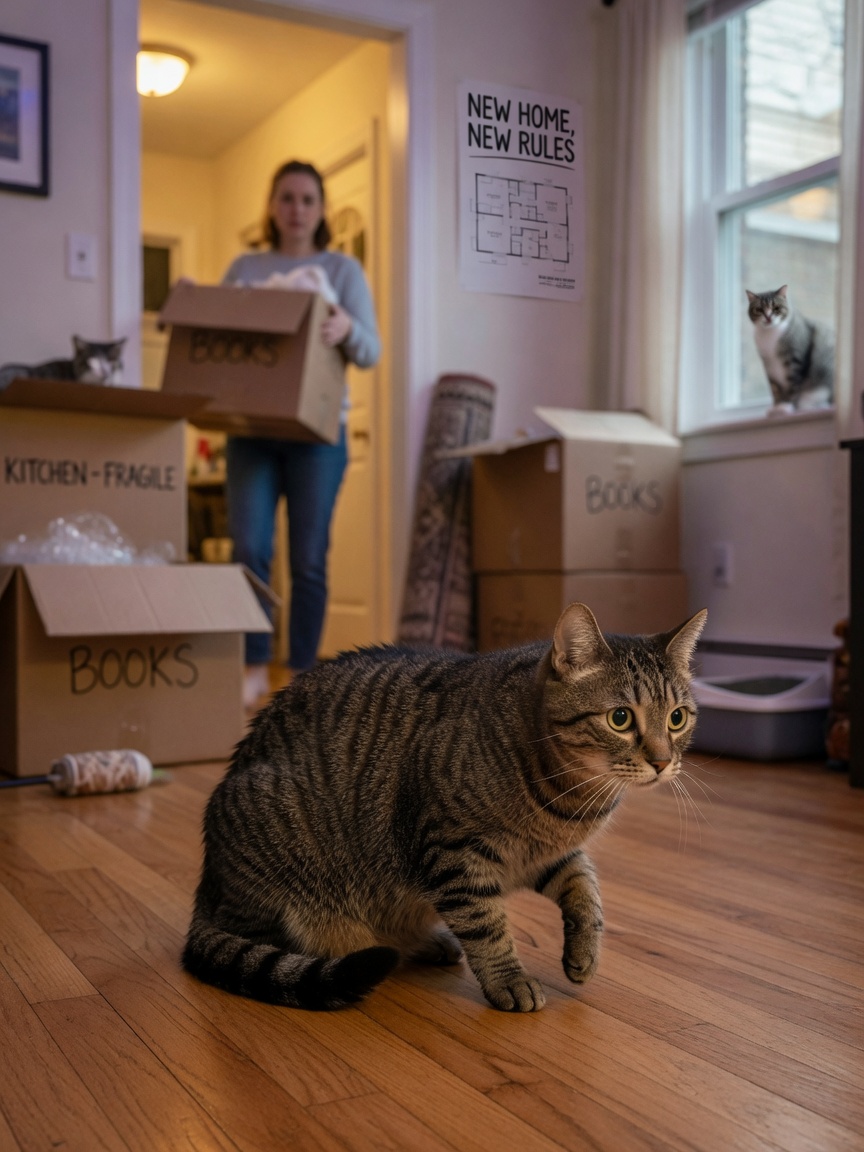
Research over the past two decades has firmly established that stress is a major driver of FIC flare-ups. Cats are sensitive creatures with a finely tuned stress response, and their nervous systems react to environmental disruptions in ways that can directly affect the bladder. Studies from Ohio State University, led by Dr Tony Buffington, demonstrated that cats with FIC show abnormalities in the hypothalamic-pituitary-adrenal axis — the system that regulates the stress response — which makes them more reactive to perceived threats.
Common triggers identified in clinical practice include:
- Changes in household routine or the owner's schedule
- New people, pets, or animals visible outside the window
- Moving house or rearranging furniture
- Conflict between cats sharing a home
- Loud noises, construction, or seasonal disruptions
- Changes to the litter tray type, location, or substrate
What makes this particularly challenging is that many of these stressors are invisible to owners. A cat that appears calm may still be experiencing significant internal stress, particularly in multi-cat households where resource competition can be subtle.
How Diet Influences Urinary Inflammation
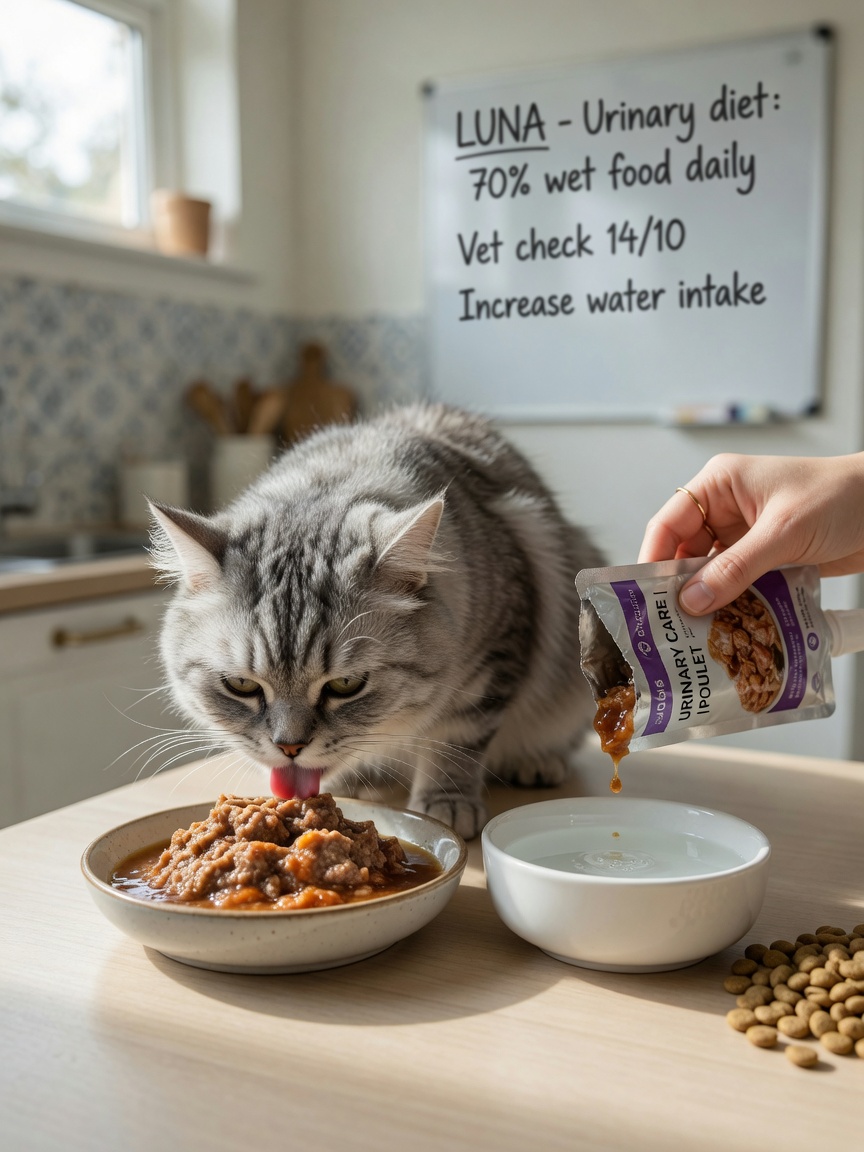
Diet plays a supporting role in managing FIC, though it works indirectly rather than treating the inflammation itself. The most evidence-based dietary intervention is increasing water intake, because dilute urine is less irritating to an already inflamed bladder lining and reduces the concentration of any crystals that may be present.
Wet food — whether tinned or pouched — has a moisture content of around 75 to 80 per cent compared to dry kibble at roughly 10 per cent. Transitioning a cat to a predominantly wet diet can meaningfully increase overall fluid intake without requiring the cat to drink more from a bowl. Cats are notoriously poor drinkers by nature, having evolved from desert ancestors who obtained most of their hydration from prey.
Some veterinarians also recommend diets formulated to produce a slightly acidic urine, as this environment discourages the formation of struvite crystals which can compound bladder irritation. However, it is worth noting that in true FIC without crystal involvement, dietary changes address secondary factors rather than the root cause.
The Recurrence Problem
One of the most disheartening aspects of idiopathic cystitis is how often it returns. Studies suggest that between 39 and 65 per cent of cats will experience another episode within twelve months of their first diagnosis. For some cats, episodes become a monthly occurrence that significantly affects quality of life — and owner wellbeing.
The recurrence problem is largely tied to the chronic nature of the underlying stress vulnerability. Unless the environmental triggers are identified and addressed, the bladder will continue to react. This is why treatment for FIC is never just about managing the current episode; it must always involve a thorough assessment of the cat's living environment.
Analgesics such as buprenorphine are commonly prescribed during acute episodes to manage pain, and anti-spasmodic medications like prazosin may be used if urethral spasm is present. Amitriptyline, a tricyclic antidepressant, has been trialled for chronic recurrent FIC with mixed but sometimes promising results in reducing the frequency of flare-ups.
What Owners Often Miss
The most common mistake in managing FIC long-term is treating each episode as an isolated event rather than recognising the pattern. Owners who rush to the vet, get the cat treated, and return to normal life without making any environmental changes are likely to find themselves back in the same situation within weeks or months.
Keeping a simple episode diary can help both owner and vet identify patterns. Note the date of each episode, any changes in routine in the preceding two weeks, whether the household had visitors, whether the cat had access to its usual resources, and any tension observed between pets. Over time, patterns often emerge.
It is also worth considering litter tray provision carefully. The general recommendation for multi-cat households is one tray per cat plus one additional. Trays should be in quiet, low-traffic locations, cleaned at least once daily, and sized generously — many commercially available trays are simply too small for an adult cat to use comfortably.
When to Worry About More Than Cystitis
While FIC is self-limiting in females and most male cats, the situation is different in intact or neutered male cats who are at risk of urethral obstruction — a life-threatening emergency where the urethra becomes physically blocked. Any male cat that is straining without producing urine, crying in pain, or appearing lethargic and unwell alongside urinary symptoms should be seen by a vet immediately. This is not something to observe at home overnight.
Regular veterinary monitoring, tailored environmental management, and a commitment to reducing the stress load in your cat's daily life remain the most powerful tools available for breaking the recurrence cycle of idiopathic cystitis.