
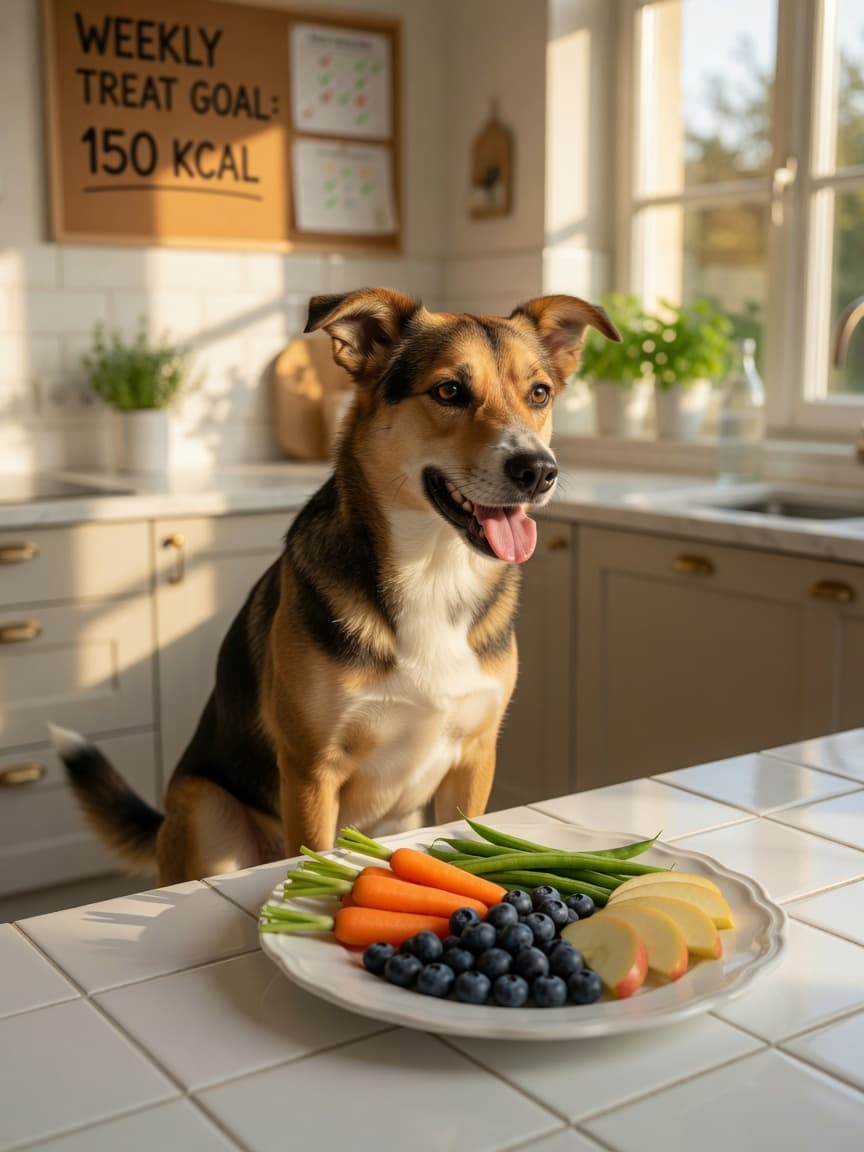
Best Low-Calorie Dog Treats for Weight Loss
What Makes a Treat Low-Calorie?
Not all treats labeled "light" or "healthy" live up to their marketing. A genuinely low-calorie dog treat shares several nutritional characteristics:
- Low fat content: Fat contains 9 kcal per gram — more than double the 4 kcal per gram in protein or carbohydrate. Treats high in fat add calories fast. Look for treats under 5% fat on the guaranteed analysis.
- High moisture or fiber: Water and dietary fiber add bulk and promote satiety without adding significant calories. This is why vegetables work so well as low-calorie treats — they are high in water and fiber, low in fat and sugar.
- Single or simple ingredients: Multi-ingredient treats with added fats, sugars, cheese coatings, or flavoring sauces quickly escalate in caloric density. Simpler is almost always better for weight management.
- Small serving size: A treat rated at 10 kcal is only useful if the portion size is small enough to use as a training reward. Large treats have to be broken into pieces, which risks inconsistent portions.
Ingredients to Look For
The best commercial low-calorie treats tend to feature these ingredients prominently on their label:
- Chicken breast or turkey breast (not by-products): Lean protein with minimal fat, highly palatable.
- Sweet potato: Moderate calorie density but rich in fiber and beta-carotene. Good for satiety.
- Peas or lentils: Plant protein and fiber without added fat.
- Apple (without seeds): Naturally sweet, low calorie, good source of pectin fiber.
- Blueberries: Antioxidant-rich, naturally low in calories at roughly 1 kcal per berry.
Ingredients to Avoid
These ingredients drive up caloric density and are best avoided during a weight loss program:
- Cheese or cheese powder: High in fat and sodium. A small chunk of cheddar has around 35–40 kcal.
- Peanut butter (especially in large amounts): Dense in fat and calories. A teaspoon is fine occasionally, but avoid treats with peanut butter as a primary ingredient — and always check that no xylitol is present, which is toxic to dogs.
- Bacon or pork fat: Very high in fat and sodium. Common in cheap commercial treats.
- Corn syrup or molasses: Empty calories with no nutritional benefit.
- Wheat-based biscuits (large portions): These are not necessarily harmful, but many commercial biscuits are 30–60 kcal each — adding up fast for a small dog.
Vegetable Treats: The Best Budget Option
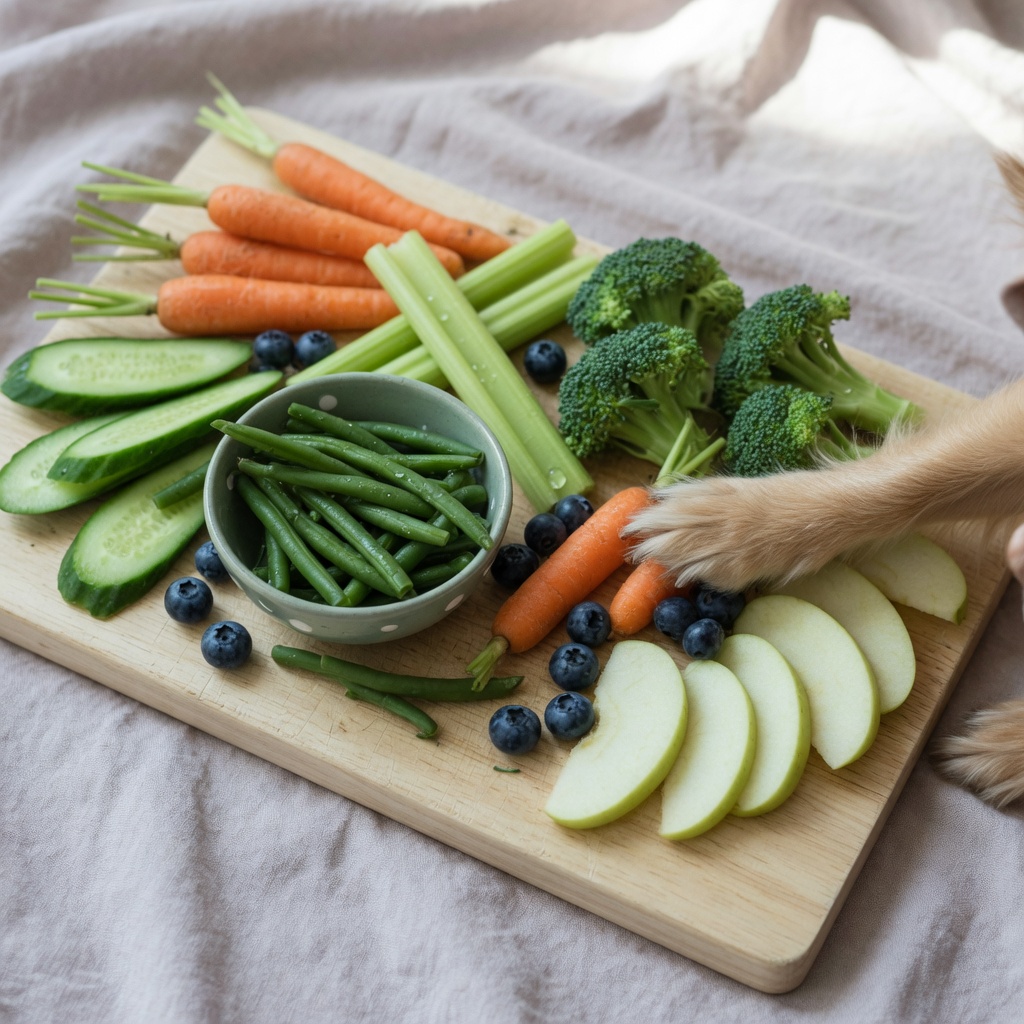
Fresh vegetables are the most underrated tool in a weight management treat toolkit. They are cheap, readily available, and naturally low in calories. Here are the best options with approximate calorie counts:
- Baby carrot: ~4 kcal each. Crunchy texture satisfies chewing behavior. Most dogs love them.
- Cucumber slice (1 cm thick): ~1–2 kcal. Very high water content, excellent for hot days.
- Celery stick (5 cm): ~2 kcal. Contains antioxidants; mild flavor most dogs accept.
- Broccoli floret (small): ~3 kcal. Rich in vitamin C and fiber. Feed in moderation — large amounts can cause gas.
- Cooked green bean (plain): ~4 kcal per 10 beans. A favorite for Labrador training sessions.
- Blueberry: ~1 kcal per berry. Can be used as high-value training rewards for small dogs.
- Apple slice (no seeds or core): ~4 kcal per small slice. Naturally sweet — excellent as a high-motivation reward.
Important: avoid grapes, raisins, onions, garlic, leeks, avocado, macadamia nuts, and anything containing xylitol — these are toxic to dogs. Always introduce new foods gradually to avoid digestive upset.
Calorie Comparison: Commercial Treats
To illustrate how dramatically calorie counts vary, here is a comparison of common treat categories:
- Freeze-dried meat training treats (small, ~1g each): 3–6 kcal per treat. Excellent for training — high value, tiny portion.
- Standard commercial biscuit (medium, ~8g): 30–45 kcal per treat. Three a day adds 90–135 kcal — significant for a small dog.
- Rawhide chew (small): 70–100 kcal. Often overlooked because it is thought of as entertainment, not food.
- Pig ear: 200+ kcal each. Essentially a full meal in treat form — avoid during weight loss.
- Dental chew (medium, commercial): 50–100 kcal. Check the package — calorie counts vary enormously by brand.
Best Training Treats for Weight Loss Programs
For training sessions where you need to reward frequently (20–50 times in a session), calorie content per piece is critical. The ideal training treat is thumb-nail sized, between 1–5 kcal each, and enticing enough to motivate focus. Options to seek:
- Freeze-dried chicken or salmon bites (natural, single ingredient)
- Commercial "mini" training treat lines from reputable brands (check per-treat calorie count)
- Homemade: small cubes of steamed chicken breast (~5 kcal per 1 cm cube)
- Pea-sized pieces of carrot or apple — effective for food-motivated dogs
Shop Low-Calorie Dog Treats at Zooplus →
Key Takeaways
- Keep treats to 10% or less of your dog's daily calorie budget — measure this, don't guess.
- Low-fat, high-fiber, single-ingredient treats are the best choices for weight management.
- Baby carrots, cucumber slices, green beans, and blueberries are nutritious, ultra-low-calorie options most dogs enjoy.
- A single pig ear or large biscuit can add 100–200 kcal — enough to derail a weight loss plan.
- Freeze-dried meat training treats (1–5 kcal each) are ideal for high-frequency training reward sessions.
- Never give grapes, raisins, onions, garlic, avocado, macadamia nuts, or xylitol to dogs.
References
Zoran DL. (2010). Obesity in dogs and cats: a metabolic and endocrine disorder. Veterinary Clinics of North America: Small Animal Practice. PubMed
Laflamme DP. (2006). Understanding and managing obesity in dogs and cats. Veterinary Clinics of North America: Small Animal Practice. PubMed