
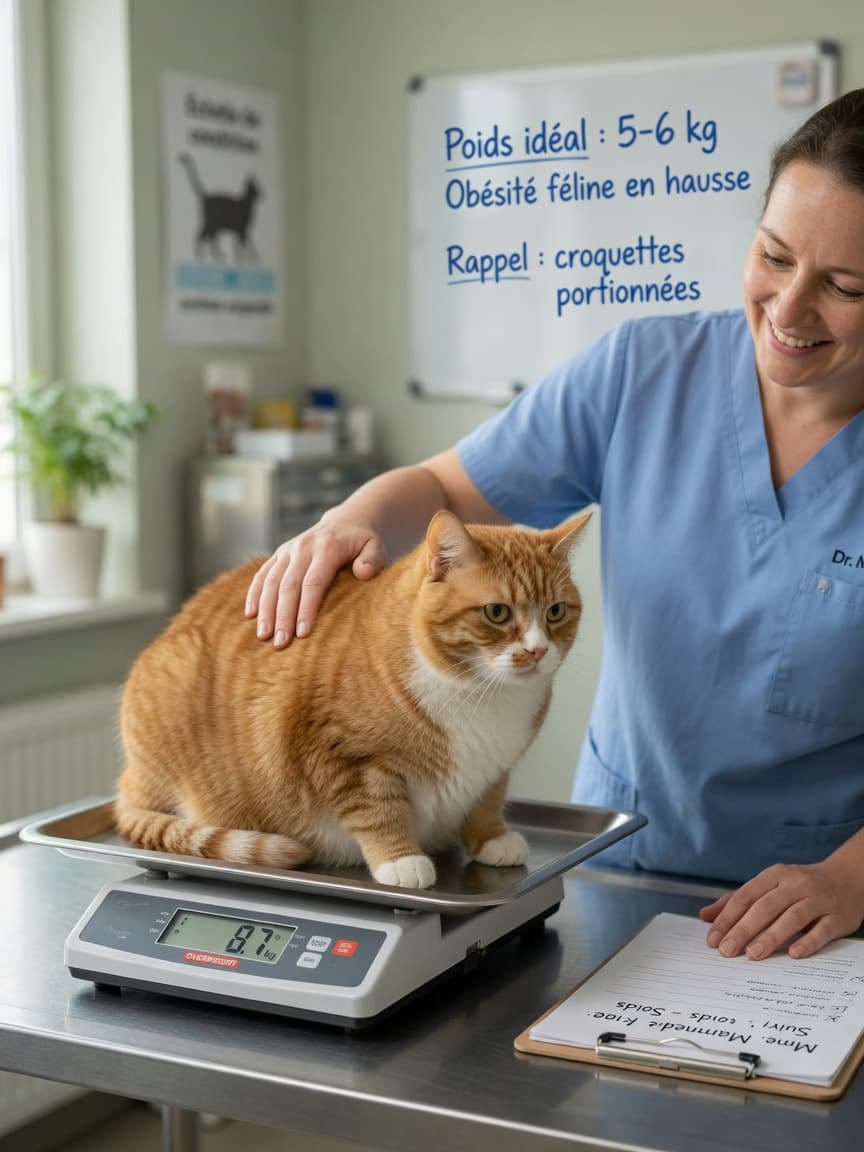
How to Help Your Cat Lose Weight Without Making Them Miserable
Your vet has confirmed your cat needs to lose weight. Now comes the part nobody tells you about: the process can be frustrating, slow and full of pitfalls — a yowling cat at 5 am, multiple cats competing for food, and the constant temptation to give in to those pleading eyes. But done correctly, gradual weight loss is achievable without making your cat miserable. This guide covers everything you need, from safe rates of loss to puzzle feeders and multi-cat meal management.
Why the Rate of Weight Loss Matters So Much
In most species, cutting calories aggressively is simply uncomfortable. In cats, it can be fatal. When a cat's calorie intake drops too sharply, the body mobilises fat reserves rapidly and floods the liver with fatty acids. The feline liver cannot process this influx efficiently, causing fat to accumulate in liver cells — a condition called hepatic lipidosis, also known as fatty liver syndrome.
Hepatic lipidosis can develop in as little as two to three days of significantly reduced food intake, causing jaundice, vomiting, lethargy and liver failure. A study in the Journal of Feline Medicine and Surgery confirmed that even previously healthy obese cats are at elevated risk when food is withdrawn abruptly: PubMed PMID 22103379.
The safe rate of weight loss for most cats is 0.5% to 1% of current body weight per week. For a 6 kg cat, that is 30–60 g per week — approximately 120–240 g per month. Patience is not optional; it is medically necessary.
Transitioning to a Weight-Loss Diet
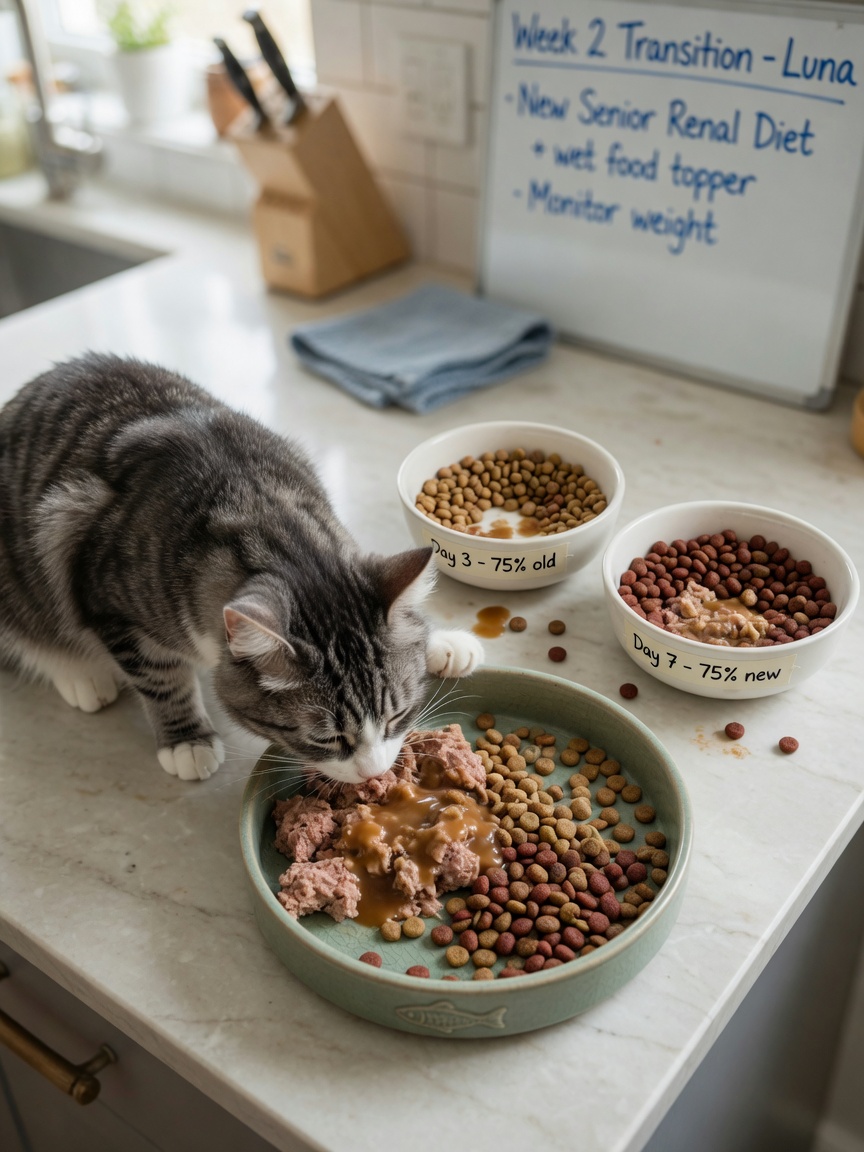
Cats are notoriously neophobic about food. Switching diets abruptly often results in refusal to eat, which circles back to hepatic lipidosis risk. A slow transition over 10–14 days is the standard recommendation:
- Days 1–3: 75% current food, 25% new diet.
- Days 4–6: 50% / 50%.
- Days 7–10: 25% current food, 75% new diet.
- Days 11+: 100% new weight-management diet.
If your cat refuses the new food at any stage, slow down the transition rather than rushing it. A cat that stops eating entirely is in more danger than a cat eating slightly too many calories. The WSAVA Global Nutrition Guidelines emphasise gradual dietary transition for all cats, especially those transitioning to therapeutic diets.
Choosing the Right Weight-Management Food
A good weight-loss diet for cats is high in protein, moderate in fat and controlled in calories. Higher dietary protein helps preserve lean muscle mass during weight loss — critical because you want your cat to lose fat, not muscle. Look for foods where the first two or three ingredients are named animal proteins (chicken, turkey, salmon).
Avoid foods marketed as "light" that simply have increased fibre but similar calorie counts to standard foods. Check the kcal/100 g figure on the label — a genuine weight-management food will be meaningfully lower in calorie density. The Pet Food Manufacturers' Association (PFMA) publishes guidance on reading pet food labels accurately.
You can browse veterinary-grade weight management ranges at Zooplus, which stocks both prescription and over-the-counter options with full calorie information listed per product.
Puzzle Feeders and Activity: Making Meal Times Work Harder
One underrated strategy for weight loss is slowing the rate at which your cat eats. Puzzle feeders — devices that require the cat to work for each kibble or portion of wet food — serve two functions simultaneously: they extend meal times (reducing the post-meal demand for more food) and provide mental stimulation that reduces boredom-driven eating.
Research published in Applied Animal Behaviour Science found that puzzle feeders reduced food-begging behaviours and improved activity levels in indoor cats: PubMed PMID 31442204.
Options range from simple muffin tins (scatter kibble into the cups) to commercial slow feeders and LickiMats for wet food. Aim to use a puzzle feeder for at least one meal per day.
Beyond feeding, active play burns calories and combats the psychological stress of calorie restriction. Two 10-minute interactive sessions daily — using a wand toy, feather lure or laser pointer — can meaningfully increase energy expenditure. The Guardian covered the importance of cat enrichment for obesity in a feature worth reading: The Guardian — Britain's Pet Obesity Crisis.
Managing a Multi-Cat Household
Feeding one cat a reduced diet while others eat freely is one of the biggest practical challenges in feline weight management. Common approaches include:
Separate feeding stations
Feed cats in different rooms with closed doors during mealtimes. This prevents both the overweight cat stealing from others and lean cats eating the weight-management food (which may be too calorie-restricted for them).
Microchip-activated feeders
These feeders open only when the registered cat approaches, using microchip or collar tag recognition. They are the most reliable solution for multi-cat households and are widely available at major pet retailers. Each cat gets their own feeder programmed with their individual chip — the overweight cat's feeder dispenses the controlled portion; other cats' feeders contain their standard diet.
Timed feeders
If microchip feeders are not feasible, timed feeders can at least enforce meal structure and prevent free-choice grazing. Place them in different locations to reduce competition.
Height separation
If the overweight cat cannot jump high (common in heavily obese cats), placing lean cats' food on elevated surfaces can give them access the dieting cat cannot reach — though this solution is temporary as weight loss improves mobility.
Measuring Food Accurately
Estimating portions by eye is consistently unreliable. Studies in human and veterinary nutrition alike show that visual estimation leads to portions 20–50% larger than intended. The solution is simple but non-negotiable: use a digital kitchen scale, not a cup or scoop.
Weigh every meal. If you feed twice daily, weigh each portion separately rather than dividing a single daily weighing. Treat calories are part of the daily total — they must be weighed and accounted for too (see the calorie-counting article for specific figures).
Vet Weight Clinics
Many veterinary practices offer dedicated weight clinics, usually run by veterinary nurses. These typically include:
- Monthly weigh-ins and BCS reassessment.
- Adjustment of calorie targets as weight changes (important — as the cat gets lighter, their maintenance calorie needs decrease, so portions must be recalculated).
- Dietary coaching and troubleshooting.
- Motivation and accountability.
Many clinics offer these appointments free or at reduced cost — ask your practice. The BVA strongly encourages owner-vet collaboration on structured weight loss plans for overweight pets.
For at-home supplementary support, HolistaPet offers natural wellness supplements formulated for cats, including options to support joint health and mobility — useful for overweight cats whose arthritis improves as they slim down.
Managing Your Own Expectations
A cat that needs to lose 1.5 kg at the maximum safe rate of 60 g per week will take approximately six months to reach target. That is normal, not a failure. Expect:
- Increased vocalisation and food-begging, especially in the first two to four weeks.
- Periodic plateaus where weight loss stalls — reassess calorie intake and recalculate if needed.
- Improvement in activity, grooming and playfulness as weight reduces — these are the rewards.
Key Takeaways
- Safe weight loss is 0.5–1% of body weight per week — faster than this risks hepatic lipidosis.
- Transition to new food gradually over 10–14 days to prevent refusal and hunger strikes.
- High-protein, calorie-controlled wet food outperforms dry "light" foods for most cats.
- Puzzle feeders slow eating, provide enrichment and reduce food-begging behaviours.
- In multi-cat homes, microchip-activated feeders are the most reliable way to control individual portions.
- Always weigh food on digital scales — never estimate by eye.
- Vet weight clinics provide free or low-cost structured support — use them.