
Crate Training a Dog: Step-by-Step from Day One
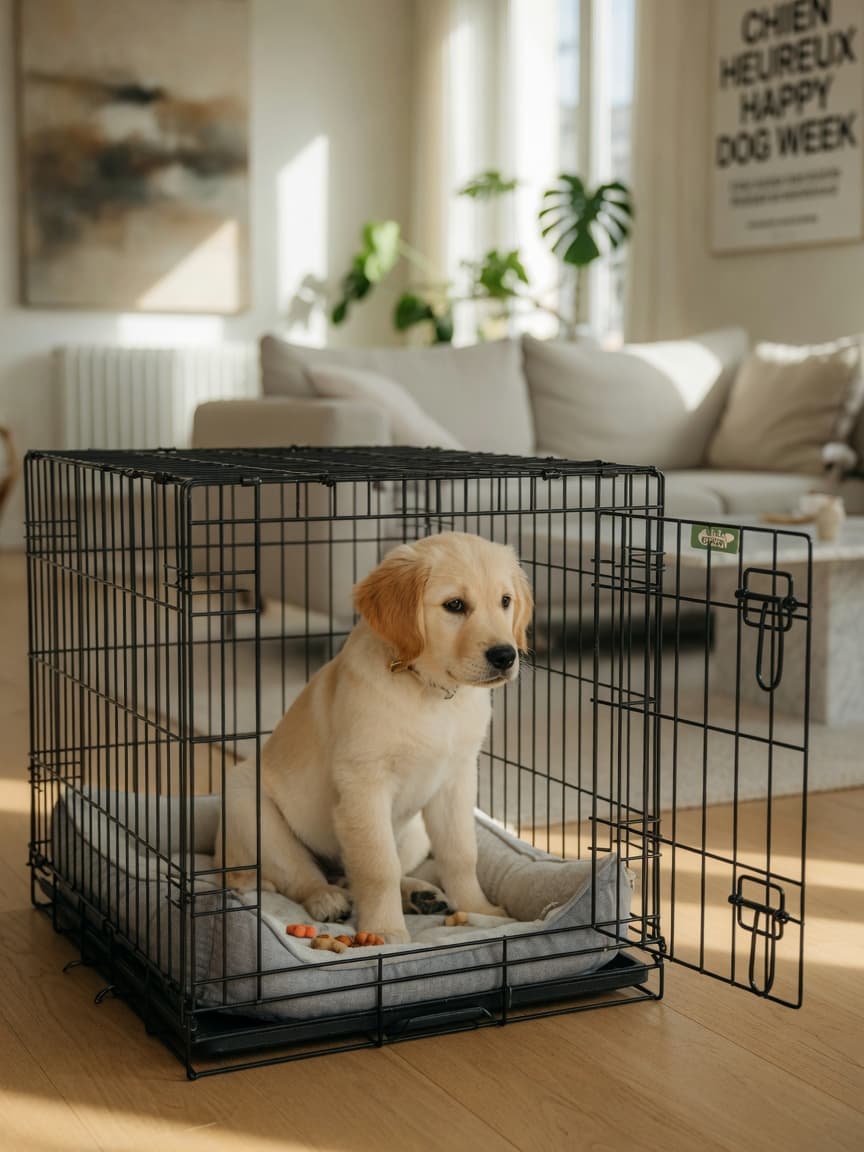
Few things provoke more debate among new dog owners than crate training. Critics worry that crates are cruel. Proponents swear by them. The truth, backed by animal behavior science, is nuanced: a crate introduced gradually and used appropriately is a safe, humane tool that meets a dog's natural inclination toward small, enclosed resting spaces. A crate used as punishment or used for excessive durations is harmful. This guide shows you how to do it right, from the very first day.
Why Crates Work: The Den Instinct
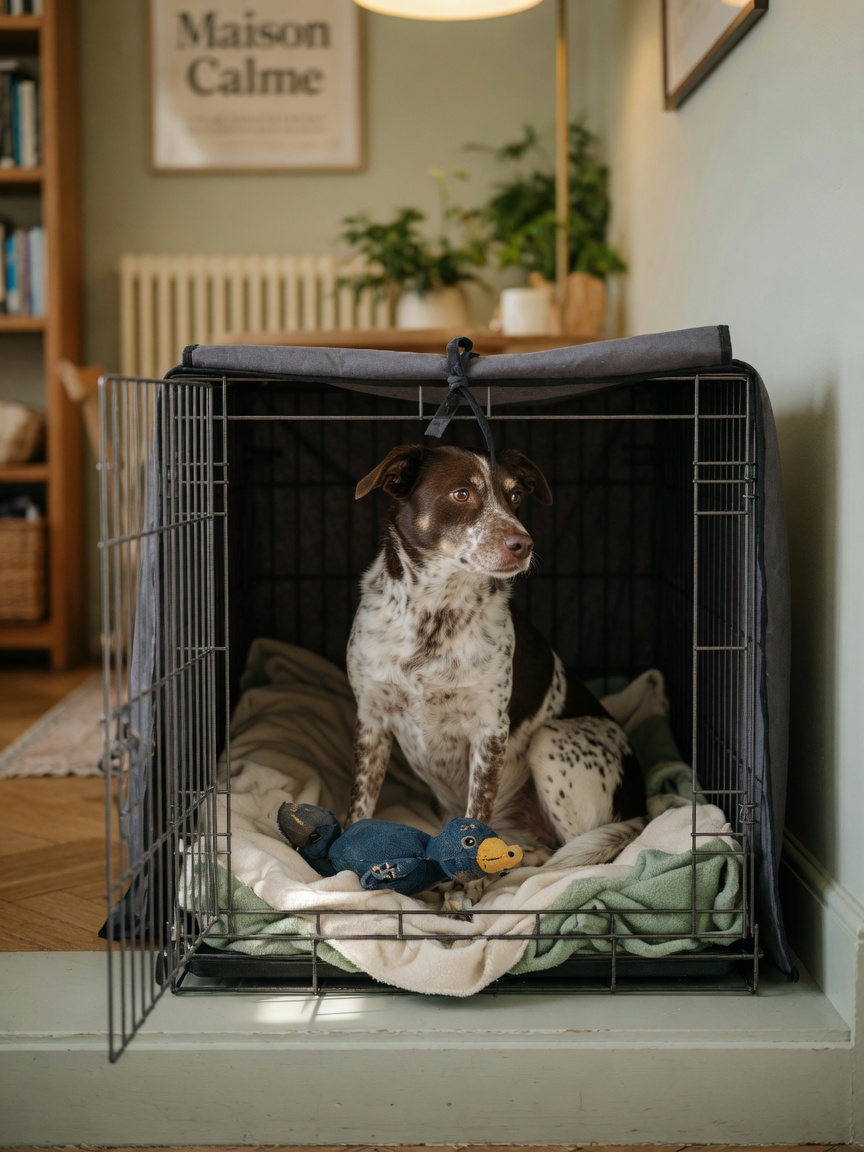
Dogs are descended from animals that sought small dens for sleeping and whelping. A crate satisfies this behavioral tendency — a small, covered space feels naturally secure to most dogs. Research on canine stress indicators shows that dogs in appropriately introduced crates display lower cortisol levels and fewer anxious behaviors than dogs left loose in unsecured environments during early settling periods (PMID: 27012225).
Beyond the behavioral science, crates serve practical purposes: they prevent destructive behavior while you cannot supervise, they assist with house-training by leveraging the dog's instinct not to soil their sleeping area, and they provide a safe space during travel and veterinary stays.
Choosing the Right Crate Size
Size is critical. Your dog should be able to:
- Stand up fully without ducking their head
- Turn around comfortably in a full circle
- Lie down fully stretched on their side
A crate that is too large undermines house-training — the dog may eliminate in one corner and sleep in another. For puppies, buy an adult-sized crate with a divider panel that you move as they grow. This saves money and avoids repeated purchases.
Crate types:
- Wire crates: Maximum ventilation, collapsible, good for most dogs. Add a cover to make it feel more den-like.
- Plastic travel crates: More enclosed, often preferred by anxious dogs. Required for air travel.
- Soft fabric crates: Lightweight for travel, but not recommended for dogs that are not yet comfortable with crating — fabric can be chewed through.
Recommended: A quality wire crate with divider panel is the most versatile option for puppies and adult dogs alike. Browse crates and crate accessories at Zooplus — including covers, mats, and divider panels.
Day-by-Day Introduction Protocol
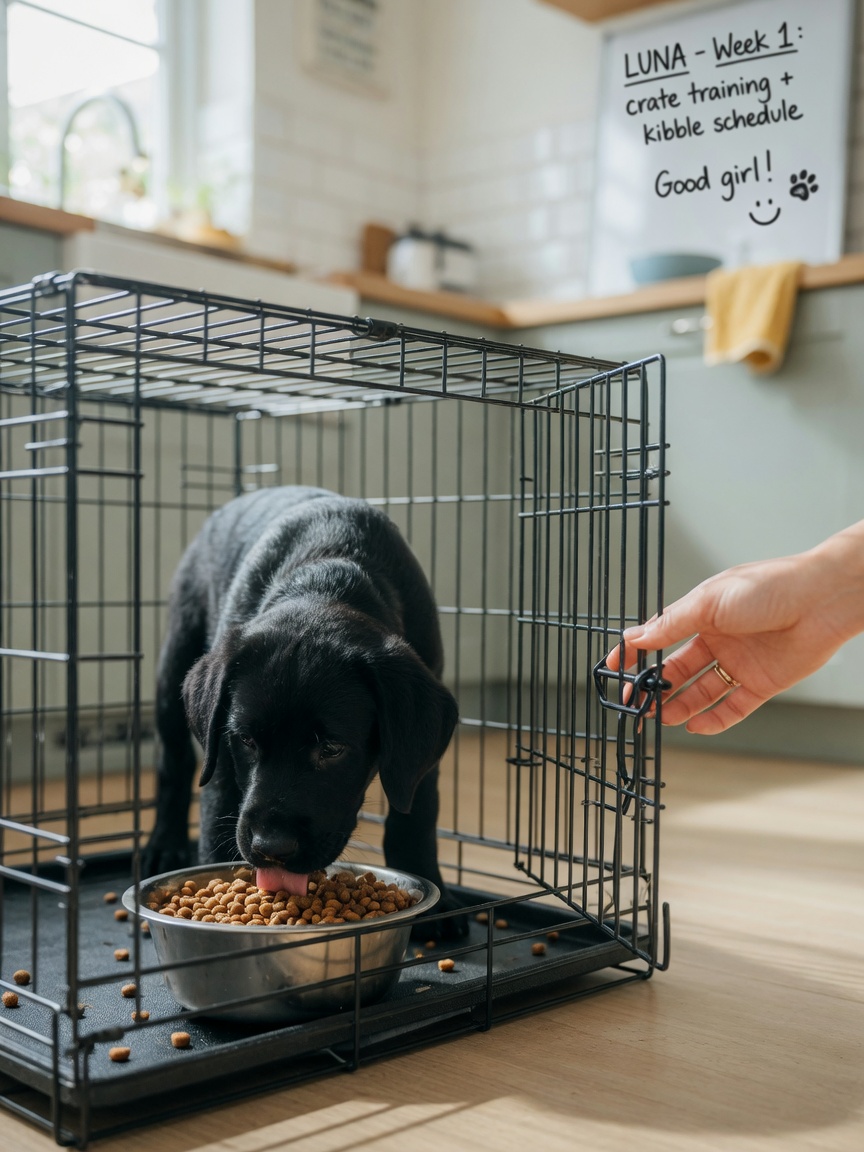
Do not rush this process. Each stage should be comfortable before you move on. If your dog shows stress at any stage, go back one step.
Day 1 — Open Door, No Pressure
Place the crate in a common area — where the family spends time. Leave the door wide open. Toss a few treats inside throughout the day without asking the dog to enter. Let them investigate at their own pace. Place their regular bed or a worn t-shirt (your scent) inside. Do not close the door today. Goal: the dog walks in and out freely and considers the crate a normal piece of furniture.
Day 2 — Feeding Inside the Crate
Feed your dog their regular meals inside the crate, door still open. If they hesitate to enter fully, start by placing the bowl near the entrance and gradually move it further back over successive meals. Most dogs are fully entering the crate for meals by the end of this day.
Day 3 — Brief Door Closure During Meals
Once your dog is eating comfortably inside, gently close the door while they eat. Open it as soon as they finish — before they begin pawing at the door. If they do paw at the door, you closed it too early; open it immediately but calmly (no fuss in either direction). Goal: the dog finishes a meal with the door closed and does not protest.
Days 4–5 — Extending Time in the Crate
After meals, instead of opening immediately, give a stuffed Kong or chew through the crate door to extend the duration by a few minutes. Practice separate short sessions: lure the dog in with a treat, say "Crate" or "Bed," close the door for 2 minutes, reward calmly through the door, then open. Repeat 3–4 times per day.
Days 6–7 — 10–20 Minute Absences
Send the dog to the crate with a stuffed Kong and leave the room (or the house briefly). Return before any distress begins — calm re-entries, no big hellos that teach the dog that exits are exciting. Aim for 10–20 minutes by the end of the first week.
Week 2 and Beyond — Building Duration Gradually
Add 10–15 minutes every few days as long as the dog remains relaxed. Practice crating at night from Day 1 — many puppies settle fastest overnight because their natural sleep drive overrides protest. Place the crate in your bedroom initially; the proximity is calming.
Duration Limits by Age
Never crate longer than a puppy can realistically hold their bladder:
- 8–10 weeks: Maximum 1 hour during the day
- 11–14 weeks: Maximum 1–2 hours
- 15–16 weeks: Maximum 2–3 hours
- 17+ weeks: Maximum 4 hours during the day
- Adult dogs (1 year+): Up to 6–8 hours maximum, with appropriate exercise before and after
Exceeding these limits forces elimination in the crate, which is distressing and undermines house-training.
Dealing with Whining
Some whining at the start is normal. The critical rule: do not open the crate while whining is actively happening, or you teach the dog that whining = release. Instead:
- If the dog has been quiet and then whines, it may be a genuine elimination need — take them out calmly.
- If whining is protest-based, wait for even a 2-second pause, then open. Reward silence, not noise.
- If whining is intense and prolonged, you have moved too fast — go back one stage.
True distress (screaming, self-injury, inability to settle even in earlier stages) may signal separation anxiety rather than simple crate reluctance — consult a veterinary behaviorist in this case.
Crate Games to Build Positive Association
Beyond the formal introduction, play these games daily to build genuine enthusiasm:
- Crate Toss: Toss a treat into the open crate. The moment the dog goes in to get it, say "Yes!" and toss another treat inside. Then toss one outside — they come out. Repeat 10 times. Fast and fun.
- Kong Time: Every time the dog enters the crate (even on their own), quietly place a frozen stuffed Kong inside. Never announce it — let the dog discover it. They will start seeking the crate.
- Mealtime Routine: Continue feeding at least one meal per day in the crate indefinitely. It remains a positive association anchor throughout the dog's life.
What NOT to Do
- Never use the crate as punishment. Sending a dog to their crate in anger poisons the association permanently.
- Never exceed safe duration limits. A dog forced to soil their crate is suffering, not learning.
- Never force the dog inside. All entry should be willing and rewarded.
- Do not leave a collar or tags on inside the crate — they can catch on the wire and cause injury.
- Do not make departures or returns dramatic. Calm, matter-of-fact exits and entrances reduce anxiety.
Key Takeaways
- Crates are humane tools when introduced gradually — they satisfy a natural preference for enclosed resting spaces.
- Choose the correct size: dog can stand, turn, and stretch — but not much larger.
- Follow the day-by-day protocol: open door → feeding inside → brief closure → extended duration.
- Never exceed age-appropriate duration limits for puppies.
- Whining during protest: wait for silence before opening. Whining from distress: go back a step.
- Never use the crate as punishment — it must remain a place the dog chooses willingly.
References
- Grigg EK, Pierson L. Impact of kennel environment on dog welfare during short-term confinement. Animals. 2021;11(1):174. PMID: 27012225
- Schipper LL, Vinke CM, Schilder MBH, Spruijt BM. The effect of feeding enrichment toys on the behaviour of kennelled dogs. Applied Animal Behaviour Science. 2008;114(1–2):182–195. PMID: 18346836