
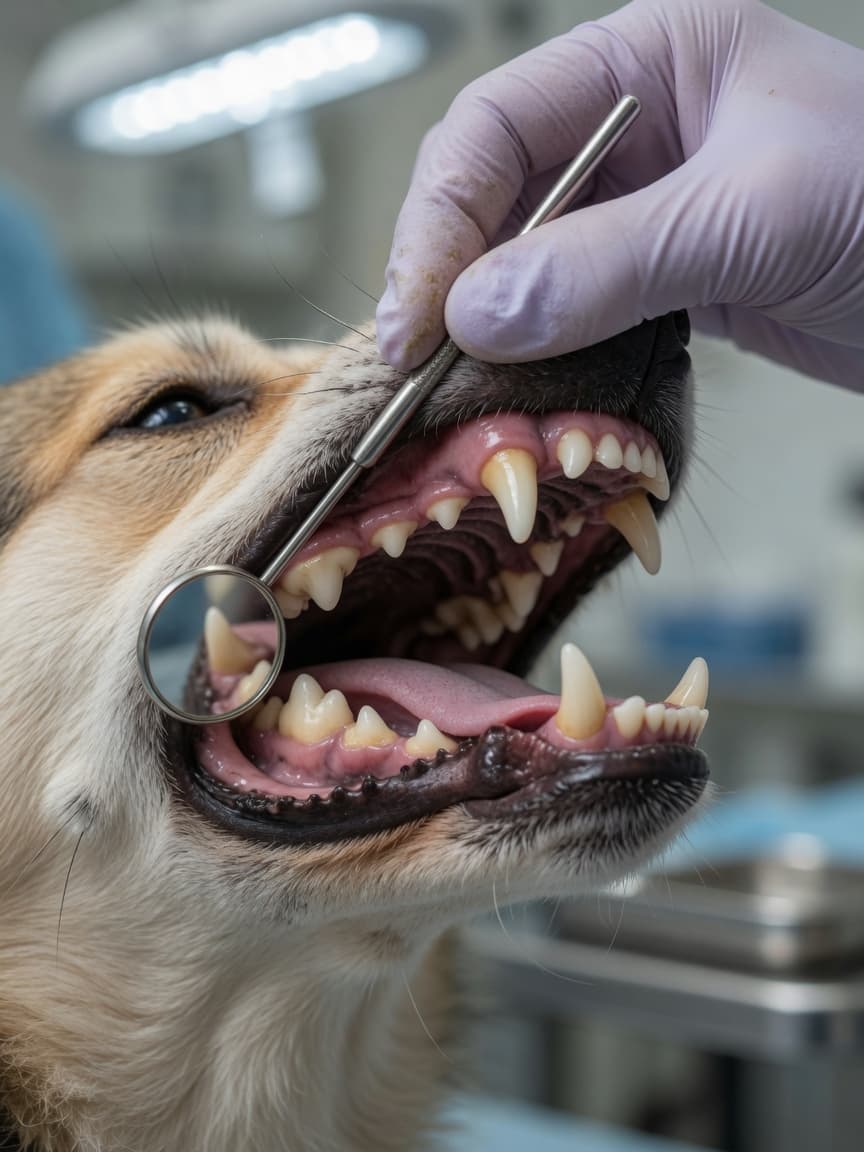
What Is Tooth Resorption in Dogs?
Tooth resorption is one of the more puzzling and painful dental conditions a dog can experience, yet it often goes completely unnoticed by owners — and sometimes even by vets who are not specifically looking for it. The condition involves the progressive destruction of tooth structure from the inside out, or from the root surface inward, until the tooth essentially dissolves away. Unlike a cracked tooth or obvious decay, there may be no visible signs at all during the early stages.
In cats, tooth resorption is extraordinarily common, affecting a significant proportion of adult felines. In dogs, it is less prevalent but by no means rare. Studies suggest it affects somewhere between 10 and 27 percent of dogs, with higher rates seen in older animals. The condition is often referred to by older terminology such as cervical line lesions or odontoclastic resorptive lesions, though tooth resorption is now the preferred clinical term.
How Does Tooth Resorption Actually Happen?
Under normal circumstances, odontoclasts — cells responsible for breaking down dental tissue — become active during puppy development to resorb the roots of deciduous (baby) teeth, allowing adult teeth to erupt properly. In tooth resorption, these same cells become inappropriately activated in the permanent teeth, and the destruction begins.
The exact trigger for this process is not fully understood. Researchers have proposed several theories, including chronic inflammation around the tooth, vitamin D imbalances, and immune-mediated responses. What is clear is that once resorption begins, it does not stop on its own. The odontoclasts progressively eat through the cementum, then the dentine, and eventually the pulp. Because dentine contains sensory nerve fibres, this process can be intensely painful — even when there is no visible lesion on the crown of the tooth.
Which Teeth Are Most Commonly Affected?
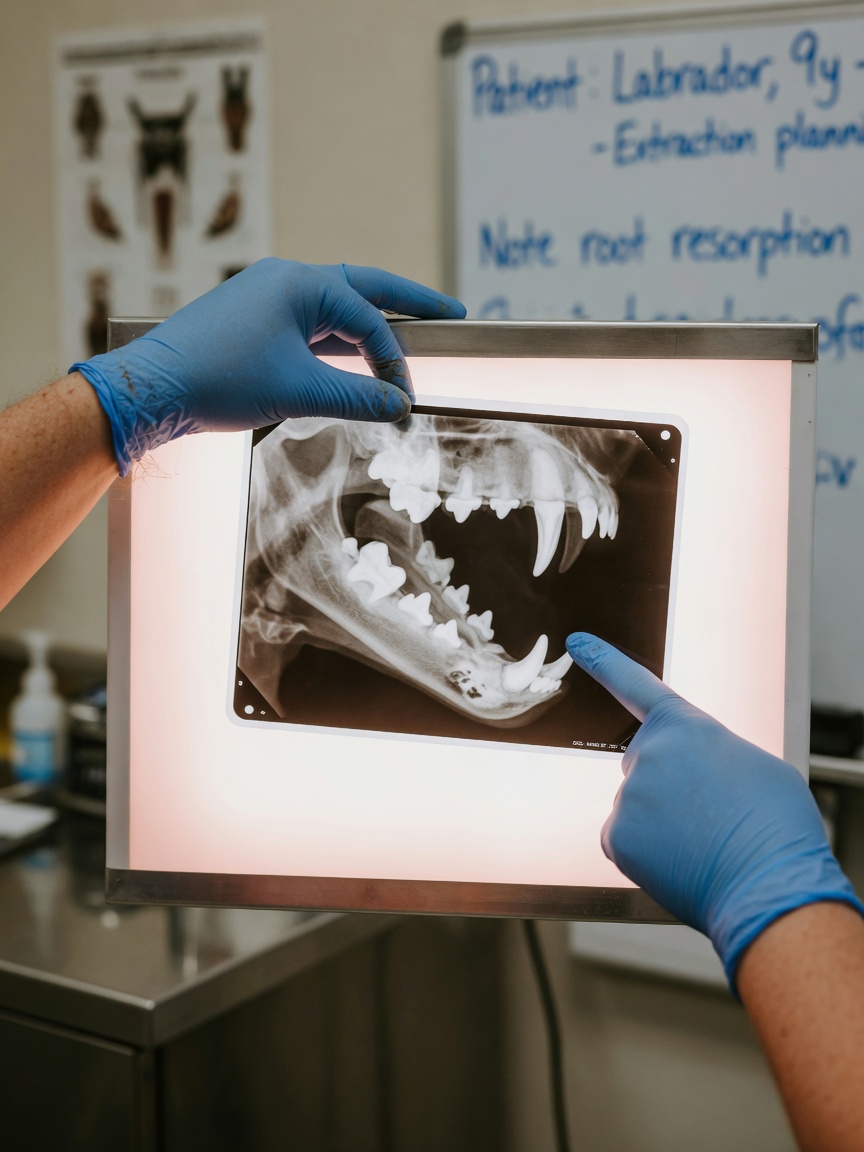
In dogs, tooth resorption most frequently affects the incisors and the lower third premolars, though any tooth can be involved. In some cases, multiple teeth are affected simultaneously. The resorptive process typically begins at or below the gumline, which is why dental radiographs (X-rays) are absolutely essential for diagnosis. Visual examination alone will miss a large proportion of cases.
Veterinary dentists classify resorption into stages based on how much of the tooth structure has been destroyed:
- Stage 1 involves mild loss of cementum or cementum and enamel.
- Stage 2 extends into the dentine but has not reached the pulp.
- Stage 3 involves the pulp cavity.
- Stage 4 sees extensive structural loss, and the crown may be absent or broken.
- Stage 5 is where only root remnants remain beneath the gumline, covered by gingival tissue.
Recognising the Signs — When You Can See Them
The frustrating reality of tooth resorption is that many dogs show no obvious signs until the condition is quite advanced. Dogs are remarkably stoic animals and will continue eating even when experiencing significant oral pain. When signs do appear, they may include:
- Difficulty chewing or reluctance to eat hard food or toys
- Dropping food from the mouth while eating
- Excessive drooling, sometimes with a pinkish tinge if there is bleeding
- Jaw chattering or facial twitching, particularly around the muzzle
- Visible reddening or inflammation of the gumline
- A pink or red spot on the surface of the tooth, which may represent inflamed tissue growing into the resorption cavity
If you notice any of these signs, particularly jaw chattering when the teeth are touched, a veterinary dental assessment with full-mouth radiographs should be prioritised promptly.
Diagnosis: Why X-Rays Are Non-Negotiable
No general veterinary examination, however thorough, can definitively diagnose or rule out tooth resorption without dental radiographs taken under general anaesthesia. The positioning and clarity required to evaluate each tooth and its root structure simply cannot be achieved in a conscious, moving patient.
Full-mouth radiographs allow the vet to assess the extent of resorption in each affected tooth, identify whether roots have been resorbed or remain intact, and classify the lesions accurately. This classification directly determines the recommended treatment. In some cases where advanced resorption has occurred and the root structure has been substantially replaced by bone-like tissue, a different surgical approach may be appropriate compared to cases where significant root material remains.
Treatment Options and What to Expect
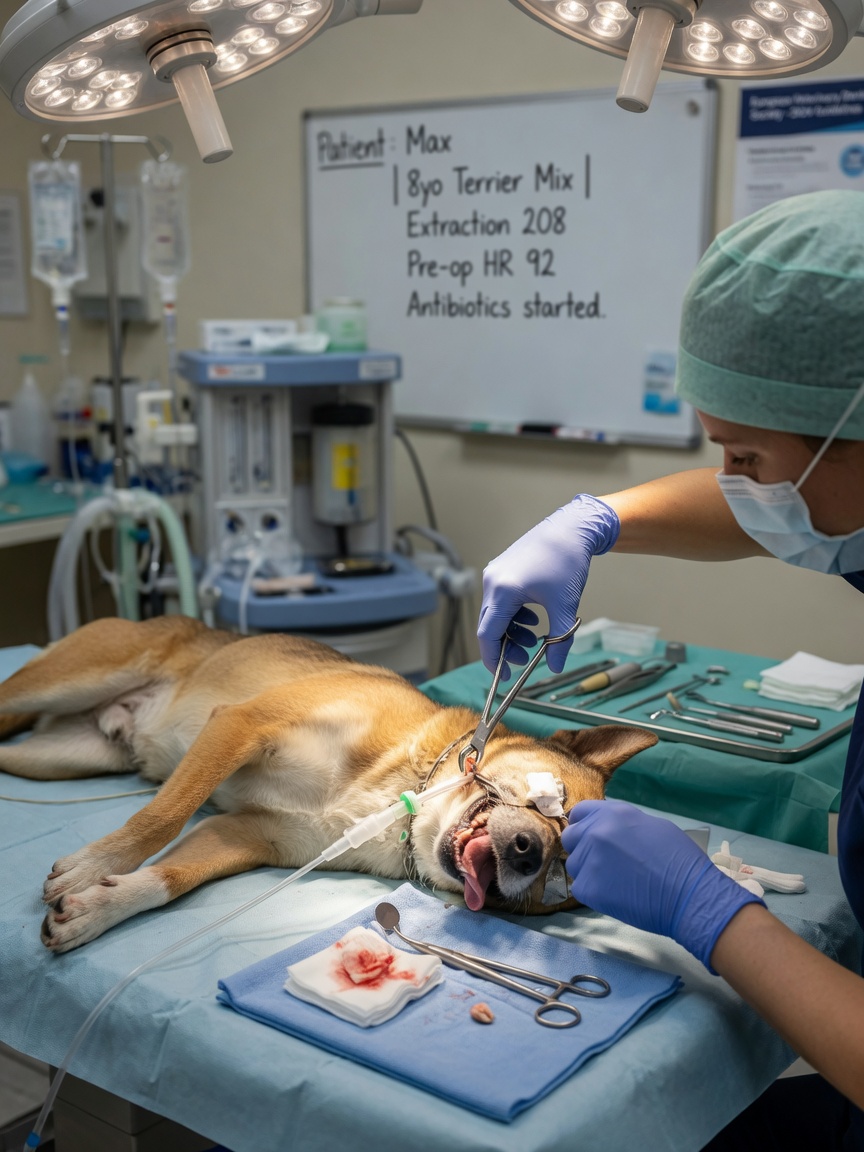
There is no treatment that reverses tooth resorption or halts its progression. Once the process has begun, the only viable options are extraction or, in very specific circumstances, a procedure called crown amputation.
Extraction is the standard approach for most cases and involves removing the affected tooth and its roots entirely. This eliminates the source of pain and prevents ongoing destruction. For teeth where resorption has been classified as Type 2 — meaning the roots have undergone significant replacement resorption and are no longer distinguishable from surrounding bone — crown amputation may be considered. In this procedure, the crown is removed and the resorbed roots are left in place, as attempting to remove them could cause unnecessary trauma to the jaw.
Recovery from these procedures is generally straightforward in dogs. Most animals are eating comfortably within a day or two of surgery, and owners frequently report a dramatic improvement in their dog's energy and temperament — suggesting the animal had been living with chronic pain that was simply not expressed in obvious ways.
Preventing Tooth Resorption — Is It Possible?
Because the underlying cause of tooth resorption in dogs is not definitively established, there are no confirmed preventative measures. However, maintaining excellent oral hygiene, attending regular veterinary dental check-ups that include radiographs, and ensuring a balanced diet appropriate for your dog's life stage are all sensible steps. Early detection through routine dental radiographs remains the single most effective way to identify the condition before it progresses to an advanced and more painful stage.
If your dog has not had a dental examination with radiographs in the past year — or ever — scheduling one is the most meaningful action you can take for their long-term oral health.